Artwork
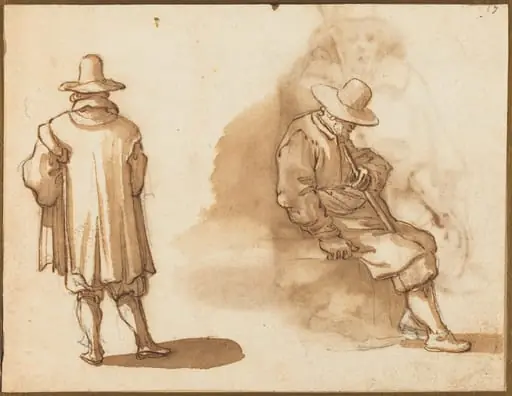
Sketches of a Gentleman
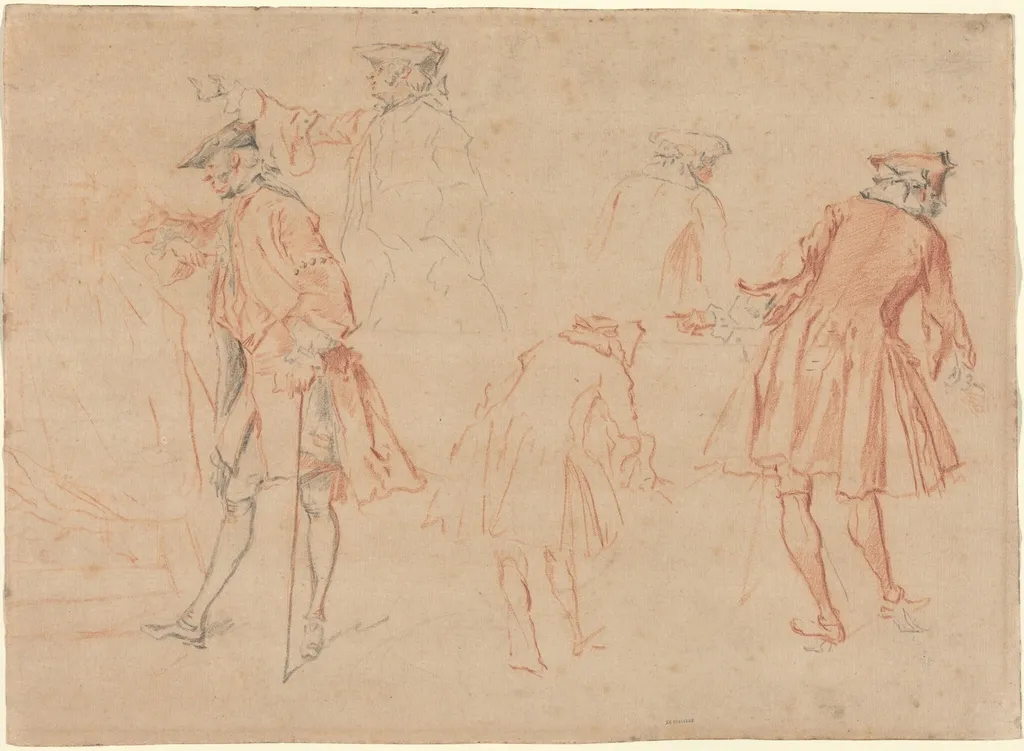
Sketches of a Gentleman is a chalk drawing by the Baroque artist Jacques André Portail. It dates from 1727 and is held in the collection of the National Gallery of Art.
About this work
Overview
Created in 1727 by Jacques André Portail, this drawing consists of four male figures rendered in red and black chalk on light laid paper.
Created in 1727 by Jacques André Portail, this drawing consists of four male figures rendered in red and black chalk on light laid paper. The composition captures the men in motion, walking in a line, their forms suggested with swift, economical strokes. The medium and technique reflect a study in posture and gesture, typical of preparatory work by artists of the period. The paper’s texture and the chalk’s contrast enhance the immediacy of the sketch.
Subject & Meaning
The figures are dressed in long, formal coats and broad-brimmed hats, suggesting late 17th- or early 18th-century urban attire. Their identical stance and aligned movement imply a group in transit, perhaps courtiers or gentlemen on a public promenade. No individual features are emphasized; the focus lies in collective rhythm and silhouette, hinting at social observation rather than portraiture.
Technique & Style
Portail employed red and black chalk with loose, rapid strokes to define form and shadow without detail. The lines are fluid yet controlled, conveying weight and direction through minimal means. The light paper allows the chalk’s warmth and depth to stand out, while the absence of background isolates the figures. This approach aligns with academic drawing practices, prioritizing gesture over finish.
History & Provenance
The drawing is attributed to Jacques André Portail, a French artist active in the early 18th century, though little is documented about his life. It survives as a private study, likely made for personal practice or as a reference for larger compositions. Its preservation suggests it was valued by later collectors for its expressive draftsmanship, though its exact provenance before the 20th century remains unclear.
Context
Produced during the late Baroque era, the sketch reflects the period’s interest in dynamic human form and movement, though it lacks the theatricality typical of grand Baroque painting. Instead, it embodies the quiet, observational tradition of French academic drawing, where sketches served as tools for mastering anatomy and composition outside formal commissions.
Legacy
This drawing exemplifies the enduring value of preparatory studies in European art. While not intended for public display, its sensitivity to gesture and form has ensured its survival as a representative example of 18th-century draftsmanship. It contributes to understanding how artists trained through direct observation, prioritizing economy of line over finish.
Artist & collection


 A Judge and Two Gentlemen Lawyers
![A Comic Actor Dressed as a Gentleman [recto], by Jean-Baptiste Joseph Pater](https://artifactworldgallery.com/img/jean-baptiste-joseph-pater--a-comic-actor-dressed-as-a-gentleman-recto--e5df5dc0f9bcc859-w320.webp) A Comic Actor Dressed as a Gentleman [recto]
A Comic Actor Dressed as a Gentleman [recto]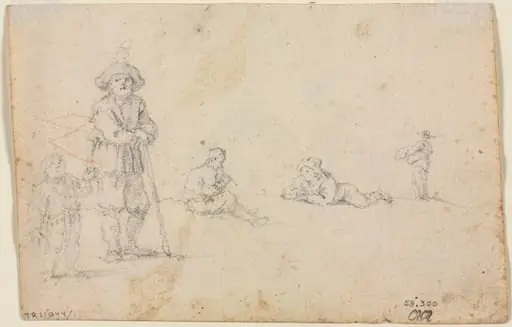 Five Figure Studies (verso)
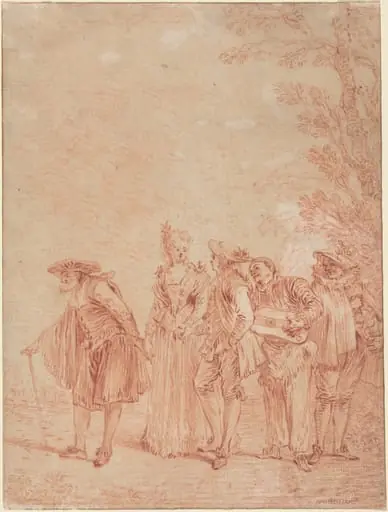 The Wedding Procession
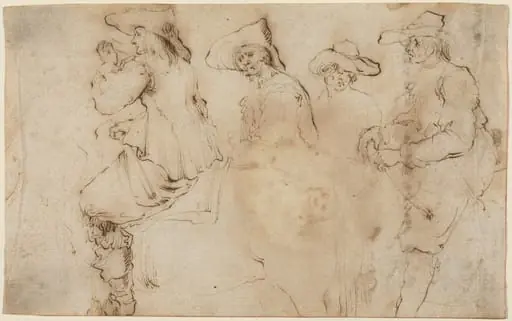 Four Horsemen
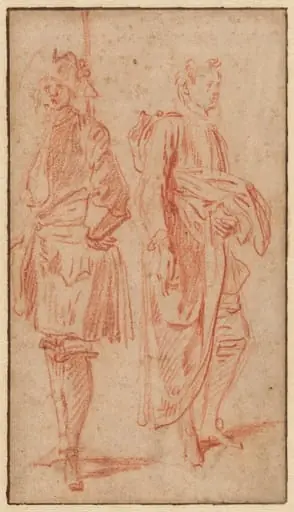 Two Standing Soldiers, One Wearing a Hat
 Poultry-Market, Loches
 An Old Man with a Cape and a Rustic with a Backpack
![Figures Deciphering an Inscription, with Two Women Seated [Study for Oeuvres de Bossuet, IV], by Giovanni Battista Piazzetta](https://artifactworldgallery.com/img/giovanni-battista-piazzetta--figures-deciphering-an-inscription-with-two-women-seated-stu--24638de2183fad9c-w320.webp) Figures Deciphering an Inscription, with Two Women Seated [Study for Oeuvres de Bossuet, IV]
Figures Deciphering an Inscription, with Two Women Seated [Study for Oeuvres de Bossuet, IV] Punchinello Arrested
 Studies of Soldiers in Camp
 Two Studies of a Man