Artwork
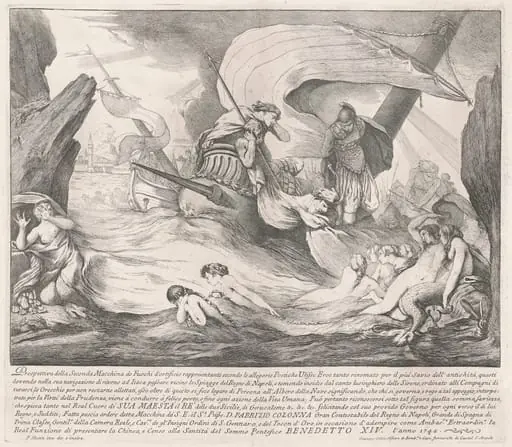
Allegory of Water
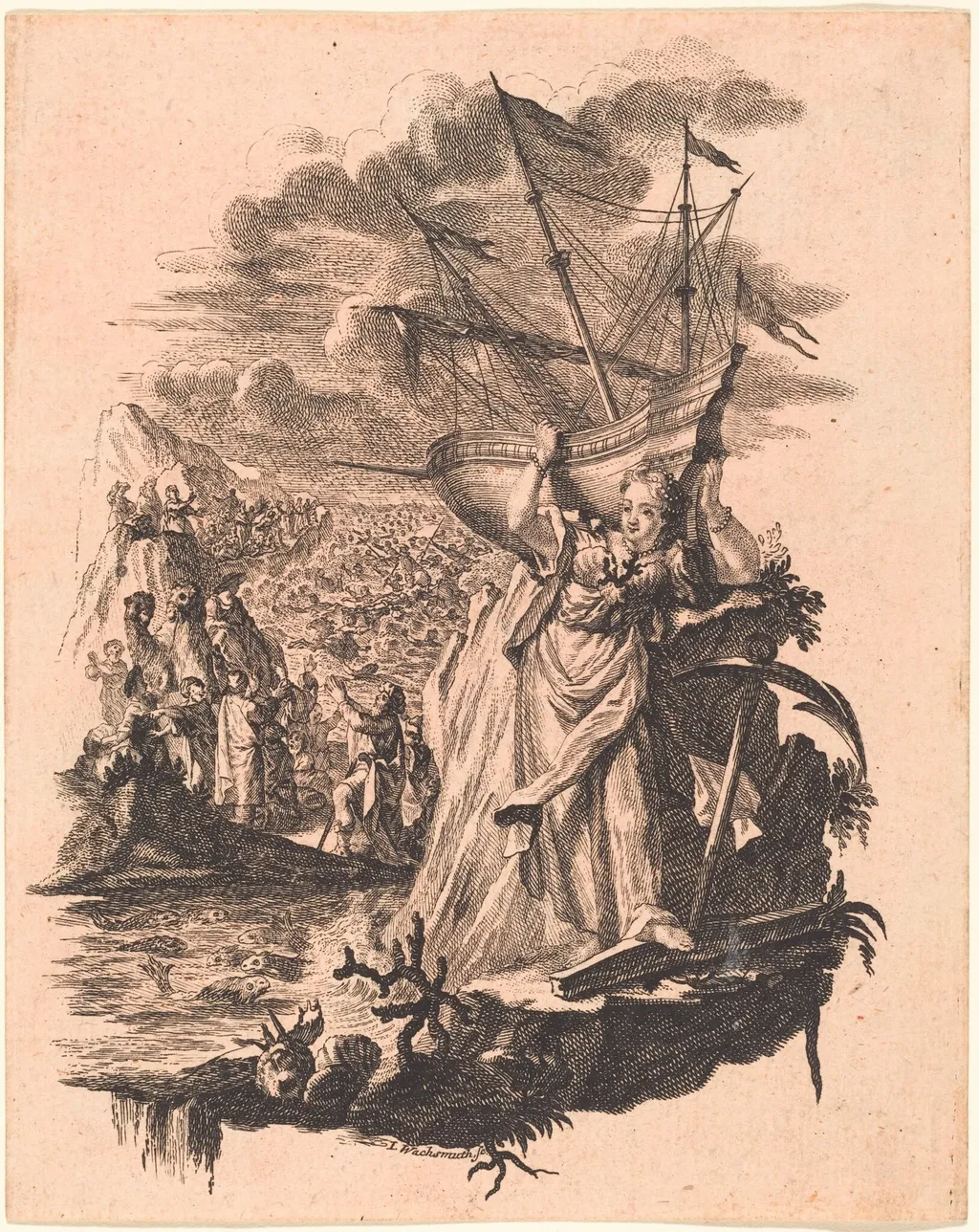
Allegory of Water is an ink print by the Baroque artist Jeremias Wachsmuth. It dates from 1741 and is held in the collection of the National Gallery of Art.
About this work
Overview
Allegory of Water is a print created by the German engraver Jeremias Wachsmuth in 1741. Executed as an etching with engraving on pink prepared laid paper, the work presents a complex allegorical scene that combines figures, landscape, and maritime elements within a Baroque visual language.
Subject & Meaning
The central figure is a woman standing on a rocky ledge, holding a large bowl and crowned with a wreath of flowers. She is surrounded by symbols of agricultural abundance—a scythe and a sheaf of wheat—while a ship with billowing sails appears in the distance. The composition suggests themes of fertility, the bounty of nature, and the life‑giving qualities associated with water.
Technique & Style
Wachsmuth employed a combination of etching and engraving to achieve fine line work and varied tonal effects on pink laid paper, a choice that adds a subtle warmth to the image. The intricate detailing of the figure’s robes, the textured clouds, and the distant figures reflects the elaborate ornamentation typical of the Baroque period.
History & Provenance
The print was produced in the mid‑18th century, a time when allegorical subjects were popular in European printmaking. While specific ownership records are limited, the work is documented in catalogues of Wachsmuth’s oeuvre and has been held in several museum collections specializing in Baroque prints.
Artist & collection


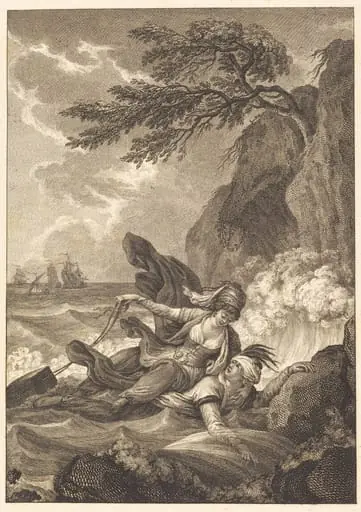 La fiancee du roi de Garbe: La cassette
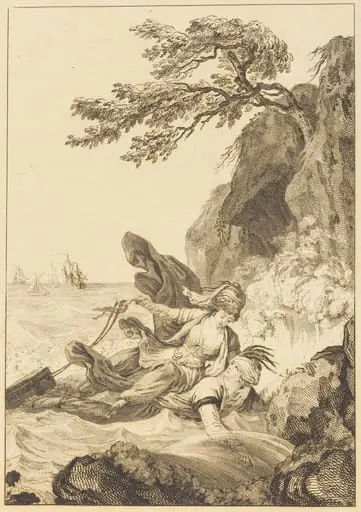 La fiancee du roi de Garbe: La cassette
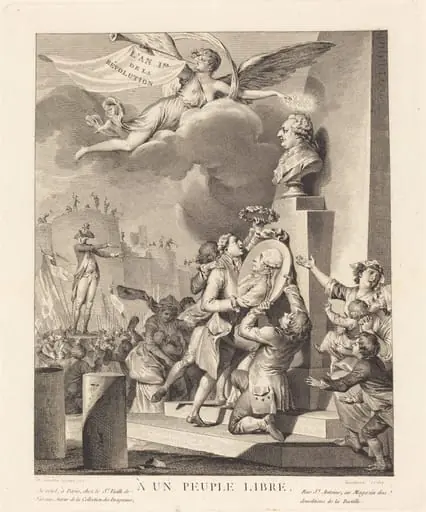 A un peuple libre
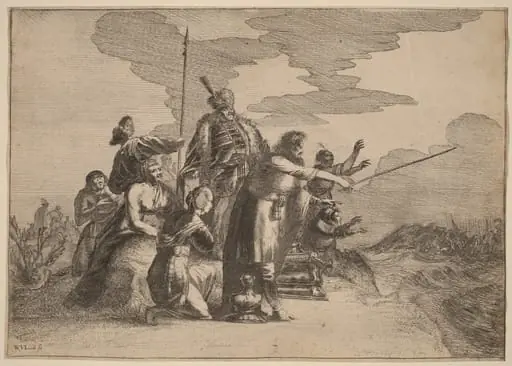 Pharoah Perishing in the Red Sea
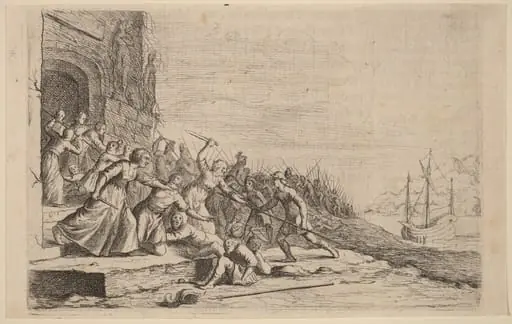 The Followers of Solon Defending the Temple of Venus
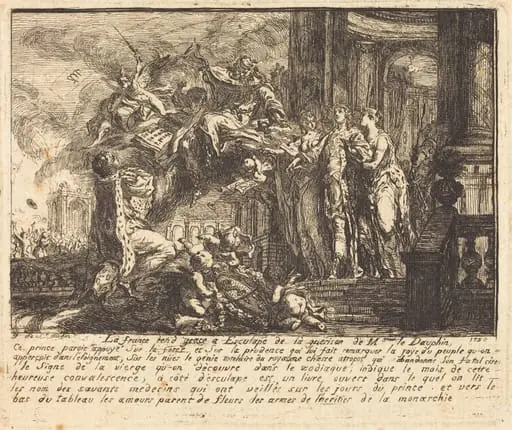 Allegory of the Dauphin's Convalescence (Allegorie sur la convalescence du Dauphin)
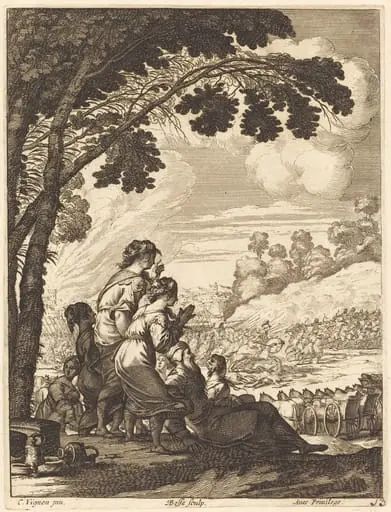 Illustration to Jean Desmarets' "L'Ariane"
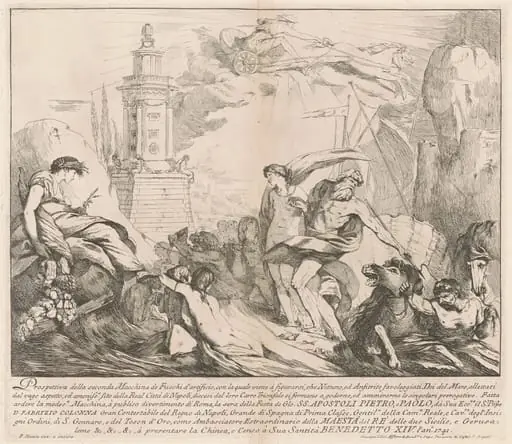 The Seconda Macchina for the Chinea of 1741: Neptune and Amphitrite
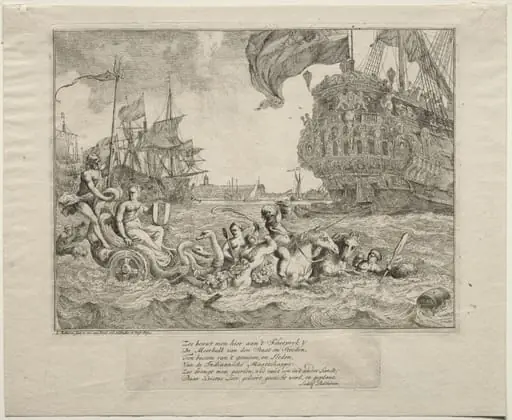 The Personification of Amsterdam Riding in Neptune's Chariot
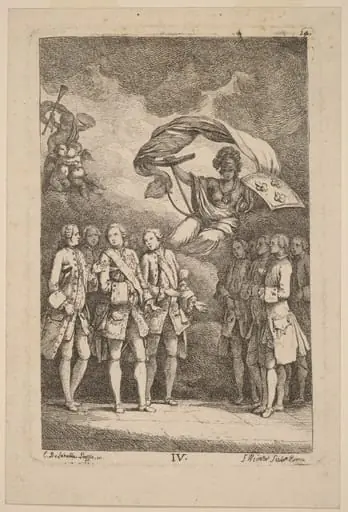 Nella Venuta in Roma: pl. 4
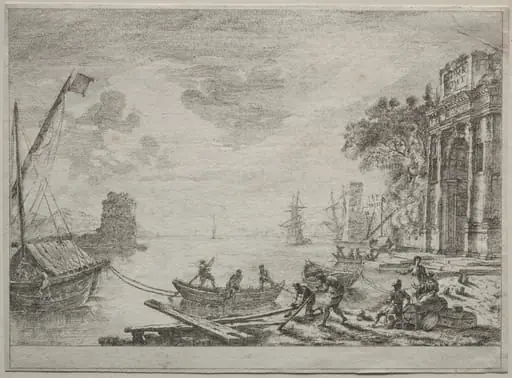 The Sunset
 The Seconda Macchina for the Chinea of 1742: Ulysses and the Sirens