Artwork
Cutting In
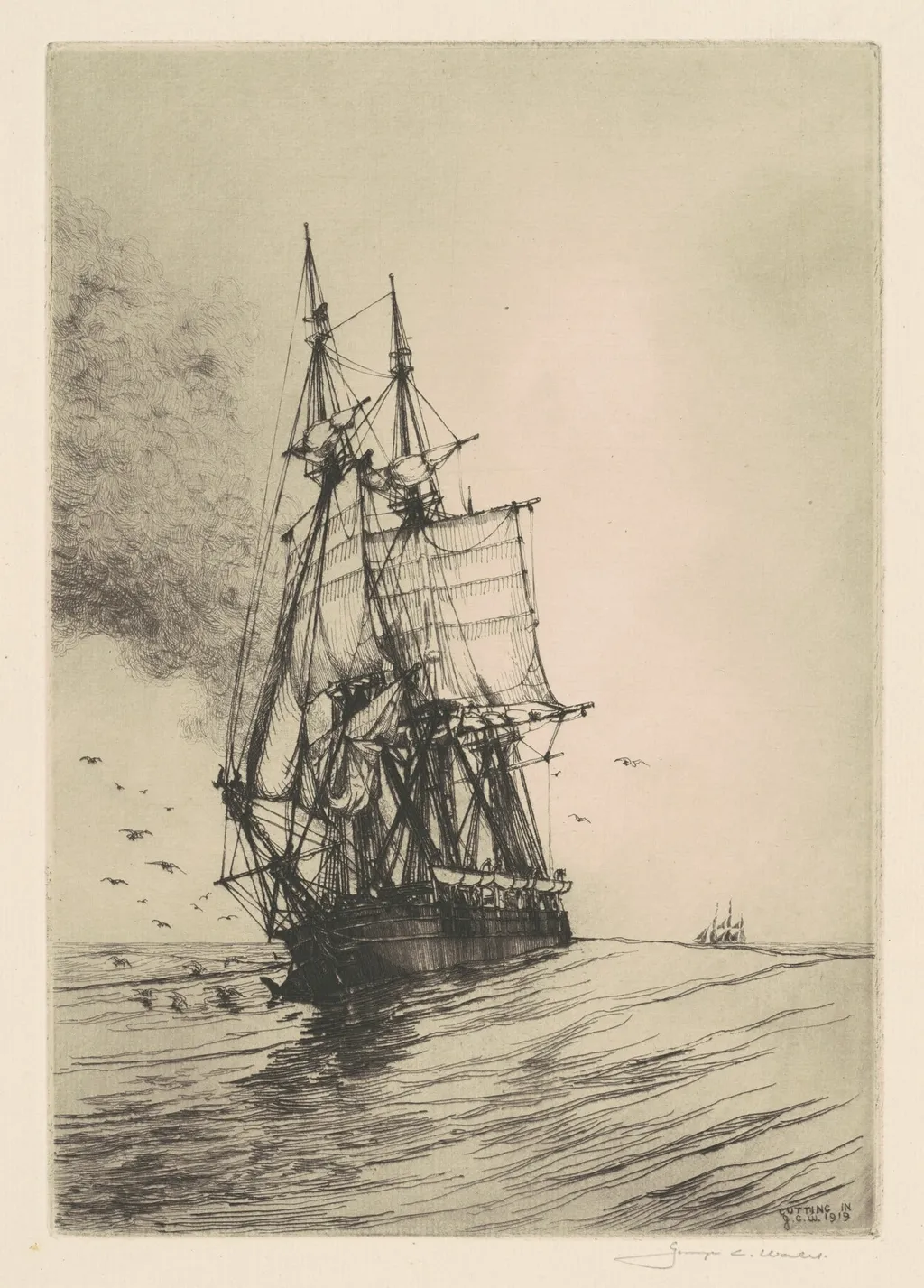
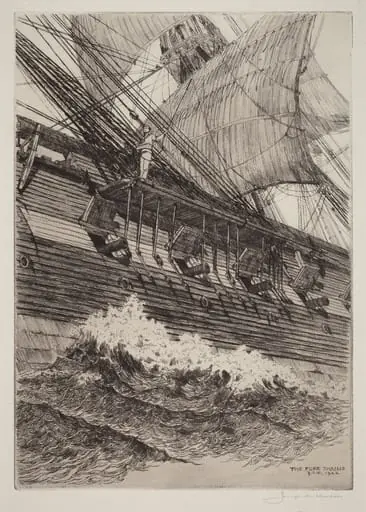
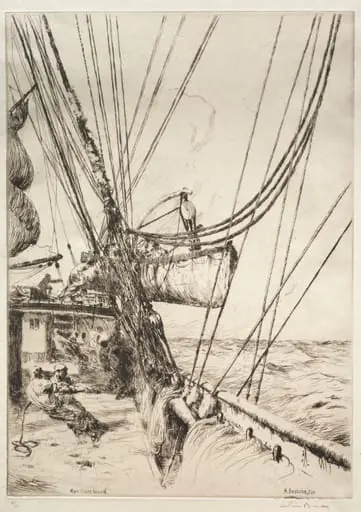
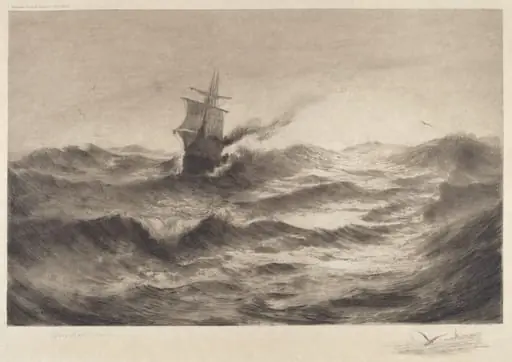
Cutting In is an ink print by George Canning Wales. It dates from 1919 and is held in the collection of the National Gallery of Art.
About this work
Overview
Cutting In is a black‑ink etching on laid paper executed by George Canning Wales in 1919. The print measures the ship’s silhouette against a tumultuous sea, rendered in fine linear marks that contrast sharply with the paper’s pale surface. The composition balances a dominant sailing vessel with distant elements, creating a sense of scale and movement.
Subject & Meaning
The image portrays a large sailing ship navigating choppy waters, its masts laden with rigging and sails that intersect in a web of lines. Rough waves surge around the hull, while a few gulls wheel overhead, and a smaller boat rests on the horizon, suggesting both the perils of the sea and the quiet of distant calm.
Technique & Style
Wales employed traditional intaglio etching, incising intricate details such as rope twists and wood grain into a copper plate before printing. The fine, controlled lines achieve a high level of texture, while the uniform black ink saturates the etched areas, producing a stark chiaroscuro effect against the laid paper’s subtle tooth.
History & Provenance
Created shortly after World War I, Cutting In reflects the artist’s continued interest in maritime subjects during a period of renewed commercial shipping. The print has been held in several private collections and was exhibited in early 20th‑century print shows, though its exact ownership trail remains limited to documented sales records.
Context
In the early 1900s, etching experienced a revival among British artists who sought to capture industrial and nautical themes with precision. Wales’ work aligns with this movement, emphasizing technical skill and a realistic portrayal of sea travel, a subject that resonated with contemporary audiences familiar with maritime commerce.
Artist & collection