Artwork
In Low Tide
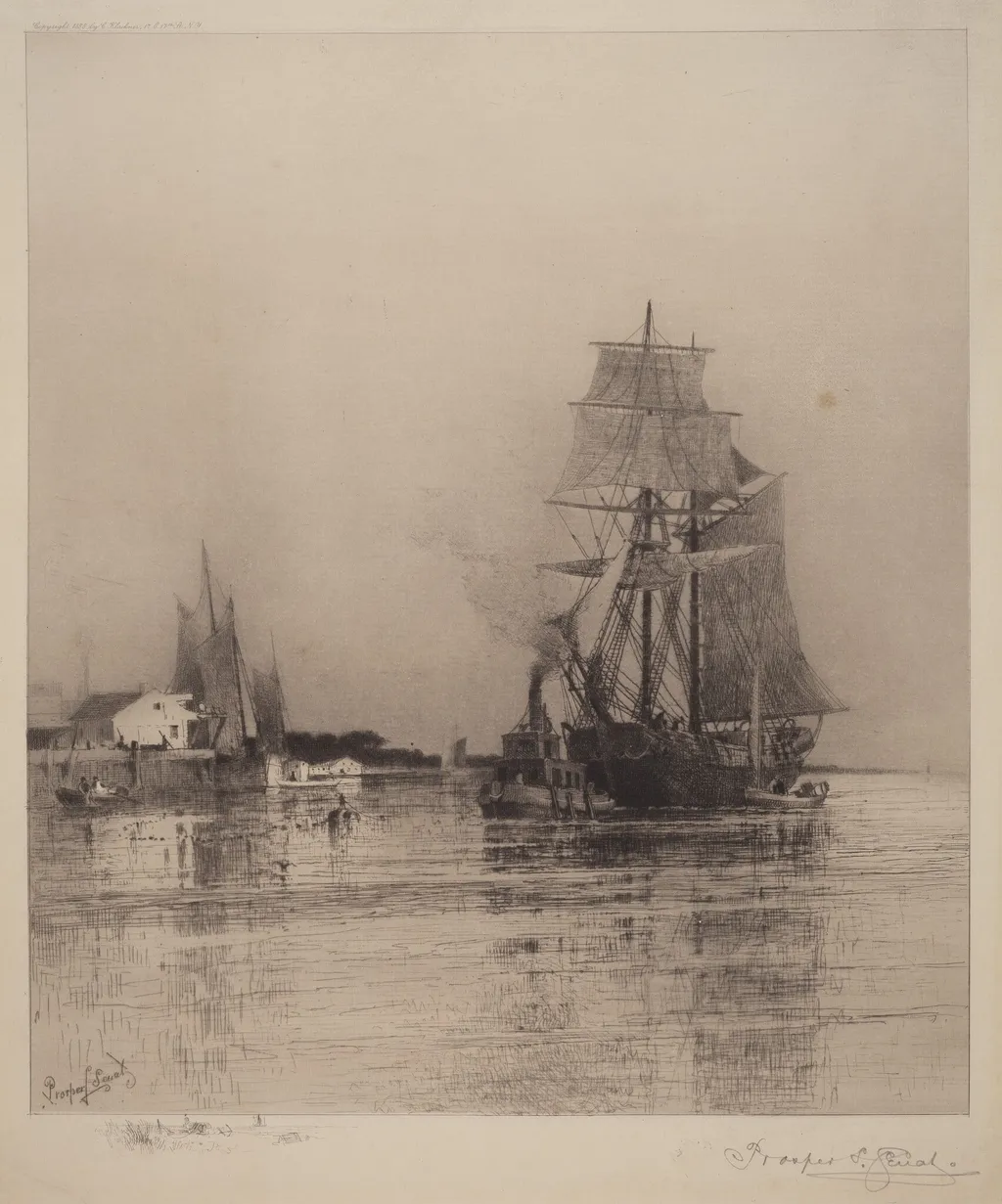
In Low Tide is an ink print by the Impressionist artist Prosper Louis Senat. It dates from 1888 and is held in the collection of the National Gallery of Art.
About this work
Overview
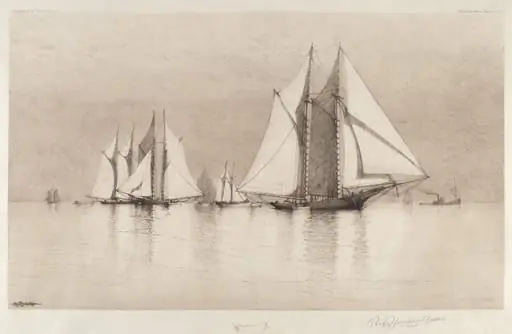
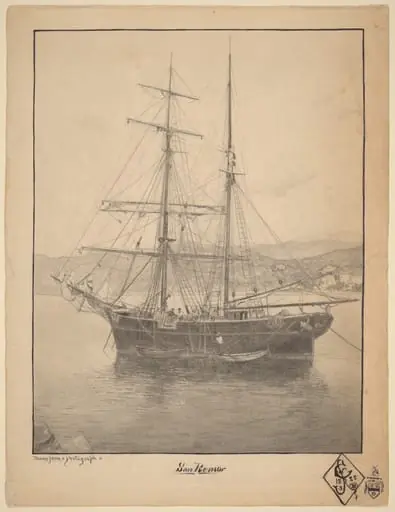
In Low Tide is an 1888 etching by Prosper Louis Senat, depicting a quiet coastal scene at low water. The work captures a large vessel at rest, its sails lowered, alongside smaller craft and distant shore structures. The composition emphasizes stillness and the subtle interplay of water, sky, and land, rendered through fine linear detail characteristic of etching techniques.
Subject & Meaning
The scene portrays a moment of suspension—ships idle as the tide recedes, suggesting a pause in maritime activity. The absence of human figures and the quiet arrangement of vessels and buildings evoke a sense of temporal stillness. Rather than narrating action, the image invites contemplation of nature’s rhythms and the quiet endurance of coastal life.
Technique & Style
The precision of the lines conveys calm without sentimentality, aligning with 19th-century print traditions focused on observation over drama.
Senat employed etching to achieve delicate tonal gradations, using fine lines to suggest light reflecting off water and the textured surfaces of hulls and buildings. The contrast between the dark, inked outlines and the open, unetched areas of paper enhances spatial depth. The precision of the lines conveys calm without sentimentality, aligning with 19th-century print traditions focused on observation over drama.
History & Provenance
Created in 1888, the etching is one of several works by Senat documenting maritime subjects during a period of transition in coastal economies. Its survival in private and institutional collections suggests modest but sustained interest in his prints. No major exhibitions or documented sales from the artist’s lifetime are recorded, indicating a quiet, localized reception.
Context
Senat worked during a time when etching experienced a revival among European artists seeking alternatives to mass-produced imagery. Coastal scenes like this one reflected broader cultural interest in the sea as a site of quiet reflection, distinct from the industrial or heroic narratives common in contemporary painting. His work aligns with regional printmakers who documented everyday maritime life.
Legacy
Though not widely known today, Senat’s etchings contribute to a body of 19th-century work that preserved the visual character of coastal communities. In Low Tide remains a quiet example of how printmaking could capture the subtleties of place without grandeur, offering a restrained, observational record of maritime stillness that resonates with later documentary traditions.
Artist & collection


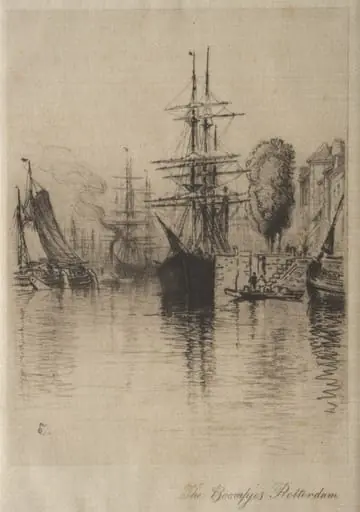 The Boompjes, Rotterdam
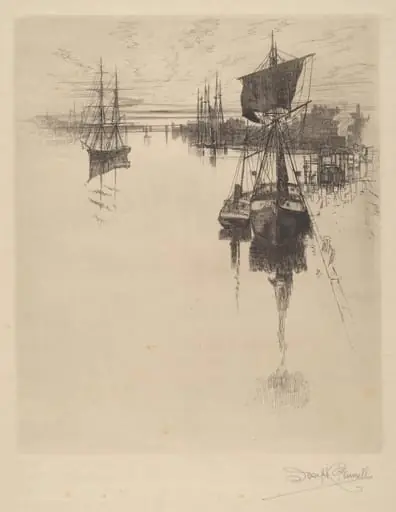 Below Chestnut St. Bridge, Philadelphia
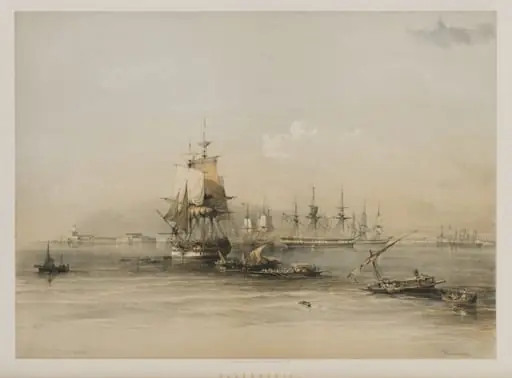 Egypt and Nubia, Volume III: Alexandria
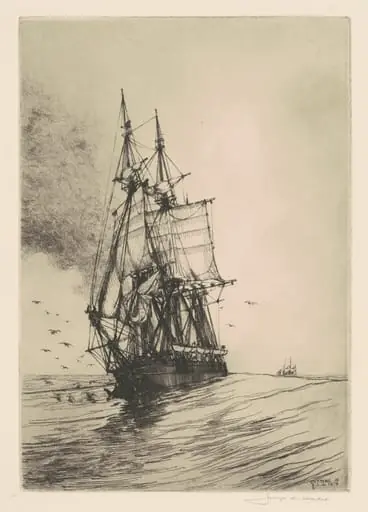 Cutting In
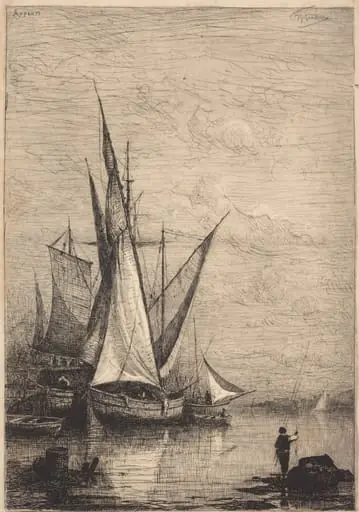 The Port of Genoa
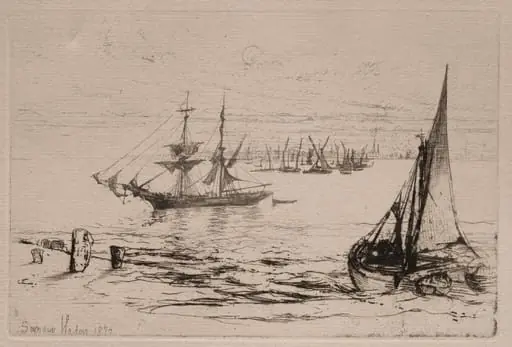 A Brig at Anchor
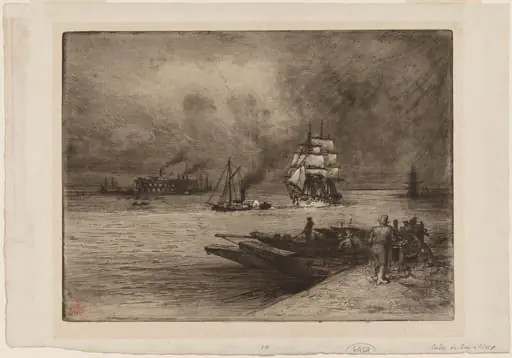 Near Gravesend: Souvenir of the Thames
 Drifting
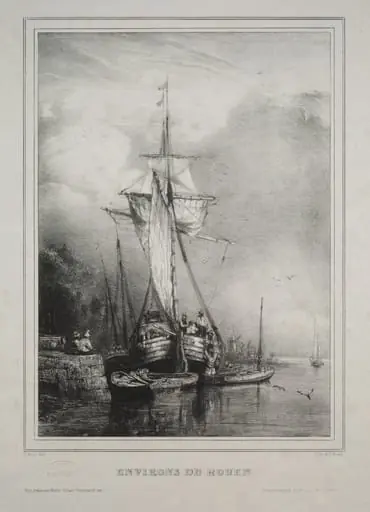 Six Marines: Environs of Rouen, France
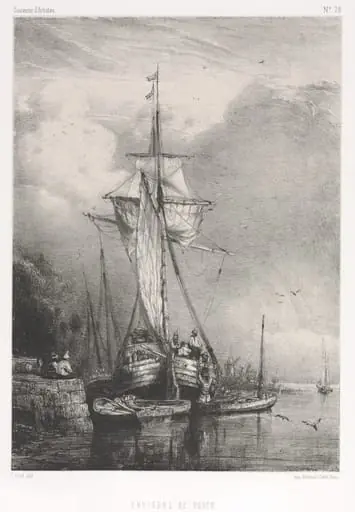 Souvenirs d' Artistes (No. 78): Six Marines: Environs de Rouen
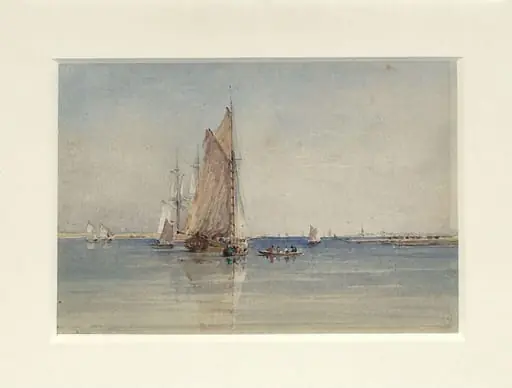 The Thames, Off Gravesend
 San Remo