Artwork
Autumn
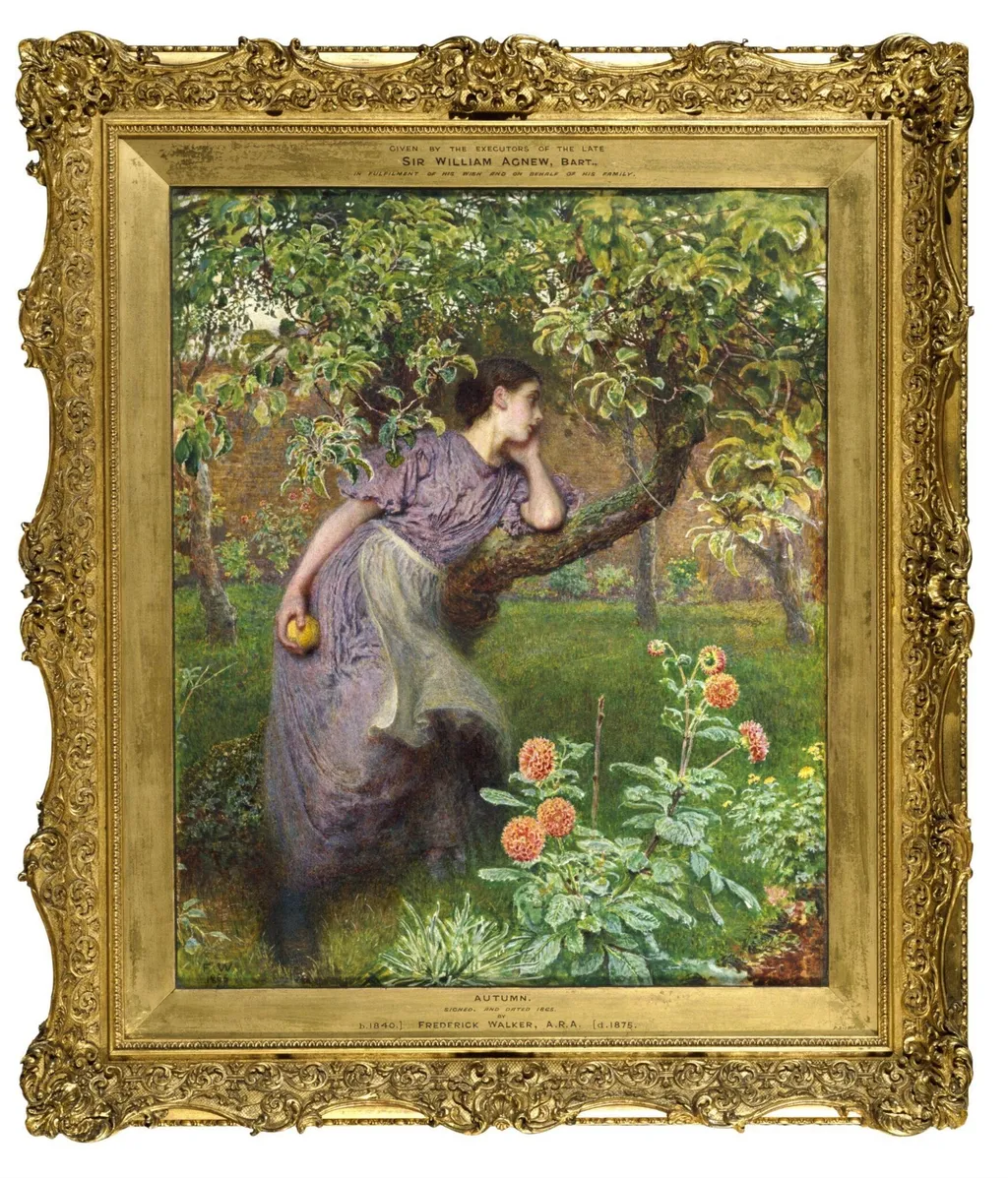
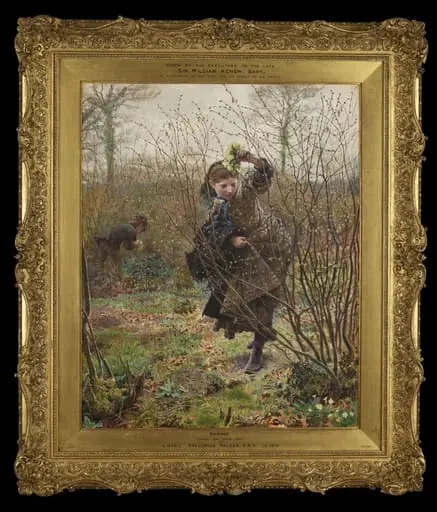
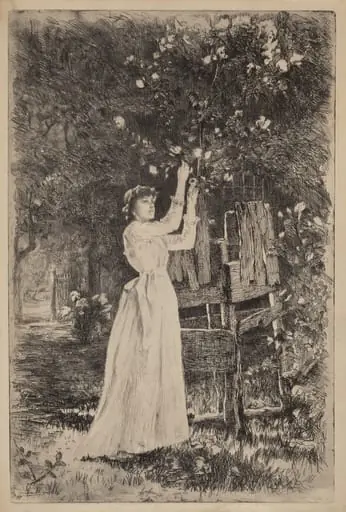
Autumn is a watercolor work on paper by the British Romanticist artist Frederick ARA Walker. It dates from 1865 and is held in the collection of the Victoria and Albert Museum.
About this work
Frederick Walker painted *Autumn* in 1865 as a watercolour. It’s part of a pair—Spring shows a girl with primroses. Here, a woman stands alone holding an apple.
Walker ties the season to human life, maybe hinting at lost love. The apple nods to the biblical Tree of Knowledge.
Check out the other half, *Spring*, at the Victoria and Albert Museum.
Overview
Autumn is a watercolour painting created by Frederick Walker in 1865, forming one half of a paired work with Spring, both now housed in the Victoria and Albert Museum.
Subject & Meaning
The painting depicts a solitary young woman holding an apple, symbolizing the fruit of the biblical Tree of Knowledge. This imagery may extend beyond the seasonal theme to suggest the passage of human life, potentially alluding to the loss of youthful love.
Technique & Style
Executed in watercolour, Autumn showcases Walker's skill in the medium, though specific stylistic innovations or notable techniques used in this work are not highlighted in available information.
History & Provenance
Painted in 1865, Autumn was later acquired by the Victoria and Albert Museum, where it is displayed alongside its counterpart, Spring.
Context
Part of a thematic pair, Autumn contrasts with Spring's scene of youthful companionship, emphasizing the cyclical nature of seasons and possibly the maturation and challenges of human experience.
Legacy
While specific lasting impacts or influences of Autumn on subsequent art movements are not detailed, it remains a notable work by Frederick Walker, contributing to the Victorian era's watercolour heritage.
Artist & collection
Artist
Frederick Walker made delicate watercolours of quiet English scenes in the mid-1800s, focusing on light and atmosphere rather than grand subjects.