Artwork
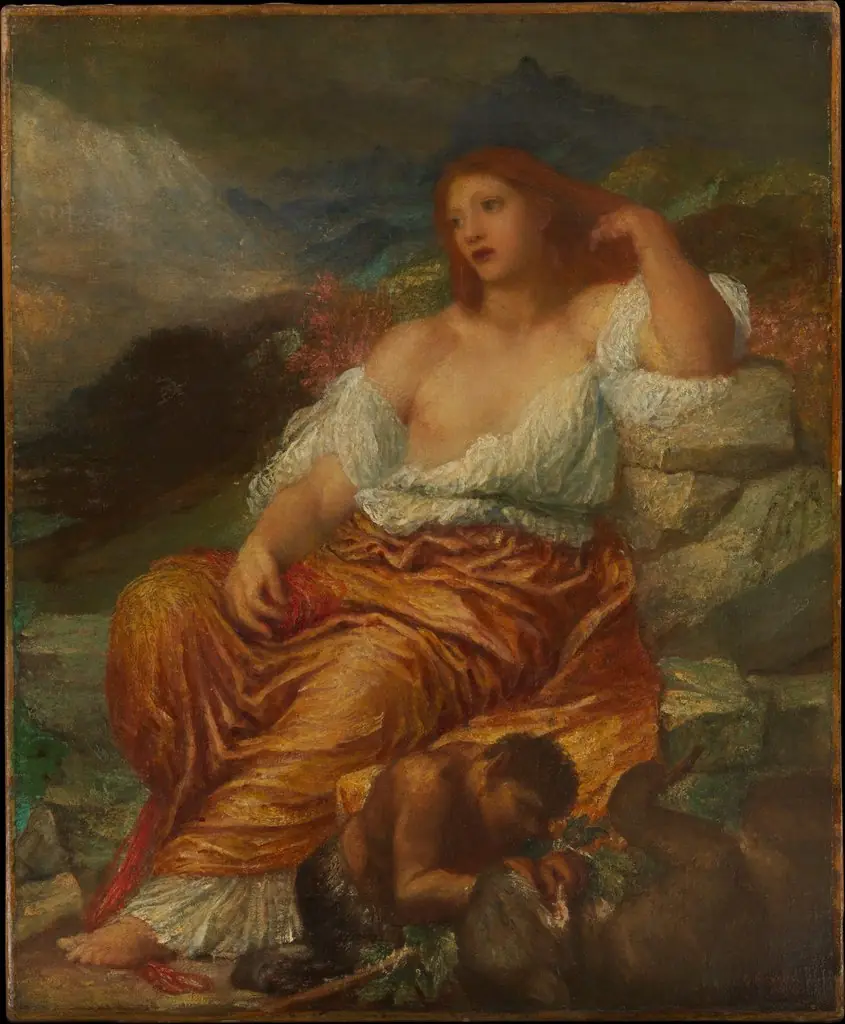
Eve Tempted
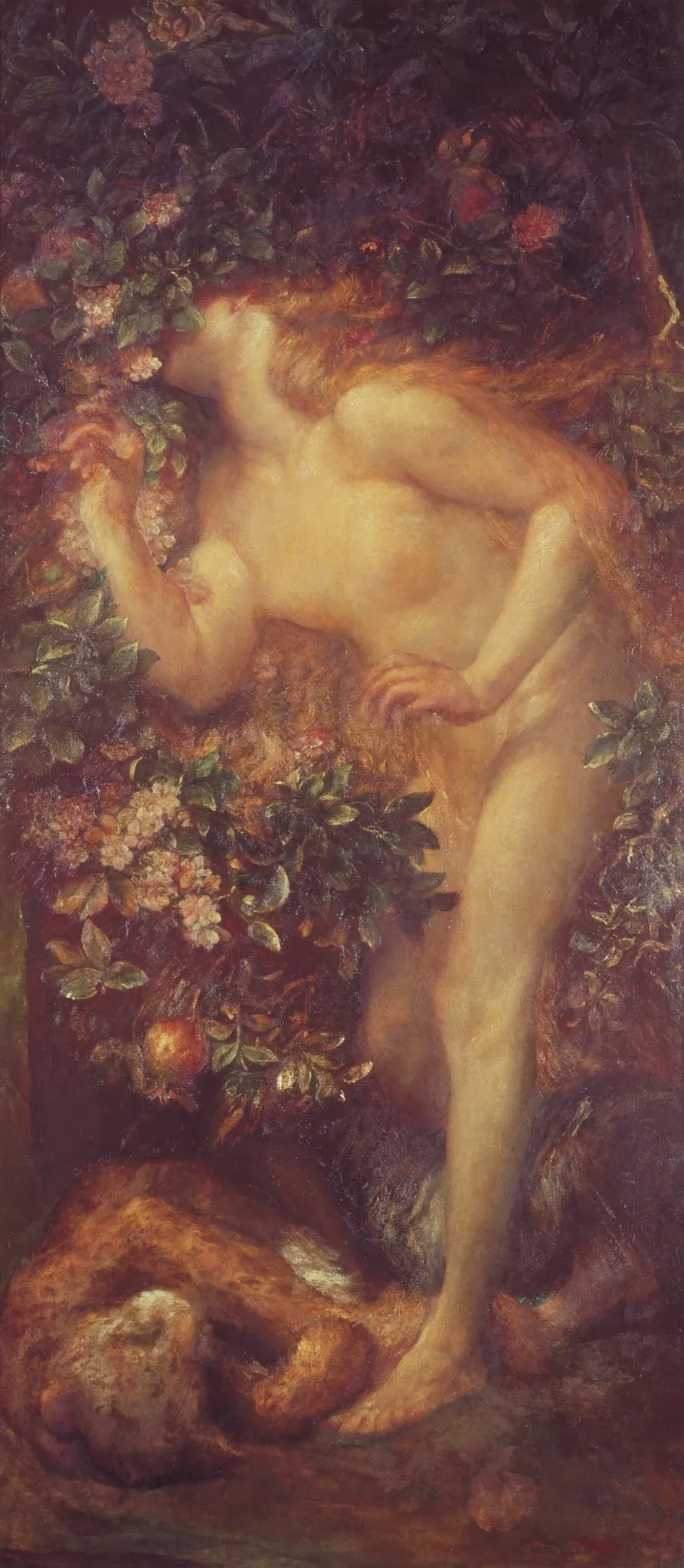
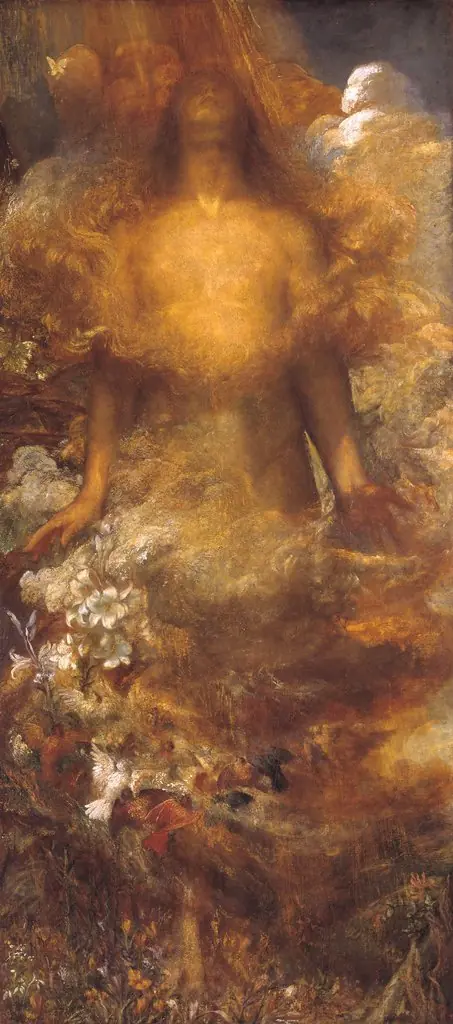
Eve Tempted is an oil painting by the Symbolist artist George Frederic Watts. It dates from 1892 and is held in the collection of the National Gallery.
About this work
Overview
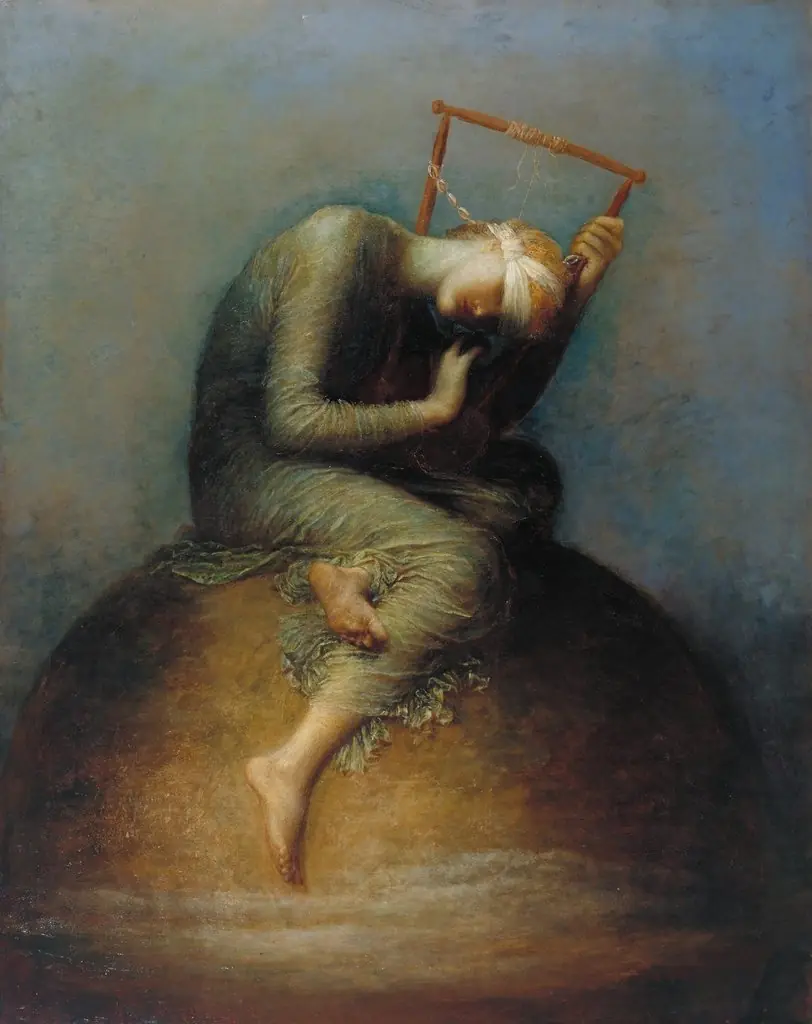
George Frederic Watts completed the oil painting *Eve Tempted* in 1892. Executed as part of his ambitious symbolic series titled the “House of Life,” the work belongs to the religious genre and is now part of the Tate Britain collection. The canvas presents a solitary figure of Eve within a verdant garden, rendered in a warm, golden atmosphere.
Subject & Meaning
The composition shows Eve from the waist up, her right hand reaching toward an apple suspended from a branch while her left hand rests on her hip. Her gaze is lowered and her expression contemplative, suggesting an inner deliberation rather than a dramatic narrative moment. Watts intended the scene to embody universal themes of temptation, choice, and human vulnerability.
Technique & Style
Watts employs soft brushwork and a limited palette of earthy and golden tones, creating a gentle chiaroscuro that models Eve’s form against the foliage. The painting’s atmospheric background and suggestive details align with Symbolist principles, favoring mood and idea over literal representation. The oil medium allows subtle gradations of light that enhance the intimate mood.
History & Provenance
After its completion, *Eve Tempted* entered the public domain through acquisition by Tate Britain, where it remains on display. The work formed a component of Watts’s broader “House of Life” project, an unrealized series intended to map the stages of human existence through allegorical imagery.
Artist & collection

Artist
George Frederic Watts (23 February 1817 – 1 July 1904) was a British painter and sculptor associated with the Symbolist movement.