Artwork
Shakespeare
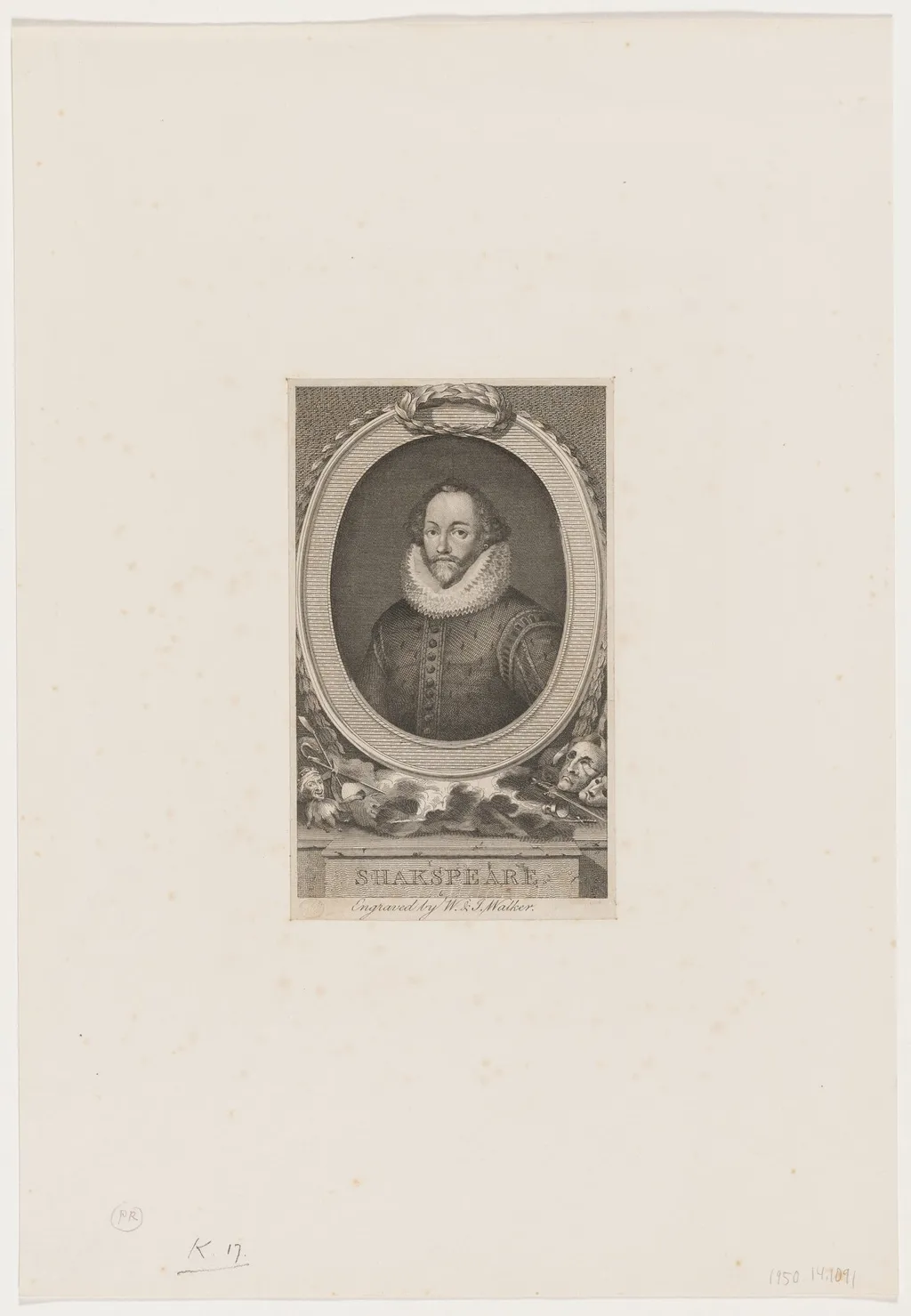
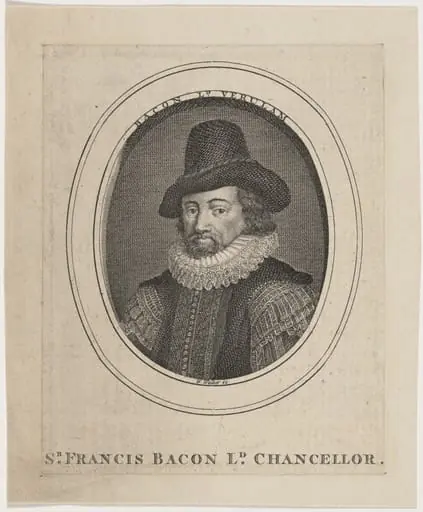
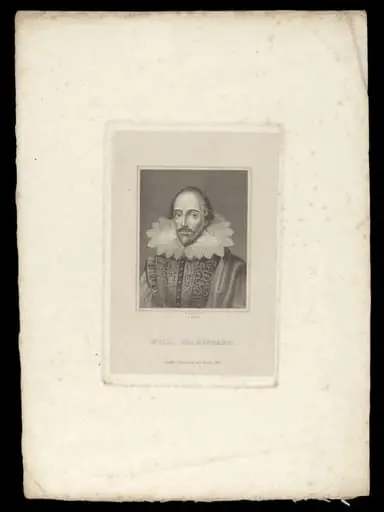
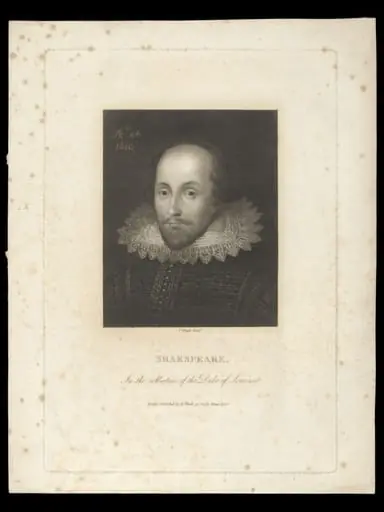
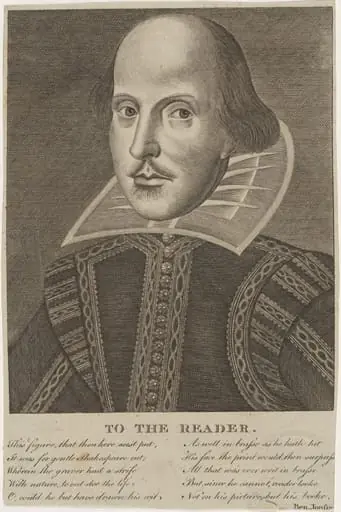
Shakespeare is an ink print by the Romanticist artist William Walker. It dates from 1829 and is held in the collection of the National Gallery of Art.
About this work
Overview
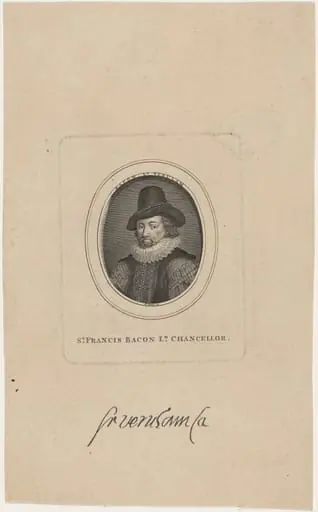
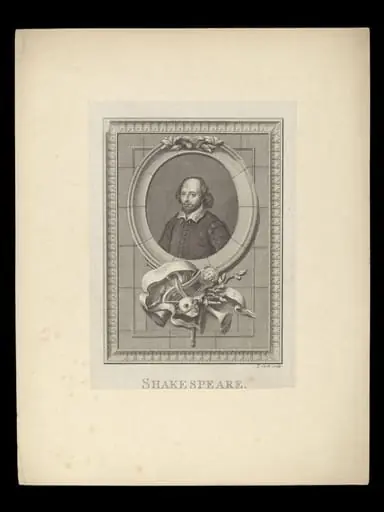
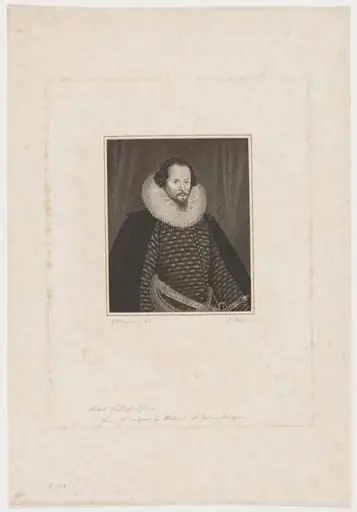
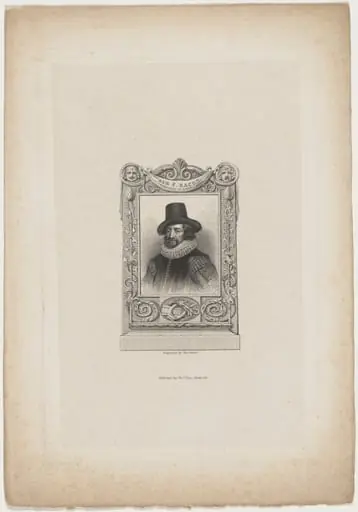
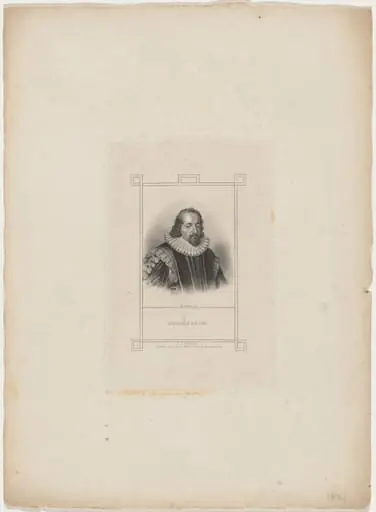
William Walker’s 1829 engraving presents a black‑and‑white portrait of a man identified as Shakespeare. The image is confined within an ornamental oval bordered by scrollwork and flanked by diminutive figures at its base, lending a formal presentation typical of early nineteenth‑century portrait prints.
Subject & Meaning
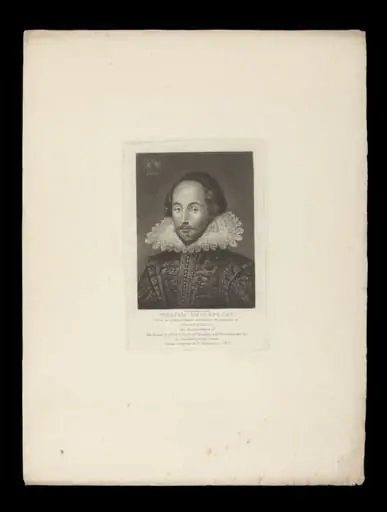
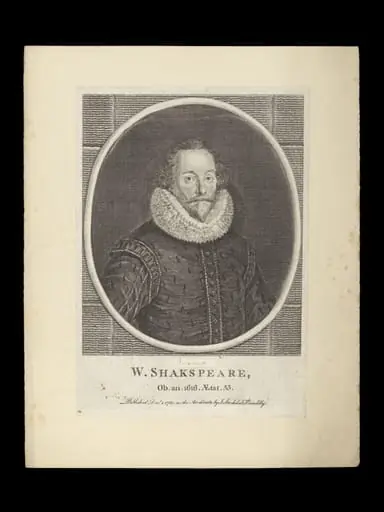
The sitter, rendered with a solemn expression, wears a high‑collared shirt with ruffled detailing, and his dark, slightly wavy hair frames the face. The inscription of the name beneath the image confirms the identification, situating the work within the tradition of commemorative portraiture of literary figures.
Technique & Style
Walker employs fine, parallel lines to model light and shadow, achieving a nuanced sense of volume across the facial features. The engraving’s linear approach, with cross‑hatching for depth, exemplifies the meticulous hand‑driven processes of early printmaking before the advent of photographic reproduction.
History & Provenance
Created in 1829, the print reflects the period’s renewed interest in Shakespearean scholarship and the market for portrait reproductions. While specific ownership records are scarce, the work has circulated among collectors of historic prints and appears in catalogues of early nineteenth‑century British engraving.
Artist & collection