Artwork
Grape-picking
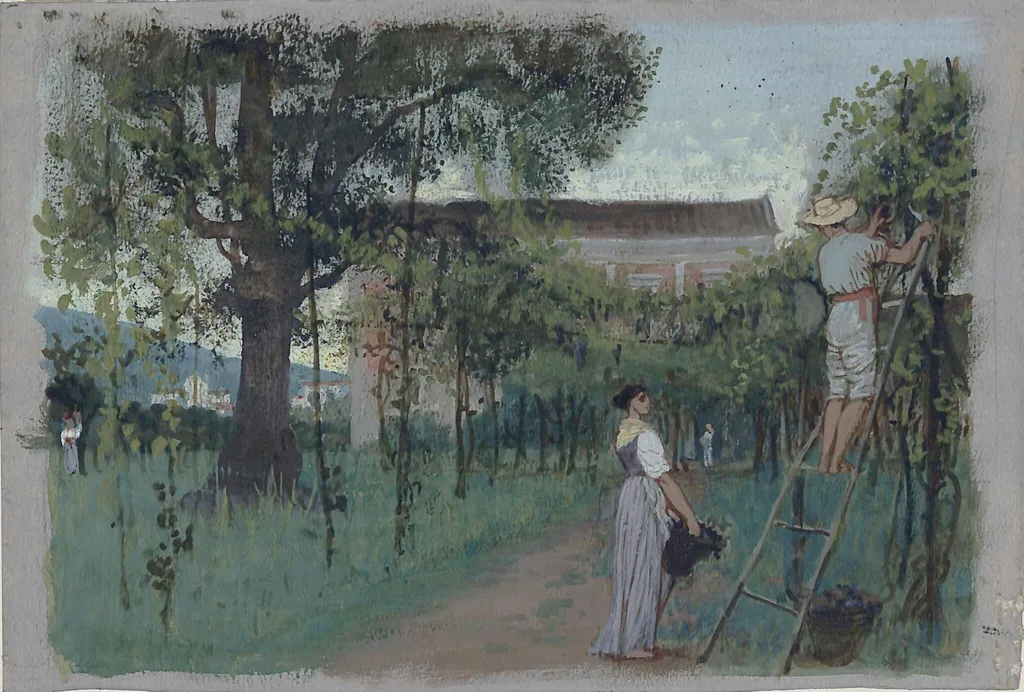
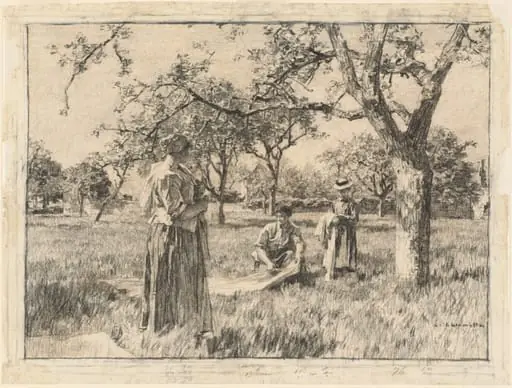
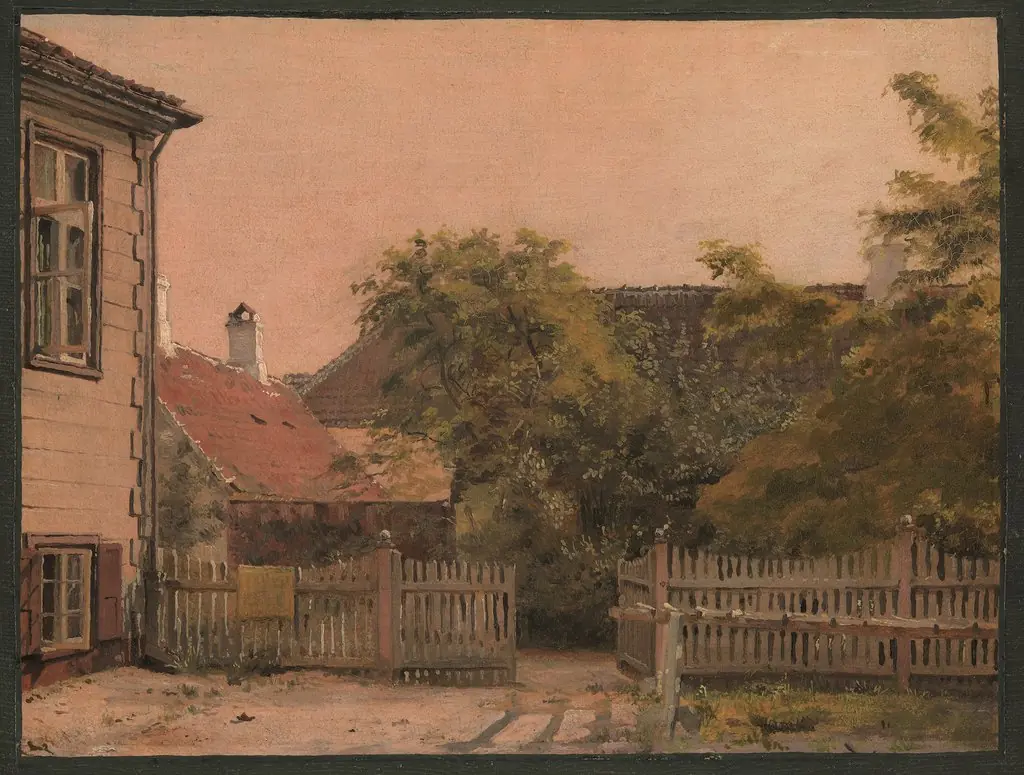
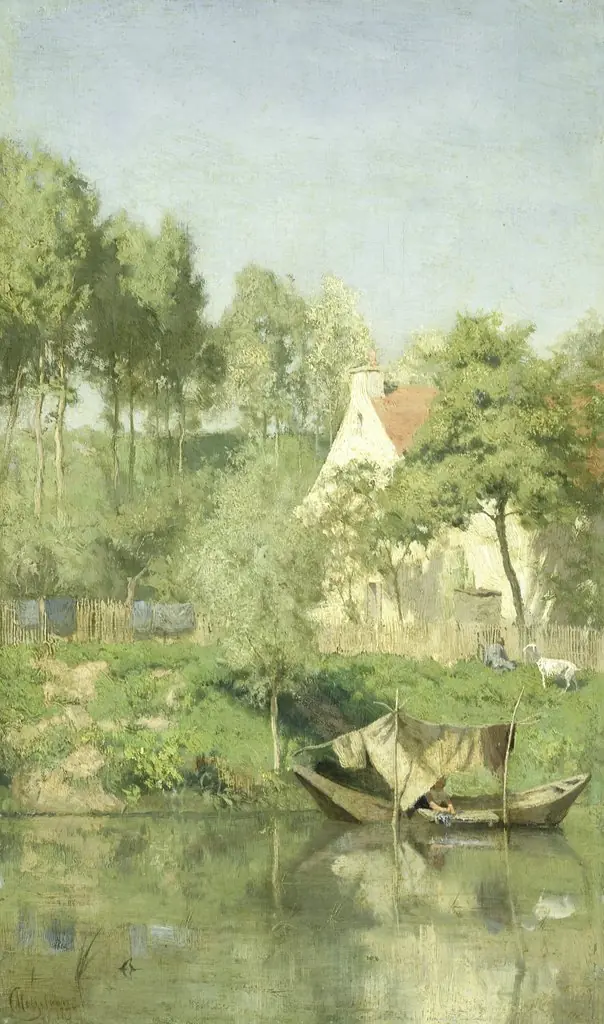
Grape-picking is a watercolor work on paper by the Impressionist artist Walter Crane. It dates from 1872 and is held in the collection of the Victoria and Albert Museum.
About this work
Overview
Though known primarily for his illustrative work in children’s books, this piece steps away from narrative fantasy toward quiet observation of labor in nature.
Walter Crane created this watercolour around 1872, capturing a rural grape harvest in soft, fluid brushwork. Though known primarily for his illustrative work in children’s books, this piece steps away from narrative fantasy toward quiet observation of labor in nature. The medium’s transparency and immediacy suit the fleeting quality of sunlight through foliage, reflecting Crane’s engagement with contemporary European painting trends without abandoning his draftsmanship roots.
Subject & Meaning
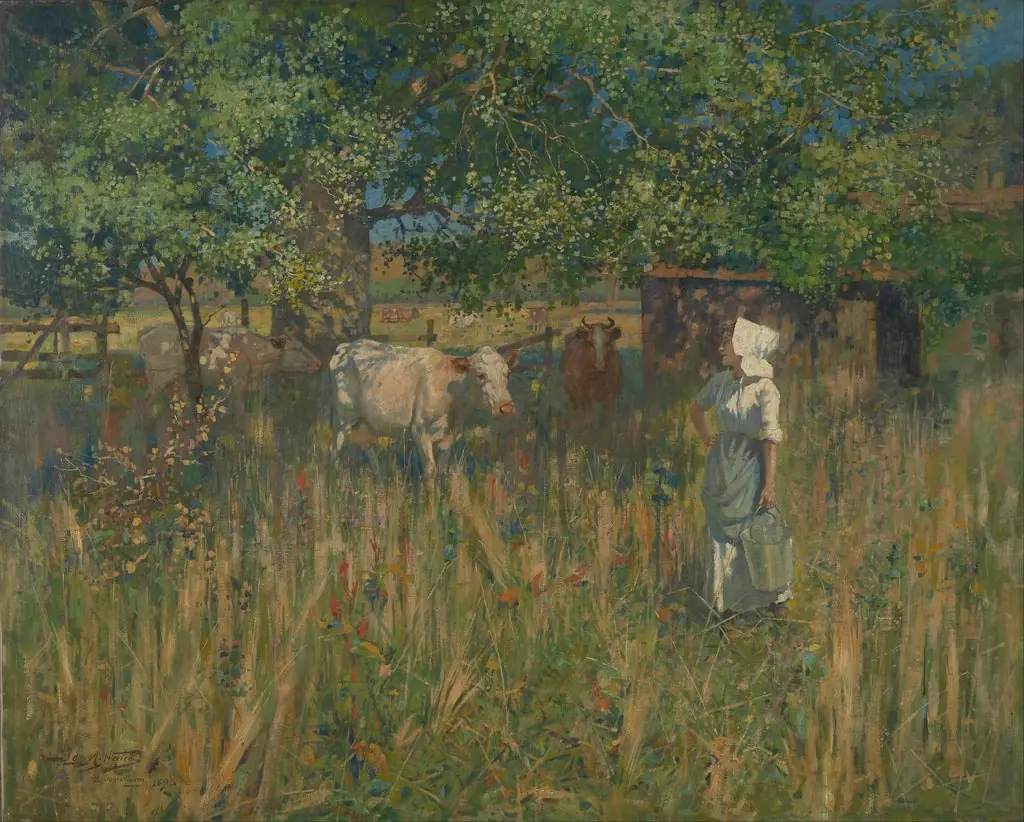
The scene portrays two figures engaged in the seasonal task of harvesting grapes: a woman standing beneath a tree with a basket, and a man ascending a ladder to reach the fruit. The absence of overt symbolism or idealization suggests a focus on ordinary rural life. Crane’s choice of subject aligns with broader 19th-century interests in labor and nature, presenting work as integrated into the landscape rather than dramatized or romanticized.
Technique & Style
Crane employed loose, rapid watercolour strokes to suggest movement and light, with minimal detail in the background. The palette is restrained—greens, blues, and muted earth tones—enhancing the sense of dappled shade. Forms are suggested rather than defined, particularly in the distant trees and blurred structure, echoing Impressionist approaches to atmosphere. Yet the figures retain a clear, linear clarity characteristic of his illustration training.
History & Provenance
The watercolour entered the Victoria and Albert Museum’s collection as part of its broader effort to document British decorative and fine arts of the 19th century. Its acquisition reflects institutional interest in artists who bridged fine art and design. While Crane’s illustrations were widely reproduced, this original work remains a rare example of his non-narrative, observational art, preserved as a study in technique and mood.
Context
In the early 1870s, British artists were increasingly exposed to French Impressionism through exhibitions and publications. Crane, though rooted in Pre-Raphaelite and illustrative traditions, responded to these developments by experimenting with light and brushwork. This piece stands alongside other works by English painters who sought to reconcile detailed observation with looser, more atmospheric methods during a period of artistic transition.
Legacy
Though not among Crane’s most widely recognized works, 'Grape-picking' illustrates his adaptability as an artist beyond children’s book illustration. It contributes to understanding how illustrators of the period engaged with evolving fine art practices. The watercolour remains a quiet testament to Crane’s ability to translate observational realism into a lyrical, unembellished vision of rural labor.
Artist & collection

Artist
Walter Crane (15 August 1845 – 14 March 1915) was an English artist and book illustrator.

![Sketch of a Couple Seated with Cloud Studies [verso], by Walter Crane](https://artifactworldgallery.com/img/walter-crane--sketch-of-a-couple-seated-with-cloud-studies-verso--bd0c5f7cb1d389b6-w320.webp)
![Kensington Gardens [recto], by Walter Crane](https://artifactworldgallery.com/img/walter-crane--kensington-gardens-recto--dc8c93f0e2ebbd57-w320.webp)