Artwork
Design for a Shakespeare Memorial
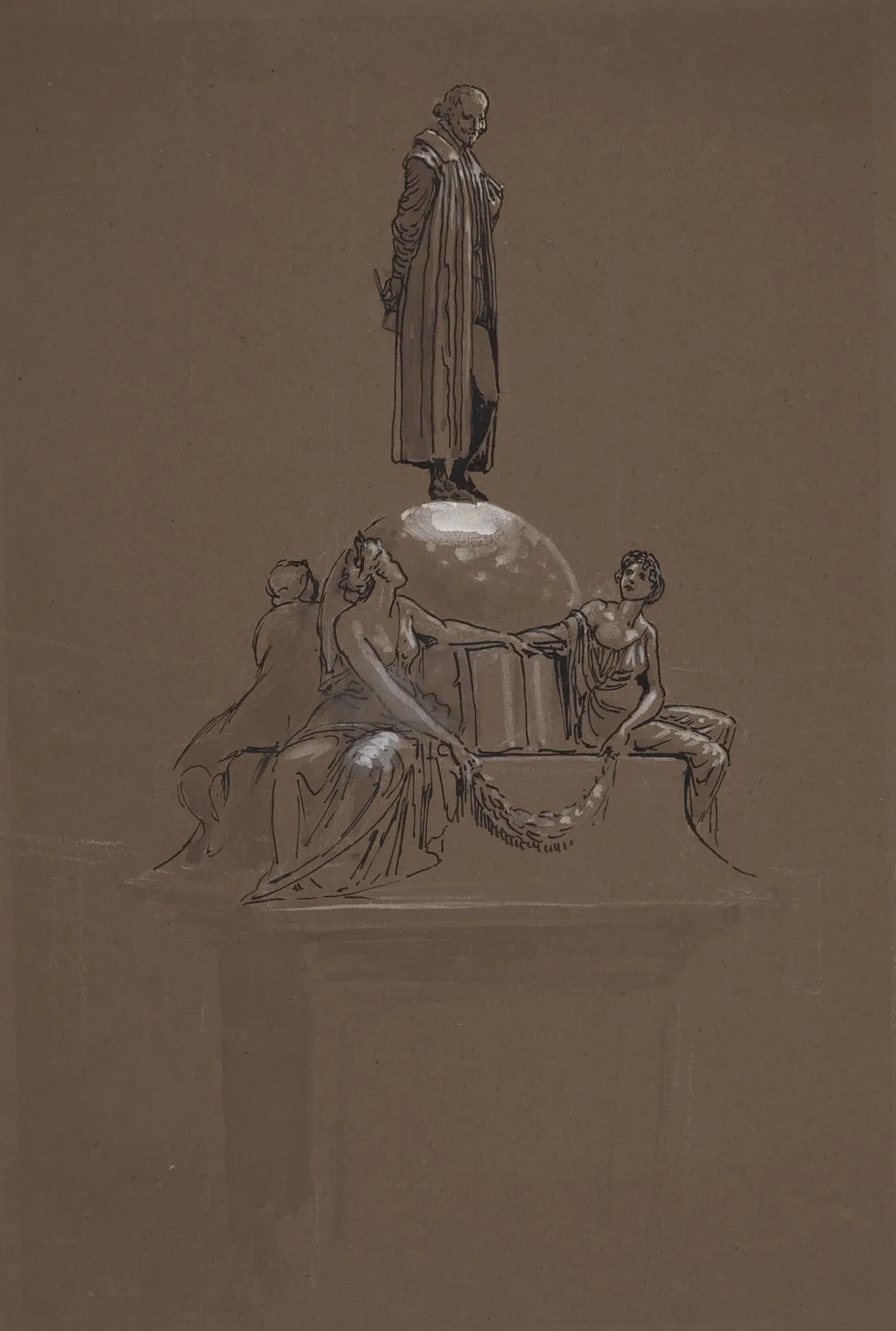
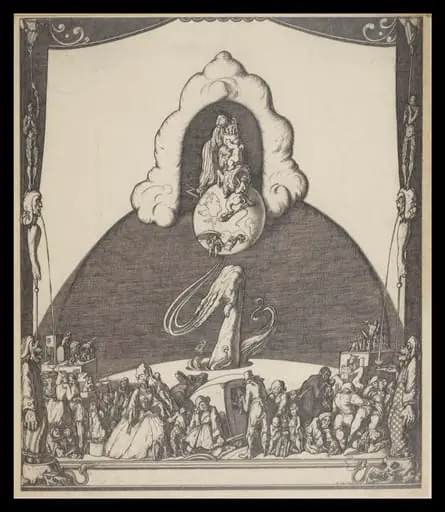
Design for a Shakespeare Memorial is an ink drawing by the Romanticist artist Walter Crane. It dates from 1880 and is held in the collection of the National Gallery of Art.
About this work
Overview
Though Crane was best known for his illustrations in children’s books, this work belongs to a different sphere: public commemorative design.
Walter Crane’s 1880 drawing, created as a proposal for a Shakespeare memorial, is executed in pen and black ink with gray wash and white highlights on brown wove paper. Though Crane was best known for his illustrations in children’s books, this work belongs to a different sphere: public commemorative design. The piece remains an unbuilt concept, capturing a moment in late Victorian efforts to honor literary figures through monumental art.
Subject & Meaning
The composition centers on a standing male figure, likely representing Shakespeare, elevated on a circular plinth. Below, two smaller figures kneel on either side, their hands extended toward a large globe, suggesting the universal reach of his work. The arrangement implies reverence and intellectual aspiration, positioning Shakespeare as a transcendent figure whose influence extends beyond national boundaries.
Technique & Style
Crane employed fine pen lines to define forms, layered with soft gray washes to model volume and depth. White pigment was added selectively to suggest light catching edges or surfaces, contrasting with the warm brown tone of the paper. The technique balances precision with atmospheric tone, reflecting his illustrative training while adapting to the scale and solemnity of a proposed monument.
History & Provenance
The drawing was produced during a period of renewed interest in public memorials to literary figures in Britain. Though Crane’s design was never realized as a statue, it was preserved as a conceptual artifact. It entered the collection of the National Gallery of Art in Washington, D.C., where it remains as evidence of 19th-century artistic engagement with national cultural identity.
Context
In the late 1800s, Britain saw numerous proposals for monuments to Shakespeare, reflecting his symbolic status in national culture. Crane’s design emerged amid debates over how to visually represent literary legacy—whether through classical allegory, naturalism, or symbolic abstraction. His approach, blending narrative detail with symbolic hierarchy, aligned with broader Arts and Crafts ideals of integrating art into public life.
Legacy
Though never constructed, Crane’s design contributes to the historical record of how Victorian artists envisioned cultural commemoration. It illustrates the intersection of illustration, public art, and literary nationalism. The drawing endures as a testament to the ambition and restraint of unexecuted projects, offering insight into the visual language of memorialization in its time.
Artist & collection
Artist
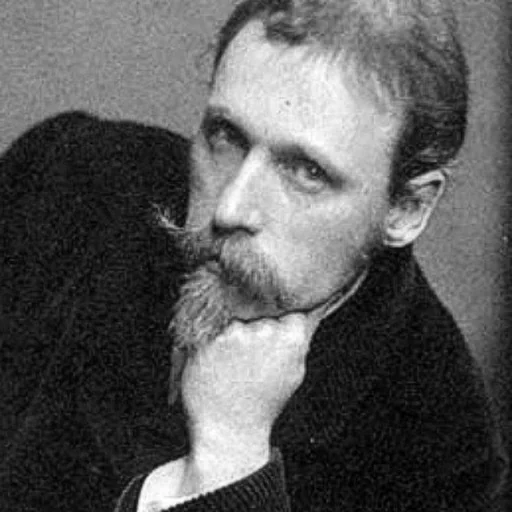
Walter Crane (15 August 1845 – 14 March 1915) was an English artist and book illustrator.

![Sketch of a Couple Seated with Cloud Studies [verso], by Walter Crane](https://artifactworldgallery.com/img/walter-crane--sketch-of-a-couple-seated-with-cloud-studies-verso--bd0c5f7cb1d389b6-w320.webp)
![Kensington Gardens [recto], by Walter Crane](https://artifactworldgallery.com/img/walter-crane--kensington-gardens-recto--dc8c93f0e2ebbd57-w320.webp)
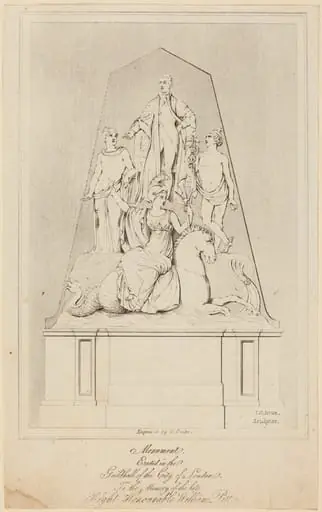 Monument to William Pitt
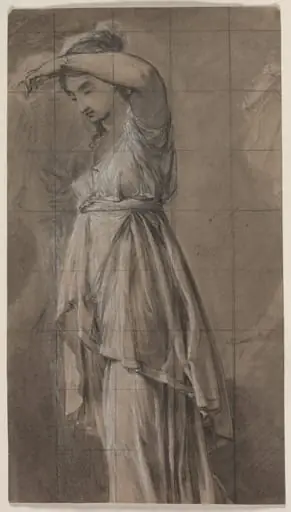 Study for Penelope
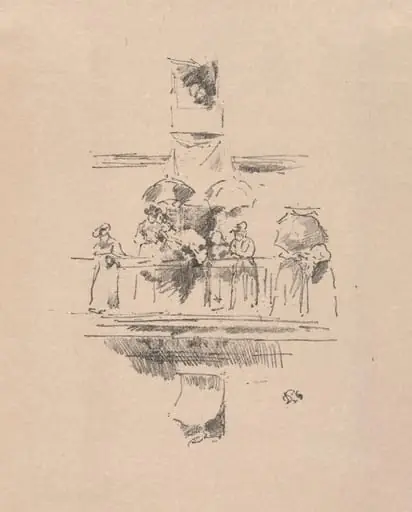 The Little Balcony
![La lezione di violincello [The Violin Lesson], by Mosè Bianchi](https://artifactworldgallery.com/img/mose-bianchi--la-lezione-di-violincello-the-violin-lesson--409ab16368cea0c8-w320.webp) La lezione di violincello [The Violin Lesson]
La lezione di violincello [The Violin Lesson]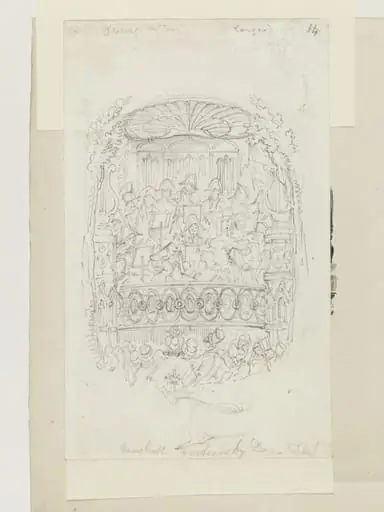 Vauxhall Gardens by Day
 Untitled
![Figure Studies [verso], by Valentine Cameron Prinsep](https://artifactworldgallery.com/img/valentine-cameron-prinsep--figure-studies-verso--ecadfdfaae5c079d-w320.webp) Figure Studies [verso]
Figure Studies [verso] Marbles
 Statue of a Nude before a Window View
 Study for "Queen Victoria"
 Untitled
 Cartoon for the Lower Hall of the NM. Patron of the Fine Arts and Founder of the Museum King Gustav III of Sweden Receiving Antique Pieces of Art