Artwork
A Scholar's Retreat amid Autumn Trees
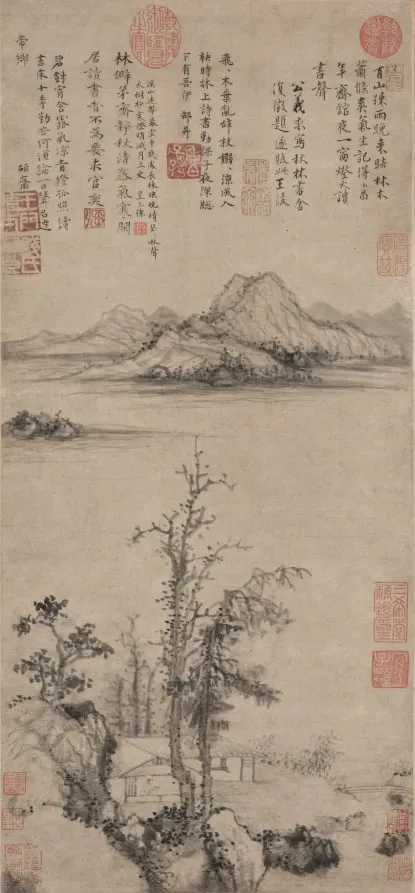
A Scholar's Retreat amid Autumn Trees is an unspecified painting by the Ming dynasty painting artist Wang Fu. It dates from 1403 and is held in the collection of the Cleveland Museum of Art.
About this work
This painting shows a quiet scene of a lone tree standing in front of a small house.
This painting shows a quiet scene of a lone tree standing in front of a small house. Behind it, a river runs toward distant hills. The colors are mostly gray, brown, and a touch of green on the tree. Red stamps and black writing cover the edges.
The artist left his name and the date in the writing—it’s from around 1403. The scene looks peaceful, like a place to escape the city.
Look up Wang Fu to see more of his work.
Overview
A Scholar’s Retreat amid Autumn Trees, attributed to the Chinese painter Wang Fu, dates to around 1403 and is part of the Cleveland Museum of Art’s collection. The work presents a tranquil landscape in which a solitary tree stands before a modest dwelling, while a river winds toward distant hills. Muted tones of gray, brown and a hint of green dominate the scene, underscored by red seals and black calligraphic inscriptions along the borders.
Subject & Meaning
The composition suggests a secluded haven for contemplation, evoking the ideal of a scholar withdrawing from urban bustle to study amid nature. The lone tree and modest house function as symbols of simplicity and self‑sufficiency, while the flowing water implies continuity and the passage of time. The overall mood conveys quiet reflection rather than dramatic narrative.
Technique & Style
Executed in traditional ink and wash on paper, the painting employs delicate brushwork to render the tree’s foliage and the river’s surface. Wang Fu’s handling of tonal variation creates depth through layered washes of gray and brown, while the subtle green accent highlights the tree’s vitality. The red seals and black inscriptions are integrated into the composition, a common practice in literati painting that merges visual and textual elements.
History & Provenance
The work bears Wang Fu’s signature and a date inscribed in the marginal script, confirming its creation near the beginning of the 15th century. It entered the Cleveland Museum of Art’s holdings through acquisition in the 20th century, though the precise chain of ownership prior to its museum entry is not extensively documented.
Context
Wang Fu was active during the early Ming dynasty, a period when scholar‑artist ideals emphasized personal expression and the moral virtues of retreating into nature. This painting reflects those values, aligning with contemporary literati traditions that favored modest, contemplative scenes over grand historical or mythological subjects.
Artist & collection


 The Jung-hsi Studio
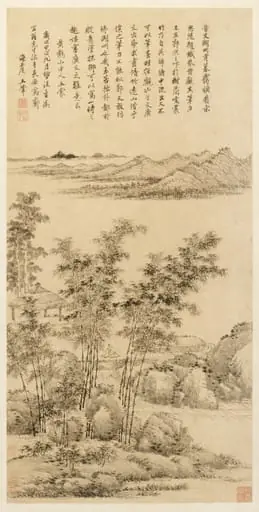 Tall Bamboo and Distant Mountains, after Wang Meng
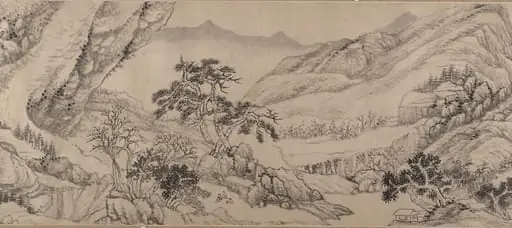 清 柳堉 山水圖 卷|Traveling Amid Streams and Mountains
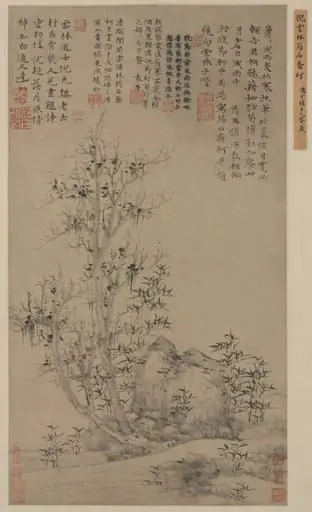 Bamboo, Rock, and Tall Tree
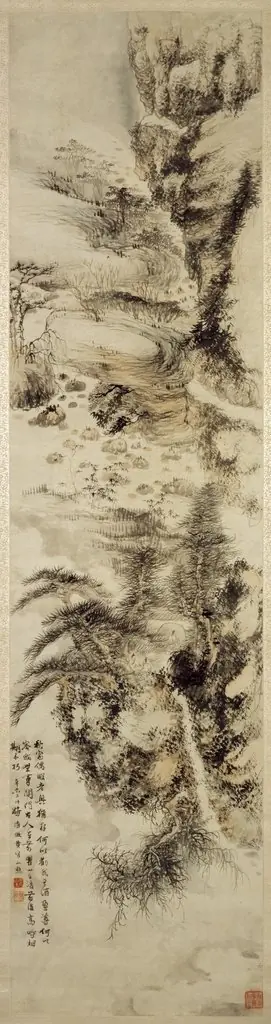 Mountain and Pine Landscape
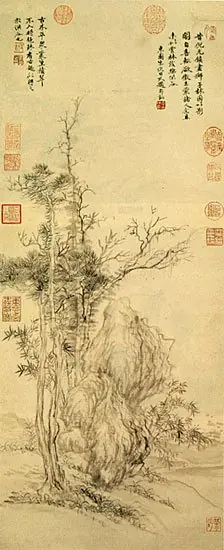 Old Trees and a Cluster of Bamboos after Ni Zan
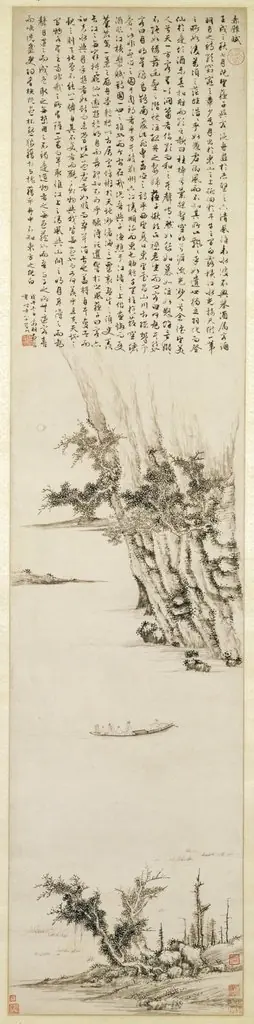 The First Prose Poem on the Red Cliff
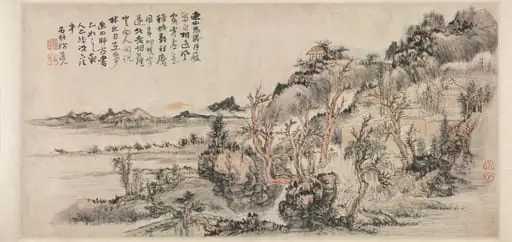 Spring Landscape
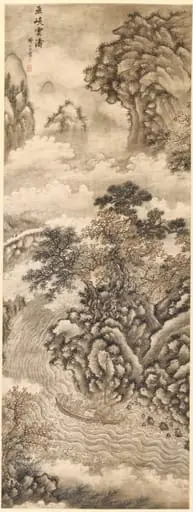 Clouds and Waves at the Wu Gorge
 Fishermen-Hermits in Stream and Mountain
 明 文徵明 東林避暑圖 卷 |Summer retreat in the eastern grove