Artwork
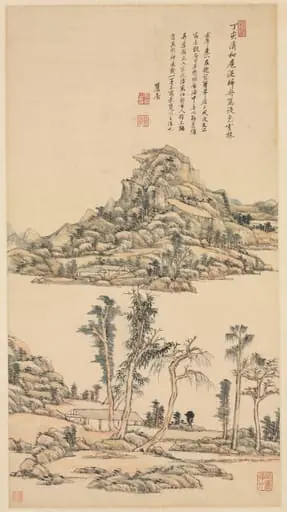
Tall Bamboo and Distant Mountains, after Wang Meng
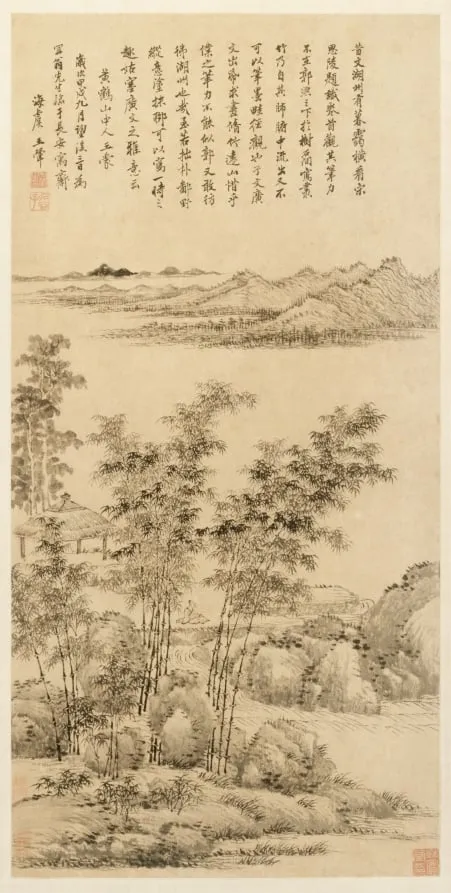
Tall Bamboo and Distant Mountains, after Wang Meng is an unspecified painting by the Baroque artist Wang Hui. It dates from 1694 and is held in the collection of the Cleveland Museum of Art.
About this work
To see how copying could still feel fresh, look up other works in the subject: china, qing dynasty (1644-1911).
You see a tall bamboo grove on the left, a winding stream, and misty blue mountains in the distance.
This painting is actually a copy—Wang Hui spent years recreating a 300-year-old landscape by Wang Meng. Instead of putting the scholar in a pavilion, he moved him right into the trees by the water. The artist even copied the old inscription, showing how much he respected the original.
To see how copying could still feel fresh, look up other works in the subject: china, qing dynasty (1644-1911).
Overview
This painting is a meticulous re-creation by Wang Hui of a landscape originally painted by Wang Meng in the 14th century. Executed between 1686 and 1712, it reflects Wang Hui’s deep engagement with earlier artistic traditions. Rather than merely replicating the composition, he subtly altered key elements, such as relocating the scholar figure from a pavilion into the natural setting beside a stream, demonstrating both reverence and creative reinterpretation.
Subject & Meaning
The scene depicts a solitary scholar seated near a stream, surrounded by towering bamboo and distant mist-shrouded mountains. This arrangement evokes a quiet contemplation of nature, a theme central to literati painting. By placing the figure directly within the landscape rather than in an architectural structure, Wang Hui emphasizes harmony between human presence and the natural world, reinforcing ideals of retreat and introspection.
Technique & Style
Wang Hui employed fine brushwork and layered ink washes to render the bamboo’s verticality and the mountains’ atmospheric depth. His technique mirrors Wang Meng’s dense, textured strokes, yet introduces subtle variations in rhythm and spatial flow. The inclusion of the original inscription, copied verbatim, underscores his commitment to preserving the historical dialogue between artist and tradition, while his compositional shift reveals personal engagement with the source.
History & Provenance
Wang Hui produced multiple versions of this composition over a quarter-century, indicating sustained scholarly interest in Wang Meng’s work. The painting’s survival as a distinct artifact within Qing dynasty collections reflects its value as both a study and a tribute. The retention of Wang Meng’s original text, which itself referenced Wen Tong, positions this copy as part of an extended lineage of artistic homage across centuries.
Context
During the Qing dynasty, elite painters often engaged with Song and Yuan precedents as a means of legitimizing their practice. Wang Hui’s repeated copying of Wang Meng aligned with broader cultural efforts to revive and reinterpret historical styles. This practice was not seen as derivative but as a form of scholarly discipline, connecting contemporary artists to a canon of revered predecessors.
Legacy
Wang Hui’s copies helped preserve and transmit the visual language of Yuan dynasty landscape painting into the 18th century. His reinterpretations influenced later artists by demonstrating how fidelity to tradition could coexist with individual expression. This work remains a key example of how artistic inheritance in Chinese painting operated through careful emulation and thoughtful transformation.
Artist & collection


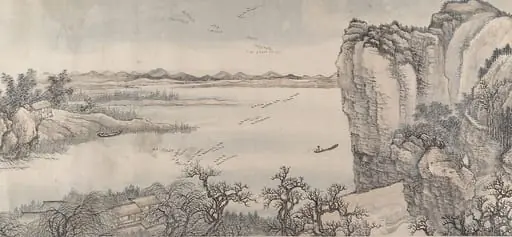 清 王翬 倣巨然燕文貴山水圖 卷|Landscape in the Style of Juran and Yan Wengui
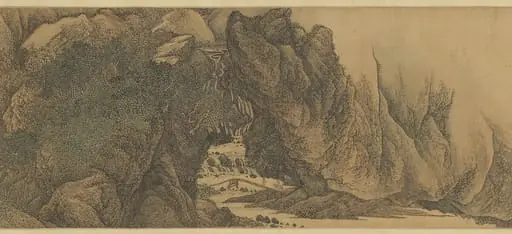 清 王翬 太行山色圖 卷|The Colors of Mount Taihang
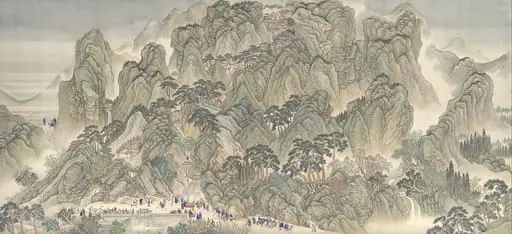 清 王翬等 康熙南巡圖 (卷三: 濟南至泰山) 卷|The Kangxi Emperor's Southern Inspection Tour, Scroll Three: Ji'nan to Mount Tai
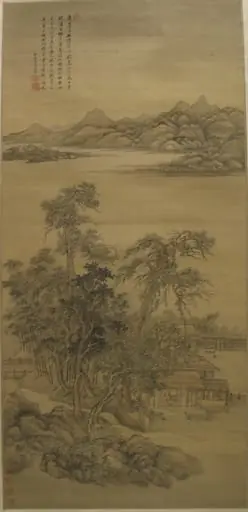 清 佚名 倣王翬 倣李公麟草堂圖 軸|Landscape in the Style of Li Gonglin
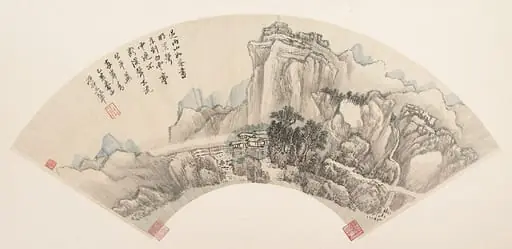 清 王翬 雨後晴巒圖 扇頁|Mountains after Rain
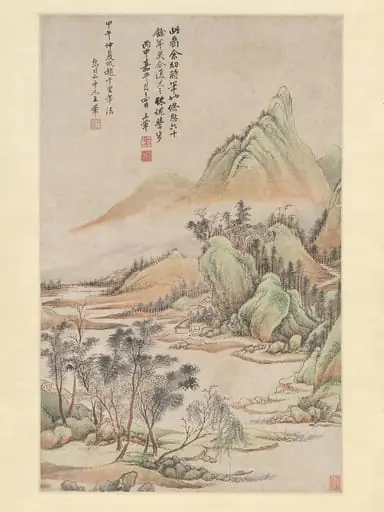 倣趙伯駒山水圖 軸|Landscape in the Style of Zhao Boju (Fang Zhao Boju shanshui)
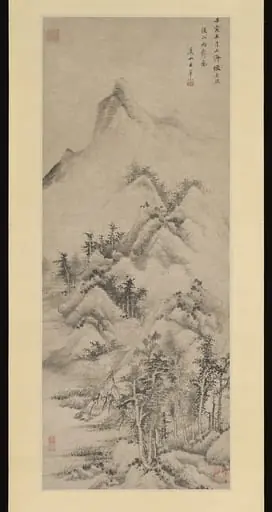 清 王翬 溪山雨霽圖 軸|Clearing after Rain over Streams and Mountains
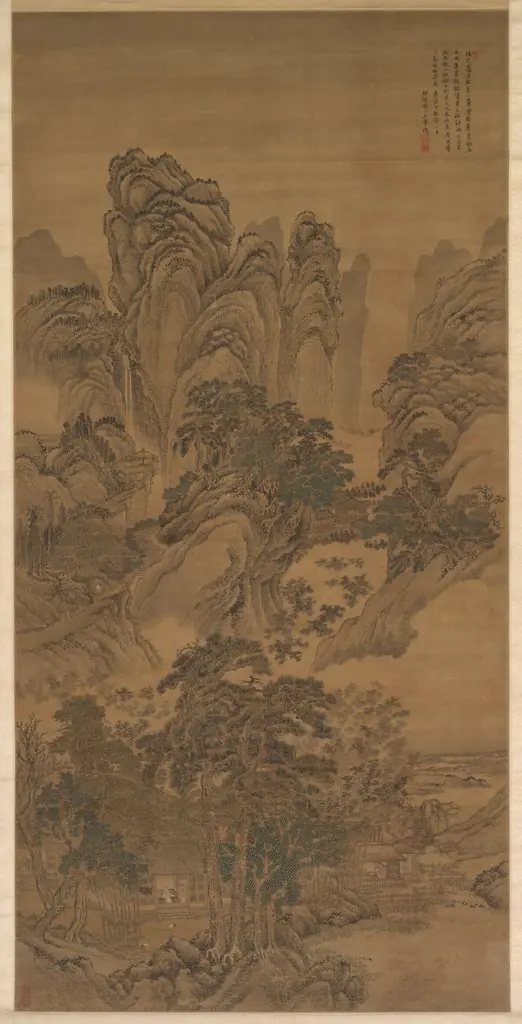 Landscape
![Summer Mountains (after Dong Yuan [active c. 937–75]), by Huang Gongwang](https://artifactworldgallery.com/img/huang-gongwang--summer-mountains-after-dong-yuan-active-c-937-75--8aeb132308294f1a-w320.webp)