Artwork
Album of Landscapes: Leaf 7
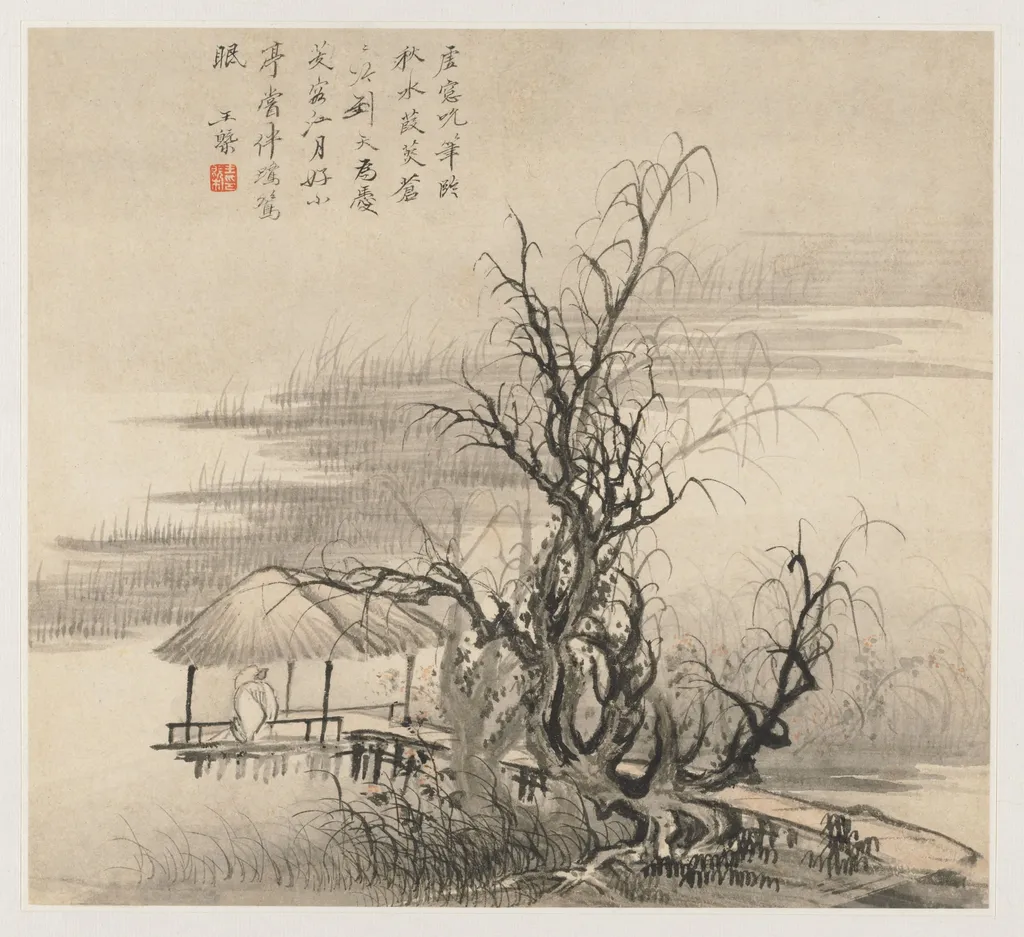
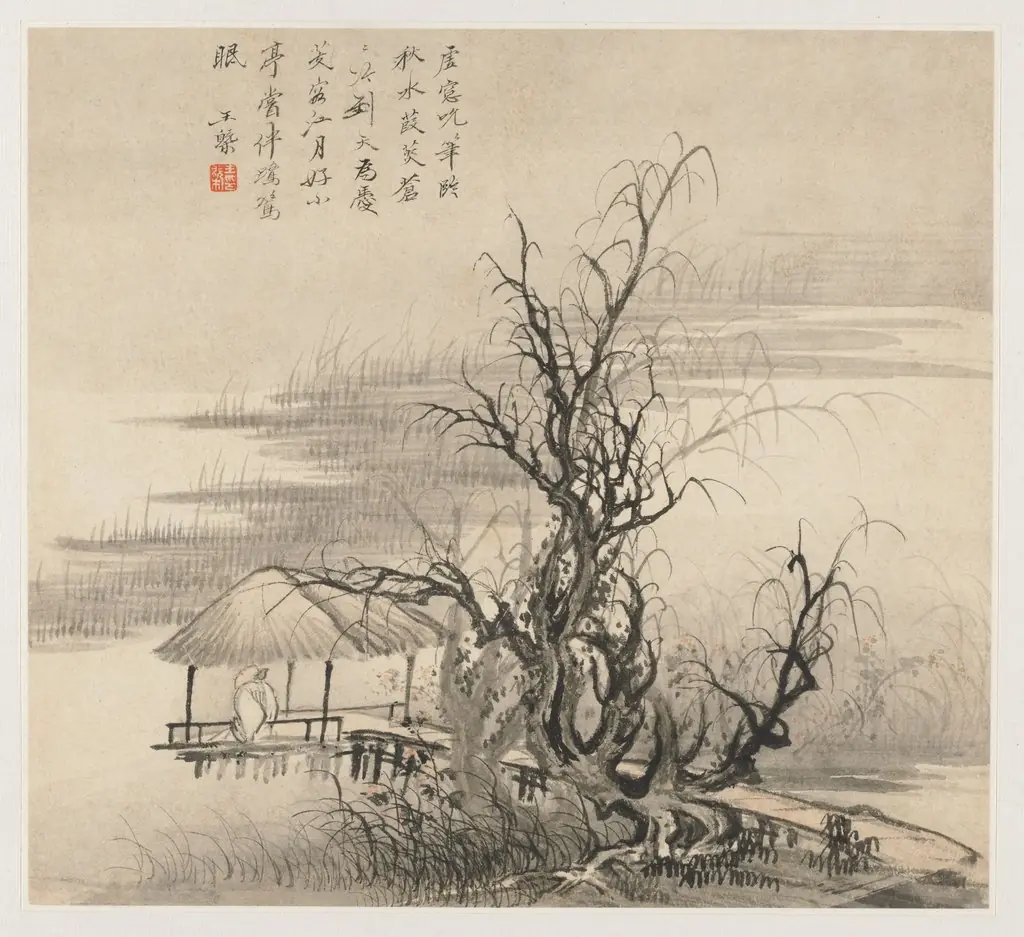
Album of Landscapes: Leaf 7 is an unspecified painting by the Baroque artist Wang Gai. It dates from 1677 and is held in the collection of the Cleveland Museum of Art.
About this work
Overview
Its small scale invites intimate viewing, characteristic of Chinese album paintings meant for personal contemplation rather than public display.
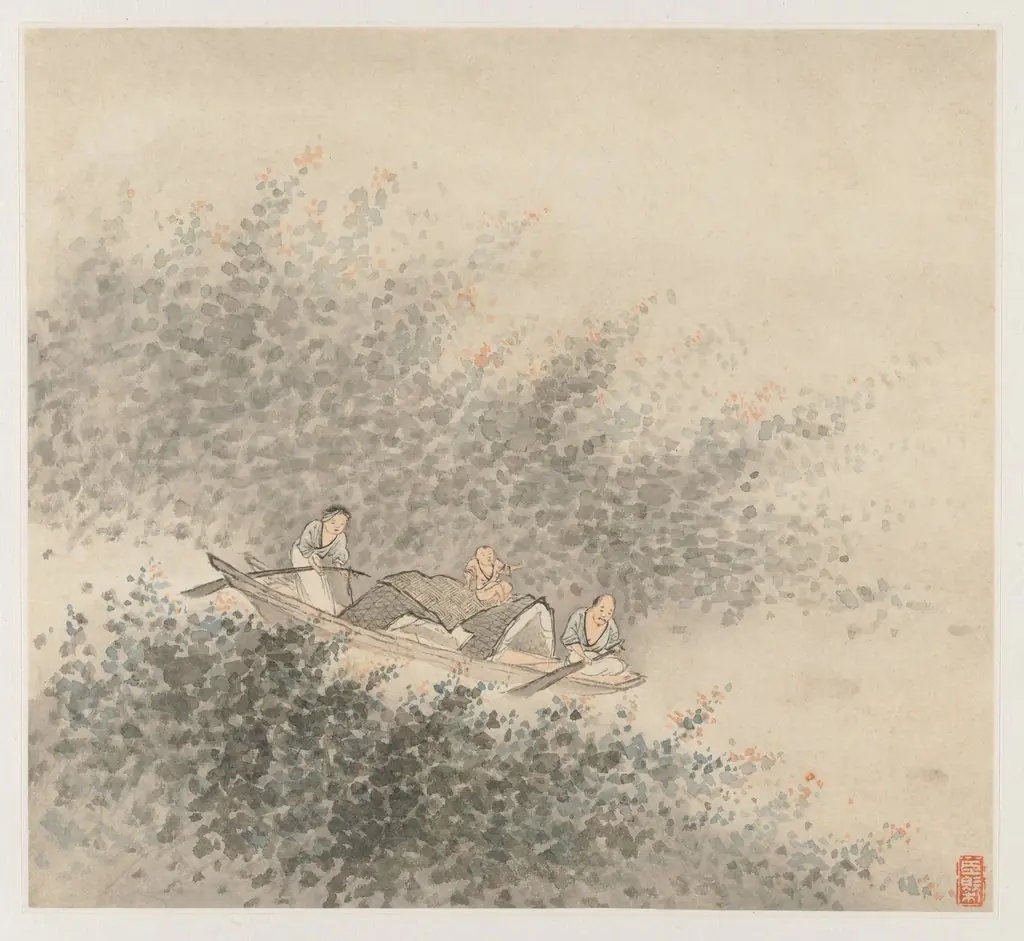
Created in 1677 by Wang Gai, this leaf from a landscape album is a quiet ink-and-wash painting on paper. It belongs to a series of works now held at The Cleveland Museum of Art. The composition is restrained, emphasizing natural forms through minimal brushwork and muted tones. Its small scale invites intimate viewing, characteristic of Chinese album paintings meant for personal contemplation rather than public display.
Subject & Meaning
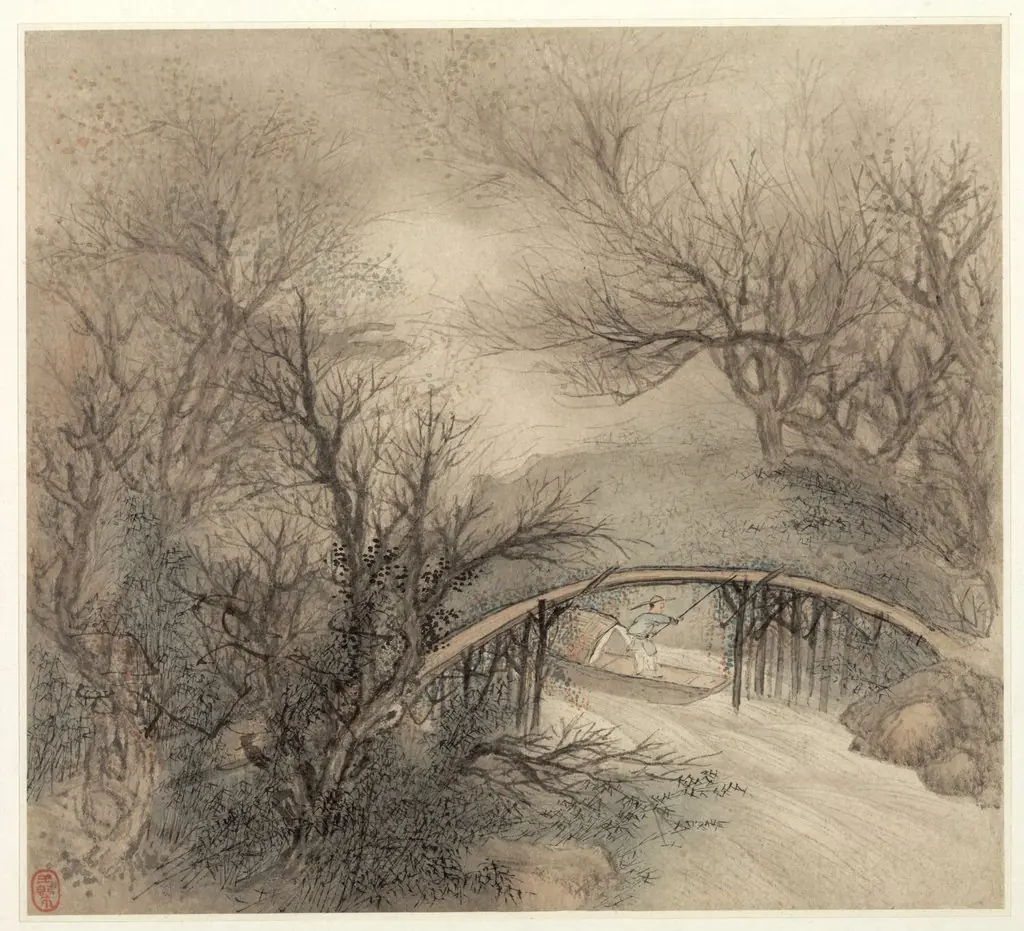
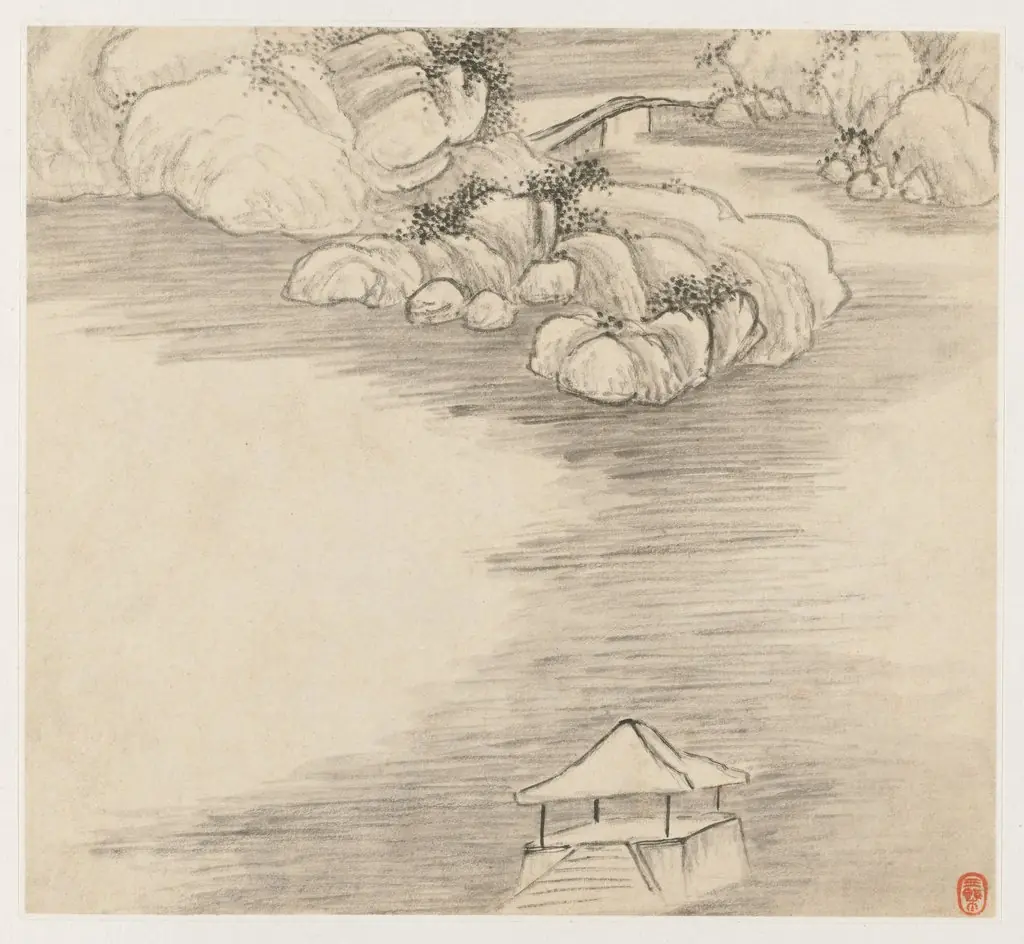
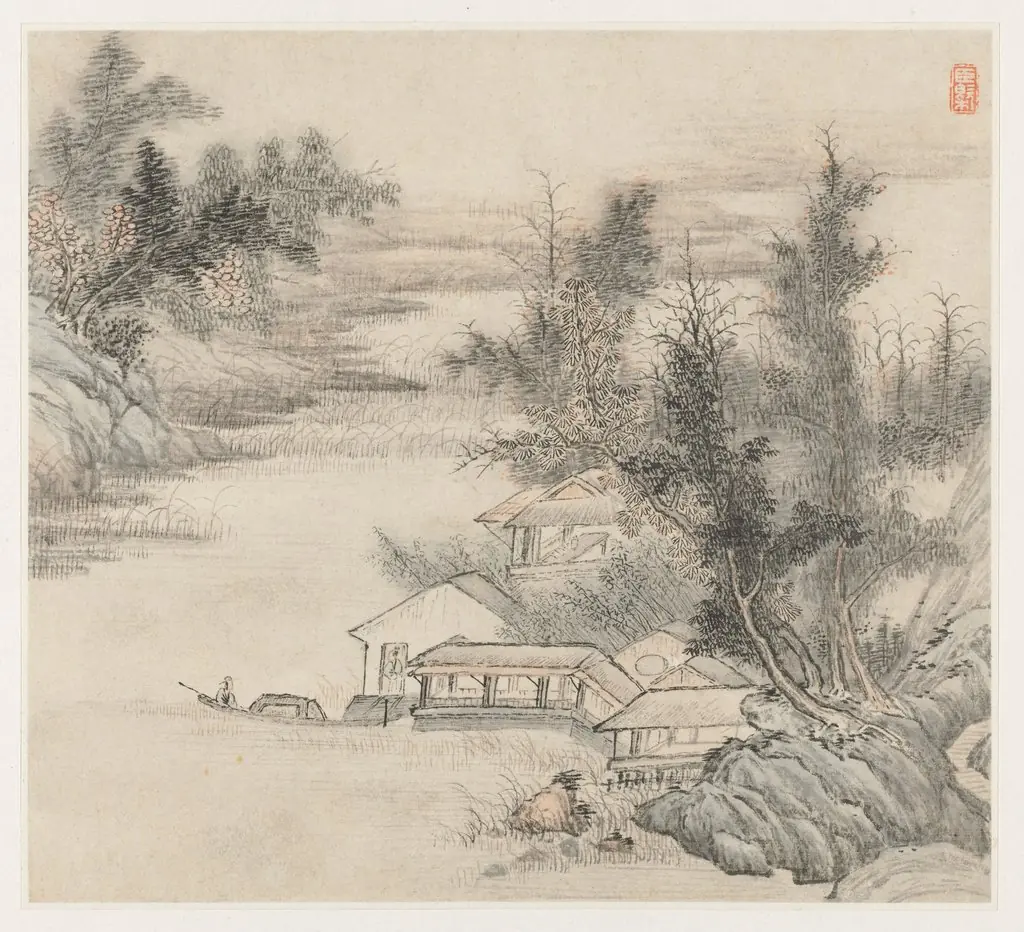
The painting centers on a solitary, gnarled tree in the foreground, its twisted branches reaching into an otherwise still atmosphere. A narrow wooden bridge spans calm water, leading the eye toward distant hills and faintly rendered structures. The scene evokes solitude and the passage of time, common themes in literati painting. The tree, weathered yet enduring, may symbolize resilience or the quiet dignity of nature amid human absence.
Technique & Style
Wang Gai employed ink washes with subtle gradations, using soft, dry brushstrokes to suggest texture without detail. The tree’s bark and branches are defined by sparse, angular lines, contrasting with the smooth, unbroken surface of the water. Hints of pale blue and green in the background suggest distant foliage, while the dominant palette of gray and brown reinforces a tone of stillness. The work reflects the literati ideal of expressive economy over decorative precision.
History & Provenance
This leaf was once part of a bound album of landscapes by Wang Gai, likely assembled for private scholarly circles in late Ming or early Qing China. It entered the collection of The Cleveland Museum of Art through established channels of Asian art acquisition in the 20th century. Its preservation in album form suggests it was valued as a refined object for intimate study, passed among connoisseurs over centuries.
Context
Wang Gai worked during a period when scholar-officials turned to landscape painting as a means of expressing inner reflection amid political upheaval. His style aligns with the literati tradition, favoring personal expression over formal realism. Albums like this one were often exchanged among friends, serving as visual poems that combined poetry, calligraphy, and painting—each element enhancing the other in quiet dialogue.
Legacy
Though not widely known outside specialist circles, Wang Gai’s album leaves exemplify the enduring influence of Ming-Qing literati aesthetics. His restrained approach to ink and composition influenced later generations of painters who sought emotional depth through simplicity. This leaf remains a quiet testament to a tradition that valued contemplation, restraint, and the expressive potential of minimal means.
Artist & collection