Artwork
Plum Blossoms
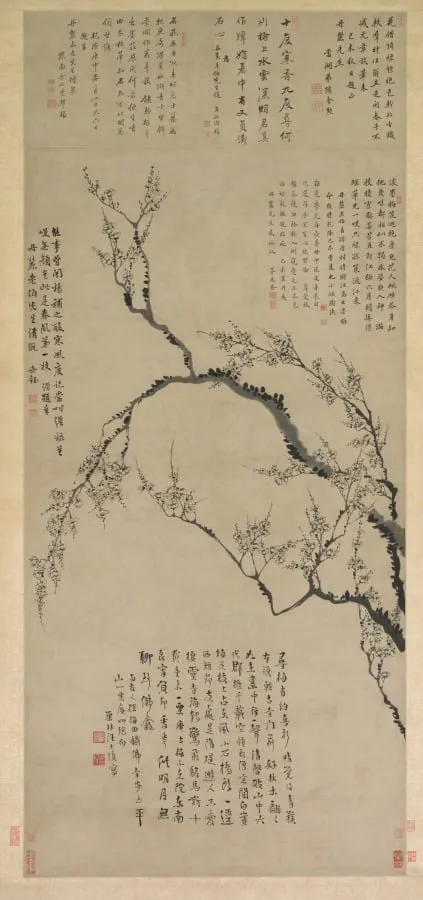
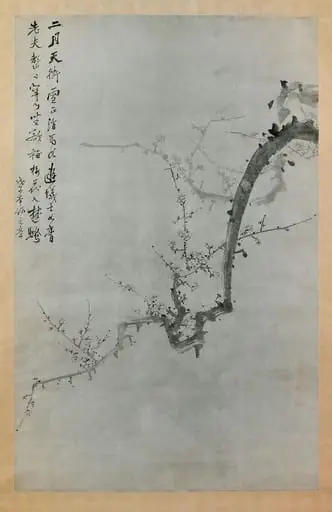
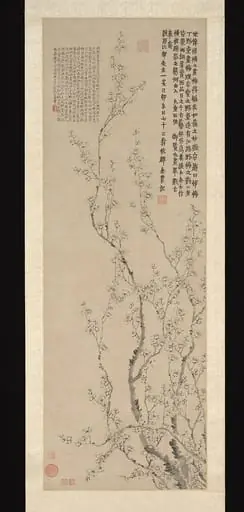
Plum Blossoms is an unspecified painting by the Baroque artist Wang Shishen. It dates from 1739 and is held in the collection of the Cleveland Museum of Art.
About this work
Overview
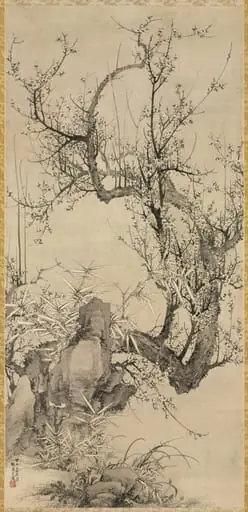
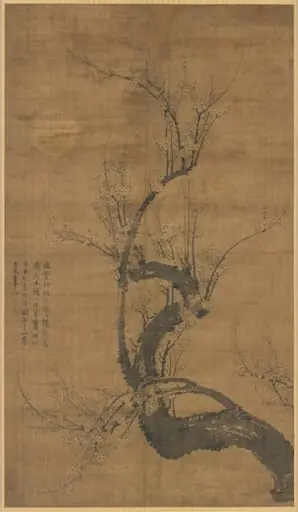
Wang Shishen, originally from Anhui, established himself in Yangzhou during the 1720s as a painter focused on plum blossoms. This work features a solitary branch in bloom, rendered with minimal detail against a muted gray field. Four poetic inscriptions are integrated into the composition, extending the visual narrative beyond the floral subject into historical and personal reflection.
Subject & Meaning
The plum branch, a traditional symbol of resilience and quiet endurance, is paired with verses that recall the Six Dynasties and the Sui dynasty, when Yangzhou flourished as a southern imperial capital. The poems evoke lost grandeur, connecting the ephemeral beauty of the blossoms to the passage of time and the decline of once-mighty dynasties, deepening the painting’s contemplative tone.
Technique & Style
Wang employed a restrained brushwork style, emphasizing the structural grace of the branch over ornate detail. The blossoms are rendered in soft pink washes, contrasting subtly with the neutral background. Calligraphy is not an afterthought but a compositional element, its placement balancing the visual weight of the branch and anchoring the painting’s layered meaning.
History & Provenance
This personal detail suggests the work was made during a period of physical decline, adding a layer of introspection to its historical allusions.
The painting includes inscriptions referencing Wang’s partial blindness, likely acquired around the time of its creation. This personal detail suggests the work was made during a period of physical decline, adding a layer of introspection to its historical allusions. The integration of self-referential text reflects a broader trend among Yangzhou artists who infused personal experience into scholarly painting.
Context
In early 18th-century Yangzhou, a commercial hub with a thriving literati culture, artists like Wang blended painting with poetry to appeal to educated patrons. The Grand Canal’s legacy, tied to Yangzhou’s former prominence, provided a rich symbolic reservoir. Wang’s work exemplifies how regional artists used historical memory to elevate everyday subjects into meditations on time and impermanence.
Legacy
Wang’s fusion of botanical imagery with literary inscription influenced later painters in the Yangzhou school. His approach demonstrated how personal adversity and historical consciousness could coexist within a single work, expanding the expressive potential of ink painting beyond formal aesthetics into the realm of lived experience and collective memory.
Artist & collection
Artist
Wang Shishen (1686–1759) was a Chinese painter and calligrapher during the Qing Dynasty.