Artwork
Plums, Bamboo, and Orchid
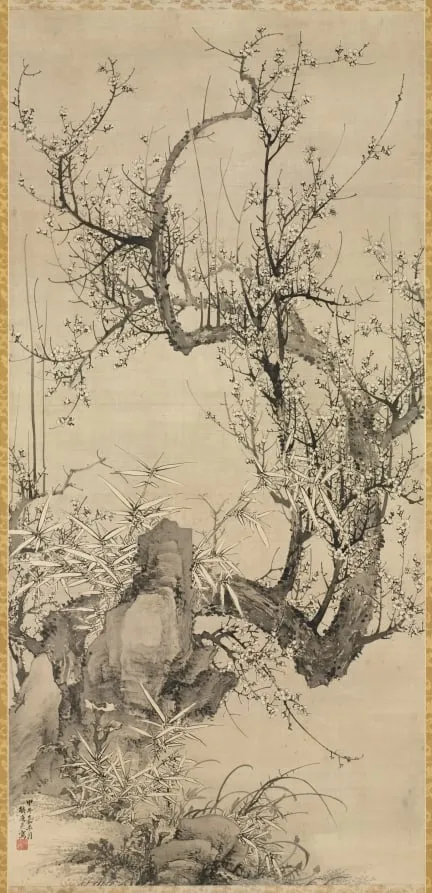
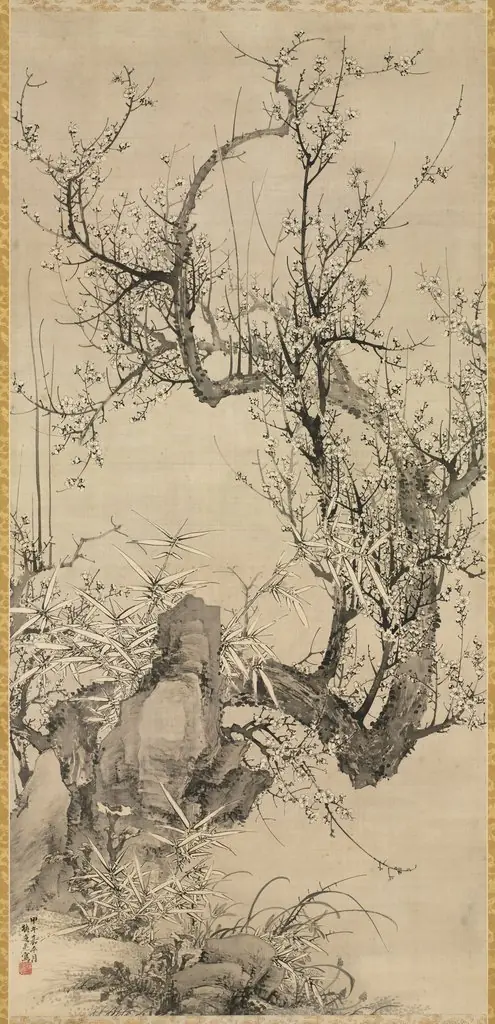
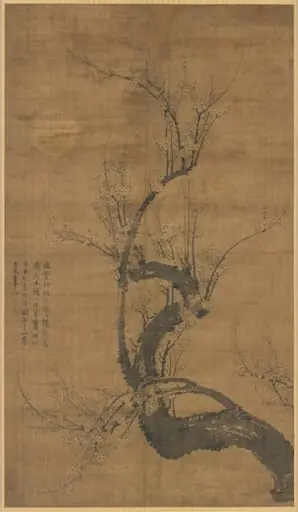
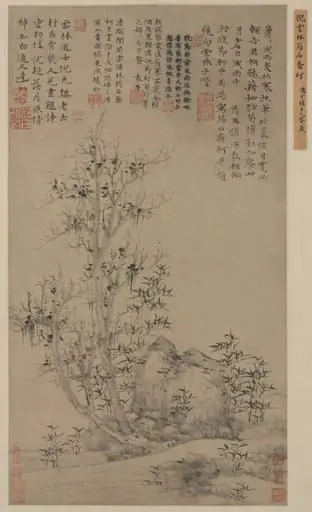
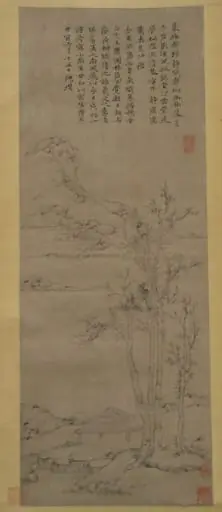
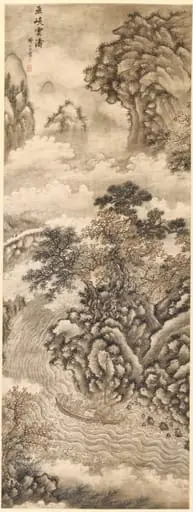
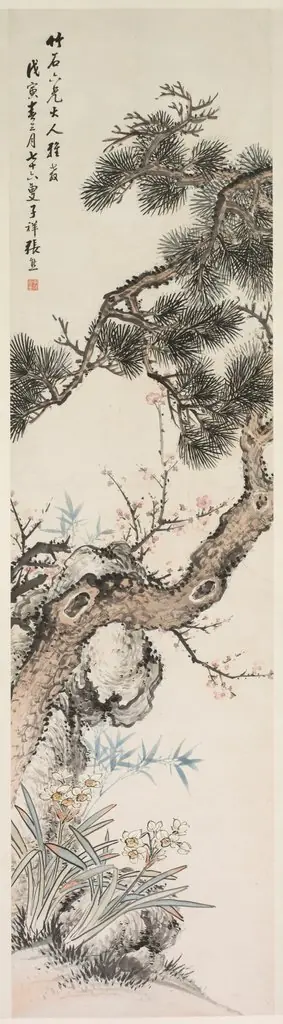
Plums, Bamboo, and Orchid is an unspecified painting by the Nihonga artist Yamamoto Baiitsu. It dates from 1834 and is held in the collection of the Cleveland Museum of Art. The work depicts three botanical motifs—plum blossoms, bamboo shoots, and orchid leaves—arranged together on silk.
About this work
Each plant stands for a Confucian virtue—plum for strength, bamboo for openness, orchid for humility.
This painting shows three plants: plums, bamboo, and orchids. The stems bend gently, each line sharp and sure. Their leaves cluster in soft ink washes, leaving breathing room between them.
This work belongs to an old tradition called the Four Gentlemen. Each plant stands for a Confucian virtue—plum for strength, bamboo for openness, orchid for humility. The artist chose ink on silk, a common Edo-period pairing.
Want to see more like it? Check out Yamamoto Baiitsu (Japanese, 1783–1856).
Overview
The work depicts three botanical motifs—plum blossoms, bamboo shoots, and orchid leaves—arranged together on silk. Each plant is rendered with confident, precise strokes that define the stems, while the foliage appears as soft, ink‑washed clusters, creating a sense of spaciousness within the composition.
Subject & Meaning
The three subjects belong to the traditional Chinese grouping known as the Four Gentlemen, a symbolic set that conveys Confucian ideals. In this context, the plum represents resilience in hardship, bamboo signifies openness and flexibility, and orchid embodies modesty and refined virtue.
Technique & Style
Executed in ink on silk, the painting follows the aesthetic conventions of the Edo period, where monochrome brushwork was prized for its expressive economy. The artist employs sharp, assured lines for the stems and a subtle gradation of ink washes for the leaves, balancing firmness with delicacy.
History & Provenance
The piece aligns with a longstanding East Asian artistic lineage that emphasizes moral symbolism through plant imagery. While the specific creator is not identified, the use of ink on silk and the subject matter situate the work within the broader tradition of Japanese and Chinese literati painting of the 18th–19th centuries.
Artist & collection