Artwork
Boy with a book on a country lane
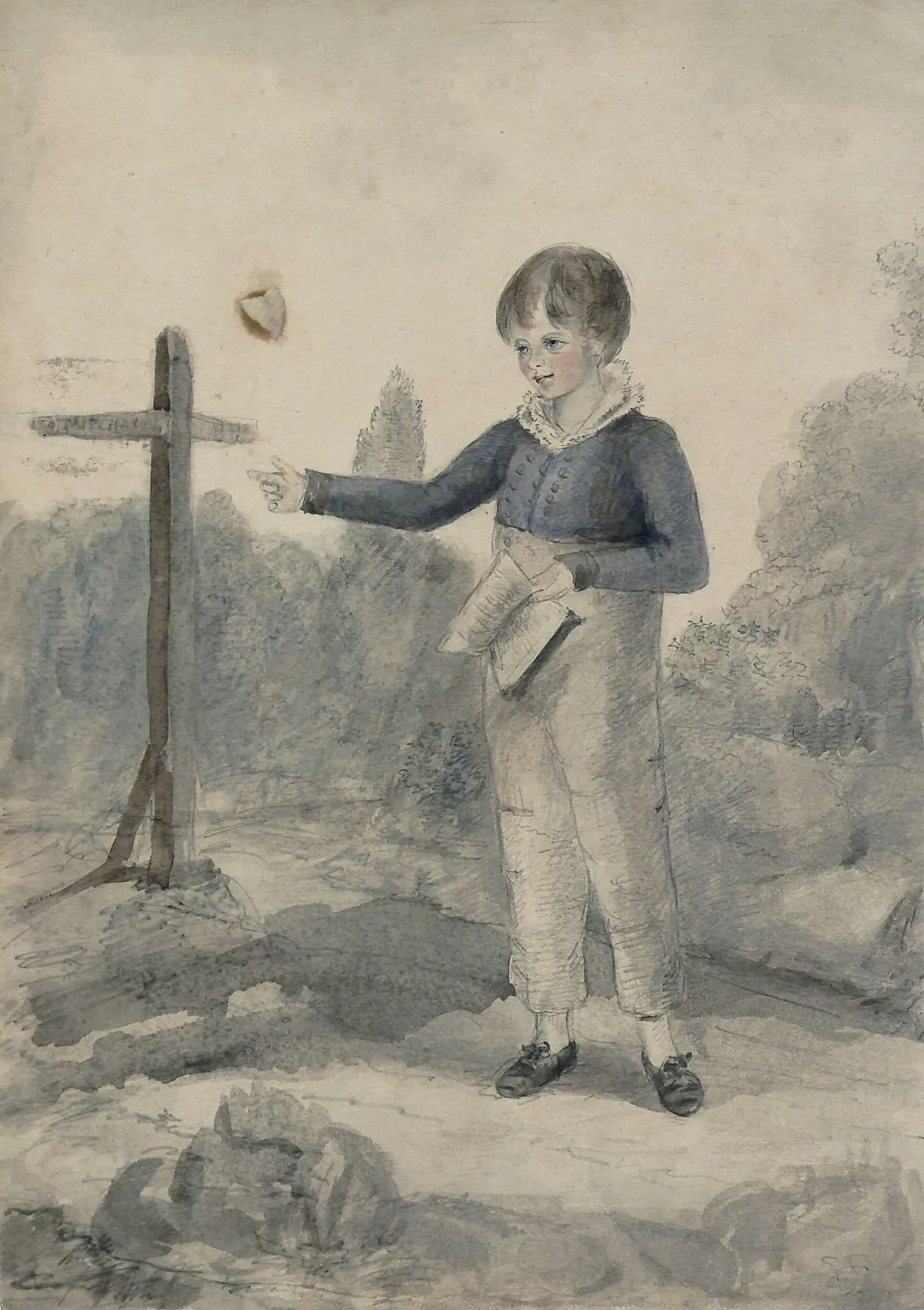
Boy with a book on a country lane is a watercolor work on paper by the British Romanticist artist Louisa, Marchioness of WATERFORD. It dates from 1850 and is held in the collection of the Victoria and Albert Museum. A watercolour painting captures a boy standing along a rural path, holding an open book.
About this work
Overview
A watercolour painting captures a boy standing along a rural path, holding an open book. His posture suggests quiet absorption, with one arm extended as if preparing to release something. A distant signpost and a stone wall frame the scene, while the background blends soft trees and undergrowth. The work’s delicate washes and muted tones evoke stillness, emphasizing the boy’s solitary focus.
Subject & Meaning
The presence of a signpost hints at transition or direction, contrasting with his stillness, suggesting a moment suspended between movement and reflection.
The boy, dressed in a dark jacket and light trousers, appears immersed in reading, his gaze fixed on the page. His outstretched arm introduces ambiguity—whether he is about to discard, gesture, or release an object—adding a subtle tension to the contemplative mood. The presence of a signpost hints at transition or direction, contrasting with his stillness, suggesting a moment suspended between movement and reflection.
Technique & Style
Executed in watercolour, the painting employs light, layered washes to suggest texture and depth without sharp definition. Brushwork is restrained, favoring soft edges and subtle gradations of color. The pale sky, muted greens of foliage, and earth-toned path create a harmonious palette, reinforcing the scene’s quietude. The faint pencil outline on the reverse, possibly a discarded figure, reveals the artist’s process of revision.
History & Provenance
The work’s origin remains undocumented, though its medium and composition align with 19th-century British watercolour traditions. The hidden pencil sketch on the reverse suggests it was not intended for public display, possibly a private study or experimental piece. No known exhibition history or collector records accompany the work, leaving its early provenance uncertain.
Context
Created during a period when rural life was increasingly idealized in British art, the scene reflects a broader cultural interest in solitary, introspective moments outdoors. Unlike grand landscapes or narrative scenes, this intimate figure study focuses on quietude rather than drama, echoing literary and artistic trends that valued personal reflection amid nature.
Legacy
Though not widely exhibited or reproduced, the painting contributes to a quieter strand of 19th-century watercolour practice—one that prioritized mood over spectacle. Its unassuming subject and unfinished quality offer insight into the artist’s working methods and the private, often unrecorded, observations that informed more public works.
Artist & collection
Artist
Louisa, Marchioness of WATERFORD
Louisa Waterford spent years sketching in the same Hampshire lane where her husband hunted, turning the quiet countryside into her daily studio.

 A young boy seated on a rock
 The Boy with a Sword
 Mulatto Boy
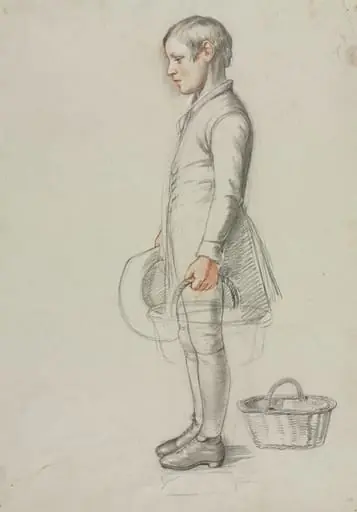 Study for "Country Cousins"
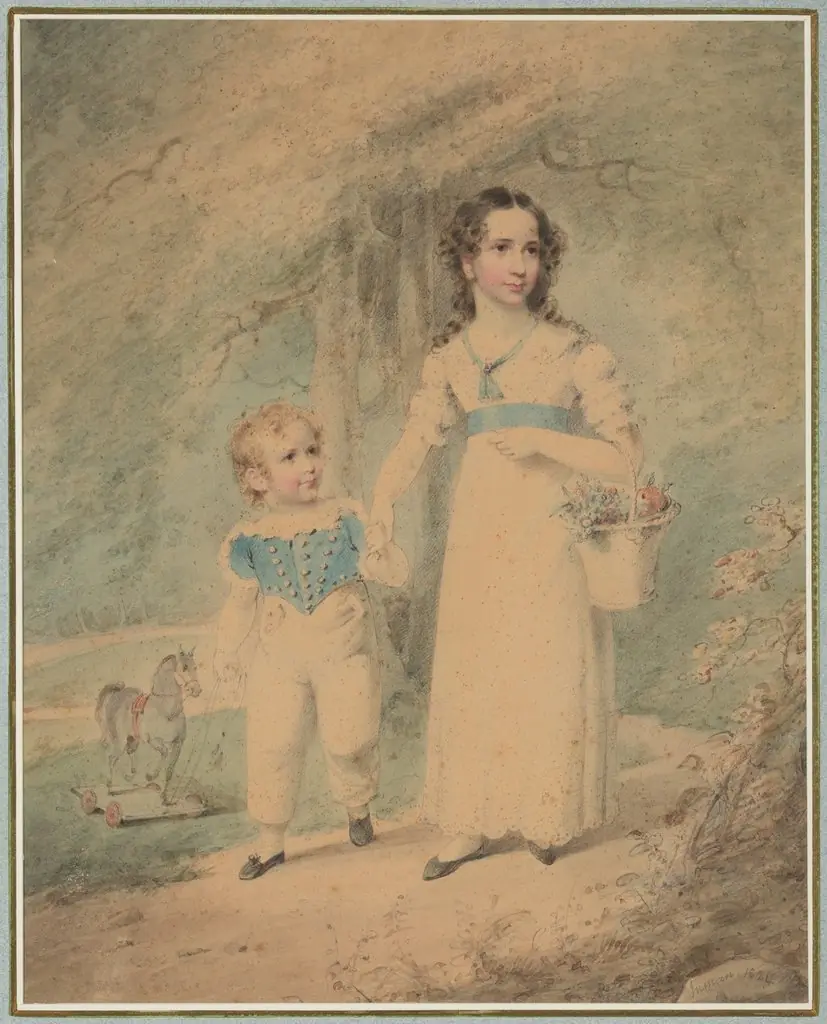 Children in the Park
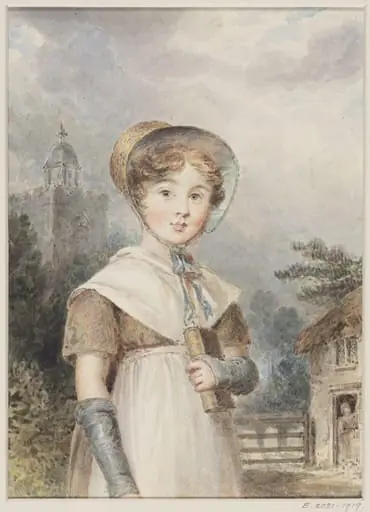 A little girl in Quaker costume, holding a Bible or prayer-book
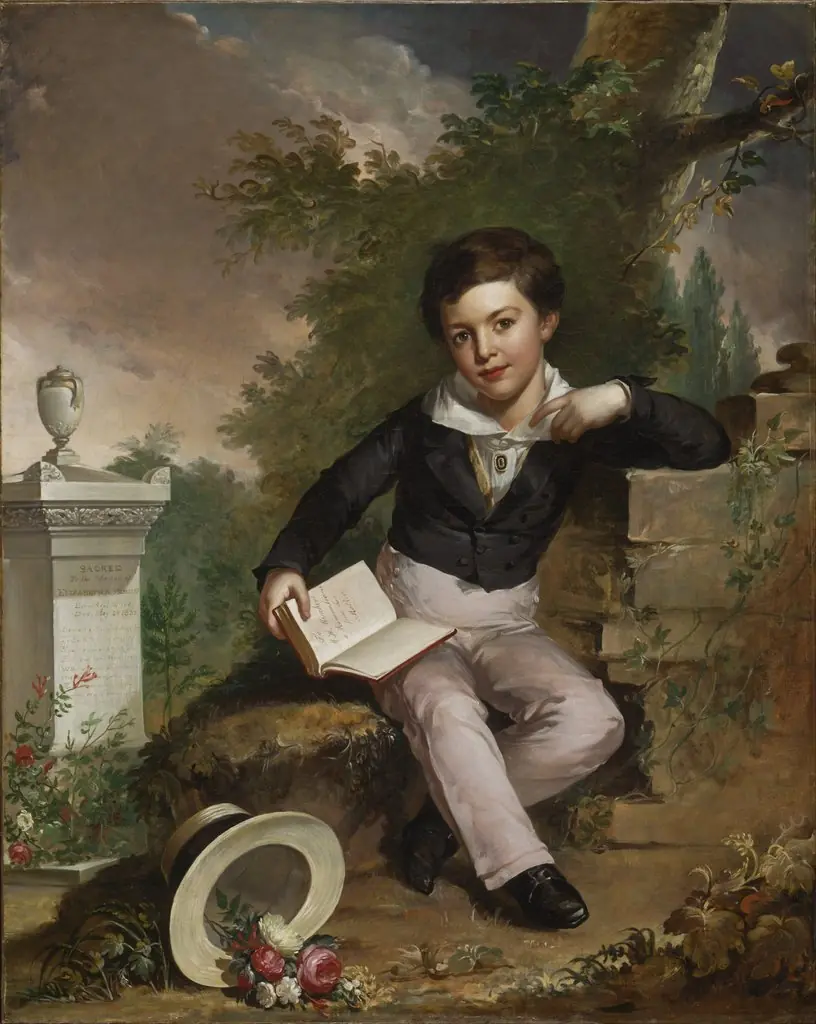 Matthew Huizinga Messchert
 H Beard Print Collection
 Specimens of Polyautography: Boy Seated on a Grassy Bank
 Young Boy Seated
 A Suffolk Child: sketch for 'The Valley Farm'
 The Reaper (The Harvest Moon)