Artwork
The Reaper (The Harvest Moon)
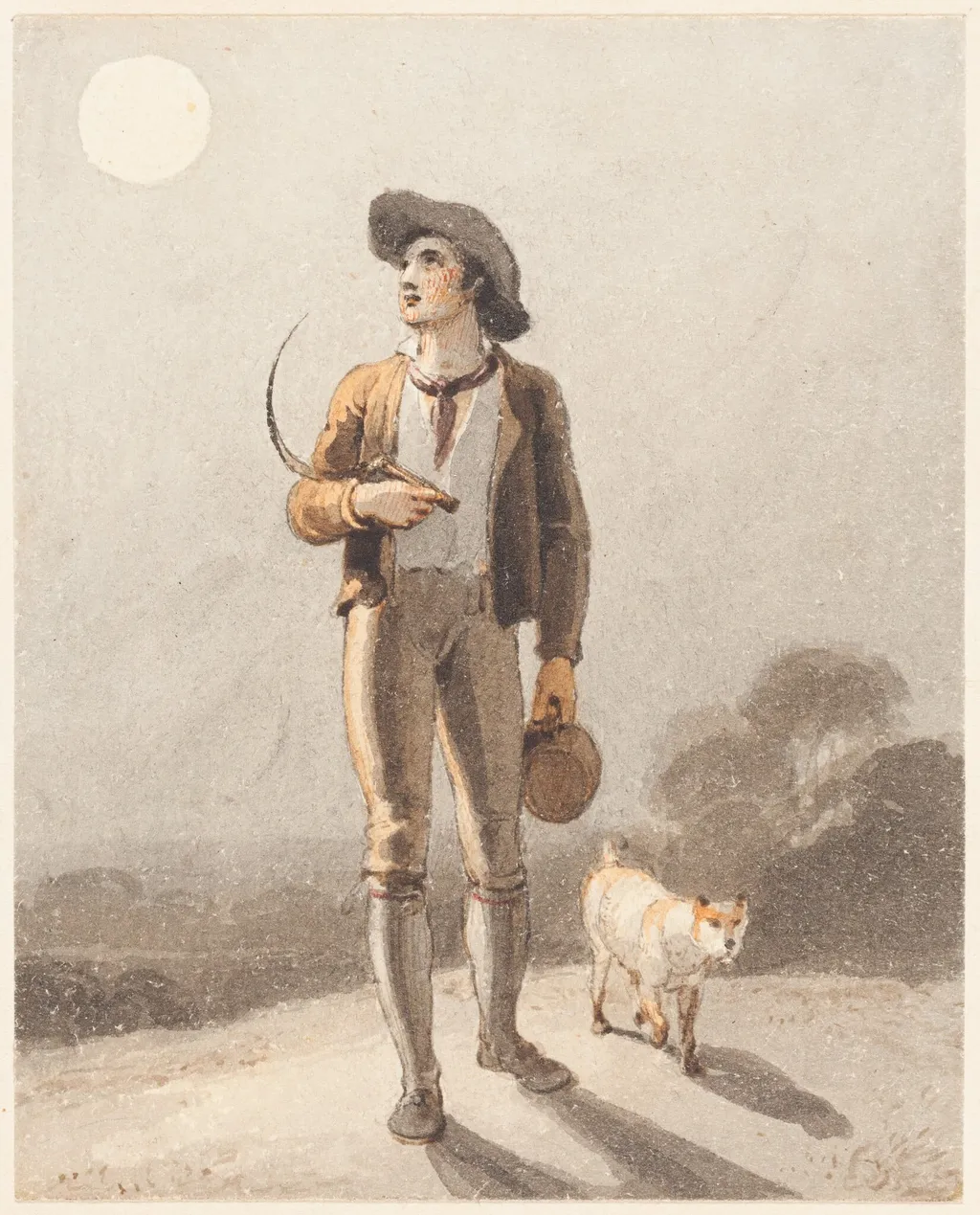
The Reaper (The Harvest Moon) is an ink drawing by the Romanticist artist Richard Westall. It dates from 1800 and is held in the collection of the National Gallery of Art.
About this work
Overview
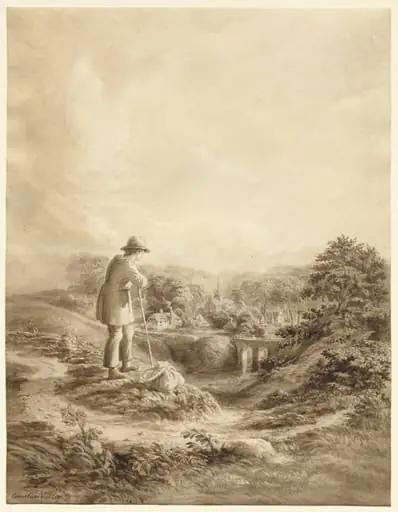
Richard Westall’s drawing titled The Reaper (The Harvest Moon) was executed in 1800. Rendered on wove paper, the work combines pen and gray ink, a gray wash, and watercolor applied over an initial graphite sketch. The piece measures a modest size typical of Westall’s drawings and presents a nocturnal rural scene with a solitary figure at work.
Subject & Meaning
The composition depicts a lone reaper cutting grain beneath a full moon that dominates the sky. The quiet, moonlit atmosphere emphasizes the rhythm of agricultural labor and the passage of time, suggesting a contemplative view of the harvest cycle.
Technique & Style
Westall employs a restrained palette of grays and muted watercolor tones, allowing the ink line work to define the figure and landscape. The initial graphite underdrawing provides structural guidance, while the gray wash builds atmospheric depth, illustrating how limited materials can achieve nuanced texture and mood.
History & Provenance
Created at the turn of the 19th century, the drawing reflects Westall’s interest in pastoral subjects during his early career. It has remained in private collections before entering a public institution’s holdings in the late 20th century, where it is catalogued as a representative example of his early water-based drawings.
Context
The work aligns with the Romantic era’s fascination with nature and the sublime, yet its focus on everyday labor grounds it in the realist tendencies emerging in British art. Westall’s choice of a nocturnal harvest scene resonates with contemporary literary themes of nature’s cycles and human industry.
Own this work as a print
Artist & collection