Artwork
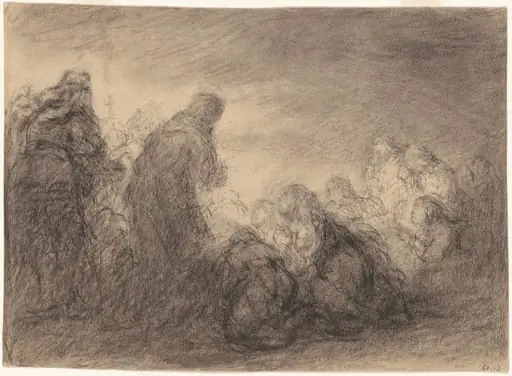
Study for "The Bailey Family"
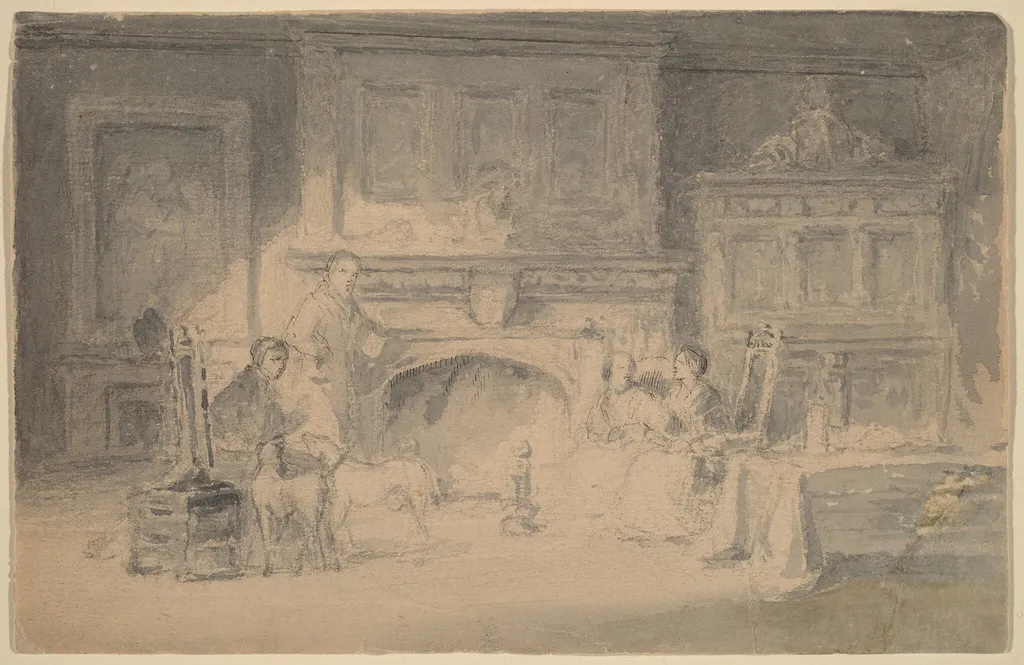
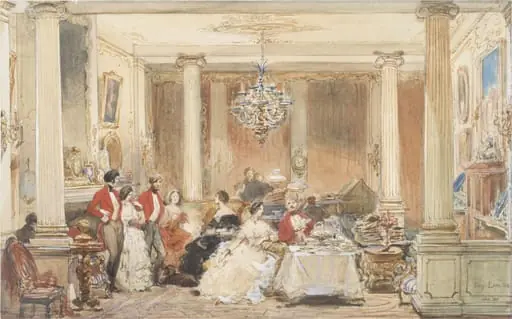
Study for "The Bailey Family" is an ink drawing by the Romanticist artist Robert Walter Weir. It dates from 1846 and is held in the collection of the National Gallery of Art. This work on paper, executed in 1846, serves as a preparatory study for a larger composition.
About this work
Overview
This work on paper, executed in 1846, serves as a preparatory study for a larger composition. Robert Walter Weir employed watercolor, graphite, and selective ink detailing to explore figural arrangements and tonal relationships before committing to a final painted version.
Subject & Meaning
The drawing depicts members of the Bailey family, capturing a domestic scene. Weir’s focus on individual expressions and postures suggests an intent to convey familial bonds or a shared moment, though the exact narrative remains implicit in this preliminary stage.
Technique & Style
Weir layered transparent watercolor washes over a graphite underdrawing, refining contours with pen and ink. The approach balances loose, fluid strokes with precise linework, reflecting mid-19th-century academic practices that prioritized observational accuracy and controlled execution.
History & Provenance
Created in 1846, the study predates the completed painting of the same subject. Its early ownership history is unrecorded, though it likely remained within private collections or the artist’s studio before entering an institutional or public repository.
Context
Weir, a prominent figure in American art education, produced this study during his tenure at the United States Military Academy at West Point, where he taught drawing. The work aligns with the era’s emphasis on portraiture and genre scenes as vehicles for moral or social commentary.
Artist & collection

Artist
Robert Walter Weir (June 18, 1803 – May 1, 1889) was an American artist and educator and is considered a painter of the Hudson River School.

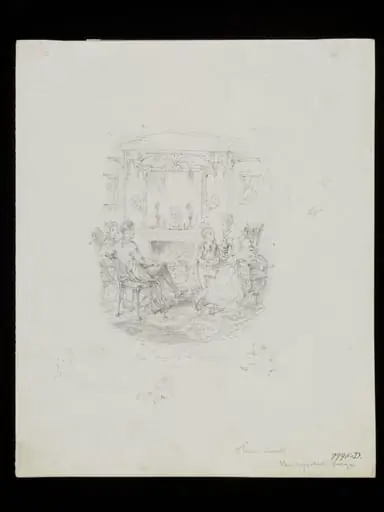 Rose Maylie and Oliver
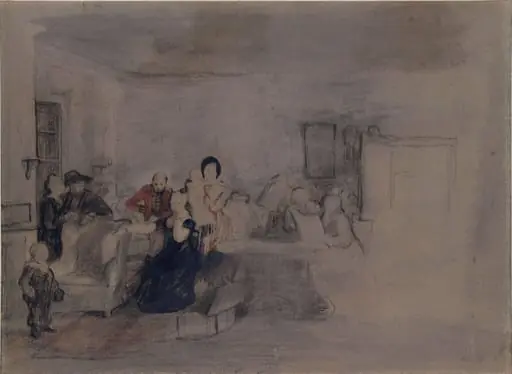 A Sketch for "The Reading of the Will"
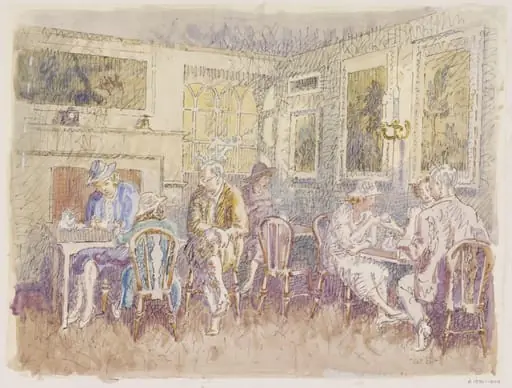 Tea Shop in the High Street, Colchester
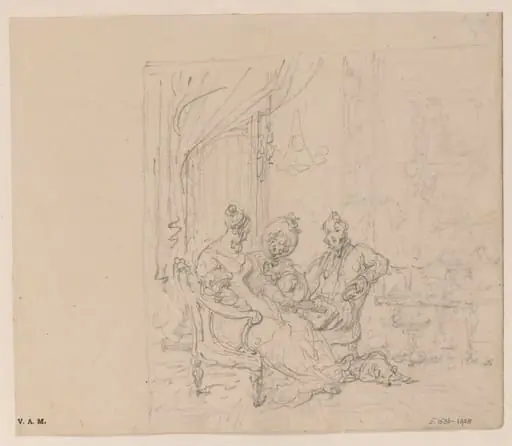 A sketch of three Western figures in a drawing room
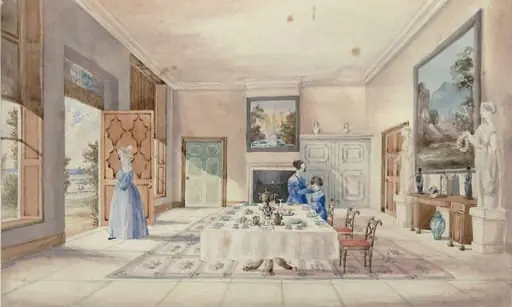 View of the Hall, Woodton Hall, Norfolk
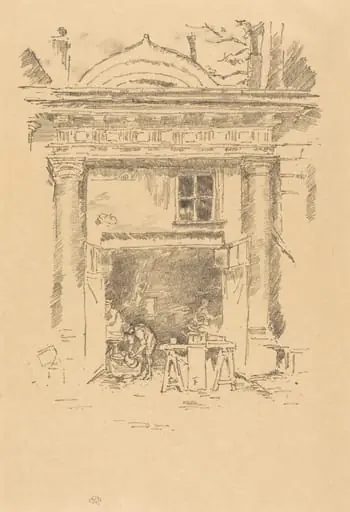 The Whitesmiths, Impasse des Carmélites
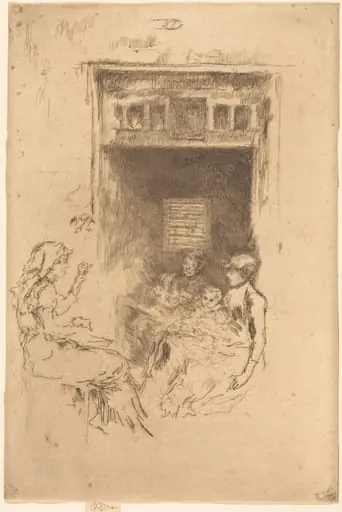 Bead-Stringers
 Portrait of Mr. Sheepshanks
 Interior of an Inn
 Conversation Piece
 A Game of Cards
 Interior at Colworth House