Artwork
A Game of Cards
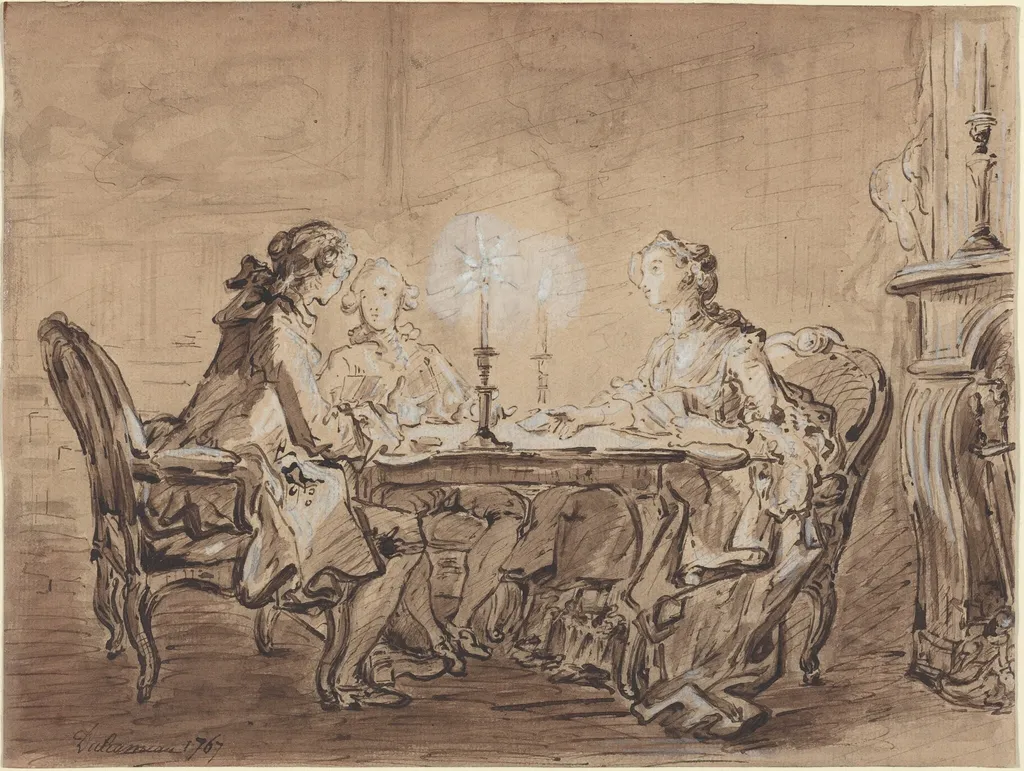
A Game of Cards is an ink drawing by the Romanticist artist Louis Durameau. It dates from 1767 and is held in the collection of the National Gallery of Art.
About this work
The artist's use of pen, brown ink, and brown wash creates a sense of depth and texture, while the white heightening adds a touch of elegance to the scene.
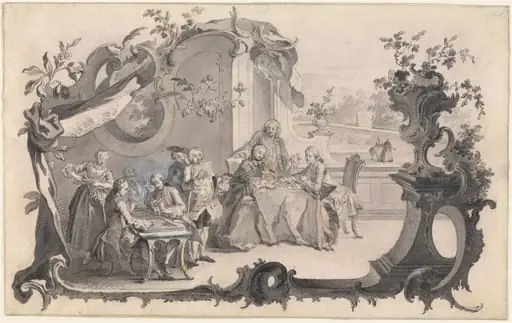
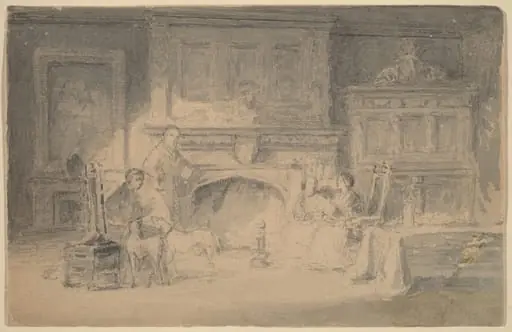
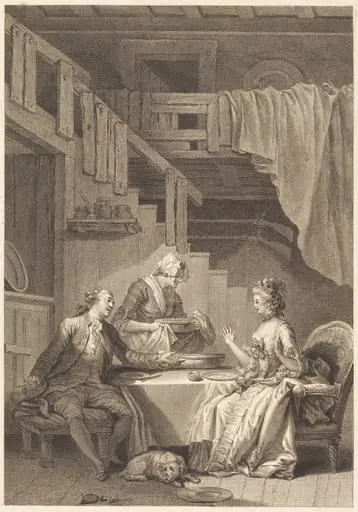
In this painting, three people are seated around a table, engaged in a game of cards. The table is adorned with a candelabra, adding warmth to the scene. The figures are dressed in attire characteristic of the 18th century, with the woman on the right wearing a long dress and the two men on the left sporting coats and breeches. The room's interior is depicted with a fireplace on the right side, complete with a mantelpiece and a vase.
The artist's use of pen, brown ink, and brown wash creates a sense of depth and texture, while the white heightening adds a touch of elegance to the scene. The overall atmosphere is one of quiet contemplation, as the figures focus on their game.
For more on the artistic techniques used in this piece, explore the world of cross-hatching.
Overview
A Game of Cards is a 1767 drawing by Louis Durameau, executed in pen and brown ink with brown wash and white highlights over graphite on laid paper. It depicts a quiet interior scene of three individuals engaged in a card game, rendered with subtle tonal gradations and delicate contrasts. The work exemplifies 18th-century French draftsmanship, emphasizing atmosphere over narrative drama.
Subject & Meaning
Three figures—two men and a woman—are seated around a small table, absorbed in their game. Their postures suggest concentration rather than revelry, and the absence of overt emotion lends the scene a restrained intimacy. The presence of a candelabra and fireplace implies a domestic, evening setting, reinforcing themes of private leisure and quiet social ritual among the bourgeoisie.
Technique & Style
Durameau employed pen lines to define forms, layered with brown wash to model volume and shadow. White heightening accentuates light sources on fabric and surfaces, enhancing tactile realism without overt brilliance. The use of graphite underdrawing reveals a methodical approach to composition, while the paper’s texture contributes to the work’s muted, tactile quality.
History & Provenance
Created in 1767, the drawing remains within documented collections since its making, though specific ownership history prior to modern institutional acquisition is not widely published. Its preservation in good condition reflects careful handling, consistent with its status as a refined study rather than a public commission.
Context
In mid-18th-century France, domestic scenes like this reflected growing interest in intimate, everyday life among the middle and upper classes. Card games were common social pastimes, often depicted in art as markers of refinement and leisure. Durameau’s work aligns with this trend, avoiding moralizing tones in favor of observational realism.
Legacy
Though not widely exhibited, the drawing stands as a representative example of French draftsmanship from the pre-Revolutionary period. Its quiet precision influenced later artists interested in domestic genre scenes, and it remains a key reference for understanding the evolution of intimate portraiture in 18th-century graphic arts.
Own this work as a print
Artist & collection


![A Game of Cards [recto], by Anton Weiss](https://artifactworldgallery.com/img/anton-weiss--a-game-of-cards-recto--6bb6d053bcd336b7-w320.webp)