Artwork
Untitled
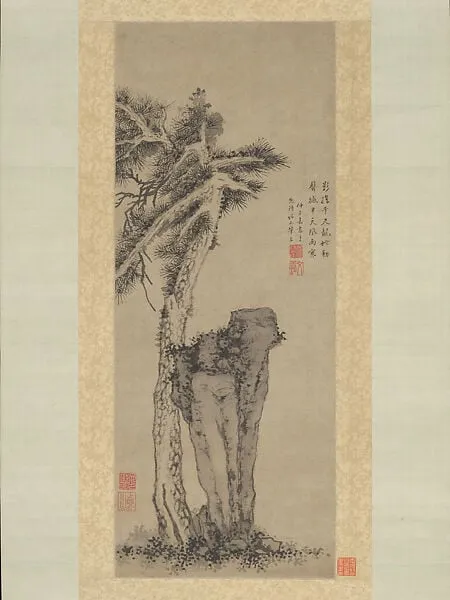
Untitled is an ink painting by the Ming dynasty painting artist Wen Zhengming. It dates from 1550 and is held in the collection of the Metropolitan Museum of Art.
About this work
Overview
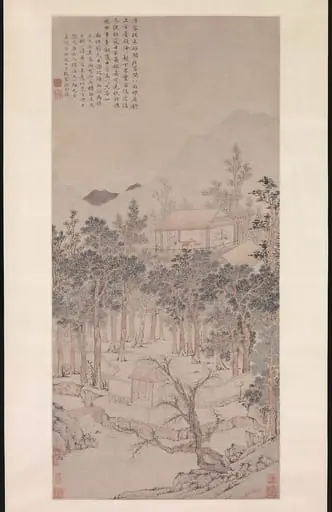
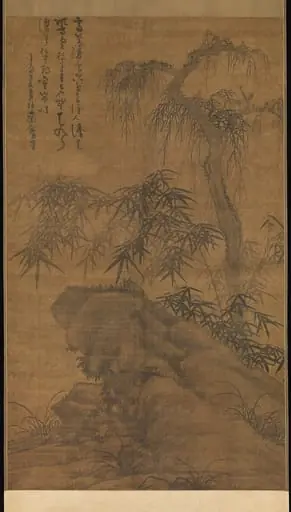
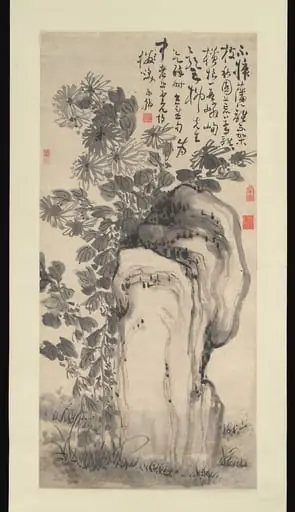
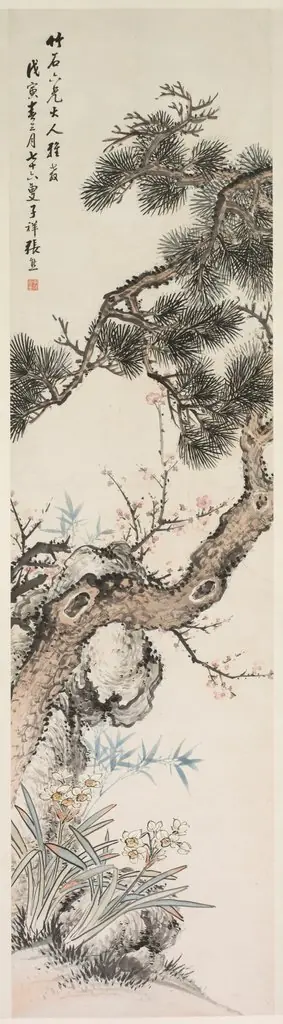
Created in 1550, this hanging scroll by the Ming‑dynasty scholar‑artist Wen Zhengming presents a solitary tree set against a muted, beige ground. Executed on silk with ink and touches of color, the composition balances stark monochrome brushwork with subtle chromatic accents, while a line of Chinese characters runs along the right margin.
Subject & Meaning
The central motif is a robust tree whose thick trunk and upward‑curving branches emerge from a rugged rock formation. Small vegetation clusters at its base suggest resilience and growth, a theme often associated with scholarly ideals of endurance and harmony with nature in Chinese literati painting.
Technique & Style
Wen employs the traditional Chinese brush technique, using concentrated black ink to define the tree’s form and lighter washes for the surrounding rocks and ground. Selective color is applied to the foliage, creating a restrained palette that emphasizes the ink’s expressive line work, characteristic of the Wu School’s refined aesthetic.
History & Provenance
The work, titled simply "Untitled," remains attributed to Wen Zhengling based on stylistic analysis and historical records of his landscape output. It survives as a silk scroll, a format typical for private contemplation, and has been documented in several catalogues of Ming‑period literati art.
Context
During the mid‑16th century, Wen Zhengming was a leading figure of the Wu School, which advocated personal expression over formal court painting. This piece reflects that ethos, integrating poetic inscription with a natural scene to convey both visual and literary contemplation.
Artist & collection

Artist
Wen Zhengming spent most of his life in Suzhou, a city of canals and scholars where art and poetry were daily habits, not hobbies.