Artwork
<i>Harlequin Mother Goose</i>
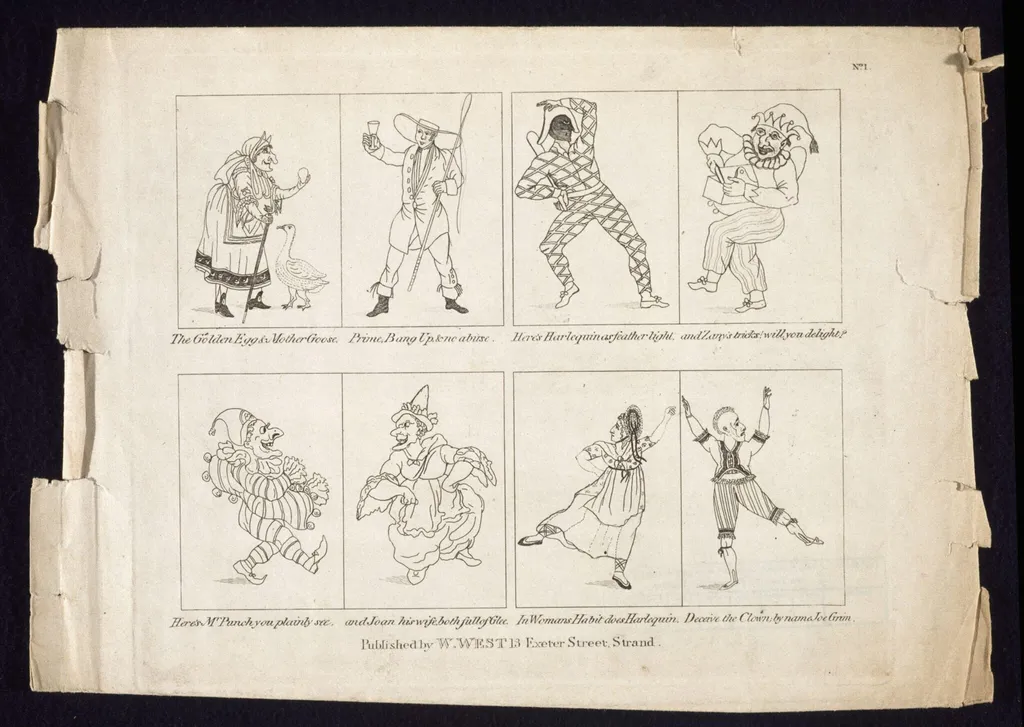
<i>Harlequin Mother Goose</i> is a print by the Romanticist artist William West. It dates from 1811 and is held in the collection of the Victoria and Albert Museum.
About this work
Overview
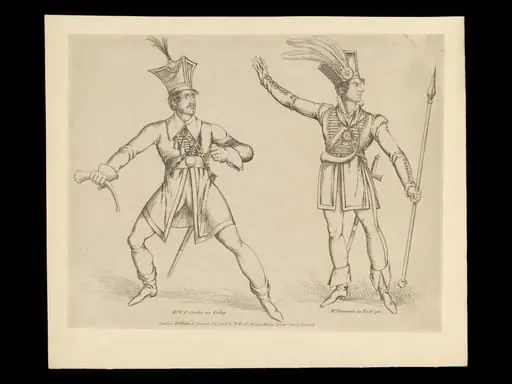
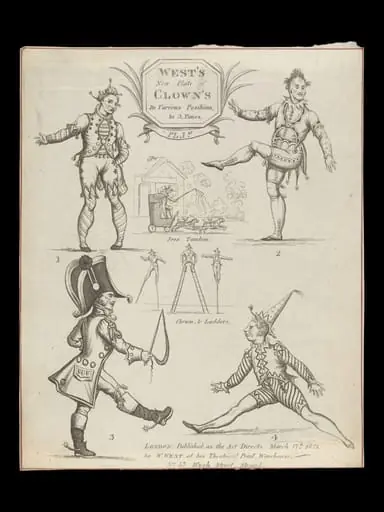
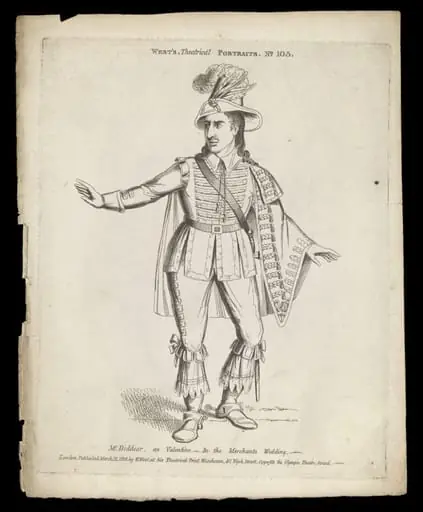
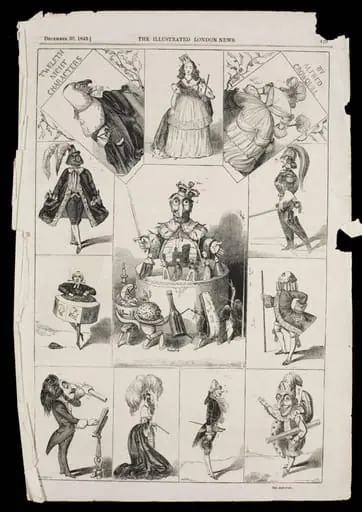
The print titled Harlequin Mother Goose is an early example of William West’s character sheets, a type of theatrical souvenir produced in London in the early 19th century. It depicts a group of costumed figures surrounding a woman dressed as Mother Goose, rendered in bright hues and crisp line work. The sheet was intended for sale to theatre‑goers as a visual record of a popular stage production.
Subject & Meaning
The lower row adds a domestic Punch couple and a comic pas de deux featuring Grimaldi and Bologna in disguise.
The imagery celebrates the 1806 Covent Garden production Harlequin and Mother Goose; or, The Golden Egg, a pantomime that helped launch the career of the clown Joseph Grimaldi. The upper row presents the principal roles—Mr. Simmons as Mother Goose, a driver representing Grimaldi’s “Bang‑up” song, a Harlequin standing in for John Bologna, and a Punch figure with kitchen implements that allude to Grimaldi’s burlesque music at Vauxhall Gardens. The lower row adds a domestic Punch couple and a comic pas de deux featuring Grimaldi and Bologna in disguise.
Technique & Style
West employed a straightforward print process, reproducing existing illustrations of the actors and their costumes. The composition is organized in two horizontal bands, each containing four figures rendered in clear, linear outlines and saturated colors. The style reflects the commercial purpose of the sheet, emphasizing recognisable facial features and costume details to aid identification by audiences.
History & Provenance
William West began publishing theatrical sheets in 1811, operating from the Circulating Library on Exeter Street near the Strand. By 1812 he expanded to include scene prints, and over two decades he documented more than 140 London plays, typically issuing a new sheet roughly every two months. This particular sheet, the earliest known from West’s output, was produced around 1811–1812 while the Harlequin Mother Goose pantomime remained in Covent Garden’s repertoire.
Context
In the early 1800s, printed character sheets served as affordable memorabilia for theatre audiences, who could purchase them as souvenirs or as visual aids for recalling performances. West’s publications filled a niche market, providing a visual catalogue of popular actors and roles at a time when photographic reproduction was unavailable. The sheet reflects the popularity of pantomime and clowning, especially the rising fame of Grimaldi, whose comic persona attracted large crowds.
Legacy
The Harlequin Mother Goose sheet offers scholars a rare glimpse into the visual culture of Regency‑era theatre and the marketing strategies surrounding popular productions. As the oldest surviving West character sheet, it marks the beginning of a prolific publishing venture that recorded the evolution of London’s stage repertoire for more than two decades. The print is held by the Victoria and Albert Museum, where it continues to inform studies of performance history and early 19th‑century print culture.
Artist & collection