Artwork
The Holy Family with Saints [recto]
![The Holy Family with Saints [recto], by Hermann Weyer, ink, 1616](https://artifactworldgallery.com/img/hermann-weyer--the-holy-family-with-saints-recto--4d51f9f823625a43-w1024.webp)
The Holy Family with Saints [recto] is an ink drawing by the Baroque artist Hermann Weyer. It dates from 1616 and is held in the collection of the National Gallery of Art.
About this work
Overview
A religious drawing attributed to Hermann Weyer, dated around 1616, depicts the Holy Family surrounded by saints. Executed in pen and black ink with gray wash, it is heightened with white pigment on pink-prepared laid paper, using black chalk as an underdrawing. The work is a study in devotional composition, emphasizing spiritual presence through layered tonal effects and delicate line work.
Subject & Meaning
The intimate arrangement invites contemplation rather than grandeur, aligning with private devotional practices of the period.
The composition centers on the Virgin Mary, Christ Child, and Saint Joseph, flanked by one or more saints, likely chosen for their symbolic association with protection or intercession. The grouping reflects Counter-Reformation ideals, reinforcing familial piety and the veneration of saints as mediators. The intimate arrangement invites contemplation rather than grandeur, aligning with private devotional practices of the period.
Technique & Style
Weyer employed a refined combination of black chalk for structural definition, ink for precise contours, and gray wash to model volume and shadow. White highlights accentuate drapery and skin tones against the pink ground, enhancing luminosity. The layered approach suggests a preparatory study, possibly for a larger altarpiece, balancing spontaneity with careful planning.
History & Provenance
The drawing’s early ownership is undocumented, but its material and style align with Northern European workshop practices of the early 17th century. It likely remained in private or ecclesiastical collections until entering a public collection in the modern era. No record of exhibition or publication exists prior to the 20th century, limiting its historical visibility.
Context
Created during the height of the Counter-Reformation, the work responds to Catholic efforts to reaffirm devotional imagery amid Protestant critiques. Northern artists like Weyer adapted Italian compositional models to local tastes, favoring intimate, emotionally grounded scenes. The use of colored paper and heightened drawing reflects a broader trend in Northern draftsmanship aimed at elevating preparatory works as objects of aesthetic value.
Legacy
Though not widely known outside specialist circles, the drawing exemplifies the sophistication of early 17th-century religious draftsmanship. It contributes to understanding how artists balanced liturgical function with artistic experimentation. Its preservation underscores the value placed on preparatory works as independent expressions of faith and skill.
Artist & collection


![Tobias and the Angel [verso], by Hermann Weyer](https://artifactworldgallery.com/img/hermann-weyer--tobias-and-the-angel-verso--e00682edf3b74b17-w320.webp)
 The Holy Family
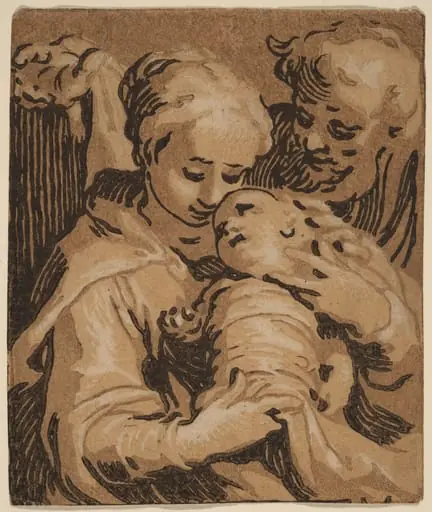 The Holy Family
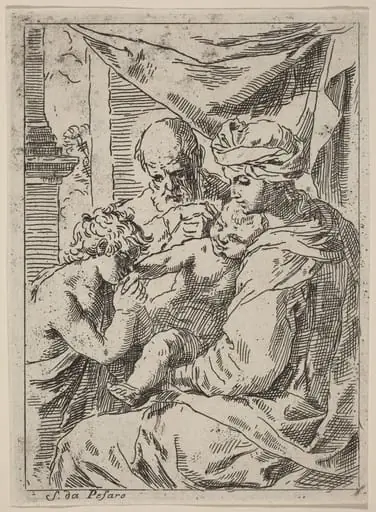 The Virgin and Child with Saint John
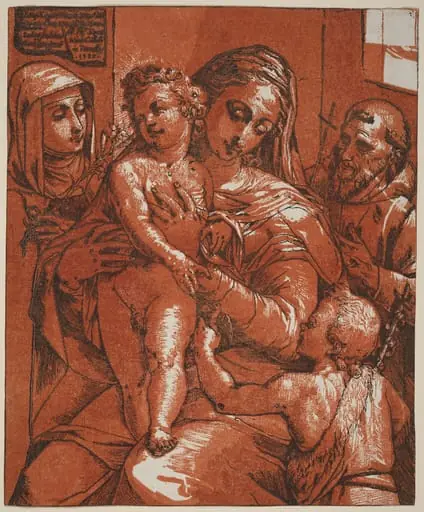 Madonna and Child Accompanied by Saints
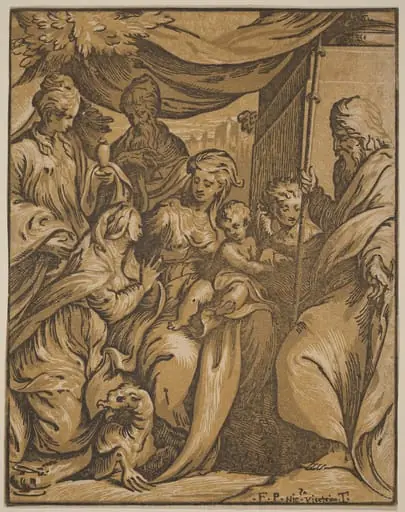 The Virgin and Child with Saints
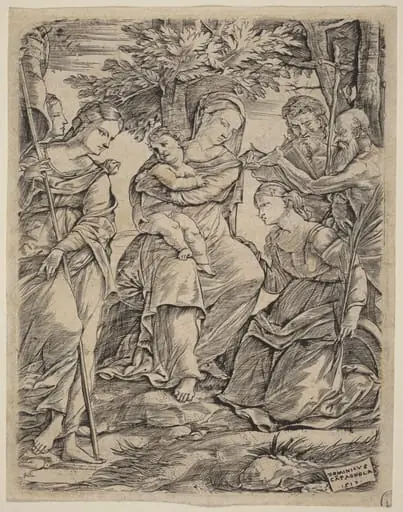 The Virgin and Child with Saints
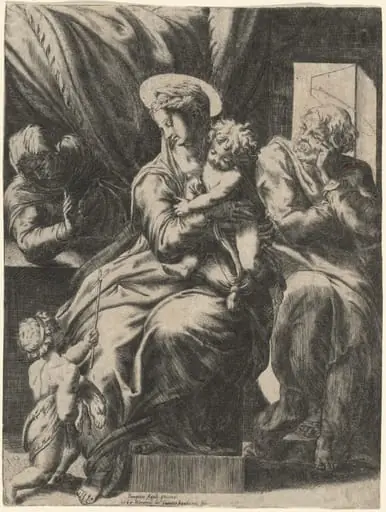 Holy Family with Saint Elizabeth and the Young John the Baptist
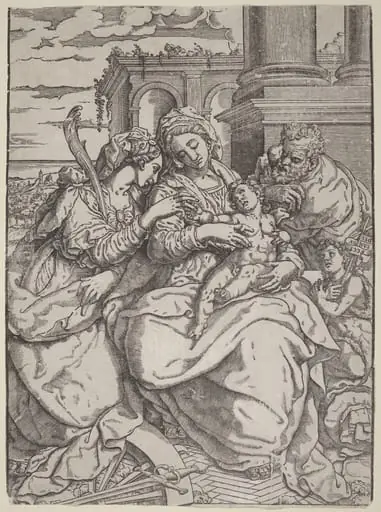 Madonna and Child with Saint Catherine
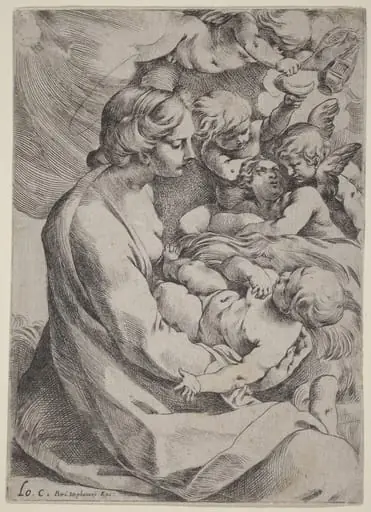 Madonna and Child with Angels
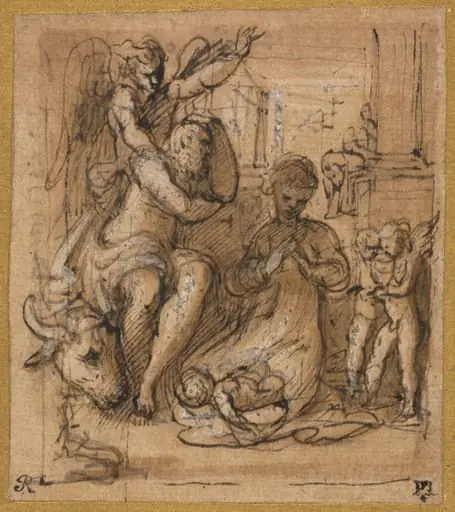 The Nativity with the Dream of Joseph
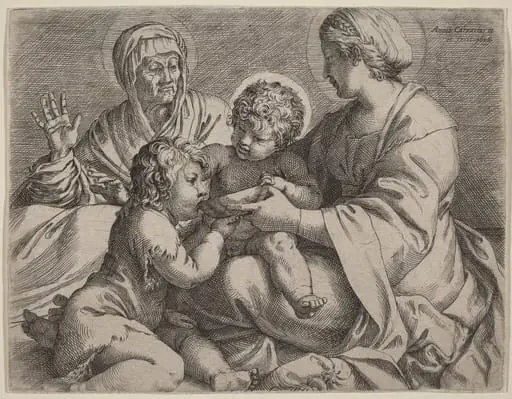 Madonna and Child with Saints Elizabeth and John the Baptist (La Madonna della Scodella)
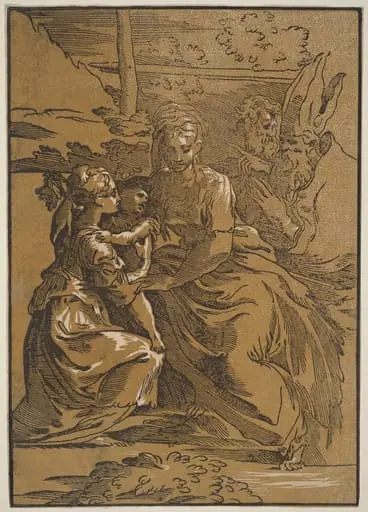 The Holy Family with Two Saints