Artwork
A Corner of the Palais Royal
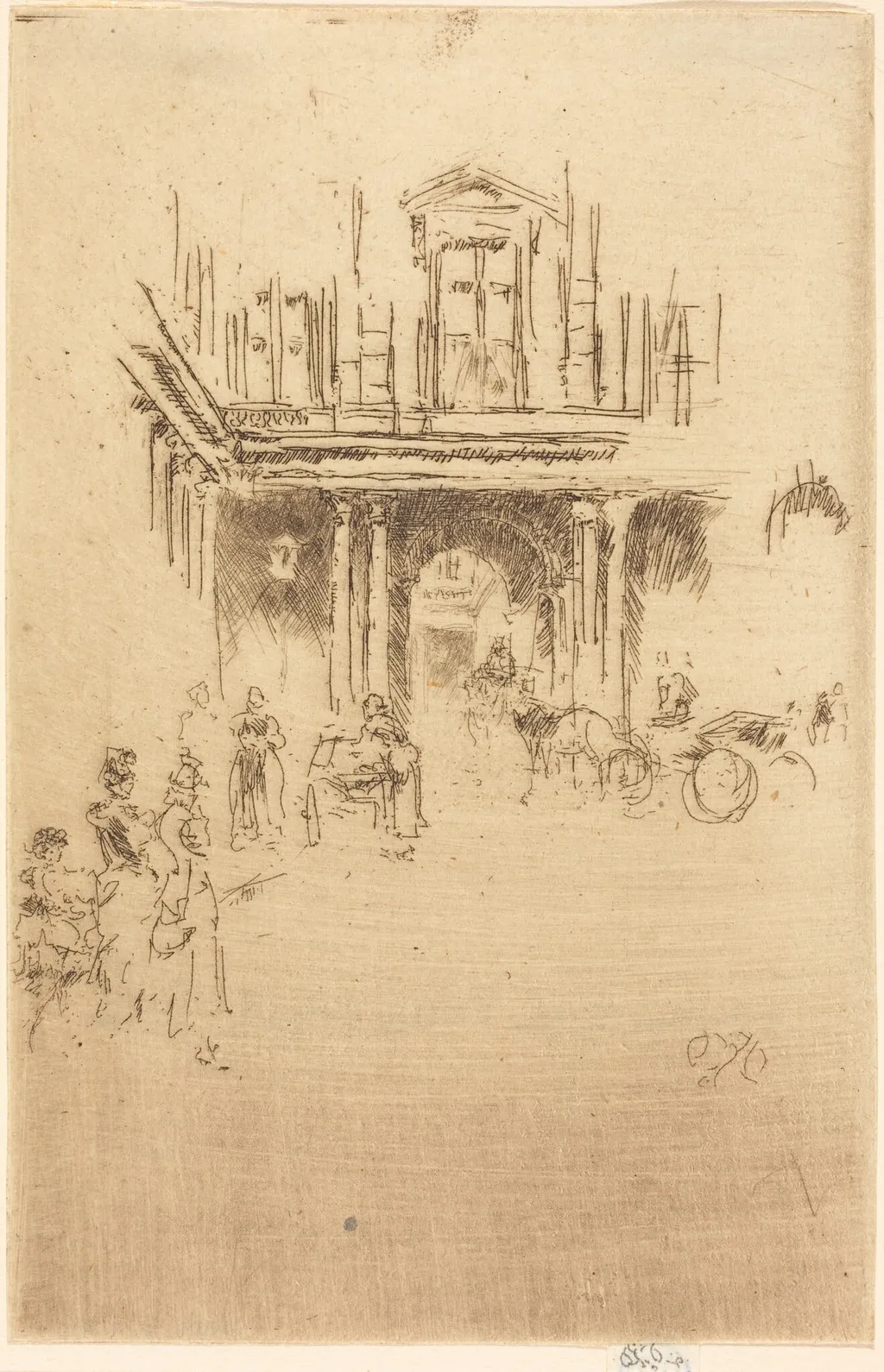
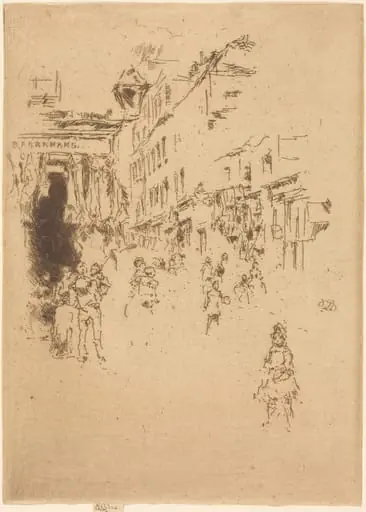
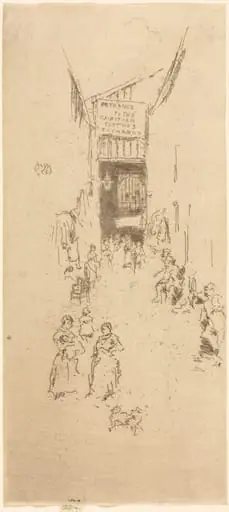
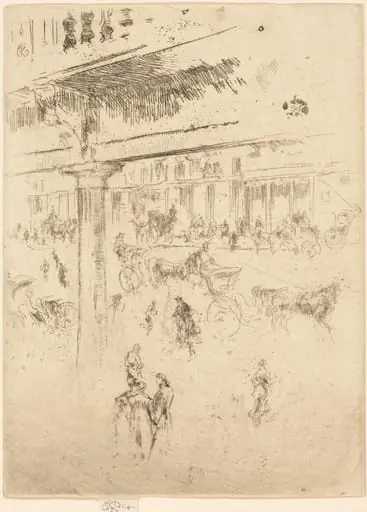
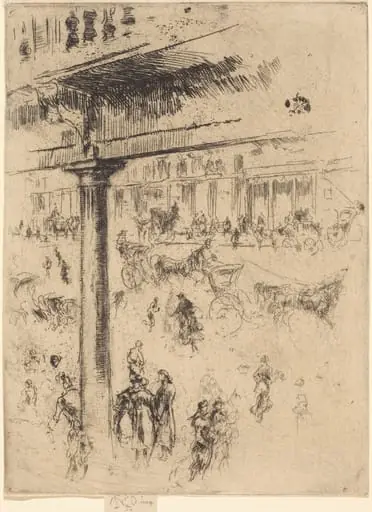
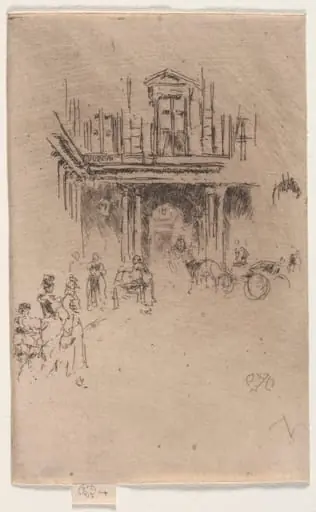
A Corner of the Palais Royal is an ink print by the Impressionist artist James McNeill Whistler. It dates from 1884 and is held in the collection of the National Gallery of Art.
About this work
Overview
Created circa 1884, *A Corner of the Palais Royal* is an etching and drypoint on laid paper by James McNeill Whistler.
Created circa 1884, *A Corner of the Palais Royal* is an etching and drypoint on laid paper by James McNeill Whistler. Though best known for his paintings, Whistler produced a significant body of graphic work during his time in Europe. This print captures a fleeting moment in a Parisian public space, reflecting his interest in transient urban life and his commitment to tonal harmony over narrative detail.
Subject & Meaning
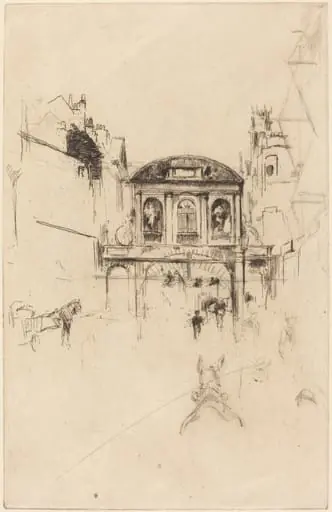
The scene portrays a modest corner of the Palais Royal gardens, with pedestrians, a horse-drawn carriage, and seated figures moving through a shaded promenade. Whistler avoids idealization, presenting ordinary activity without drama or moralizing. The composition suggests the rhythm of daily life in late 19th-century Paris, emphasizing atmosphere over individual identity or event.
Technique & Style
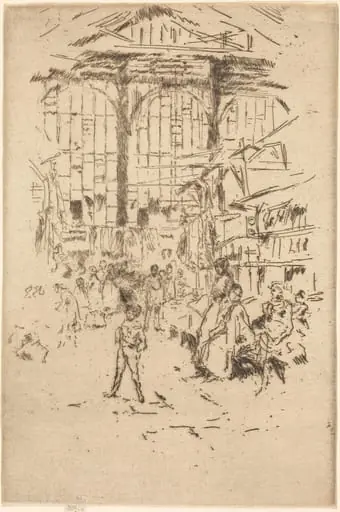
Whistler employed etching and drypoint to achieve varied line quality—dark, scratchy strokes define architecture and movement, while softer areas suggest light and distance. The loose, rapid marks convey immediacy, aligning with his belief in capturing the essence of a moment. The paper’s laid texture enhances the print’s tactile quality, reinforcing the intimacy of the scene.
History & Provenance
Made during Whistler’s mature period in London and Paris, the print emerged from his sustained engagement with printmaking in the 1880s. It was likely produced for private circulation among collectors and fellow artists rather than mass distribution. Its survival in museum collections reflects its status as a significant example of his graphic work, though its early ownership remains undocumented.
Context
In 1880s Paris, artists increasingly turned to urban subjects and spontaneous draftsmanship, influenced by the city’s modernization and the rise of print culture. Whistler’s approach aligned with contemporaries like Degas and Daumier, who valued observation over idealization. His focus on quiet corners of public space offered a counterpoint to grand historical or romantic themes prevalent in academic art.
Legacy
The print exemplifies Whistler’s influence on modern printmaking through his emphasis on tonal subtlety and expressive line. While not widely exhibited in his lifetime, it contributed to a broader redefinition of etching as a medium for personal, observational art rather than reproductive illustration. Later artists recognized its quiet innovation in capturing urban tempo with minimal means.
Artist & collection
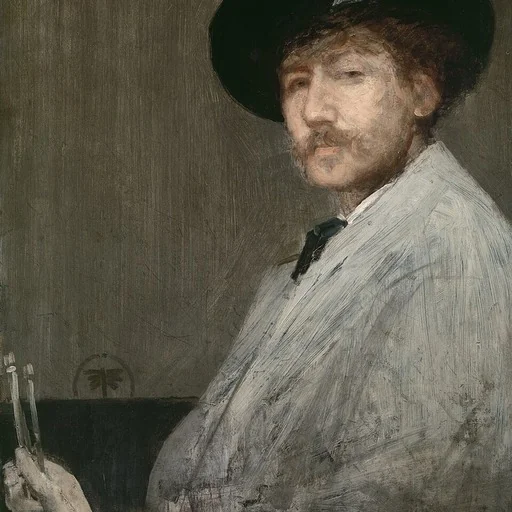
Artist
James Abbott McNeill Whistler was an American painter in oils and watercolor, and printmaker, active during the American Gilded Age and based primarily in the United Kingdom.

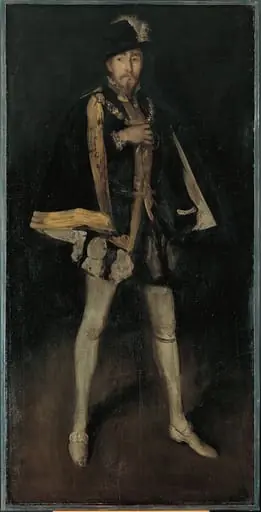 Arrangement in Black, No. 3: Sir Henry Irving as Philip II of Spain
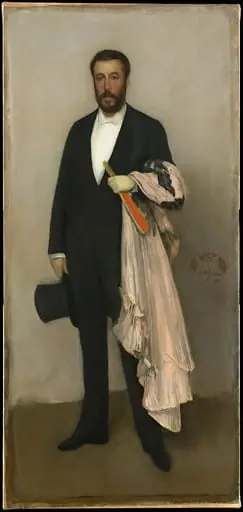 Arrangement in Flesh Colour and Black: Portrait of Theodore Duret
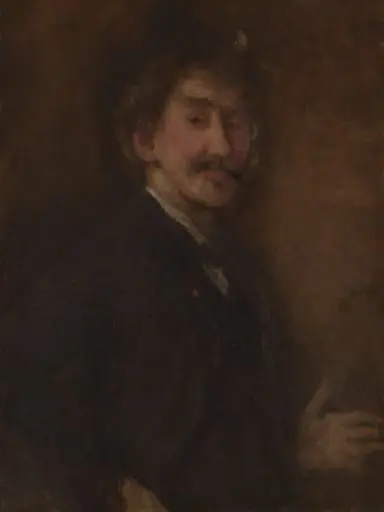 Gold and Brown: Self-Portrait
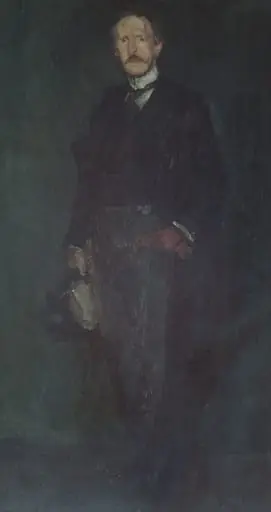 Edward Guthrie Kennedy
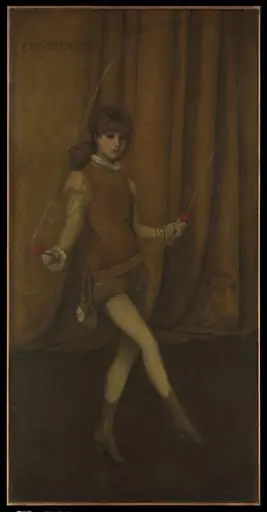 Harmony in Yellow and Gold: The Gold Girl—Connie Gilchrist
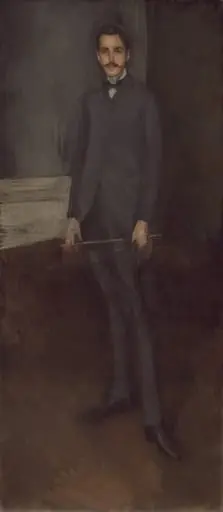 George W. Vanderbilt
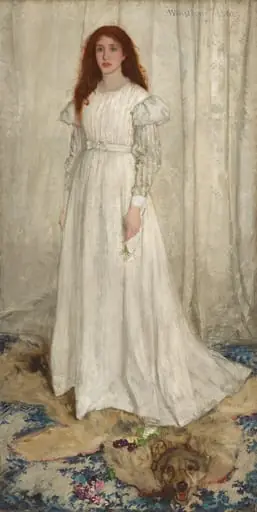 Symphony in White, No. 1: The White Girl
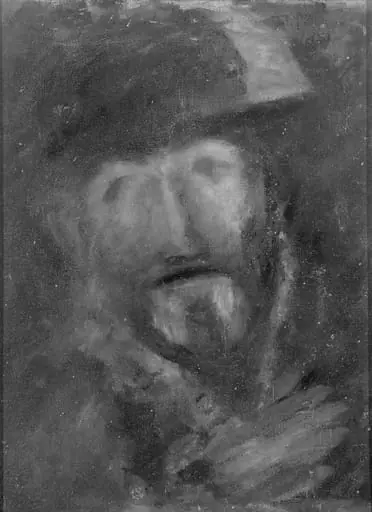 Henry Irving as Philip II of Spain