Artwork
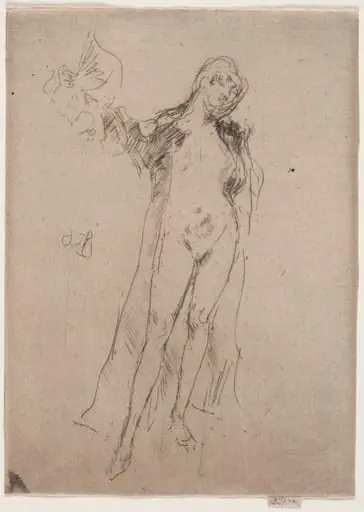
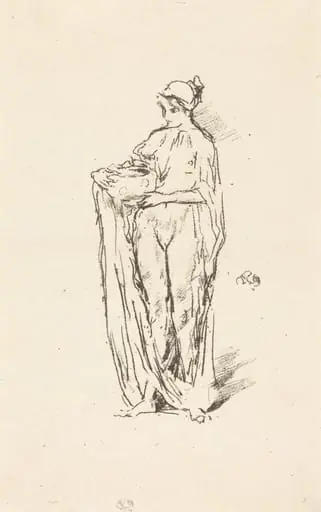
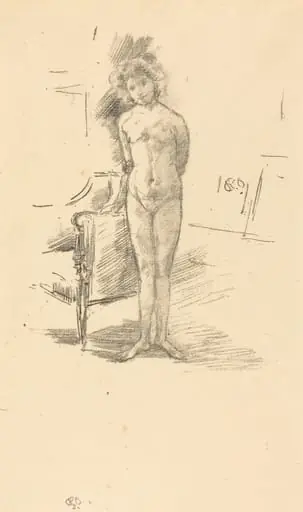
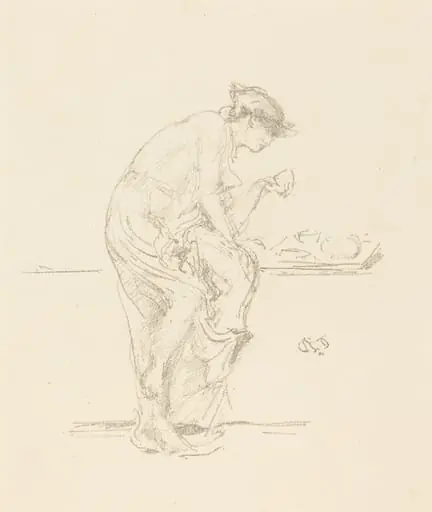
A Nude Model Arranging Flowers
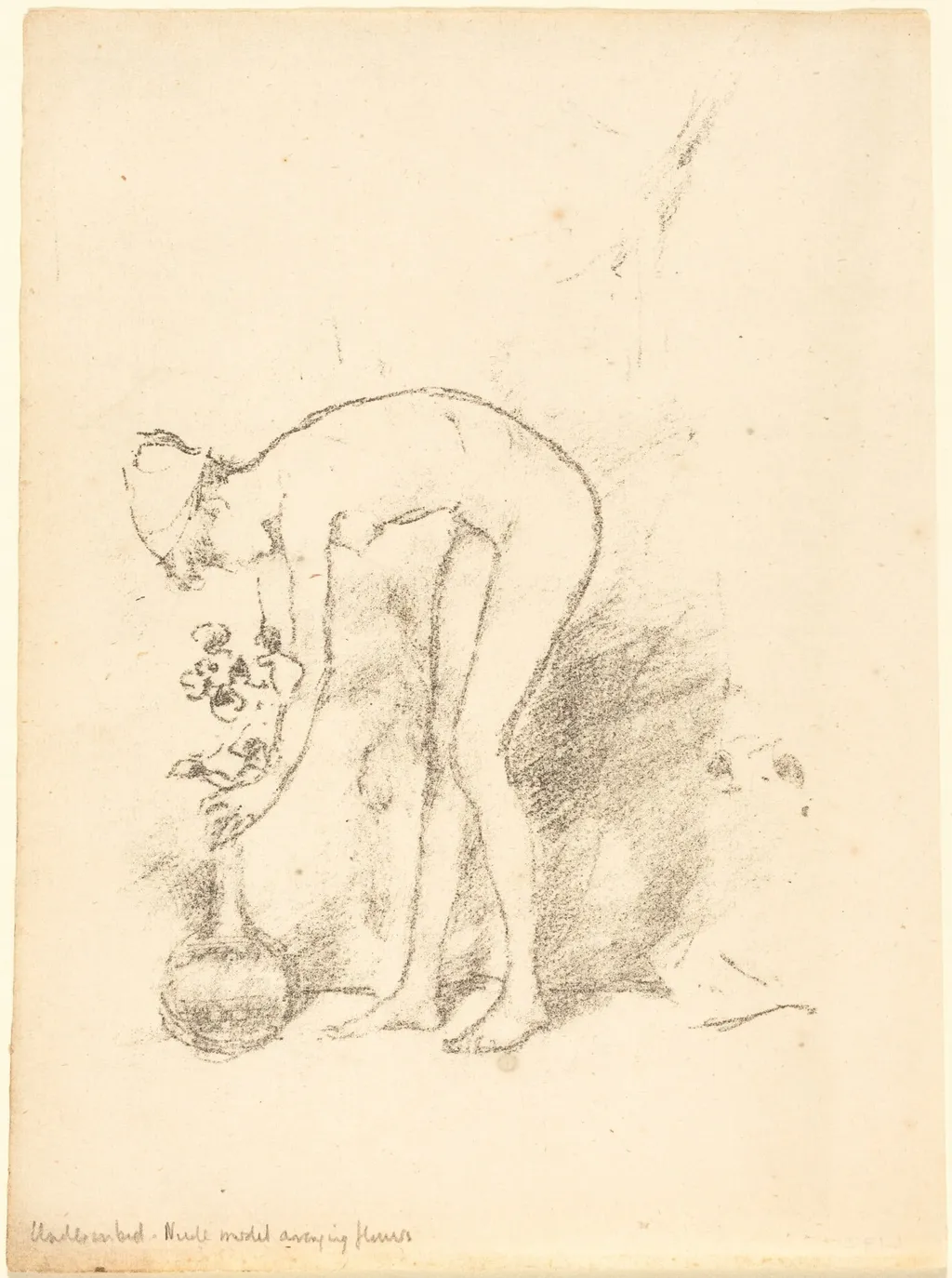
A Nude Model Arranging Flowers is an ink print by the Impressionist artist James McNeill Whistler. It dates from 1892 and is held in the collection of the National Gallery of Art. Created around 1892, this lithograph in black on laid paper captures a quiet moment in Whistler’s studio.
About this work
Overview
The work belongs to a series of intimate figure studies made during his later years, emphasizing line and tone rather than detail.
Created around 1892, this lithograph in black on laid paper captures a quiet moment in Whistler’s studio. The artist, an American expatriate based in London, favored understated compositions over narrative drama. The work belongs to a series of intimate figure studies made during his later years, emphasizing line and tone rather than detail. Its unadorned title, handwritten at the bottom, stands out among his typically anonymous prints.
Subject & Meaning
The figure, seated with her back turned, is engaged in the simple act of arranging flowers. Her loose hair and draped clothing suggest a private, unguarded moment. Whistler avoids idealization or eroticism; the pose conveys stillness and concentration. The title, unusually explicit for the time, frames the scene not as a mythological or moralizing image, but as a direct observation of the model’s routine.
Technique & Style
Whistler employed rapid, fluid lines to suggest form without heavy shading, capturing the gesture of the figure and the loose arrangement of blooms with minimal strokes. The lithographic medium allowed for spontaneity, echoing the immediacy of a sketch. Textural contrasts emerge through varying pressure and ink density, while the rough, unfinished quality of the lines reinforces the work’s observational character over polished finish.
History & Provenance
This print was produced during Whistler’s mature period, when he increasingly turned to intimate, non-commercial subjects. Likely made in his London studio, it was not intended for wide circulation but may have served as a study or personal record. Its survival suggests it was retained by the artist or a close associate, distinguishing it from his more widely distributed commercial prints.
Context
In the 1890s, Whistler distanced himself from the narrative-driven art popular in Victorian Britain. His focus on quiet, everyday moments aligned with broader aesthetic movements that valued mood and form over moral or sentimental content. This print reflects his belief in art as an arrangement of tones and lines, independent of storytelling or social commentary.
Legacy
Though less known than his portraits or nocturnes, this lithograph exemplifies Whistler’s commitment to artistic restraint and the expressive potential of line. Its unembellished title and informal execution influenced later modernists who valued candidness over grandeur. The work remains a quiet testament to his belief that art could derive significance from simplicity and observation.
Artist & collection
Artist
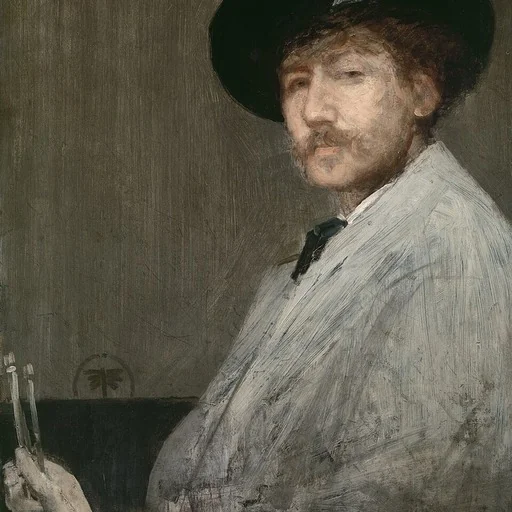
James Abbott McNeill Whistler was an American painter in oils and watercolor, and printmaker, active during the American Gilded Age and based primarily in the United Kingdom.

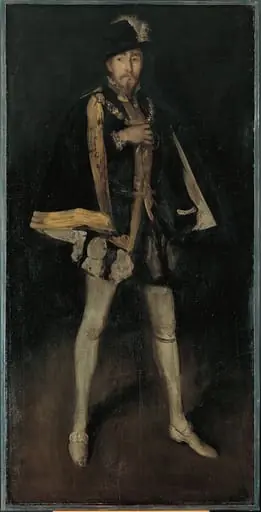 Arrangement in Black, No. 3: Sir Henry Irving as Philip II of Spain
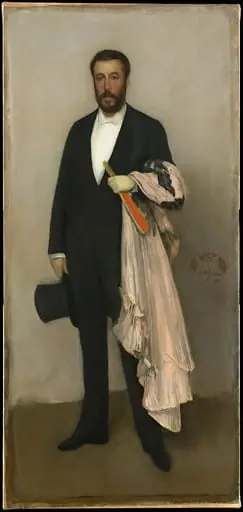 Arrangement in Flesh Colour and Black: Portrait of Theodore Duret
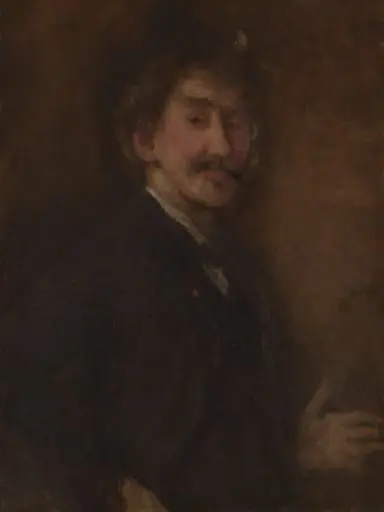 Gold and Brown: Self-Portrait
 Edward Guthrie Kennedy
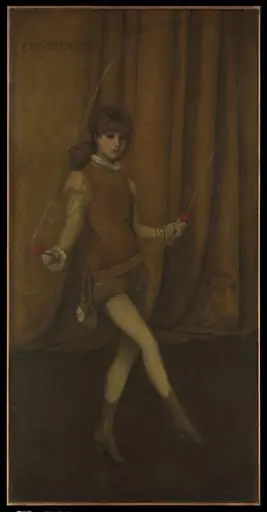 Harmony in Yellow and Gold: The Gold Girl—Connie Gilchrist
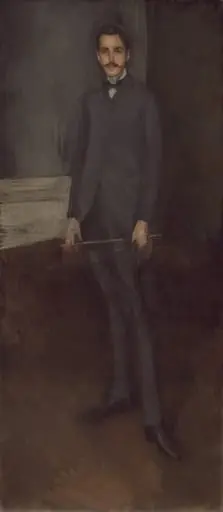 George W. Vanderbilt
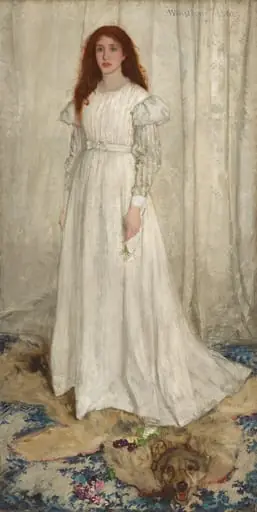 Symphony in White, No. 1: The White Girl
 Henry Irving as Philip II of Spain