Artwork
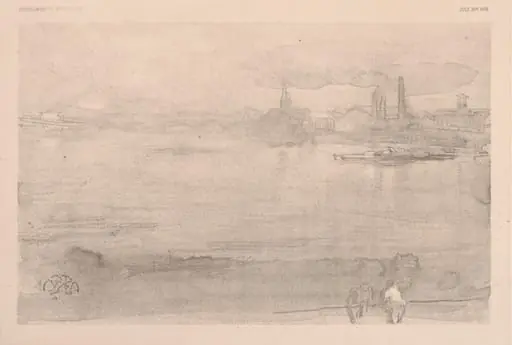
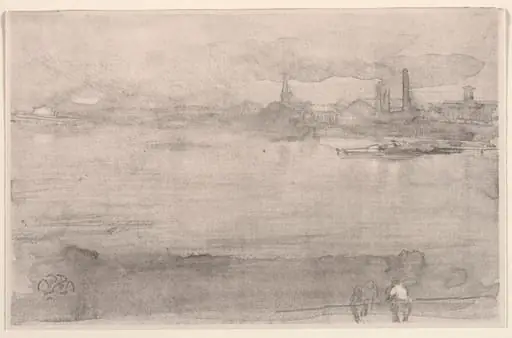
Battersea: Dawn
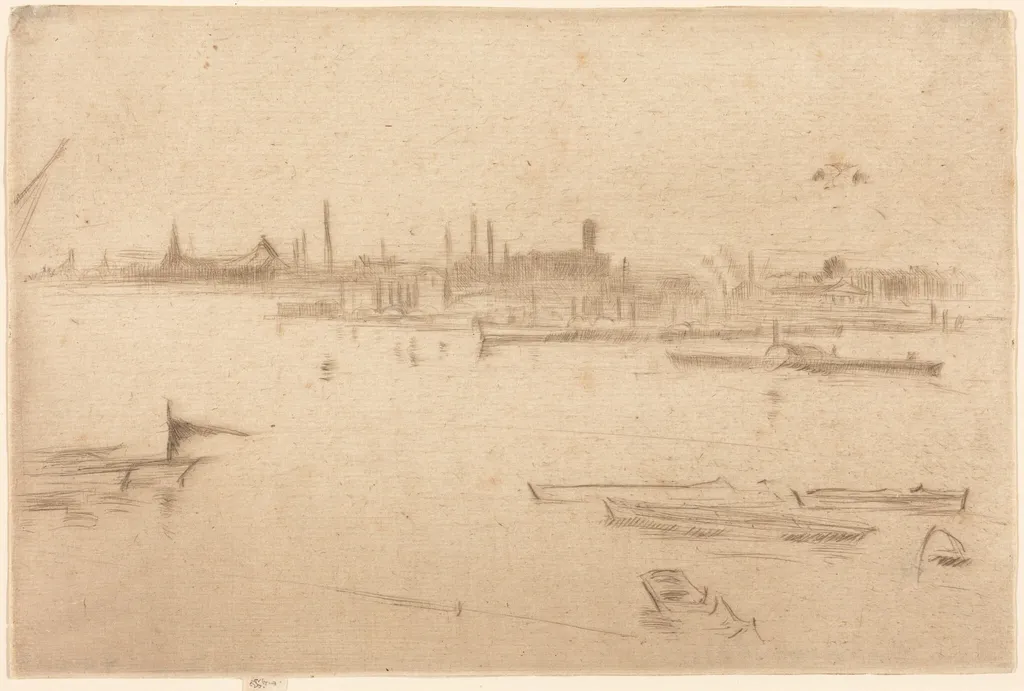
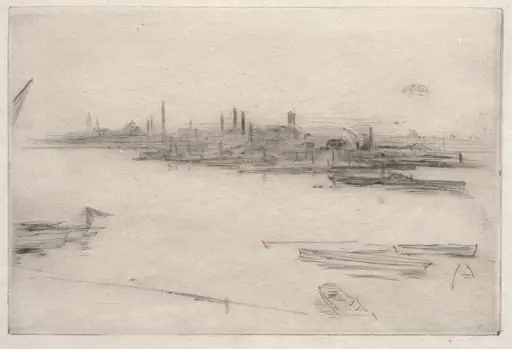
Battersea: Dawn is an ink print by the Impressionist artist James McNeill Whistler. It dates from 1875 and is held in the collection of the National Gallery of Art.
About this work
Overview
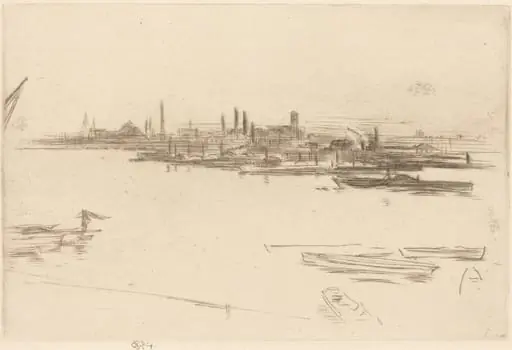
Created in 1875, *Battersea: Dawn* is a dry‑point print on laid paper by James McNeill Whistler. The work presents a tranquil view of the Thames at daybreak, with the river’s edge lined by modest buildings and a few small vessels. Its muted palette and restrained composition convey the quiet moment when the city awakens.
Subject & Meaning
The scene captures the early‑morning atmosphere of Battersea, focusing on the soft light that diffuses over the water and rooftops. Rather than telling a narrative, the image emphasizes the subtle interplay of tone and space, inviting the viewer to contemplate the calm of a waking urban landscape.
Technique & Style
Whistler employed dry‑point, incising fine, burr‑laden lines directly into the paper. This method produces delicate, velvety strokes that catch ambient light, enhancing the work’s atmospheric quality. The overall effect is sketch‑like, prioritising mood and tonal harmony over precise detail, reflecting Whistler’s advocacy of “art for art’s sake.”
History & Provenance
The print was produced during Whistler’s productive period in Britain, when he was establishing his reputation as both painter and printmaker. It was issued as part of his series of Thames views, which were widely circulated among collectors of the time. The work remains in the holdings of several major museums, illustrating its continued relevance to studies of 19th‑century printmaking.
Artist & collection
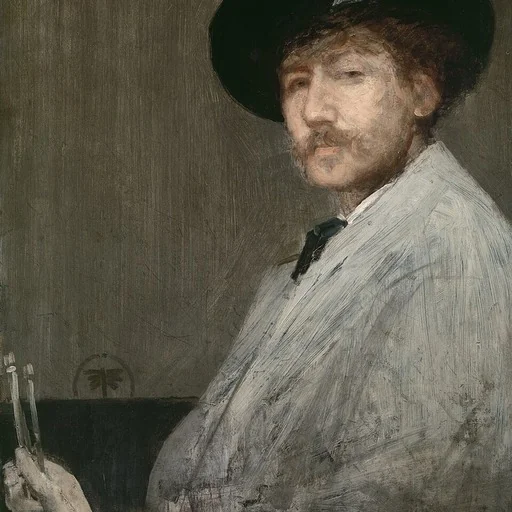
Artist
James Abbott McNeill Whistler was an American painter in oils and watercolor, and printmaker, active during the American Gilded Age and based primarily in the United Kingdom.

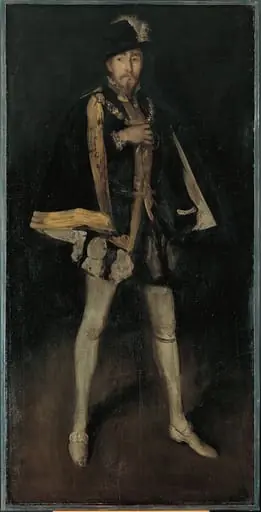 Arrangement in Black, No. 3: Sir Henry Irving as Philip II of Spain
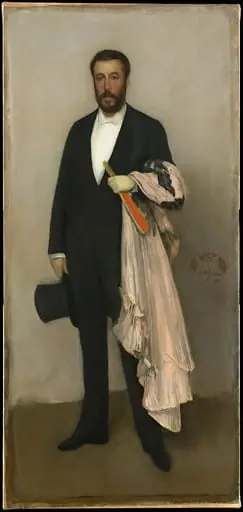 Arrangement in Flesh Colour and Black: Portrait of Theodore Duret
 Gold and Brown: Self-Portrait
 Edward Guthrie Kennedy
 Harmony in Yellow and Gold: The Gold Girl—Connie Gilchrist
 George W. Vanderbilt
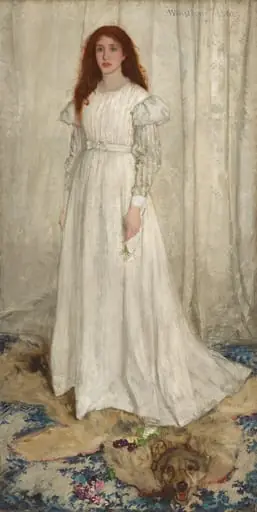 Symphony in White, No. 1: The White Girl
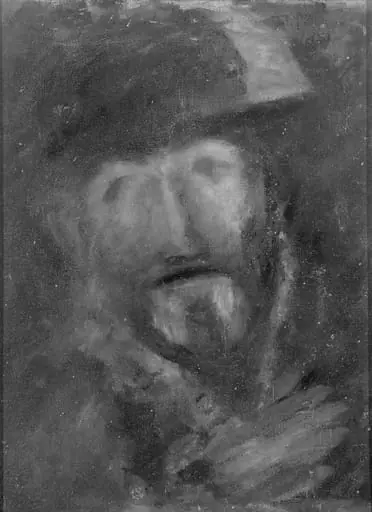 Henry Irving as Philip II of Spain