Artwork
Billingsgate
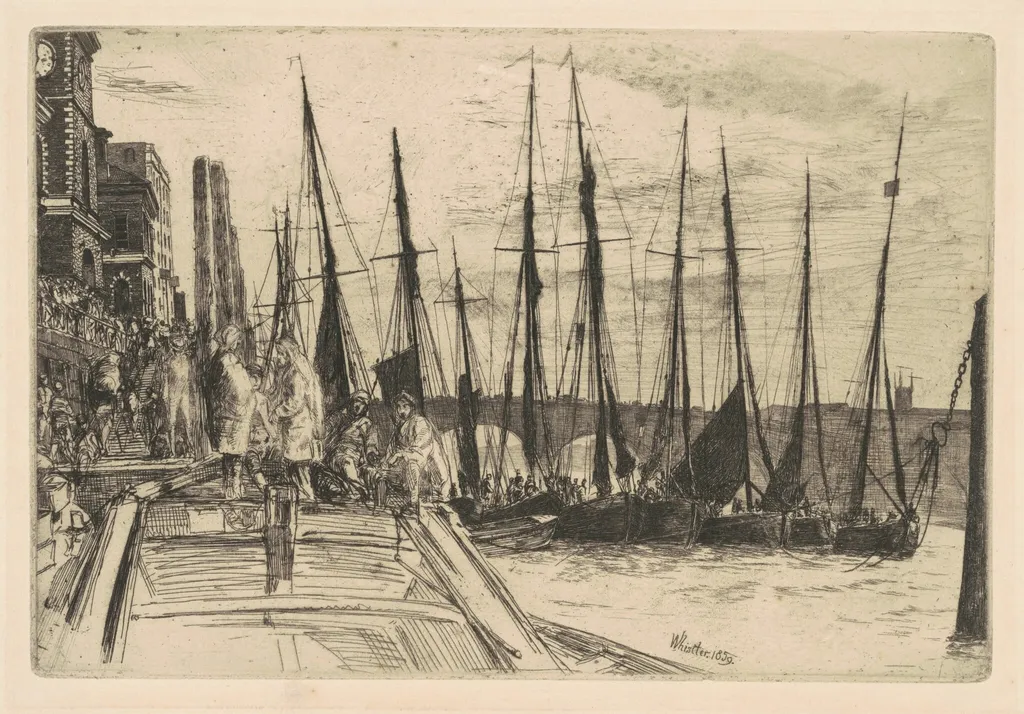
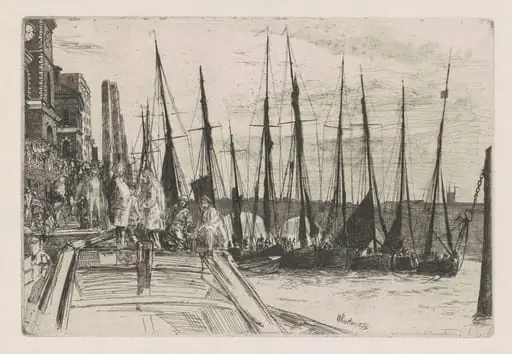
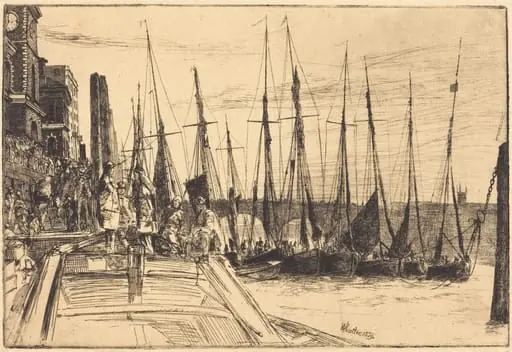
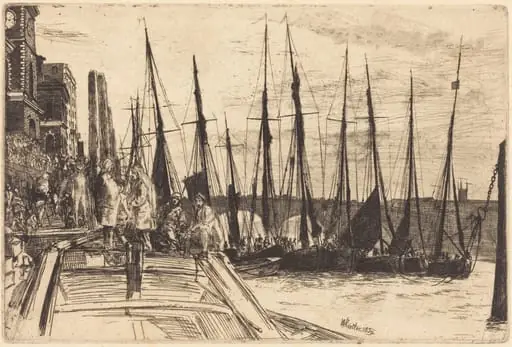
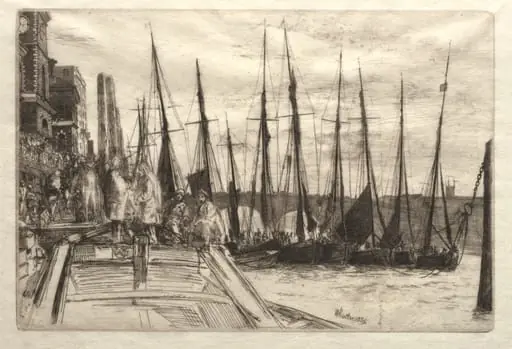
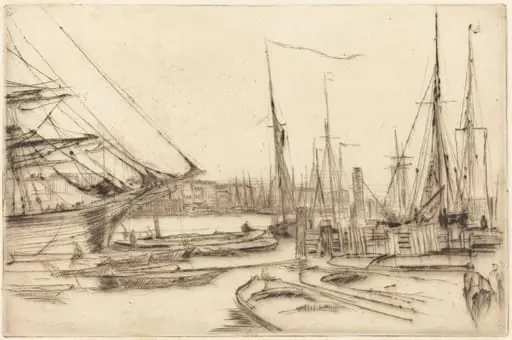
Billingsgate is an ink print by the Impressionist artist James McNeill Whistler. It dates from 1859 and is held in the collection of the National Gallery of Art.
About this work
Overview
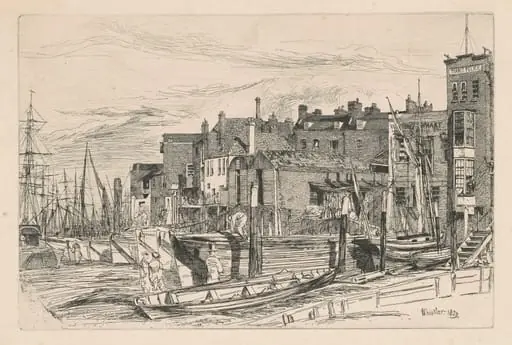
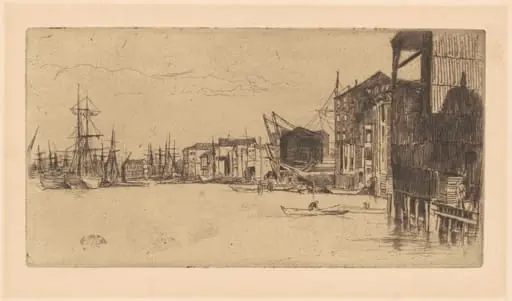
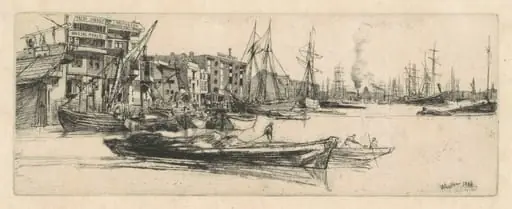
Billingsgate is an etching and drypoint print by James McNeill Whistler, capturing the dynamic activity of a port scene with sailboats and figures engaged in various tasks on the quay.
Subject & Meaning
Beyond its literal depiction of harbor life, Billingsgate conveys the energy and vibrancy of urban waterfront scenes, emphasizing the interplay of light, water, and human endeavor.
Technique & Style
Whistler achieved depth and contrast through a monochromatic sepia palette, varying line densities in etching and drypoint. The technique involved scratching lines of differing depths onto metal plates, with deeper scratches producing darker marks, thus creating visual pop against lighter areas.
History & Provenance
No specific historical or provenance details are provided for Billingsgate, focusing instead on the artwork's technical and thematic aspects.
Context
Billingsgate reflects Whistler's interest in capturing everyday city life, particularly in London, where Billingsgate Market and the Thames would have been familiar subjects.
Legacy
The work directs viewers towards exploring more of Whistler's oeuvre, suggesting its role as an introductory piece to the artist's broader body of work.
Own this work as a print
Artist & collection
Artist
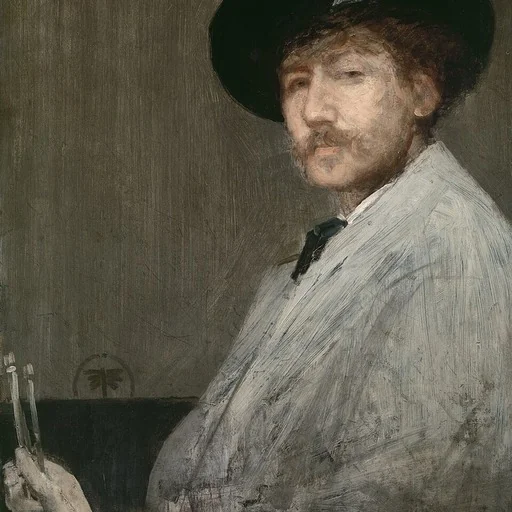
James Abbott McNeill Whistler was an American painter in oils and watercolor, and printmaker, active during the American Gilded Age and based primarily in the United Kingdom.

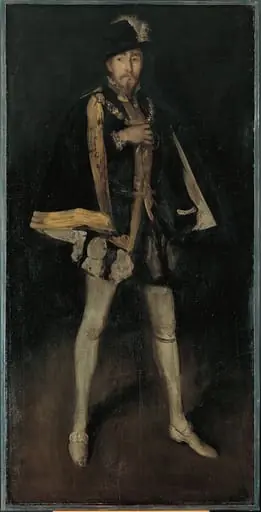 Arrangement in Black, No. 3: Sir Henry Irving as Philip II of Spain
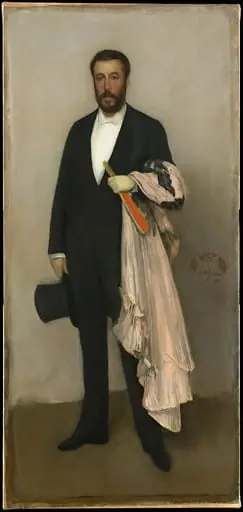 Arrangement in Flesh Colour and Black: Portrait of Theodore Duret
 Gold and Brown: Self-Portrait
 Edward Guthrie Kennedy
 Harmony in Yellow and Gold: The Gold Girl—Connie Gilchrist
 George W. Vanderbilt
 Symphony in White, No. 1: The White Girl
 Henry Irving as Philip II of Spain