Artwork
Billingsgate
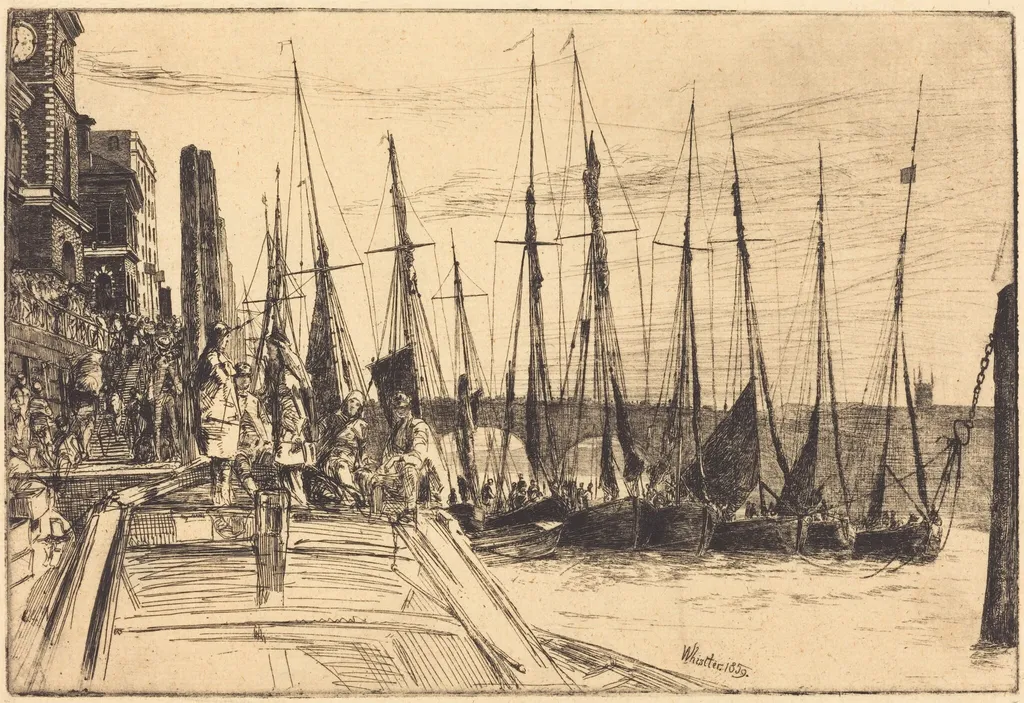
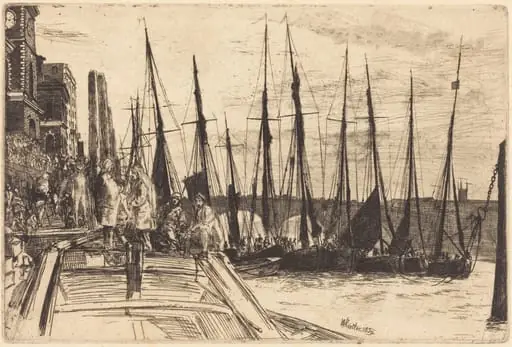
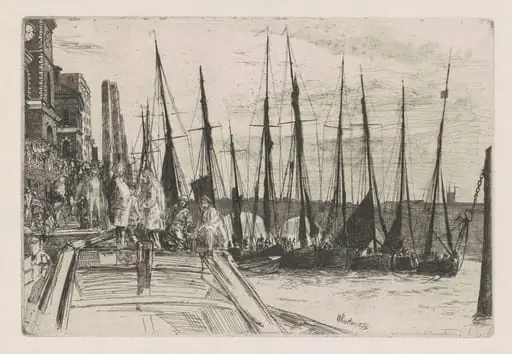
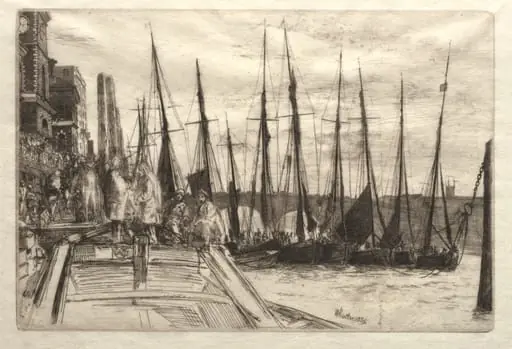
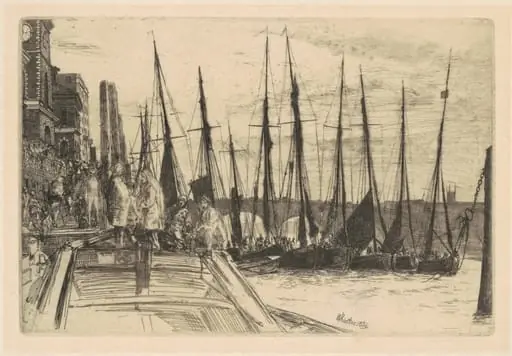
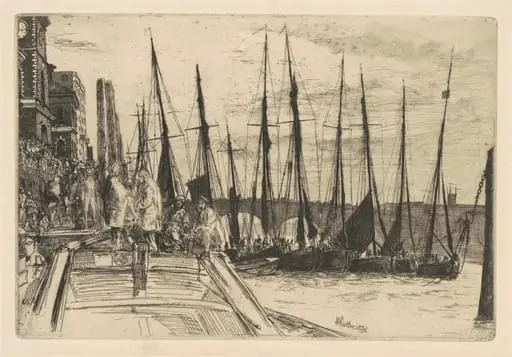
Billingsgate is an ink print by the Impressionist artist James McNeill Whistler. It dates from 1859 and is held in the collection of the National Gallery of Art.
About this work
Overview
Created in 1859, *Billingsgate* is an etching and drypoint on laid paper by James McNeill Whistler, an American artist based in London. It belongs to a body of printwork that explores urban life with quiet precision. Unlike narrative-driven imagery, the piece prioritizes visual harmony and tonal subtlety, reflecting Whistler’s commitment to aesthetic form over storytelling.
Subject & Meaning
The scene captures the early morning bustle of London’s Billingsgate fish market, with figures clustered along the dockside and vessels anchored in the Thames.
The scene captures the early morning bustle of London’s Billingsgate fish market, with figures clustered along the dockside and vessels anchored in the Thames. No single narrative dominates; instead, the composition conveys the rhythm of labor and commerce through grouped silhouettes and shifting light. Whistler avoids moral judgment, presenting the scene as a study in movement and atmosphere rather than social commentary.
Technique & Style
Whistler employed etching for fine, controlled lines and drypoint for richer, velvety textures, particularly in the shadows and fabric folds. The layered marks create depth without heavy shading, allowing the paper’s tone to suggest mist and moisture. His delicate handling of line and negative space gives the scene a sense of immediacy, balancing detail with atmospheric suggestion.
History & Provenance
Made during Whistler’s early years in London, *Billingsgate* was part of his exploration of printmaking as an independent art form. It was likely produced for private circulation among artists and collectors rather than mass reproduction. The work remained within European circles until entering public collections in the 20th century, where it is now recognized as a key example of his graphic work.
Context
In the late 1850s, London’s docks were hubs of industrial activity, and artists like Whistler turned to such scenes as alternatives to traditional historical or religious subjects. His focus on everyday labor aligned with emerging realist tendencies, yet his approach diverged by emphasizing mood and structure over social critique, distinguishing his work from contemporaries like Dickens or Cruikshank.
Legacy
*Billingsgate* exemplifies Whistler’s influence on modern printmaking by elevating etching beyond illustration to a medium of personal expression. His restrained composition and emphasis on tonal relationships inspired later artists, including those in the Aesthetic Movement and early modernists. The work remains a touchstone for understanding how quiet observation can yield profound visual resonance.
Own this work as a print
Artist & collection
Artist
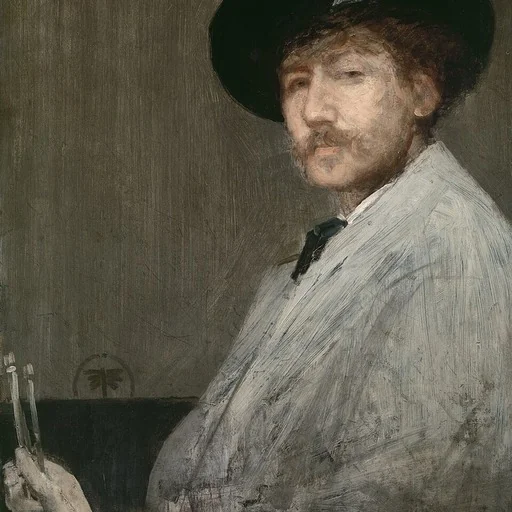
James Abbott McNeill Whistler was an American painter in oils and watercolor, and printmaker, active during the American Gilded Age and based primarily in the United Kingdom.

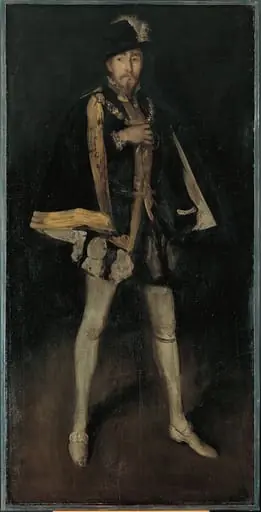 Arrangement in Black, No. 3: Sir Henry Irving as Philip II of Spain
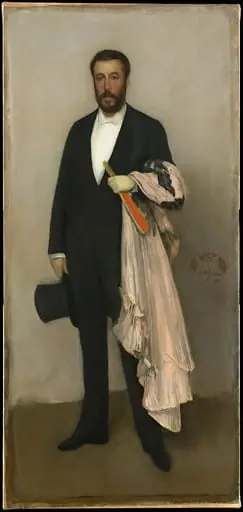 Arrangement in Flesh Colour and Black: Portrait of Theodore Duret
 Gold and Brown: Self-Portrait
 Edward Guthrie Kennedy
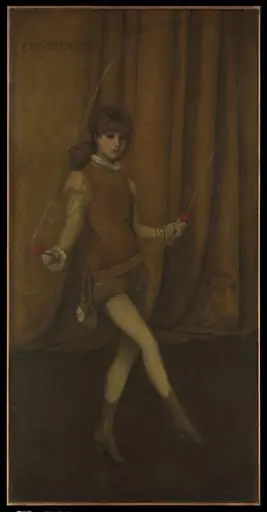 Harmony in Yellow and Gold: The Gold Girl—Connie Gilchrist
 George W. Vanderbilt
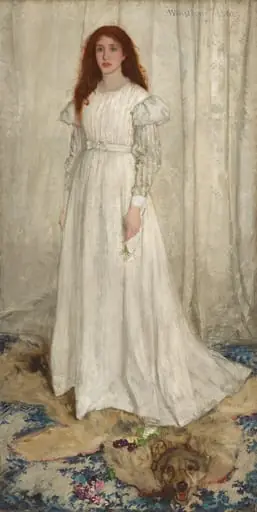 Symphony in White, No. 1: The White Girl
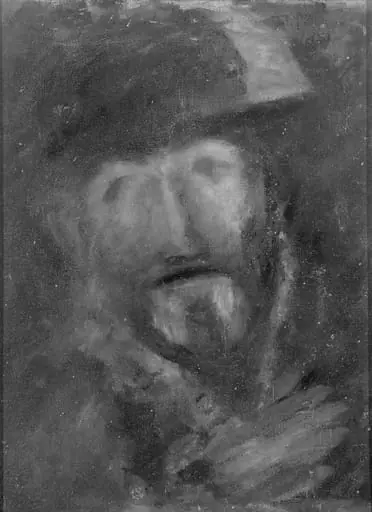 Henry Irving as Philip II of Spain