Artwork
Billingsgate
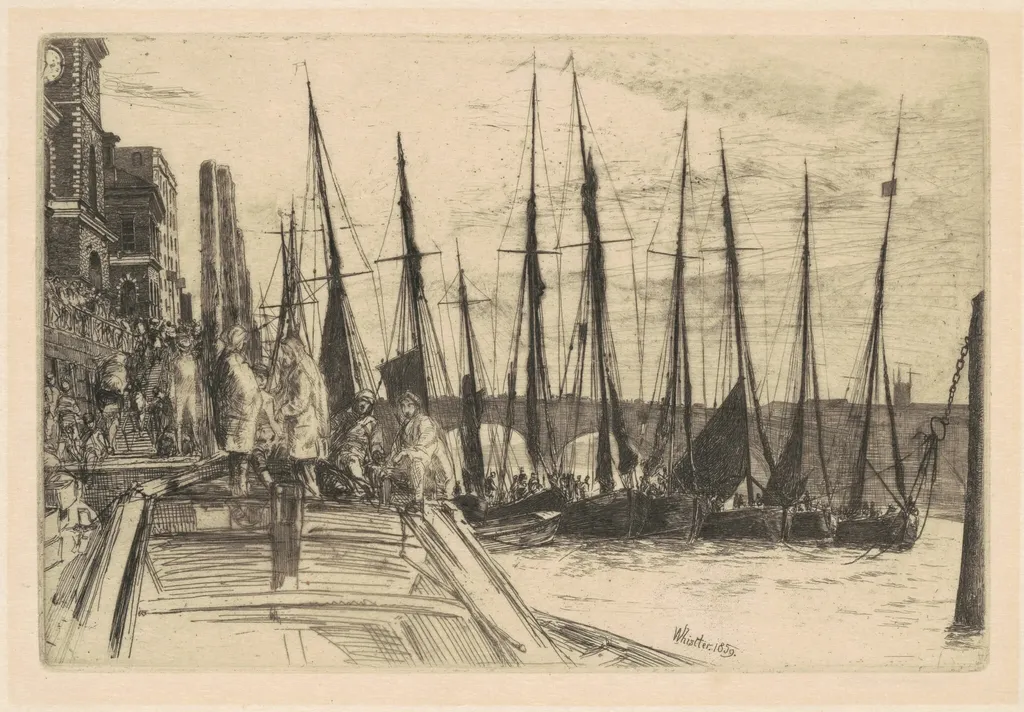
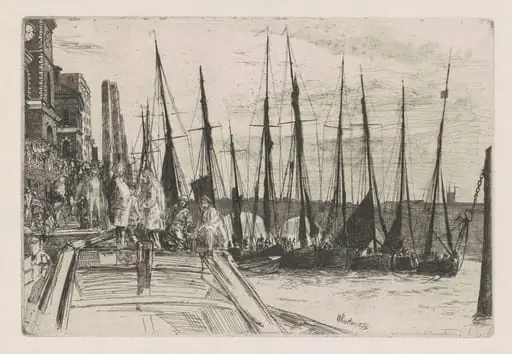
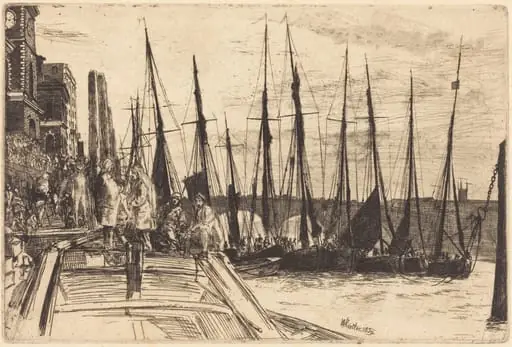
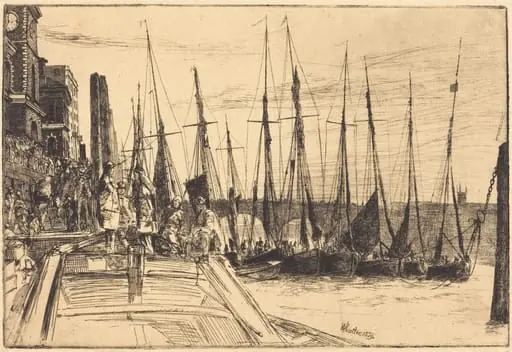
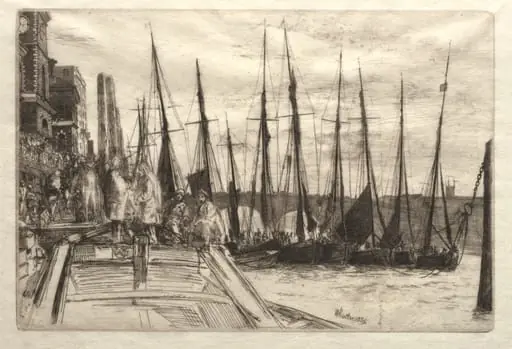
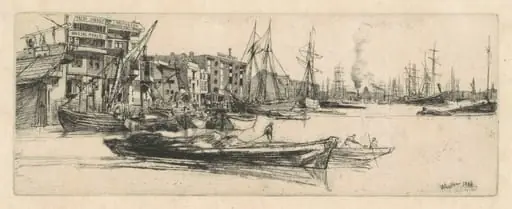
Billingsgate is an ink print by the Impressionist artist James McNeill Whistler. It dates from 1859 and is held in the collection of the National Gallery of Art.
About this work
Overview
James McNeill Whistler’s 1859 print “Billingsgate” presents a bustling riverside view of the Thames, centered on a wooden barge with sail‑filled vessels anchored beyond. Executed in black ink on laid paper, the composition captures the lively atmosphere of the historic fish market area.
Subject & Meaning
The scene portrays the activity of Billingsgate Fish Market, a noisy hub of commerce in mid‑nineteenth‑century London. By focusing on the interplay of boats, sails, and water, Whistler conveys the energy of the dockside trade without narrative embellishment, allowing the viewer to sense the market’s daily rhythm.
Technique & Style
Whistler employed a combination of etching and drypoint, using fine, closely spaced lines to render the rippling water and the texture of the sails. The monochrome palette of deep black on laid paper creates a contrast of light and shadow that emphasizes form and movement while imparting a timeless quality.
History & Provenance
Created during Whistler’s early years in London, “Billingsgate” is among his first forays into printmaking. The work remained in private collections before entering the National Gallery of Art in Washington, where it is currently on view.
Context
The print reflects the mid‑Victorian fascination with urban industrial scenes, aligning with contemporary interests in documenting modern life. Whistler’s choice of a commercial waterfront as subject places the work within a broader trend of realist observation in British art of the 1850s.
Artist & collection
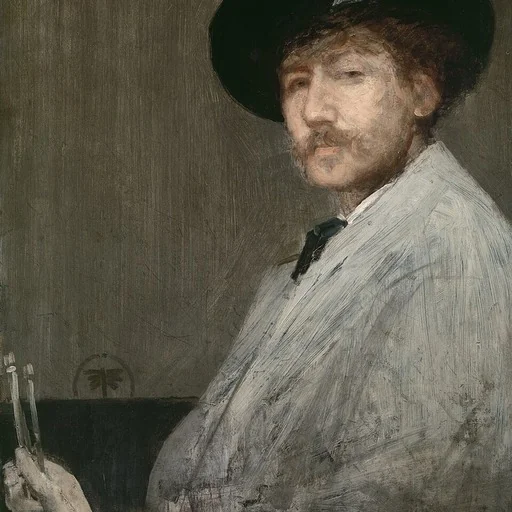
Artist
James Abbott McNeill Whistler was an American painter in oils and watercolor, and printmaker, active during the American Gilded Age and based primarily in the United Kingdom.

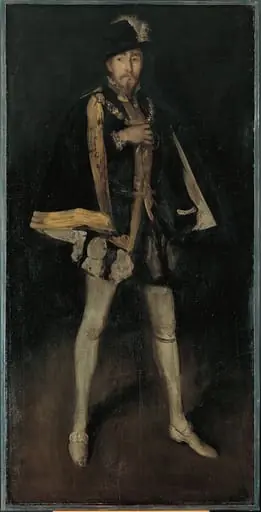 Arrangement in Black, No. 3: Sir Henry Irving as Philip II of Spain
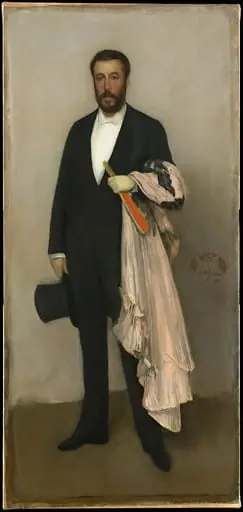 Arrangement in Flesh Colour and Black: Portrait of Theodore Duret
 Gold and Brown: Self-Portrait
 Edward Guthrie Kennedy
 Harmony in Yellow and Gold: The Gold Girl—Connie Gilchrist
 George W. Vanderbilt
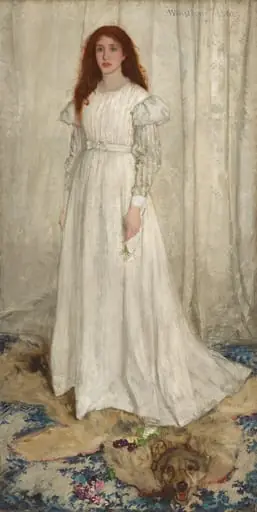 Symphony in White, No. 1: The White Girl
 Henry Irving as Philip II of Spain