Artwork
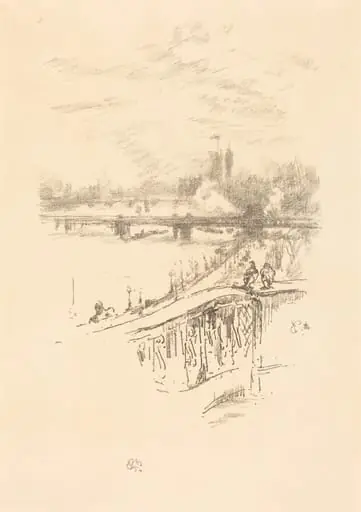
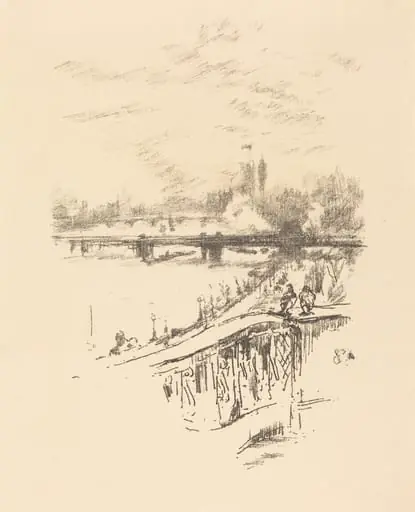
Evening, Little Waterloo Bridge
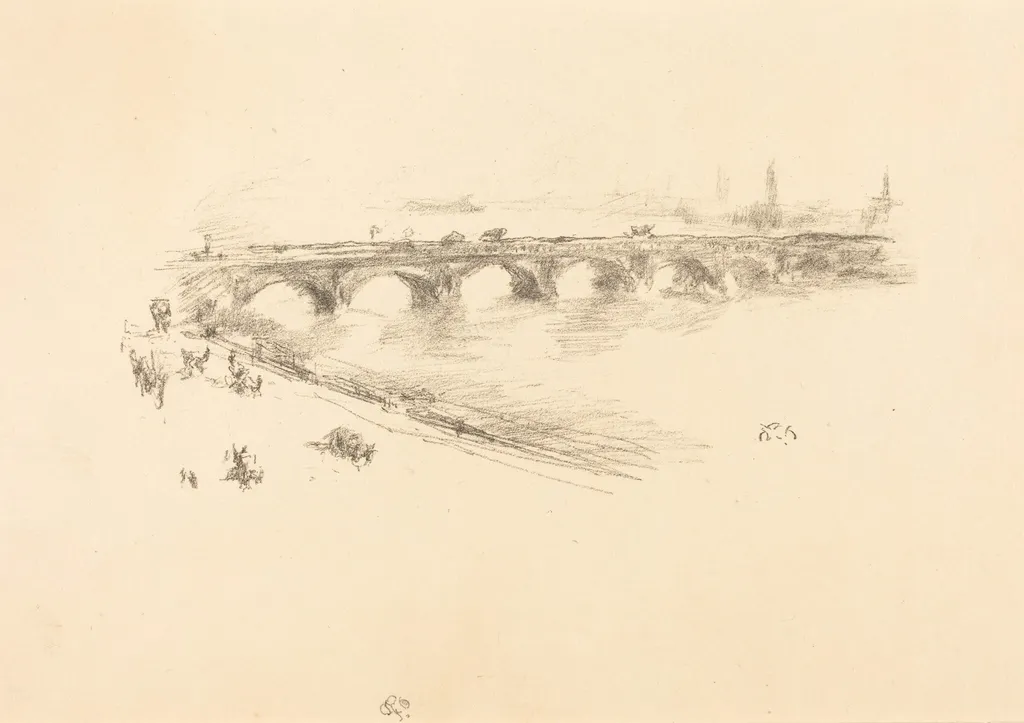
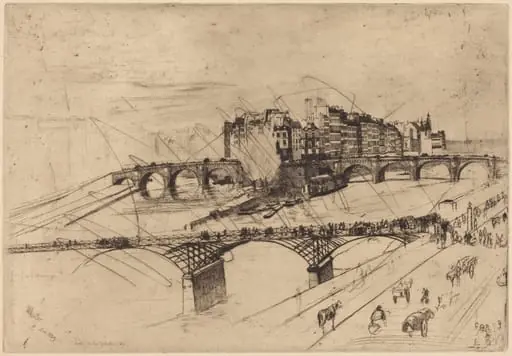
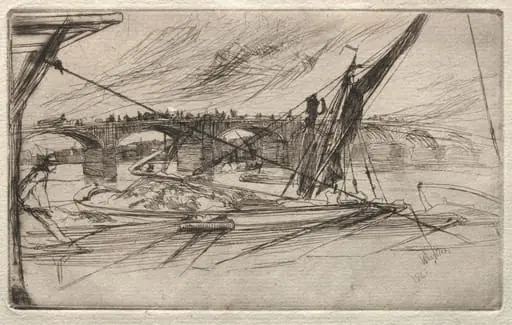
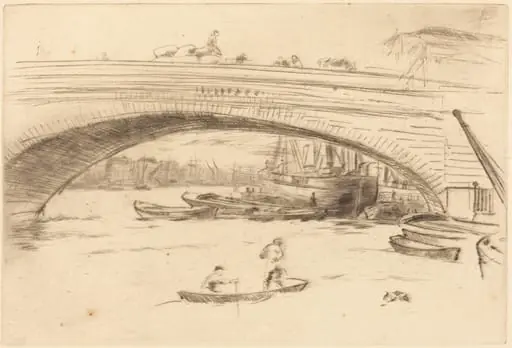
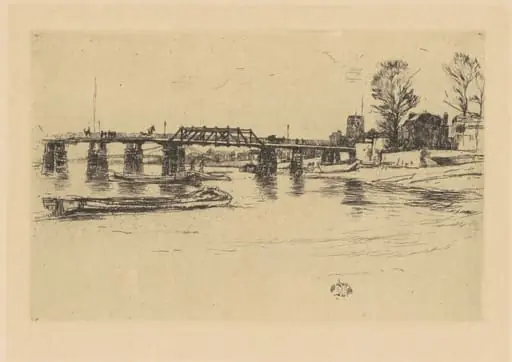
Evening, Little Waterloo Bridge is an ink print by the Impressionist artist James McNeill Whistler. It dates from 1896 and is held in the collection of the National Gallery of Art.
About this work
Overview
James McNeill Whistler’s 1896 lithograph *Evening, Little Waterloo Bridge* depicts the Thames at twilight, focusing on the bridge’s five stone arches spanning calm water. Rendered in black ink on laid paper, the image balances the subdued sky with the illuminated structure, while figures on the left bank are suggested with loose, fleeting strokes.
Subject & Meaning
The composition captures a quiet moment on the river, emphasizing atmosphere over narrative. The bridge, rendered in stark silhouette, serves as a structural anchor amid the fading light, while the scattered pedestrians and horses hint at everyday urban life without directing a specific story, reflecting Whistler’s interest in mood and tonal harmony.
Technique & Style
Created through lithography, the work employs black ink applied to a prepared stone surface, then transferred onto laid paper. Whistler’s delicate handling is evident in the fine pencil-like lines that suggest movement and the subtle gradations of shadow, while the overall design remains restrained, aligning with his “art for art’s sake” aesthetic.
History & Provenance
Part of a broader series of Thames and bridge studies, the print was produced in the late 1890s, a period when Whistler explored printmaking alongside painting. His stylized butterfly signature appears on the plate, a hallmark of his later works, and the piece has since been held in several public and private collections documenting his print oeuvre.
Artist & collection
Artist
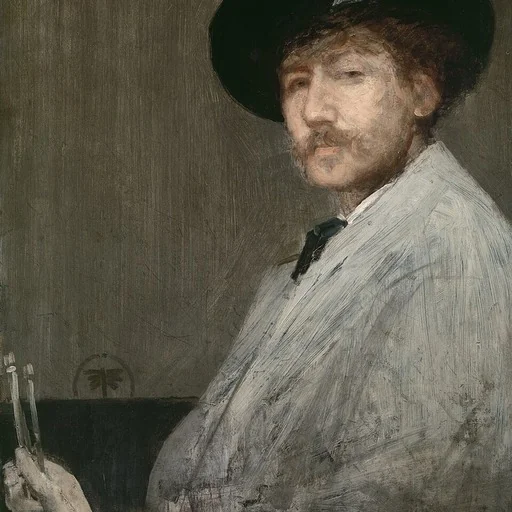
James Abbott McNeill Whistler was an American painter in oils and watercolor, and printmaker, active during the American Gilded Age and based primarily in the United Kingdom.

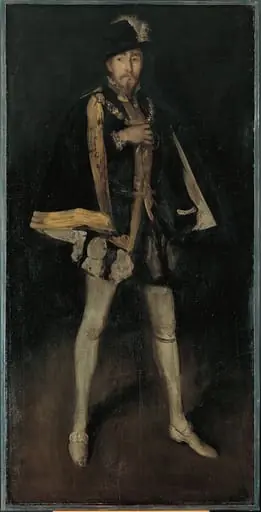 Arrangement in Black, No. 3: Sir Henry Irving as Philip II of Spain
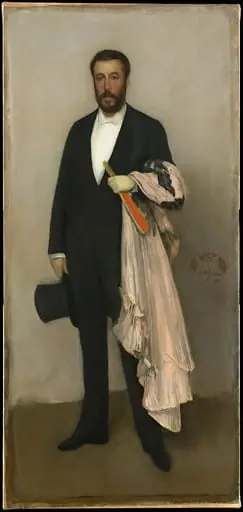 Arrangement in Flesh Colour and Black: Portrait of Theodore Duret
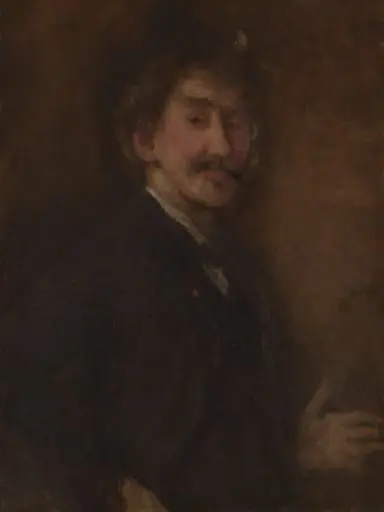 Gold and Brown: Self-Portrait
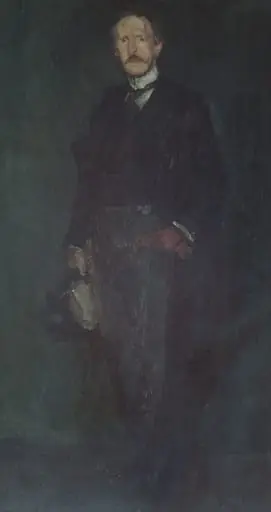 Edward Guthrie Kennedy
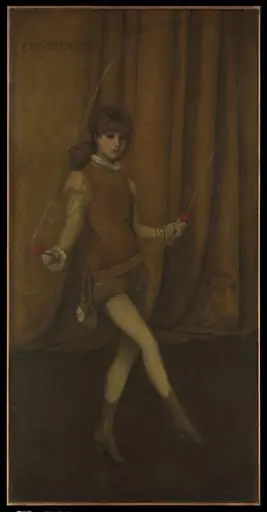 Harmony in Yellow and Gold: The Gold Girl—Connie Gilchrist
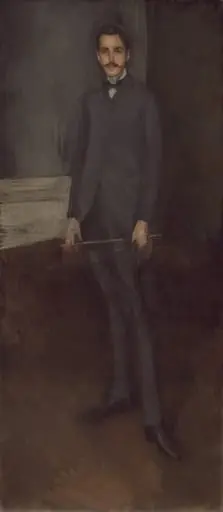 George W. Vanderbilt
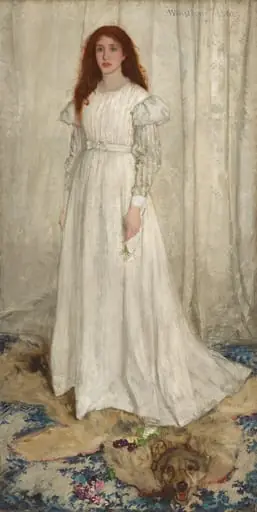 Symphony in White, No. 1: The White Girl
 Henry Irving as Philip II of Spain