Artwork
Angers - Panoramic View (Angers - Vue panoramique)
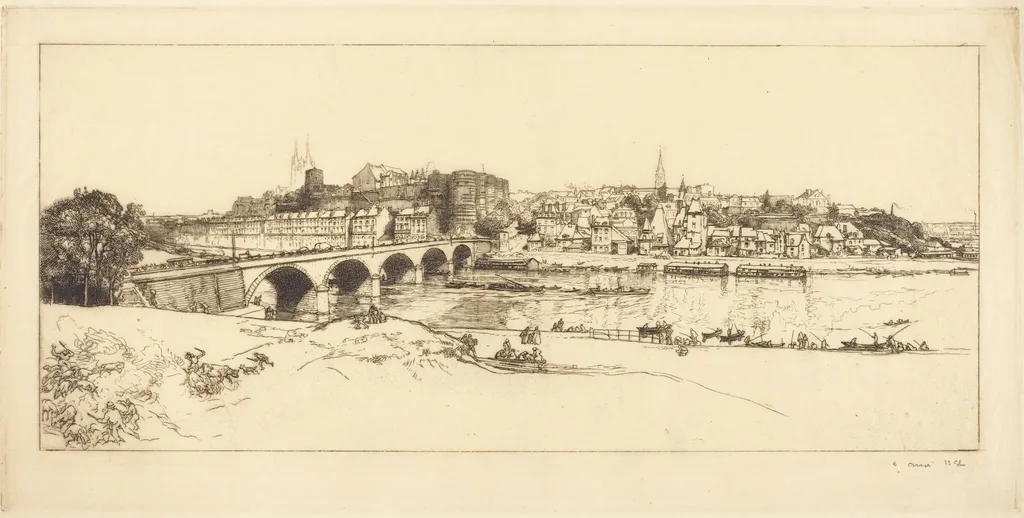
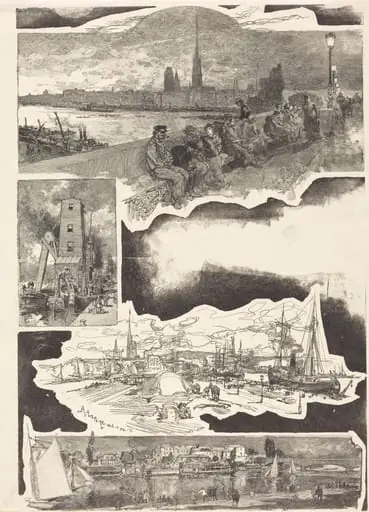
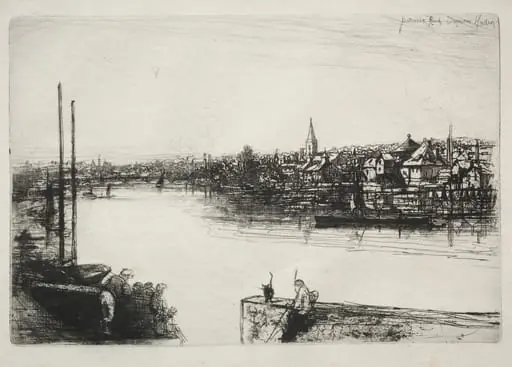
Angers - Panoramic View (Angers - Vue panoramique) is an ink print by Auguste Lepère. It dates from 1912 and is held in the collection of the National Gallery of Art.
About this work
Overview
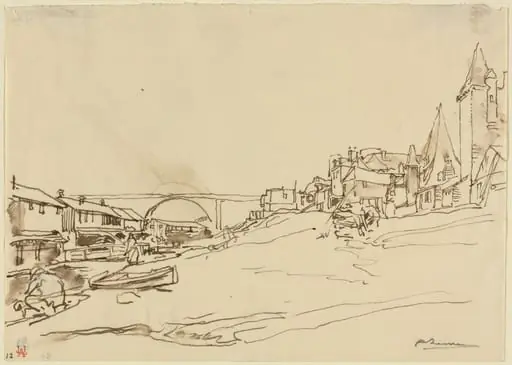
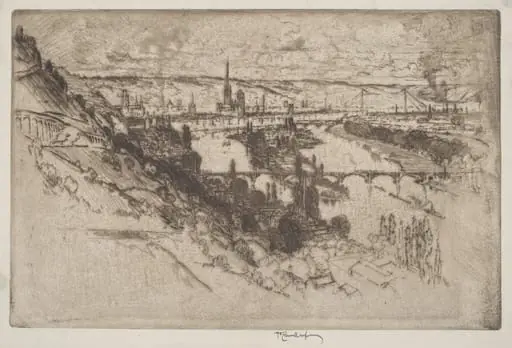
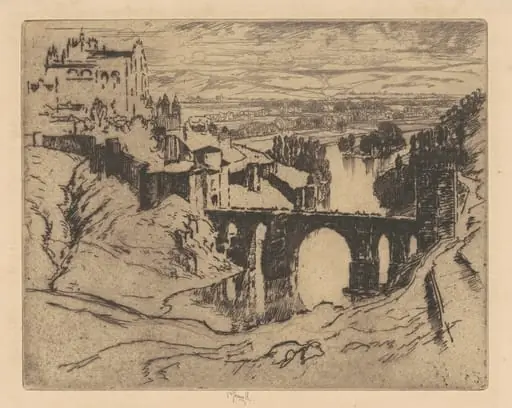
Created in 1912, *Angers – Panoramic View* is an etching by French artist Auguste Lepère. The print offers an elevated, wide‑angle representation of the city of Angers, capturing its riverfront, architecture, and surrounding landscape in a single, continuous composition.
Subject & Meaning
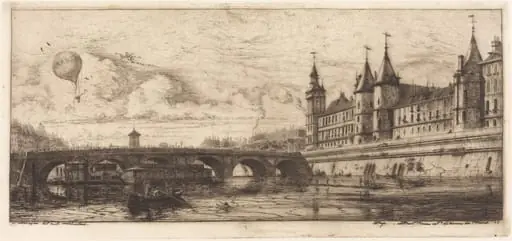
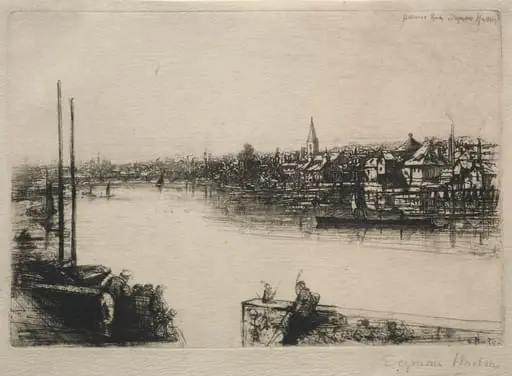
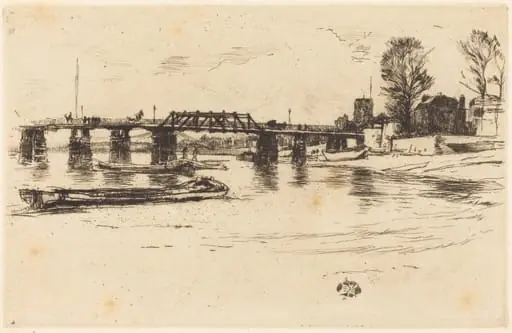
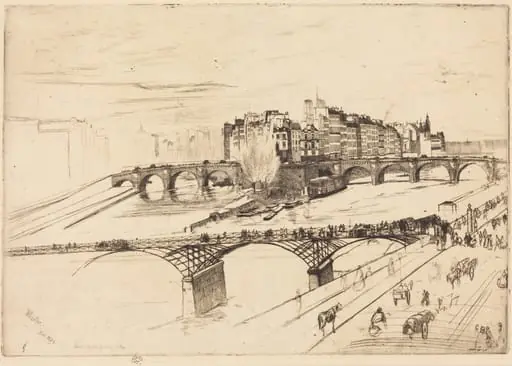
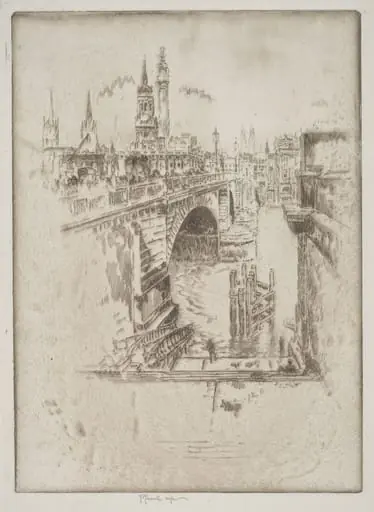
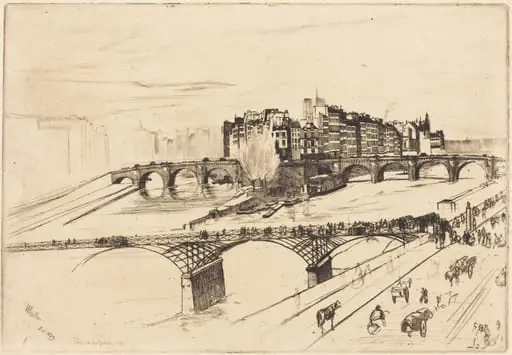
The image presents Angers as a compact urban settlement set along a river, with a stone bridge spanning the water and supporting traffic of pedestrians and horses. Dense rows of buildings, some topped with steep roofs, frame a distant church tower, while trees line the banks and small boats drift near the shore, emphasizing the town’s relationship to its waterways.
Technique & Style
Lepère employed delicate, intersecting lines typical of etching to model light, shadow, and texture, giving the scene a subtle three‑dimensional quality. The fine hatching delineates the arches of the bridge and the facades of the structures, while tonal variations suggest atmospheric depth and the reflective surface of the river.
History & Provenance
Born in 1849, Auguste Lepère was a prominent figure in the late‑19th‑ and early‑20th‑century revival of wood engraving and printmaking in Europe. *Angers – Panoramic View* reflects his mature period, produced shortly before his death in 1914, and exemplifies his skill in translating urban vistas into the etching medium.
Artist & collection
Artist
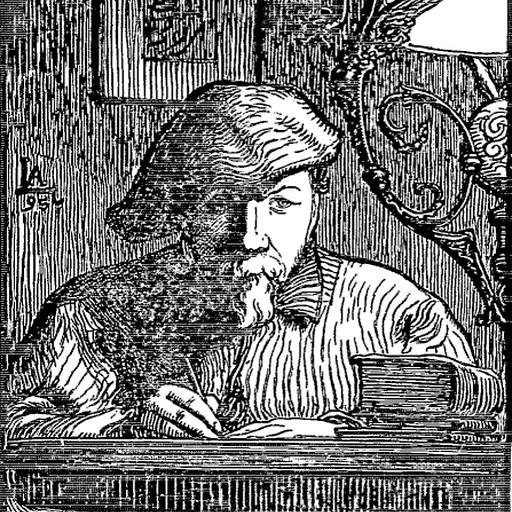
Louis-Auguste Lepère (30 November 1849 – 20 November 1918) was a French painter and etcher. Lepère is also considered a leader in the creative revival of wood engraving in Europe.