Artwork
Hurlingham
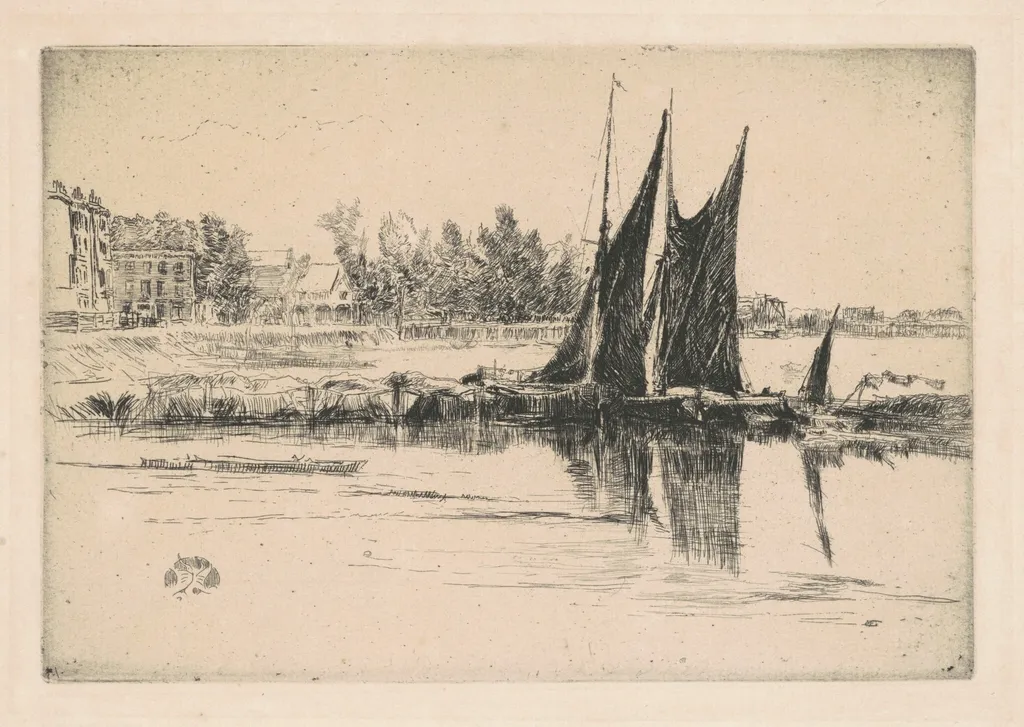
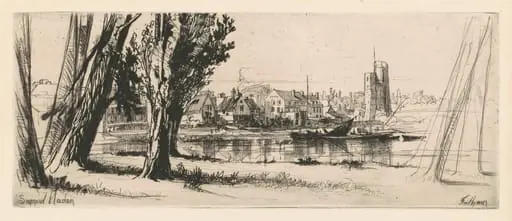
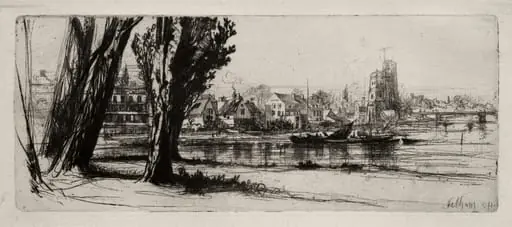
Hurlingham is an ink print by the Impressionist artist James McNeill Whistler. It dates from 1879 and is held in the collection of the National Gallery of Art.
About this work
Overview
It captures a quiet stretch of the Thames near the Hurlingham Club, focusing on the stillness of the water and the quiet presence of sailing vessels.
Created in 1879, Hurlingham is an etching and drypoint by James McNeill Whistler, rendered in black ink on laid paper. It captures a quiet stretch of the Thames near the Hurlingham Club, focusing on the stillness of the water and the quiet presence of sailing vessels. The composition is deliberately sparse, with a high horizon and generous margins of untouched paper that isolate the scene and amplify its stillness.
Subject & Meaning
The scene depicts a tranquil riverside at Hurlingham, with trees and buildings lining the banks and large sails resting on calm water. There is no human activity visible; the absence of figures reinforces a sense of solitude and quiet observation. The work conveys not a narrative, but a mood — one of contemplative stillness, aligned with Whistler’s interest in tonal harmony over storytelling.
Technique & Style
Whistler employed etching and drypoint to achieve subtle gradations of tone, using fine lines and soft burrs to suggest texture in foliage and architecture. The monochromatic sepia palette, limited to blacks and warm greys, enhances atmospheric depth. Deliberate use of negative space and precise control of ink density create the illusion of reflected light, particularly in the dark sails that seem to float as mirrored forms on the water’s surface.
History & Provenance
Whistler produced Hurlingham during a period of intense printmaking activity in the late 1870s, following his move to London. It was likely made from direct observation of the Thames near his residence. The work was part of a series of river scenes he developed to explore tonal effects, and it entered public collections through private acquisitions before being acquired by major institutions in the 20th century.
Context
Hurlingham emerged amid the Aesthetic Movement’s emphasis on beauty and sensory experience over moral or narrative content. Whistler’s approach aligned with Japanese prints in its flattened perspective and emphasis on composition over detail. The work reflects his broader interest in capturing transient atmospheric conditions, paralleling his nocturnes and other tonal studies of the Thames.
Legacy
Hurlingham exemplifies Whistler’s influence on modern printmaking through its restraint and focus on mood. Its emphasis on tonal harmony and spatial economy inspired later artists to prioritize atmosphere over detail. The work remains a key example of how etching could convey emotional resonance without narrative, shaping the evolution of tonal printmaking in the late 19th and early 20th centuries.
Artist & collection
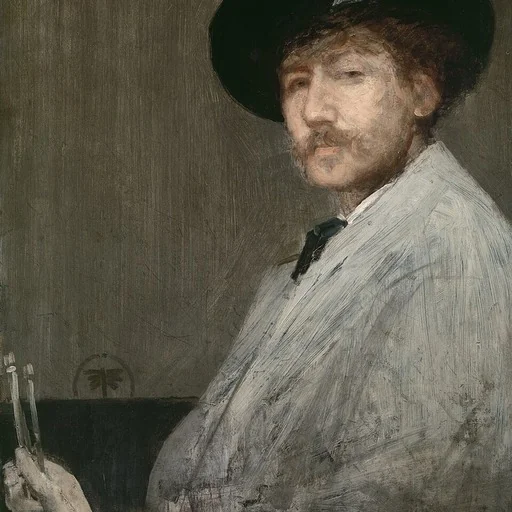
Artist
James Abbott McNeill Whistler was an American painter in oils and watercolor, and printmaker, active during the American Gilded Age and based primarily in the United Kingdom.

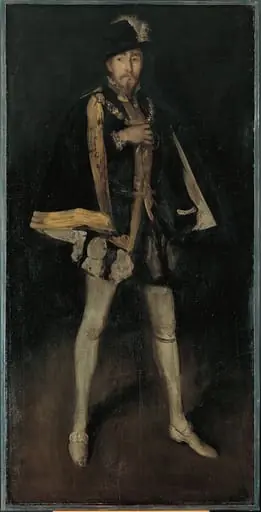 Arrangement in Black, No. 3: Sir Henry Irving as Philip II of Spain
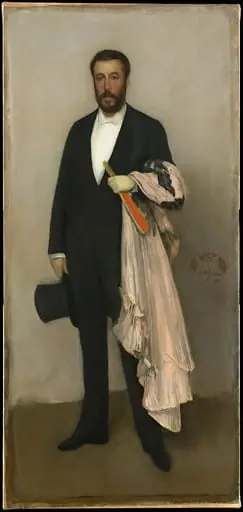 Arrangement in Flesh Colour and Black: Portrait of Theodore Duret
 Gold and Brown: Self-Portrait
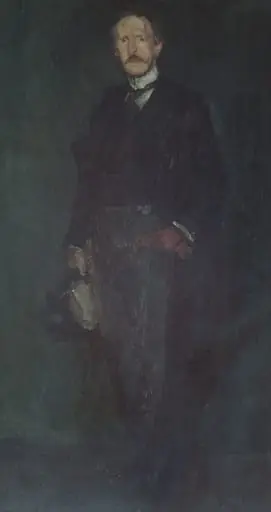 Edward Guthrie Kennedy
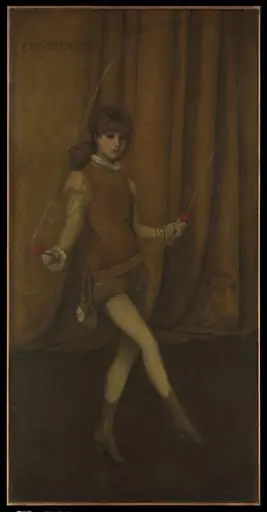 Harmony in Yellow and Gold: The Gold Girl—Connie Gilchrist
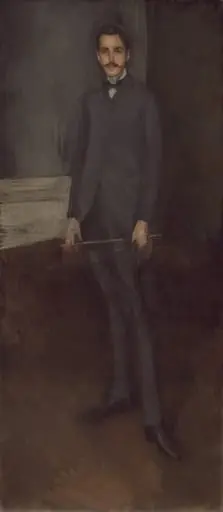 George W. Vanderbilt
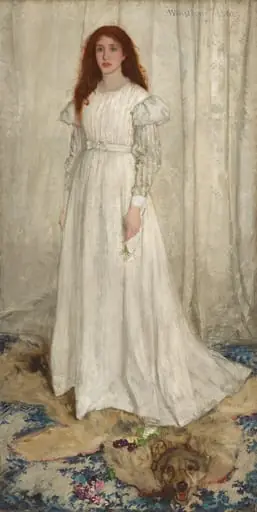 Symphony in White, No. 1: The White Girl
 Henry Irving as Philip II of Spain