Artwork
Fulham
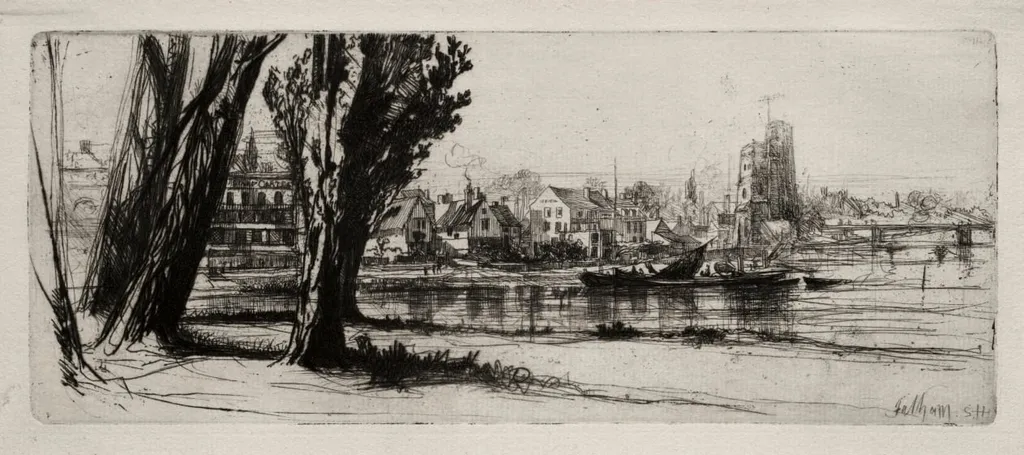
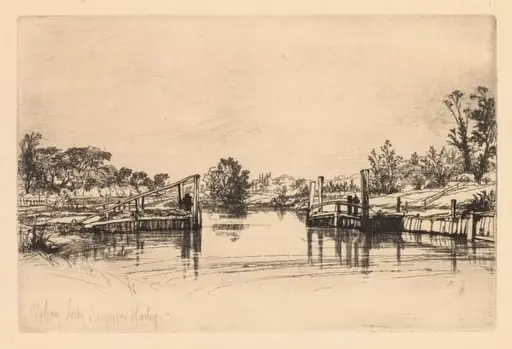
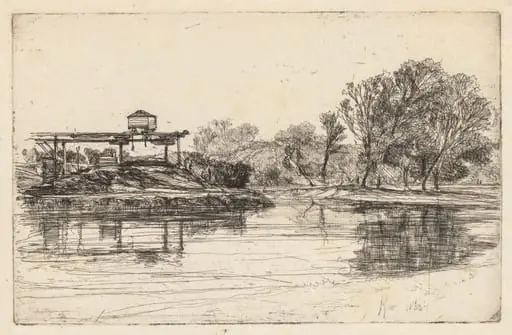
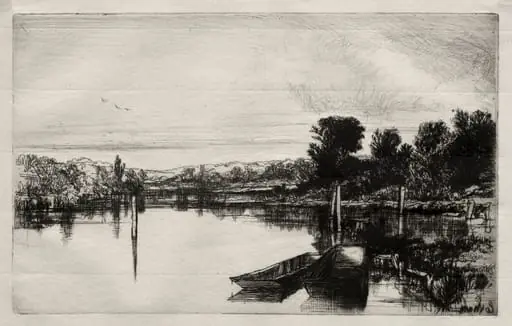
Fulham is a print by Francis Seymour Haden. It dates from 1868 and is held in the collection of the Cleveland Museum of Art.
About this work
Overview
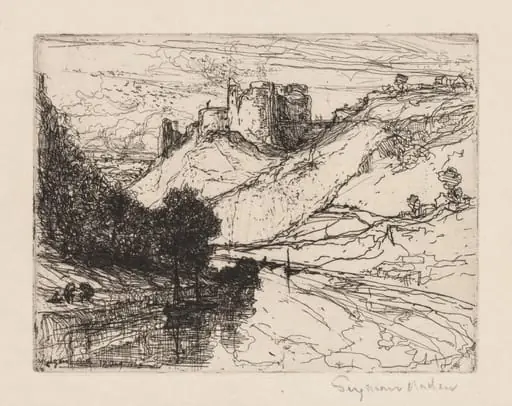
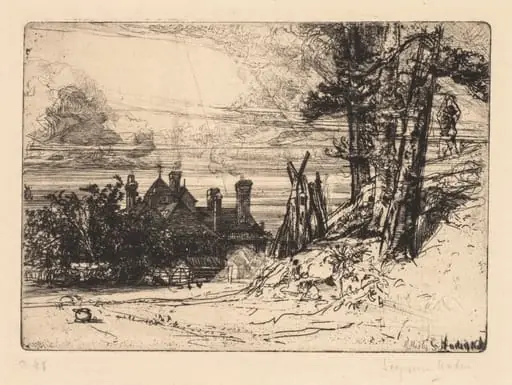
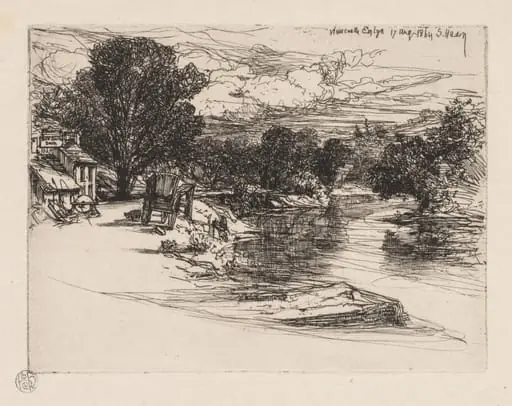
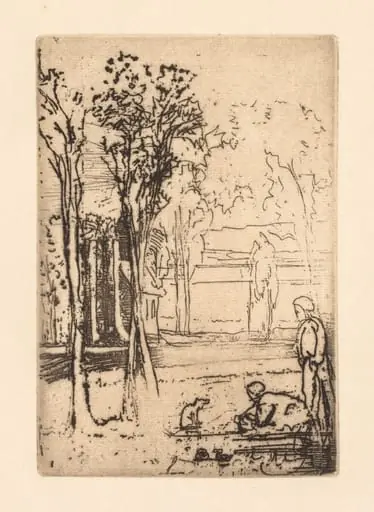
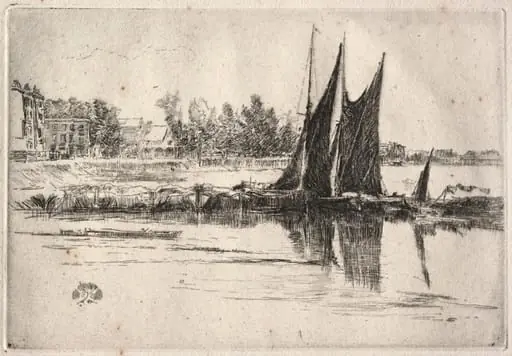
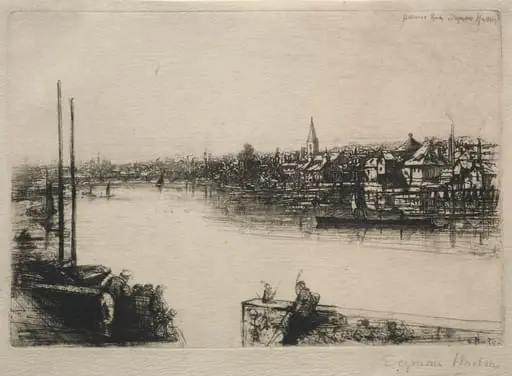
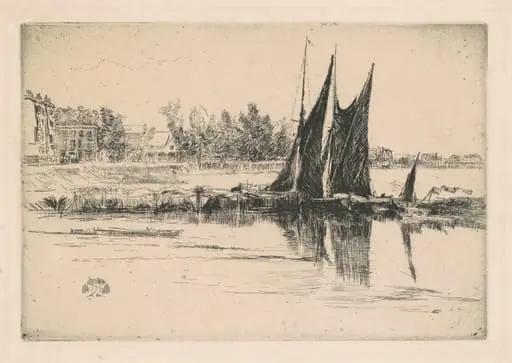
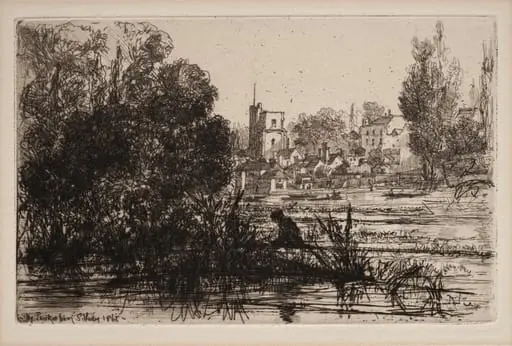
Fulham, created around 1868 by Francis Seymour Haden, is a drypoint print capturing a quiet stretch of the River Thames near the London suburb of Fulham. The work is part of the collection at The Cleveland Museum of Art and exemplifies Haden’s interest in everyday landscapes rendered with subtle tonal nuance. Unlike grand historical scenes, it focuses on the unassuming rhythms of riverside life.
Subject & Meaning
The absence of human figures emphasizes solitude and the quiet persistence of daily existence, inviting contemplation rather than storytelling.
The scene portrays a tranquil riverside with clustered trees on the left, a single small boat drifting near the center, and a line of modest buildings receding into the distance beneath a pale, overcast sky. There is no narrative drama—only stillness and routine. The absence of human figures emphasizes solitude and the quiet persistence of daily existence, inviting contemplation rather than storytelling.
Technique & Style
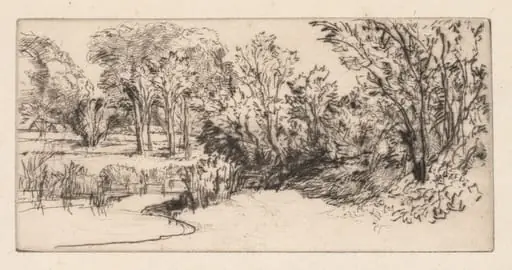
Haden employed drypoint engraving, using a needle to scratch lines directly into a metal plate, creating soft, velvety blacks and delicate gradations. His restrained use of tone and fine, meandering lines evokes atmospheric depth without sharp definition. The muted palette and blurred edges reflect the diffused light of a cloudy day, enhancing the mood of quietude and introspection.
History & Provenance
Created during Haden’s active period as a printmaker, Fulham was made shortly after his return from studying European etching techniques. It was likely produced for private circulation among artists and collectors rather than mass distribution. The print entered The Cleveland Museum of Art’s collection in the 20th century, where it remains as part of their holdings of 19th-century British graphic art.
Context
In the late 1860s, Haden was part of a movement among British artists reviving etching as a serious medium, distinct from commercial reproduction. Fulham aligns with this revival, reflecting a preference for intimate, observational subjects over grand historical themes. It also mirrors the broader Victorian fascination with the liminal spaces between urban development and natural quiet.
Legacy
Fulham stands as an example of Haden’s influence in elevating printmaking to the status of fine art in Britain. Though not widely exhibited during his lifetime, his emphasis on personal expression through etching inspired later generations of printmakers. The work continues to be studied for its quiet composition and technical restraint, embodying a distinctly English aesthetic of understated observation.
Artist & collection