Artwork
Liverdun
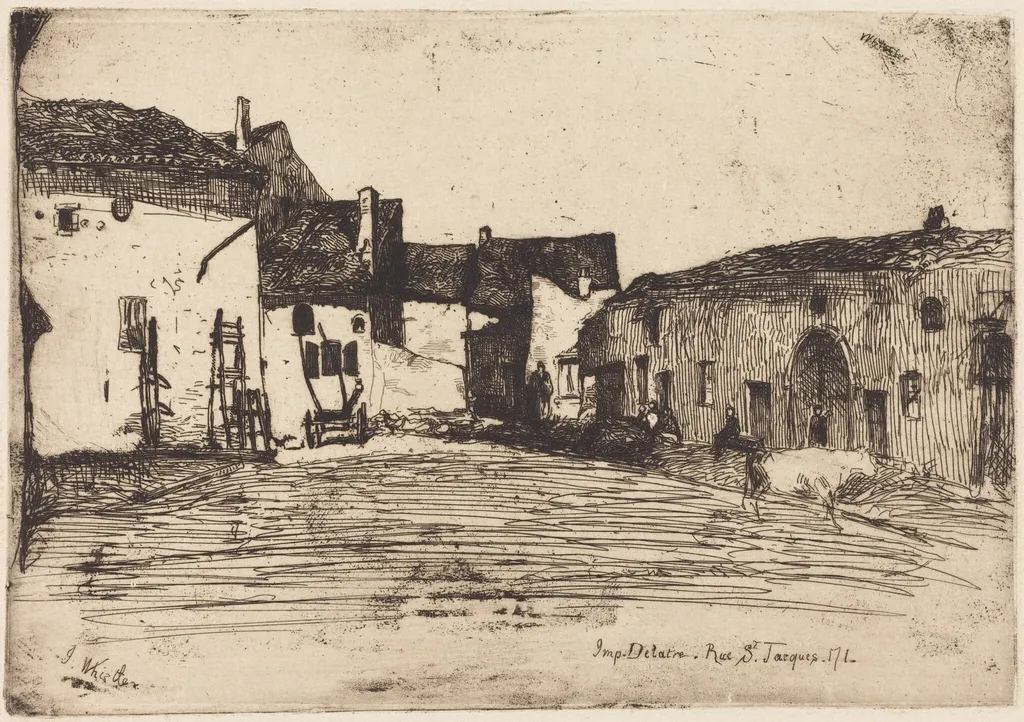
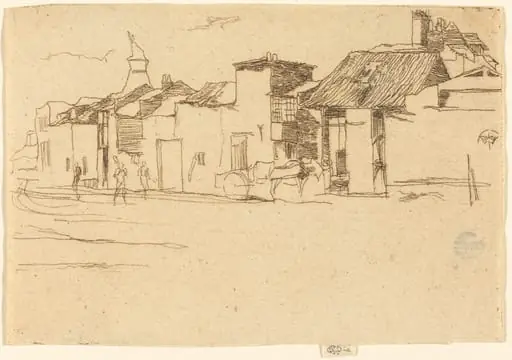
Liverdun is an ink print by the Impressionist artist James McNeill Whistler. It dates from 1858 and is held in the collection of the National Gallery of Art.
About this work
Overview
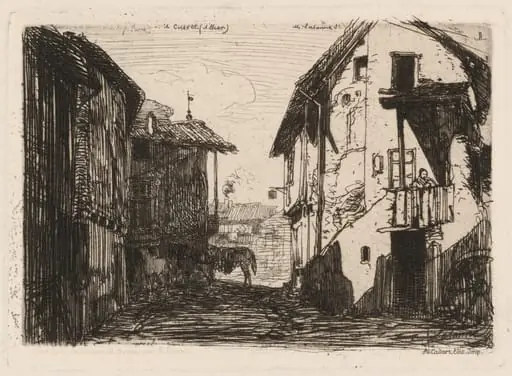
James McNeill Whistler’s 1858 etching titled Liverdun presents a compact view of a French provincial town. Executed on a chine collé support, the print combines fine line work with subtle tonal gradations to render architecture, streets and figures in a calm, observational manner.
Subject & Meaning
The image records a typical street scene in Liverdun, showing modest buildings, open windows and doors, and a few townspeople beside a cart. The composition emphasizes the ordinary rhythm of daily life, inviting the viewer to notice the quiet interactions of a small community.
Technique & Style
Whistler employed etching on a thin paper adhered to a backing sheet (chine collé), allowing delicate lines to emerge against a smooth surface. The method yields precise architectural details while preserving atmospheric depth through varied line density and tonal shading, characteristic of his early printmaking.
History & Provenance
Created during Whistler’s formative years while he was residing in Europe, the work predates his later fame as an oil and watercolor painter. The etching reflects his early interest in landscape and urban subjects before he turned to larger-scale media.
Context
In the mid‑19th century, French towns like Liverdun were common subjects for artists exploring the interplay of light, structure and human activity. Whistler’s approach aligns with contemporary European print traditions that valued meticulous observation and tonal subtlety.
Own this work as a print
Artist & collection
Artist
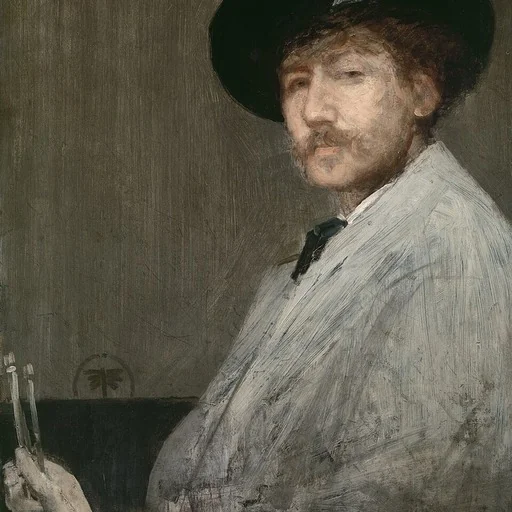
James Abbott McNeill Whistler was an American painter in oils and watercolor, and printmaker, active during the American Gilded Age and based primarily in the United Kingdom.

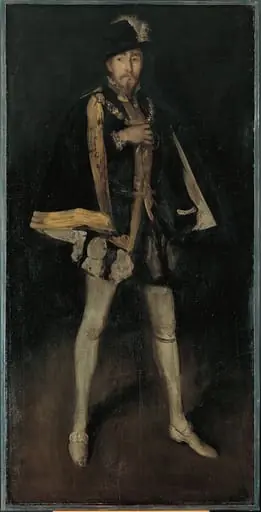 Arrangement in Black, No. 3: Sir Henry Irving as Philip II of Spain
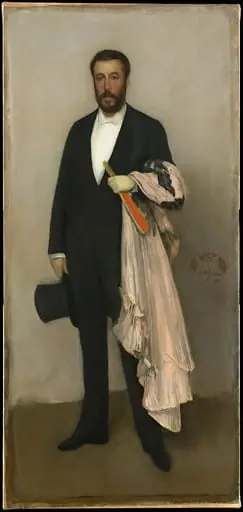 Arrangement in Flesh Colour and Black: Portrait of Theodore Duret
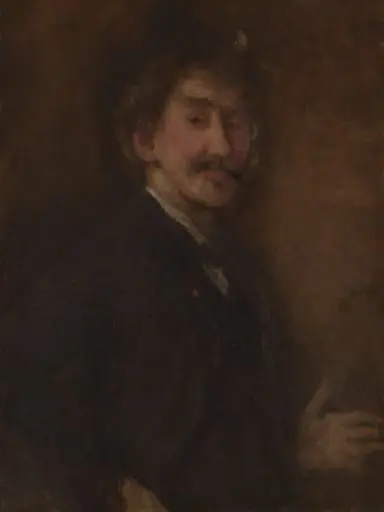 Gold and Brown: Self-Portrait
 Edward Guthrie Kennedy
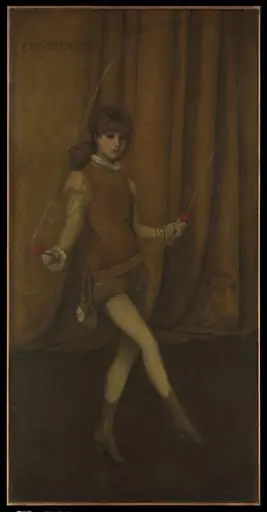 Harmony in Yellow and Gold: The Gold Girl—Connie Gilchrist
 George W. Vanderbilt
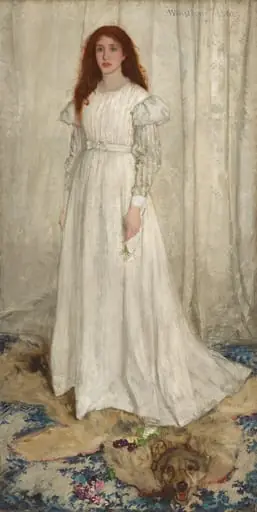 Symphony in White, No. 1: The White Girl
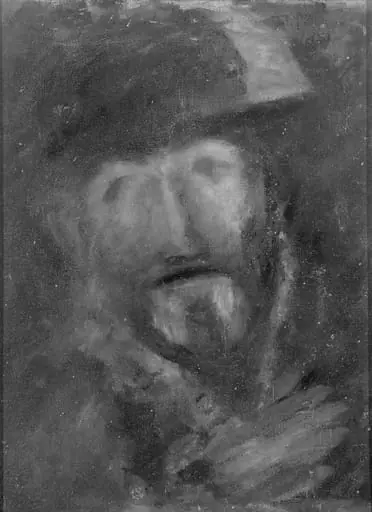 Henry Irving as Philip II of Spain