Artwork
Mother and Child, No. 4
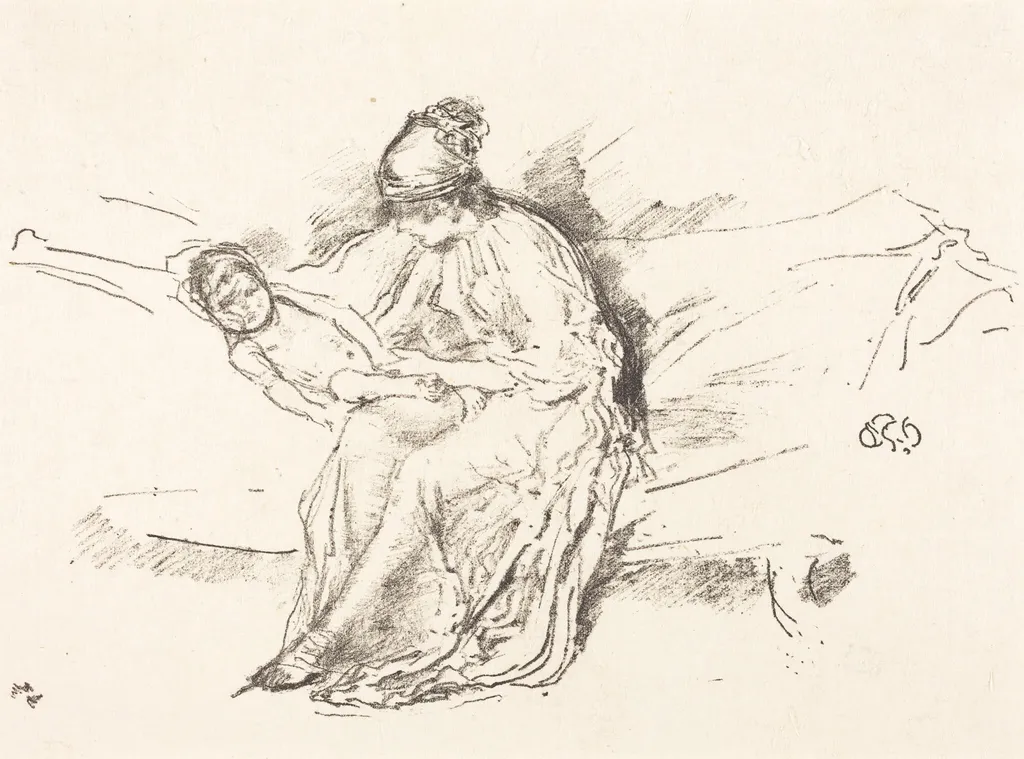
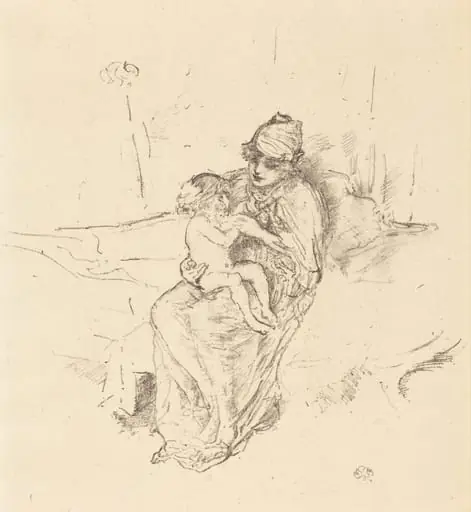
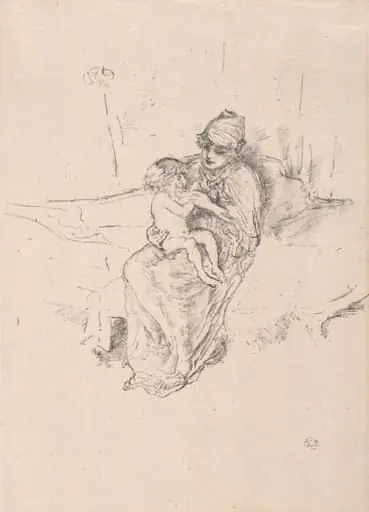
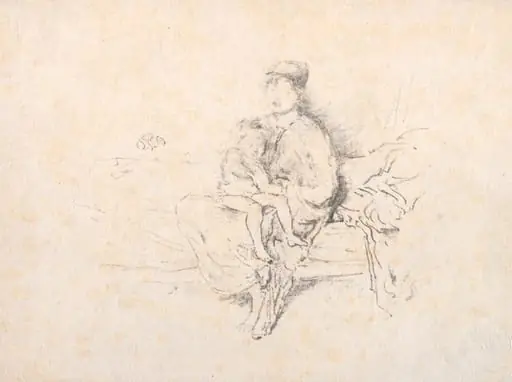
Mother and Child, No. 4 is an ink print by the Impressionist artist James McNeill Whistler. It dates from 1893 and is held in the collection of the National Gallery of Art. Created in 1893, *Mother and Child, No.
About this work
Overview
Unlike formal portraits, this work captures a fleeting moment with minimal detail, reflecting Whistler’s interest in tonal harmony over narrative clarity.
Created in 1893, *Mother and Child, No. 4* is a lithograph executed in black ink on wove paper. It belongs to a small series of intimate studies by James McNeill Whistler, made during his time in Britain. Unlike formal portraits, this work captures a fleeting moment with minimal detail, reflecting Whistler’s interest in tonal harmony over narrative clarity. The medium allowed for spontaneous, direct expression, aligning with his preference for evocative suggestion over explicit storytelling.
Subject & Meaning
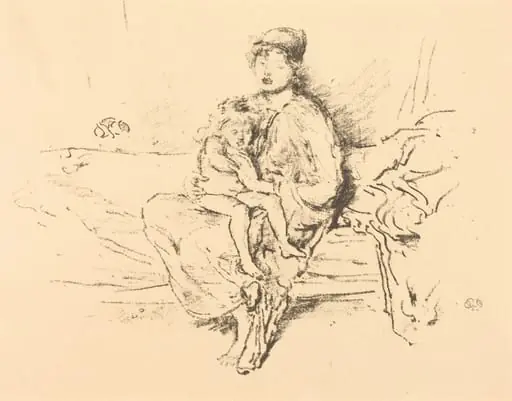
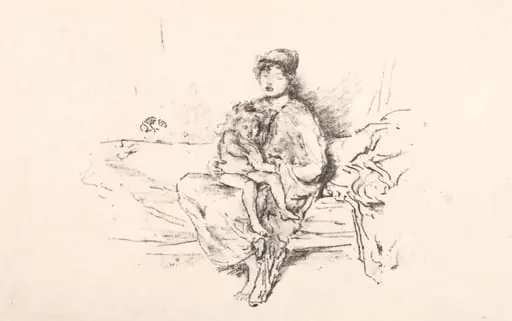
The image depicts a seated woman holding an infant, rendered without idealization or emotional exaggeration. Whistler avoids conventional maternal symbolism, presenting the figures as quiet, anonymous forms. The lack of facial detail and the subdued interaction suggest a focus on presence rather than sentiment. The subject is not a specific person but a generalized observation of domestic stillness, consistent with his belief that art should evoke mood, not convey moral or emotional messages.
Technique & Style
Whistler employed lithographic stone to create soft, smudged contours using pencil-like strokes, emphasizing tone over line. The background is nearly blank, with only faint indications of furniture, directing attention to the figures’ silhouettes. The child’s hands and the mother’s loose garment are rendered with rapid, unfinished marks, suggesting immediacy. This sketchlike quality reflects his practice of treating prints as autonomous studies, not preparatory sketches for paintings.
History & Provenance
This lithograph was produced during Whistler’s mature period, when he increasingly turned to printmaking as a means of personal exploration. It was likely made in his London studio, where he experimented with lithography alongside etching. Though not widely exhibited at the time, it entered private collections in the early 20th century and is now held in institutional holdings, primarily as part of studies on his graphic work rather than as a major public display piece.
Context
In the 1890s, Whistler was distancing himself from the narrative-driven art popular in Victorian Britain. His focus on formal elements—line, tone, composition—aligned with the Aesthetic Movement’s principle of 'art for art's sake.' Lithography offered him a direct, unmediated medium to explore form without the constraints of academic tradition. This work reflects his broader shift toward abstraction and economy of means in his later years.
Legacy
Whistler’s *Mother and Child, No. 4* exemplifies his influence on modern printmaking by prioritizing atmosphere over detail. Its understated approach anticipated 20th-century tendencies toward simplification and emotional restraint in figurative art. While not as widely recognized as his paintings, the lithograph remains a key example of how he redefined the potential of print as a medium for quiet, contemplative expression.
Artist & collection
Artist
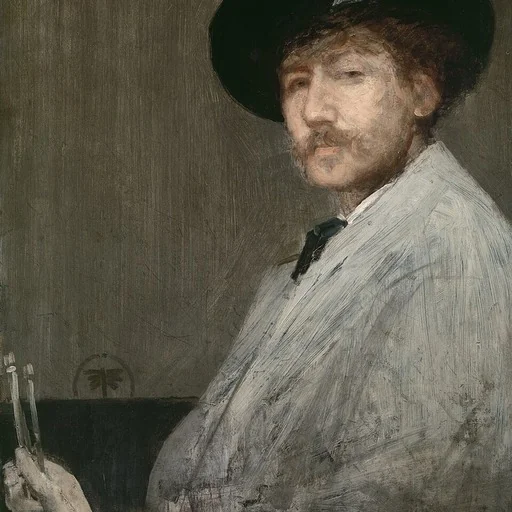
James Abbott McNeill Whistler was an American painter in oils and watercolor, and printmaker, active during the American Gilded Age and based primarily in the United Kingdom.

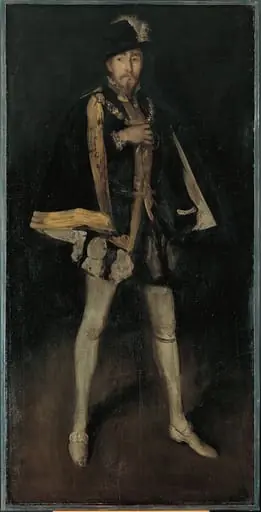 Arrangement in Black, No. 3: Sir Henry Irving as Philip II of Spain
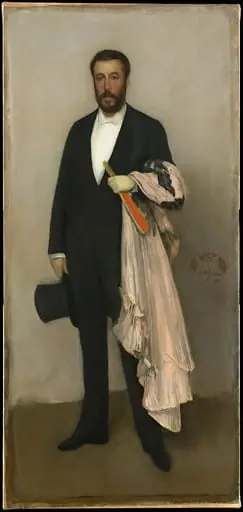 Arrangement in Flesh Colour and Black: Portrait of Theodore Duret
 Gold and Brown: Self-Portrait
 Edward Guthrie Kennedy
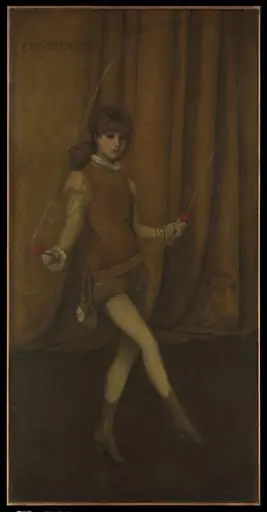 Harmony in Yellow and Gold: The Gold Girl—Connie Gilchrist
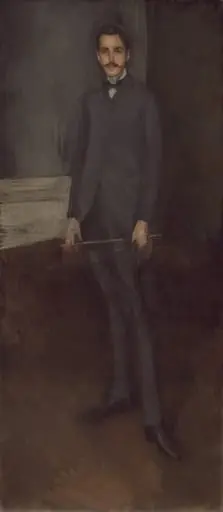 George W. Vanderbilt
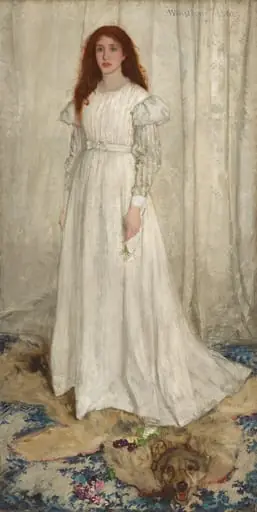 Symphony in White, No. 1: The White Girl
 Henry Irving as Philip II of Spain