Artwork
La Robe Rouge
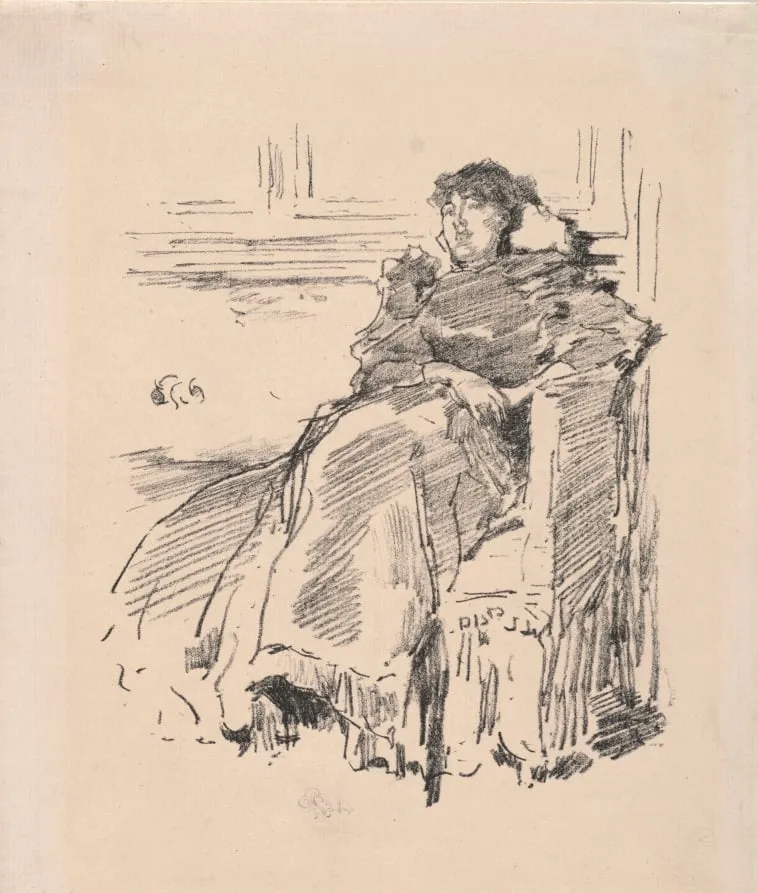
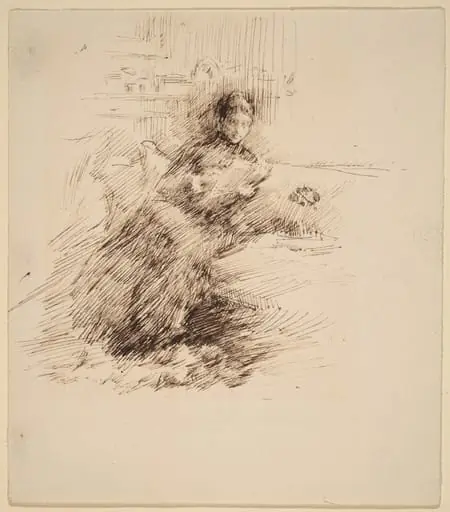
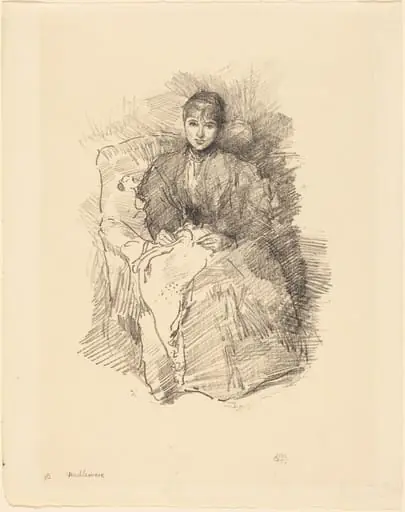
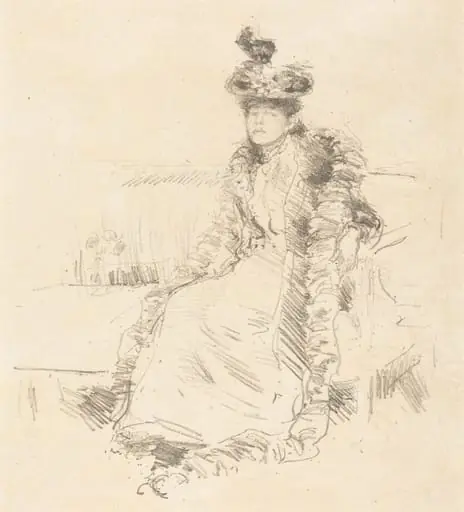
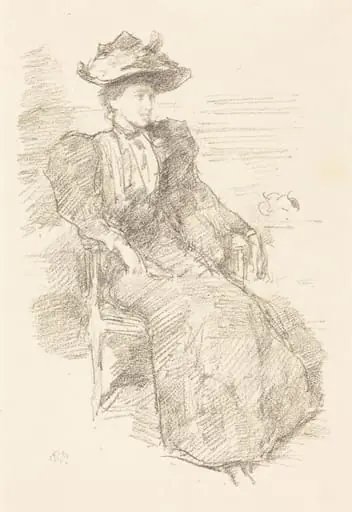
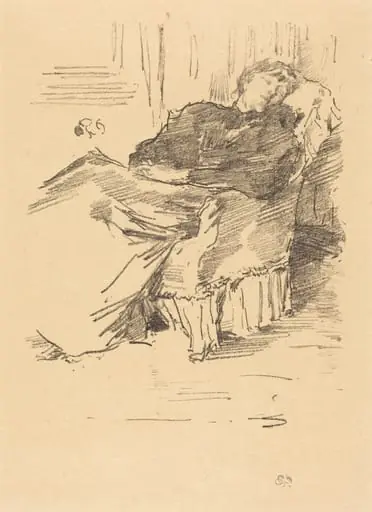
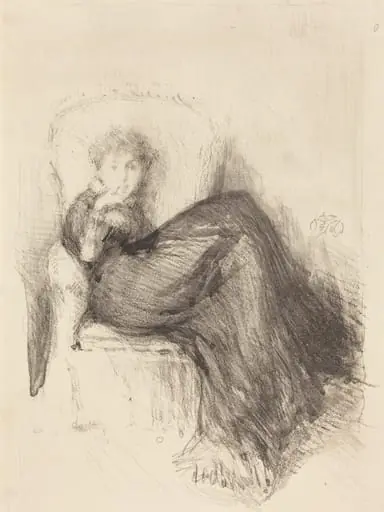
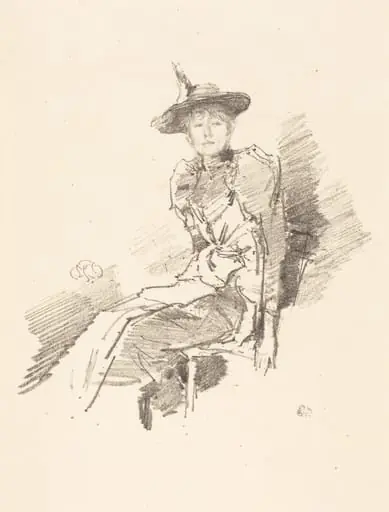
La Robe Rouge is a print by the Impressionist artist James McNeill Whistler. It dates from 1894 and is held in the collection of the Cleveland Museum of Art.
About this work
Overview
The piece is held in the collection of The Cleveland Museum of Art, representing his refined approach to tonal harmony and restrained expression.
La Robe Rouge is a print by James McNeill Whistler, completed in 1894 during his time in London. It depicts a solitary female figure in a vivid red dress, positioned against a dark, flat background. The work is part of Whistler’s later output, where color and composition took precedence over narrative. The piece is held in the collection of The Cleveland Museum of Art, representing his refined approach to tonal harmony and restrained expression.
Subject & Meaning
The figure, turned away from the viewer, is rendered with minimal detail—only the contour of her cheek and the drift of her hair are visible. This anonymity shifts focus from identity to presence. The red dress becomes the emotional core, not as a symbol of passion or status, but as a quiet, resonant element. Whistler treats color as an atmospheric force, evoking mood rather than telling a story.
Technique & Style
Whistler employed drypoint and etching to achieve subtle gradations of tone and texture. The dress’s intense red is rendered through layered ink, creating a luminous effect that seems to glow against the deep shadows. His brushwork in the original painting was translated into precise, controlled lines in the print, emphasizing form through contrast rather than detail. The composition is deliberately sparse, reflecting his belief in art as an arrangement of form and hue.
History & Provenance
Created in London in 1894, La Robe Rouge emerged from Whistler’s period of mature experimentation with color and printmaking. Though he had long lived abroad, the work’s emotional resonance has been interpreted as a subtle nod to his American roots. The print entered The Cleveland Museum of Art’s collection in the 20th century, where it remains a key example of his late graphic work and tonalist philosophy.
Context
Whistler was deeply influenced by Japanese prints and Aesthetic Movement ideals, prioritizing harmony and mood over narrative. La Robe Rouge aligns with his broader series of tonal studies, including the Nocturnes, where he sought to evoke sensation through color and composition. In this period, he distanced himself from literal representation, instead treating paint and ink as tools for sensory suggestion rather than description.
Legacy
La Robe Rouge exemplifies Whistler’s enduring influence on modern printmaking and color theory. His use of a single dominant hue to anchor a composition inspired later artists exploring emotional abstraction. The work’s quiet intensity and formal economy continue to be studied as a model of restraint, demonstrating how minimal means can convey profound presence without narrative.
Artist & collection
Artist
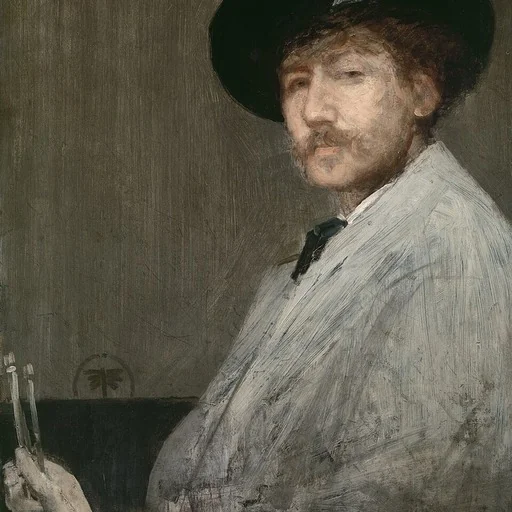
James Abbott McNeill Whistler was an American painter in oils and watercolor, and printmaker, active during the American Gilded Age and based primarily in the United Kingdom.

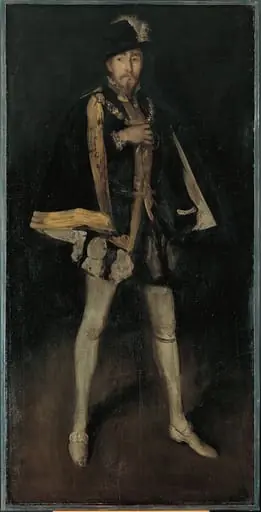 Arrangement in Black, No. 3: Sir Henry Irving as Philip II of Spain
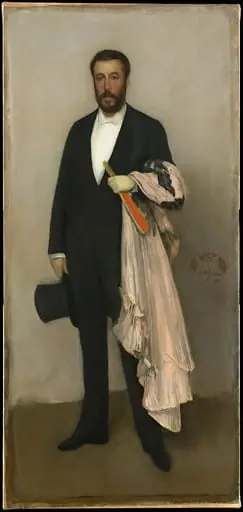 Arrangement in Flesh Colour and Black: Portrait of Theodore Duret
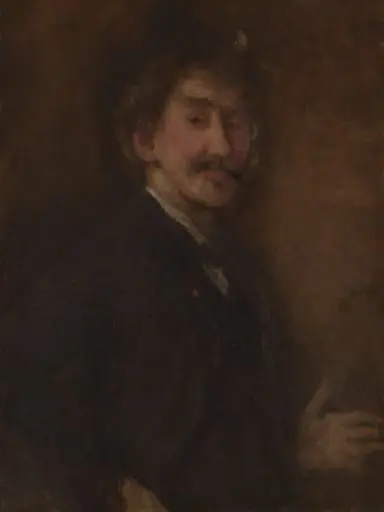 Gold and Brown: Self-Portrait
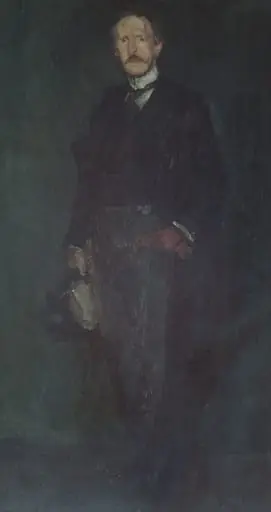 Edward Guthrie Kennedy
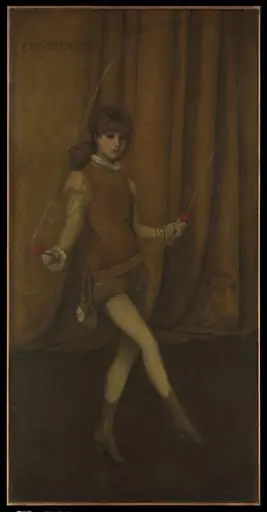 Harmony in Yellow and Gold: The Gold Girl—Connie Gilchrist
 George W. Vanderbilt
 Symphony in White, No. 1: The White Girl
 Henry Irving as Philip II of Spain