Artwork
Nocturne: Furnace
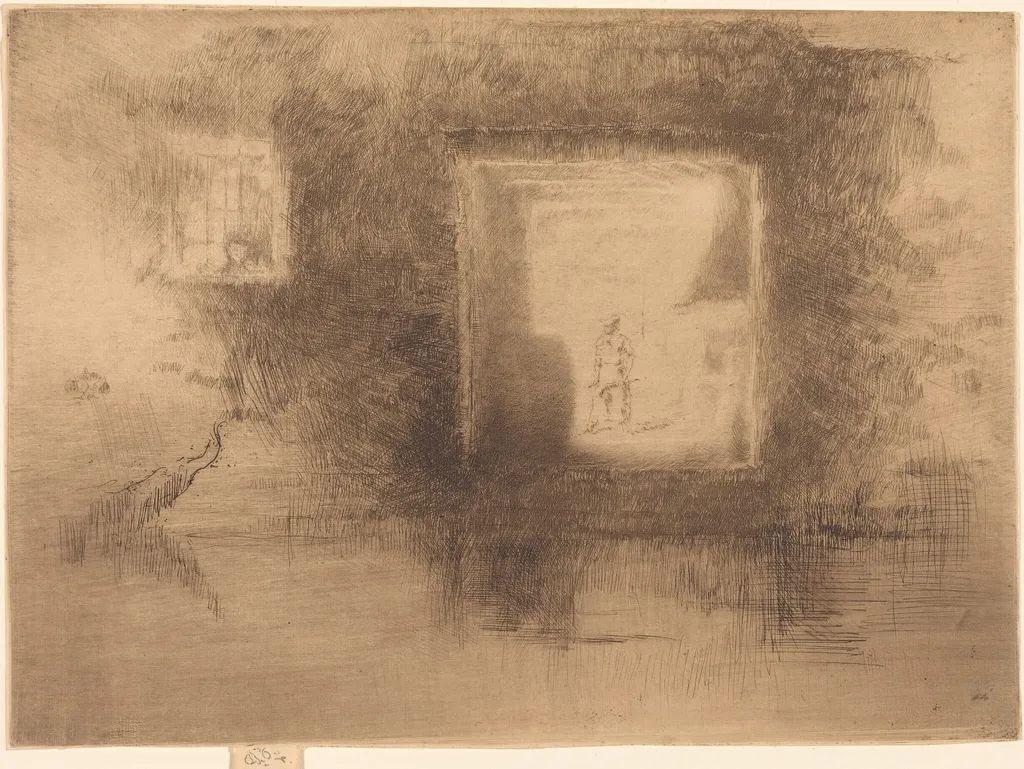
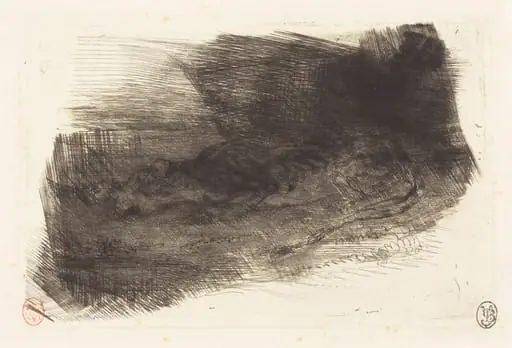
Nocturne: Furnace is an ink print by the Impressionist artist James McNeill Whistler. It dates from 1880 and is held in the collection of the National Gallery of Art.
About this work
Overview
It belongs to a series of works exploring low-light scenes, where mood and tonal harmony take precedence over literal representation.
Created in 1880, *Nocturne: Furnace* is an etching and drypoint in dark brown ink on Asian laid paper by James McNeill Whistler. It belongs to a series of works exploring low-light scenes, where mood and tonal harmony take precedence over literal representation. The print exemplifies Whistler’s interest in abstracted naturalism, reducing industrial subjects to quiet, atmospheric compositions that prioritize visual rhythm over storytelling.
Subject & Meaning
The image centers on a solitary furnace in a dim, empty interior, rendered without figures or secondary objects. Rather than documenting industrial labor, Whistler isolates the form to evoke stillness and thermal presence. The furnace becomes a silent monument, its heat implied through gradations of shadow and light. This abstraction aligns with his belief that art should evoke emotion through form and tone, not narrative or moral content.
Technique & Style
Whistler employed etching and drypoint to achieve subtle tonal shifts, using fine lines and textured strokes to suggest depth without detail. The dark brown ink, applied with restraint, creates a muted palette that enhances the sense of enclosure and quiet. His drypoint burr adds soft, velvety shadows, while the delicate lines of the furnace’s structure contrast with the broader, blurred areas of the surrounding space, reinforcing atmospheric ambiguity.
History & Provenance
Produced during Whistler’s mature period in London, the print emerged from his sustained exploration of nocturnal themes across media. It was likely made for private circulation among collectors and fellow artists rather than public exhibition. The work bears his stylized butterfly monogram, a signature he adopted to mark his aesthetic independence. Its survival in collections today reflects its status as a key example of his graphic work.
Context
In the 1880s, Whistler distanced himself from narrative painting and realism, favoring tonal harmony and compositional balance. While industrial subjects were common in social realism, he treated the furnace as a formal element, akin to his harbor or river scenes. His approach resonated with contemporary European avant-garde interests in abstraction and sensation, though he remained distinct from Impressionist concerns with light and movement.
Legacy
Whistler’s *Nocturne: Furnace* influenced later printmakers who sought to elevate etching beyond illustration into expressive abstraction. Its quiet intensity and rejection of literalism helped redefine printmaking as a medium for personal, non-narrative vision. Though not widely exhibited in his lifetime, it now stands as a quiet landmark in the transition from 19th-century realism to modernist sensibility in graphic art.
Artist & collection
Artist
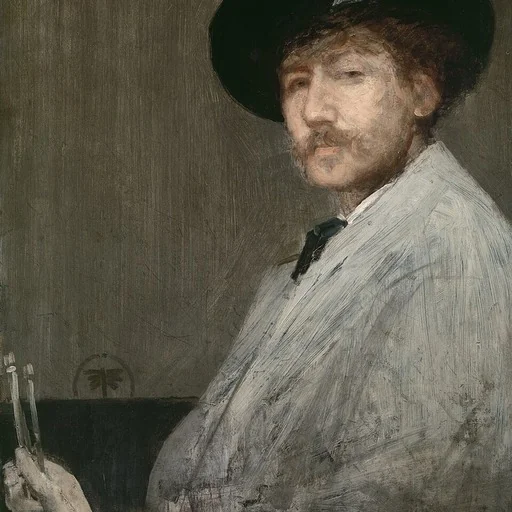
James Abbott McNeill Whistler was an American painter in oils and watercolor, and printmaker, active during the American Gilded Age and based primarily in the United Kingdom.

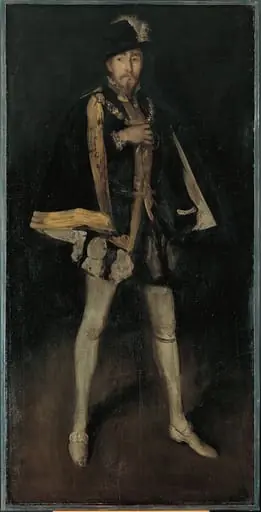 Arrangement in Black, No. 3: Sir Henry Irving as Philip II of Spain
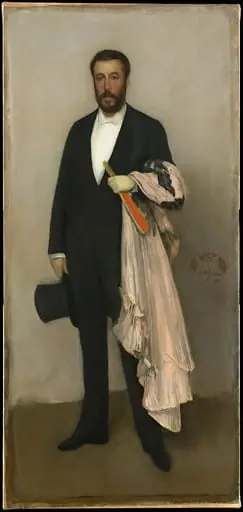 Arrangement in Flesh Colour and Black: Portrait of Theodore Duret
 Gold and Brown: Self-Portrait
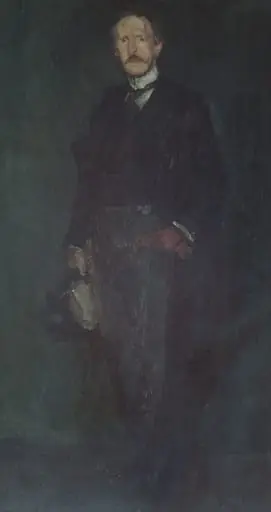 Edward Guthrie Kennedy
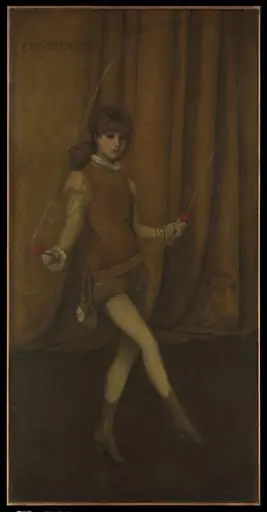 Harmony in Yellow and Gold: The Gold Girl—Connie Gilchrist
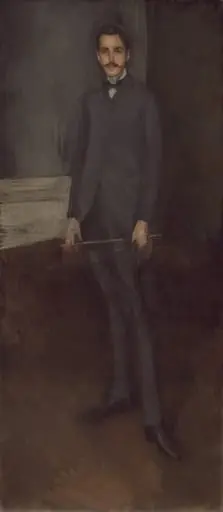 George W. Vanderbilt
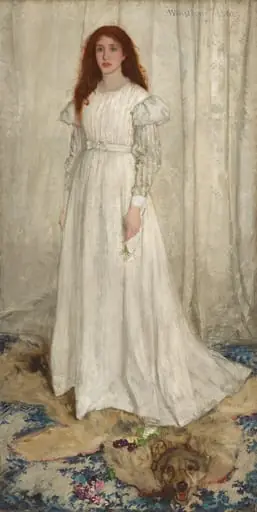 Symphony in White, No. 1: The White Girl
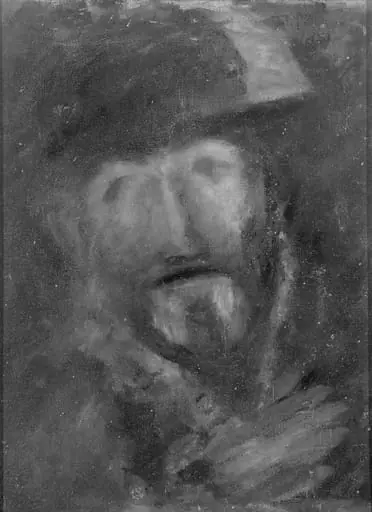 Henry Irving as Philip II of Spain