Artwork
The Philosophers' Retreat (Le Repos des Philosophes)
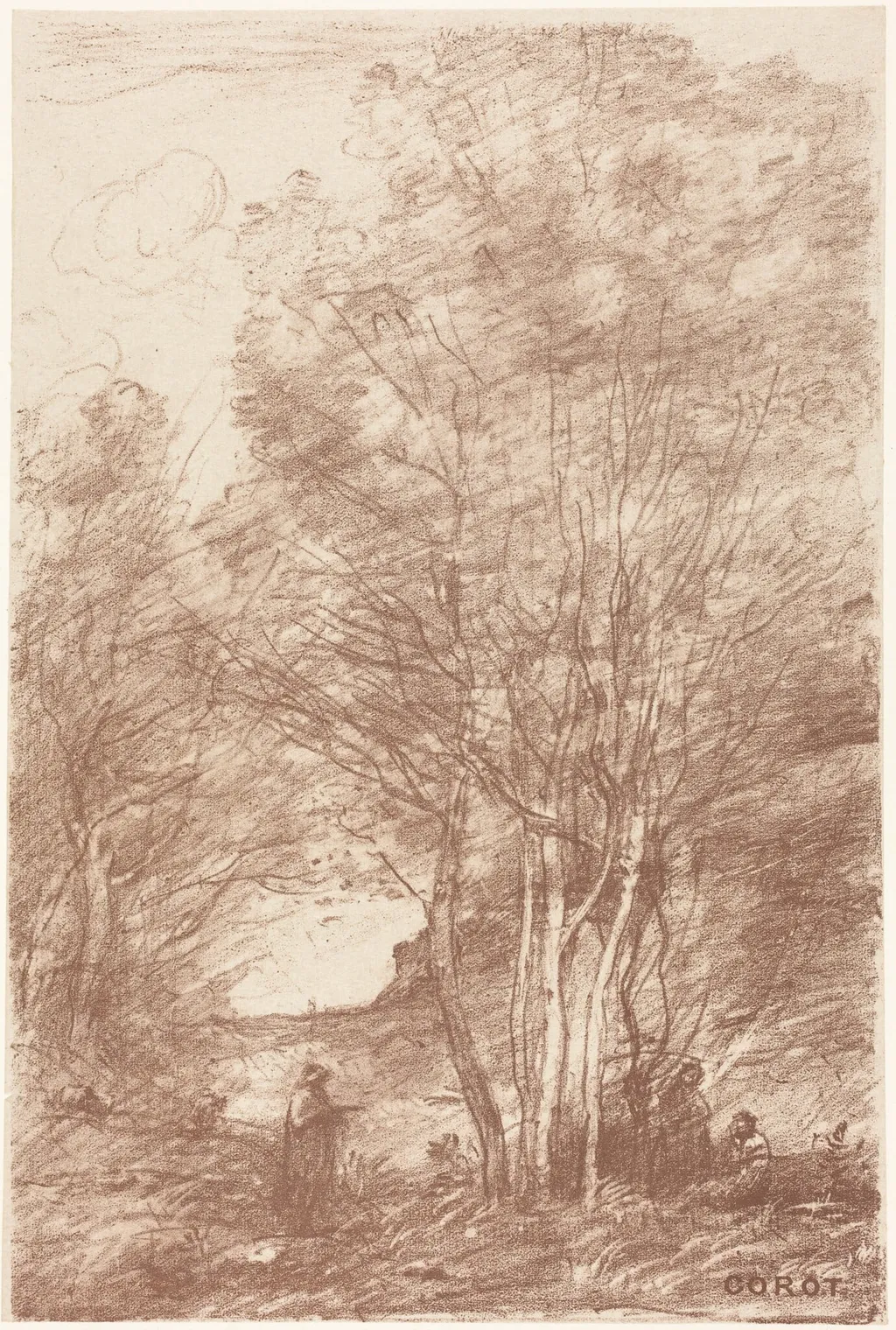
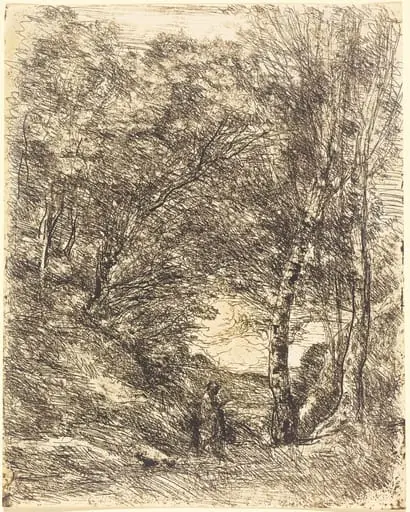
The Philosophers' Retreat (Le Repos des Philosophes) is an ink print by the Impressionist artist Jean Baptiste Camille Corot. It dates from 1871 and is held in the collection of the National Gallery of Art.
About this work
Overview
Though primarily known for oil painting, Corot also explored printmaking with sensitivity, using lithography to capture fleeting atmospheric effects.
Created in 1871, *The Philosophers' Retreat* is a lithograph by Jean-Baptiste-Camille Corot, reflecting his late-career interest in quiet, introspective landscapes. Though primarily known for oil painting, Corot also explored printmaking with sensitivity, using lithography to capture fleeting atmospheric effects. This work exemplifies his transition from formal composition toward a more spontaneous, observational style that anticipated Impressionist concerns with light and mood.
Subject & Meaning
The scene depicts a solitary figure seated near a rock in a sparse woodland, gazing into the distance. Bare trees and scattered leaves suggest late autumn or early winter, evoking stillness and contemplation. The figure, neither named nor detailed, functions as a silent observer, reinforcing the theme of solitude in nature. There is no narrative or mythological reference—only a moment of quiet reflection, aligned with Romantic and philosophical ideals of nature as a space for thought.
Technique & Style
Corot employed a light, gestural line quality typical of sketchbook drawings, translating the immediacy of pencil work into lithographic medium. The tangled branches and textured ground are rendered with minimal, rapid strokes, emphasizing texture over detail. The tonal range is restrained, relying on subtle contrasts to suggest depth and atmosphere. This approach prioritizes mood over precision, aligning with his broader shift toward naturalism and away from idealized forms.
History & Provenance
Produced in the final year of Corot’s life, this lithograph emerged from a period of renewed focus on printmaking after decades of painting. It was likely part of a small, private edition, not widely distributed during his lifetime. The work remained within French artistic circles and was later acquired by public institutions, where its understated quality attracted scholars interested in Corot’s lesser-known graphic output.
Context
In 1871, France was recovering from the Franco-Prussian War and the Paris Commune, events that deeply affected artists. Corot, then in his seventies, withdrew further into intimate, personal subjects. This print reflects a broader trend among older artists to seek solace in nature, away from political turmoil. His lithographs from this time reveal a quiet rebellion against grand historical themes, favoring instead the quiet dignity of the natural world.
Legacy
Though not as celebrated as his paintings, *The Philosophers' Retreat* exemplifies Corot’s influence on the transition from academic landscape to modern observational practice. His use of sketch-like lithography inspired later printmakers and Impressionists who valued spontaneity and direct engagement with nature. The work stands as a quiet testament to his enduring belief in art as a meditative act, not merely a representation.
Own this work as a print
Artist & collection
Artist
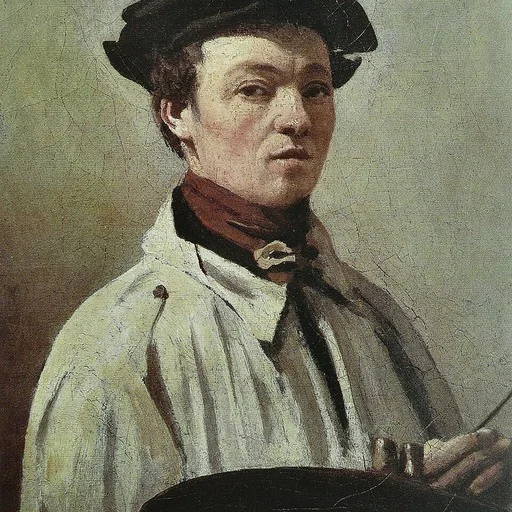
Jean-Baptiste-Camille Corot (UK: KORR-oh, US: kə-ROH, kor-OH; French: ; 16 July 1796 – 22 February 1875), or simply Camille Corot, was a French landscape and portrait painter as well as a printmaker in etching.

 The Gardens of Horace (Les Jardins d'Horace)
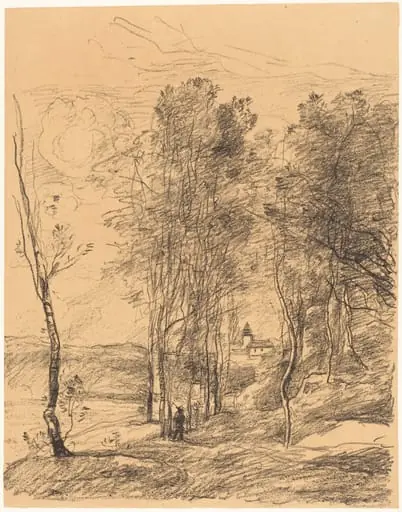 The Bell Tower of St. Nicolas-Lez-Arras (Le Clocher de St. Nicolas-Lez-Arras)
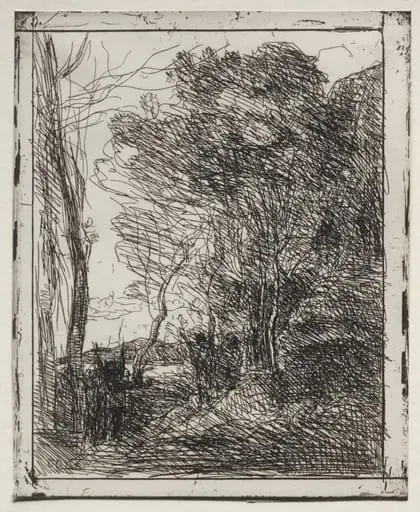 The Gallic Round
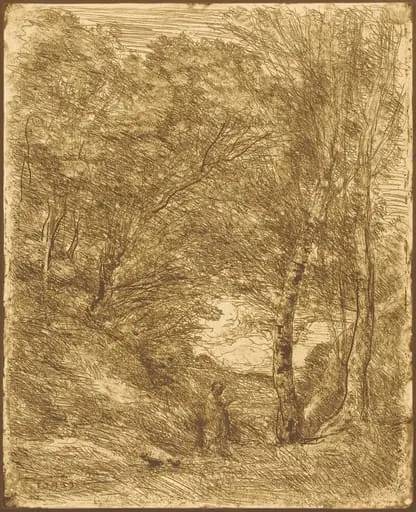 The Gardens of Horace (Les Jardins d'Horace)
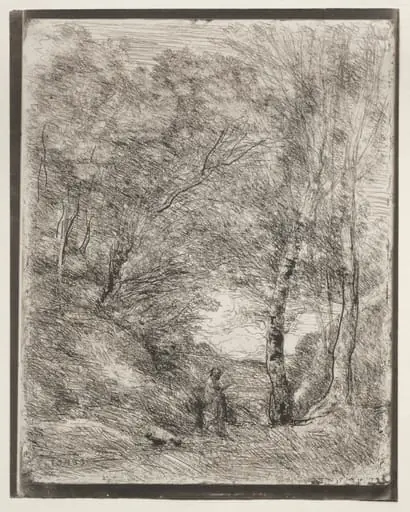 The Gardens of Horace
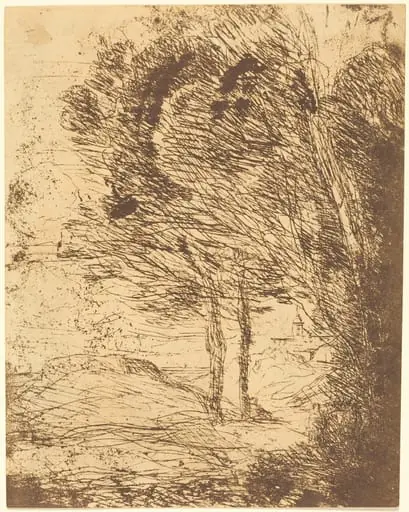 Environs of Genoa (Environs de Genes)
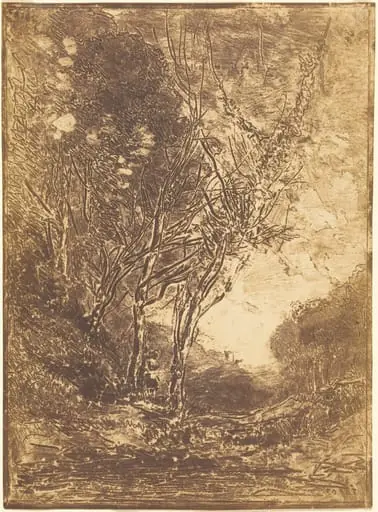 Ambush (L'Embuscade)
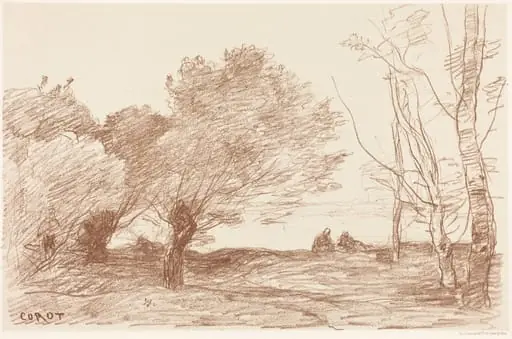 Willows and White Poplars (Saules et peupliers blancs)
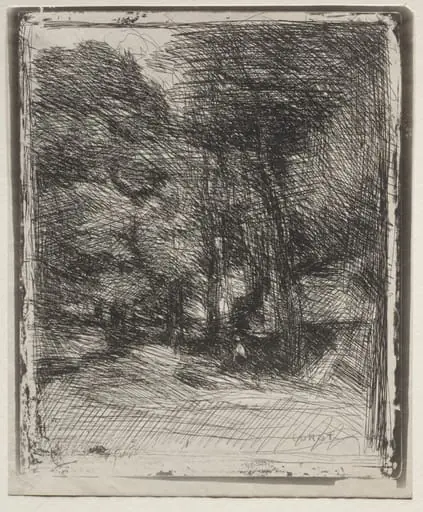 A Souvenir of the Bas-Bréau
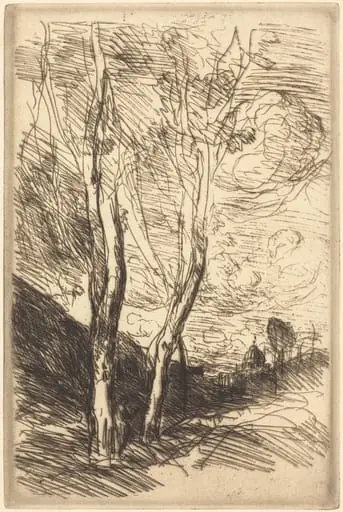 The Cathedral of Florence (Le Dome florentin)
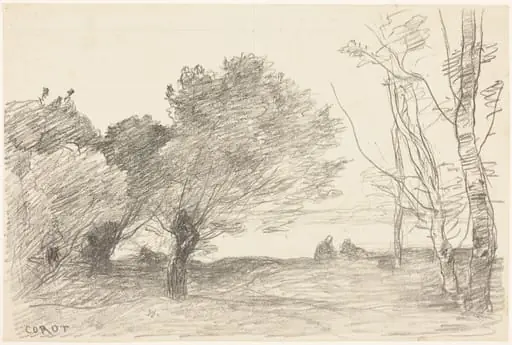 Willows and White Poplars (Saules et peupliers blancs)
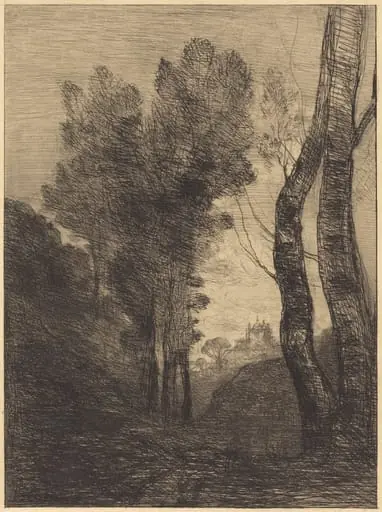 Environs of Rome (Environs de Rome)