Artwork
The Bridge, Santa Marta
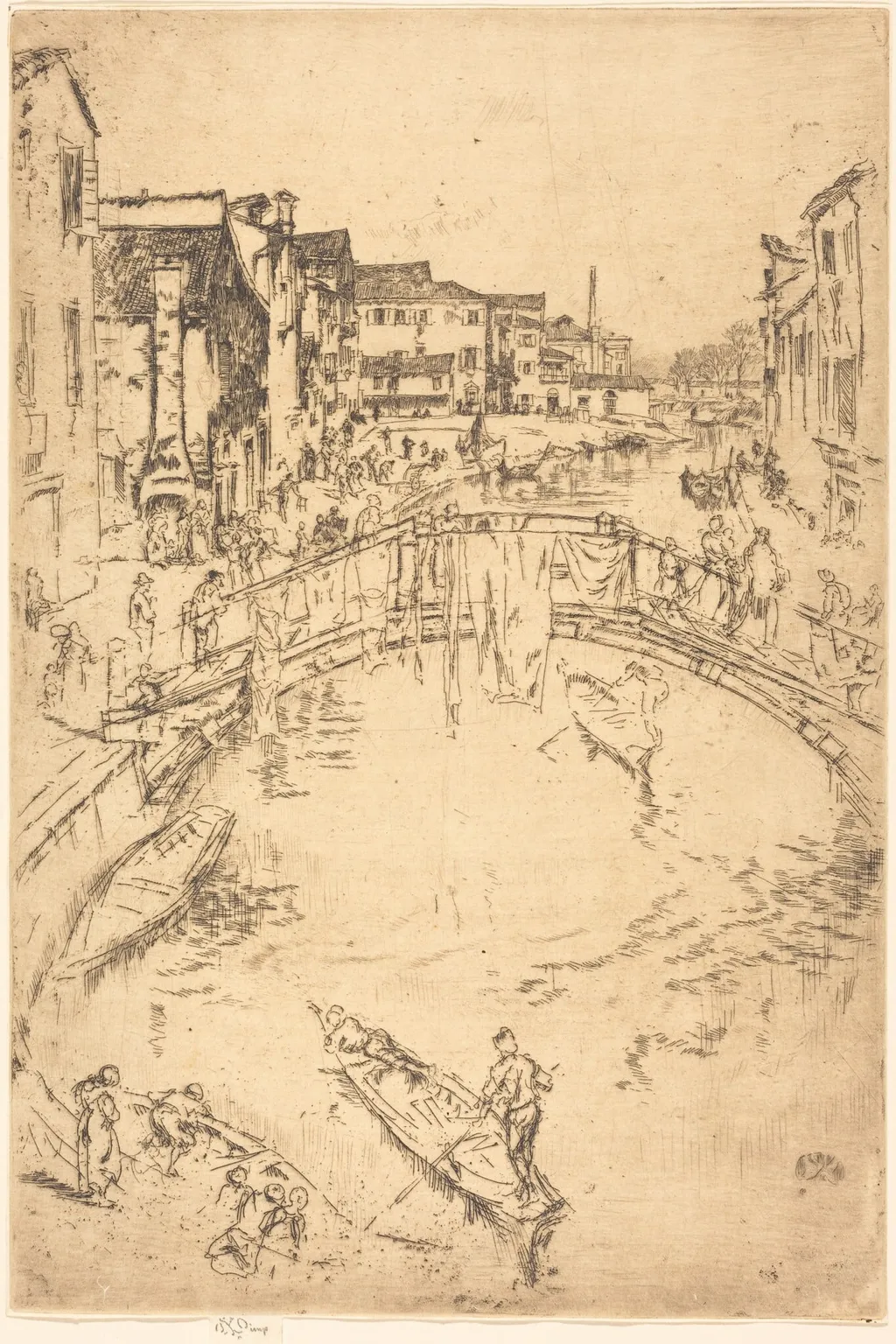
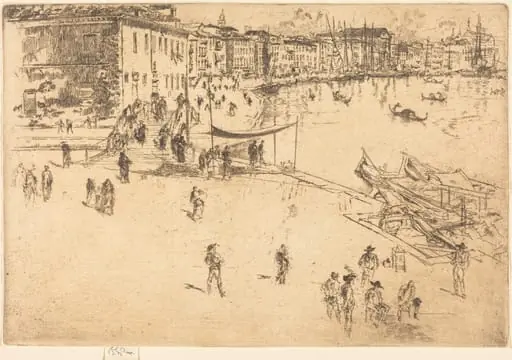
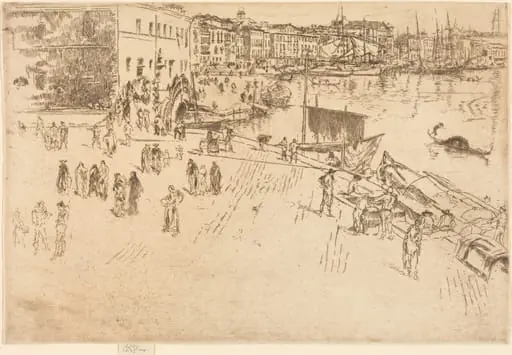
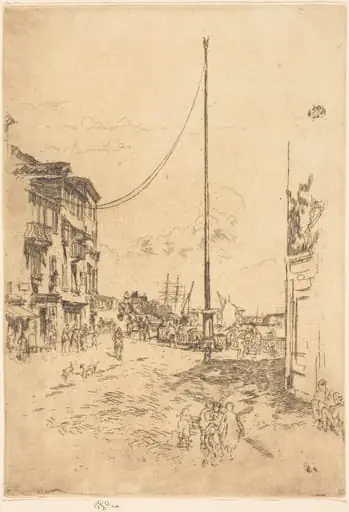
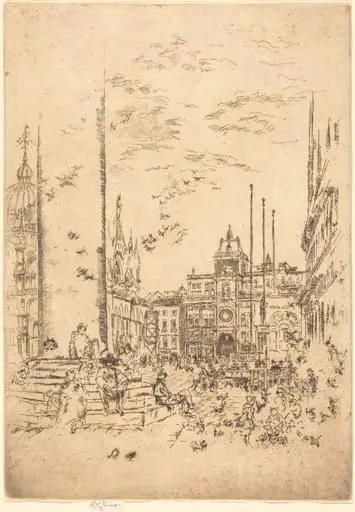
The Bridge, Santa Marta is an ink print by the Impressionist artist James McNeill Whistler. It dates from 1880 and is held in the collection of the National Gallery of Art.
About this work
Overview
It belongs to a series of urban and coastal views produced during his time in Europe and the Americas, reflecting his interest in quiet, observational scenes.
Created in 1880, *The Bridge, Santa Marta* is an etching and drypoint on laid paper by James McNeill Whistler. It belongs to a series of urban and coastal views produced during his time in Europe and the Americas, reflecting his interest in quiet, observational scenes. The work exemplifies his commitment to tonal harmony and formal balance, prioritizing mood over storytelling. Whistler’s signature butterfly mark appears subtly, affirming his authorship without disrupting the composition.
Subject & Meaning
The scene captures a modest wooden bridge spanning calm water in Santa Marta, Colombia, with a few indistinct figures crossing. Whistler avoids dramatic narrative, instead focusing on the quiet rhythm of daily life. The bridge becomes a structural motif, linking land and water, while the figures serve as scale markers rather than characters. The absence of overt symbolism aligns with his belief in art’s autonomy — the image exists for its visual presence alone.
Technique & Style
Whistler employed etching for fine, controlled lines and drypoint to create soft, velvety textures by scratching directly into the copper plate. The result is a delicate interplay of sharp contours and blurred shadows, particularly evident in the water’s reflective surface. His restrained use of ink and emphasis on subtle gradations evoke atmospheric light without heavy modeling. The paper’s laid texture enhances the tactile quality, reinforcing the work’s intimate scale.
History & Provenance
Whistler produced this print during a period of extensive printmaking activity, following his travels to the Caribbean and South America in the late 1870s. *The Bridge, Santa Marta* was likely made from sketches taken on-site and refined in his London studio. It entered private collections in Europe and the U.S. during the 1880s and 1890s, often grouped with his other river and bridge studies, though it received less public attention than his London etchings.
Context
In the 1880s, Whistler was deeply engaged with the Aesthetic Movement, which valued sensory experience over moral or historical content. His prints of bridges, harbors, and waterfronts responded to Japanese ukiyo-e prints, which he admired for their flattened space and selective detail. Unlike contemporaries who depicted grandeur or social commentary, Whistler sought stillness and equilibrium, positioning his work as a counterpoint to narrative realism.
Legacy
Though less celebrated than his portraits or Nocturnes, *The Bridge, Santa Marta* remains a key example of Whistler’s graphic precision and quiet lyricism. It influenced later printmakers who favored tonal subtlety over bold line work. The work’s understated composition continues to be studied for its economy of means and its embodiment of the principle that art need not explain — only evoke.
Artist & collection
Artist
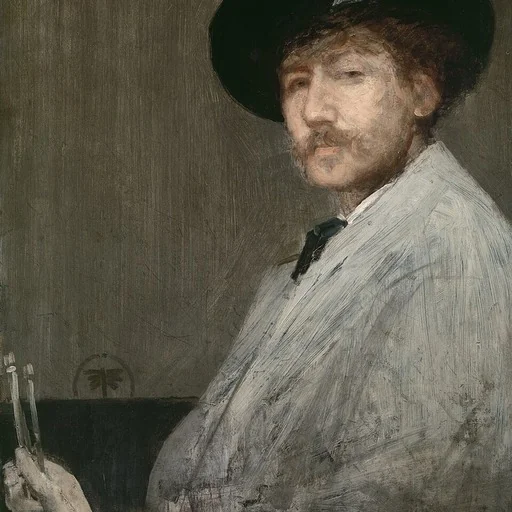
James Abbott McNeill Whistler was an American painter in oils and watercolor, and printmaker, active during the American Gilded Age and based primarily in the United Kingdom.

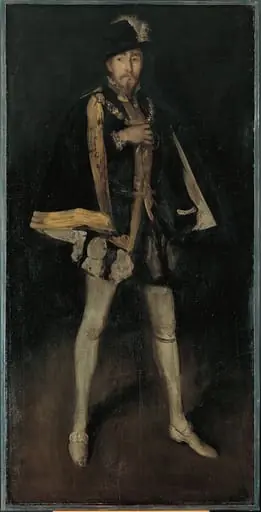 Arrangement in Black, No. 3: Sir Henry Irving as Philip II of Spain
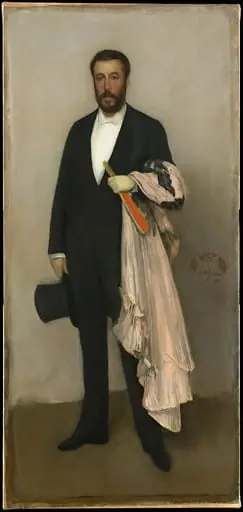 Arrangement in Flesh Colour and Black: Portrait of Theodore Duret
 Gold and Brown: Self-Portrait
 Edward Guthrie Kennedy
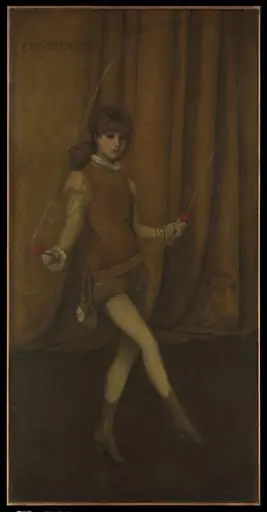 Harmony in Yellow and Gold: The Gold Girl—Connie Gilchrist
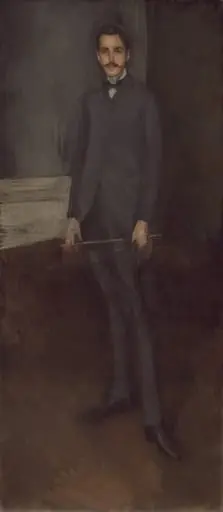 George W. Vanderbilt
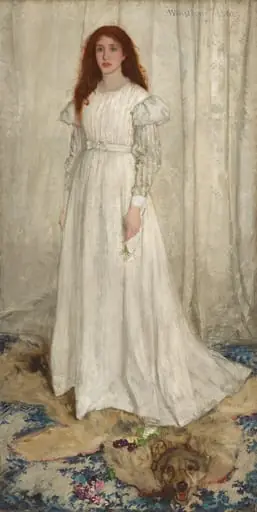 Symphony in White, No. 1: The White Girl
 Henry Irving as Philip II of Spain