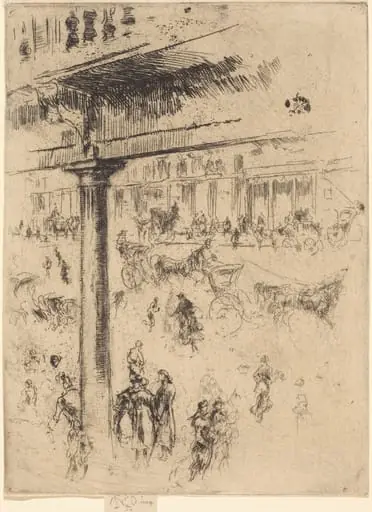
Artwork
The Rialto
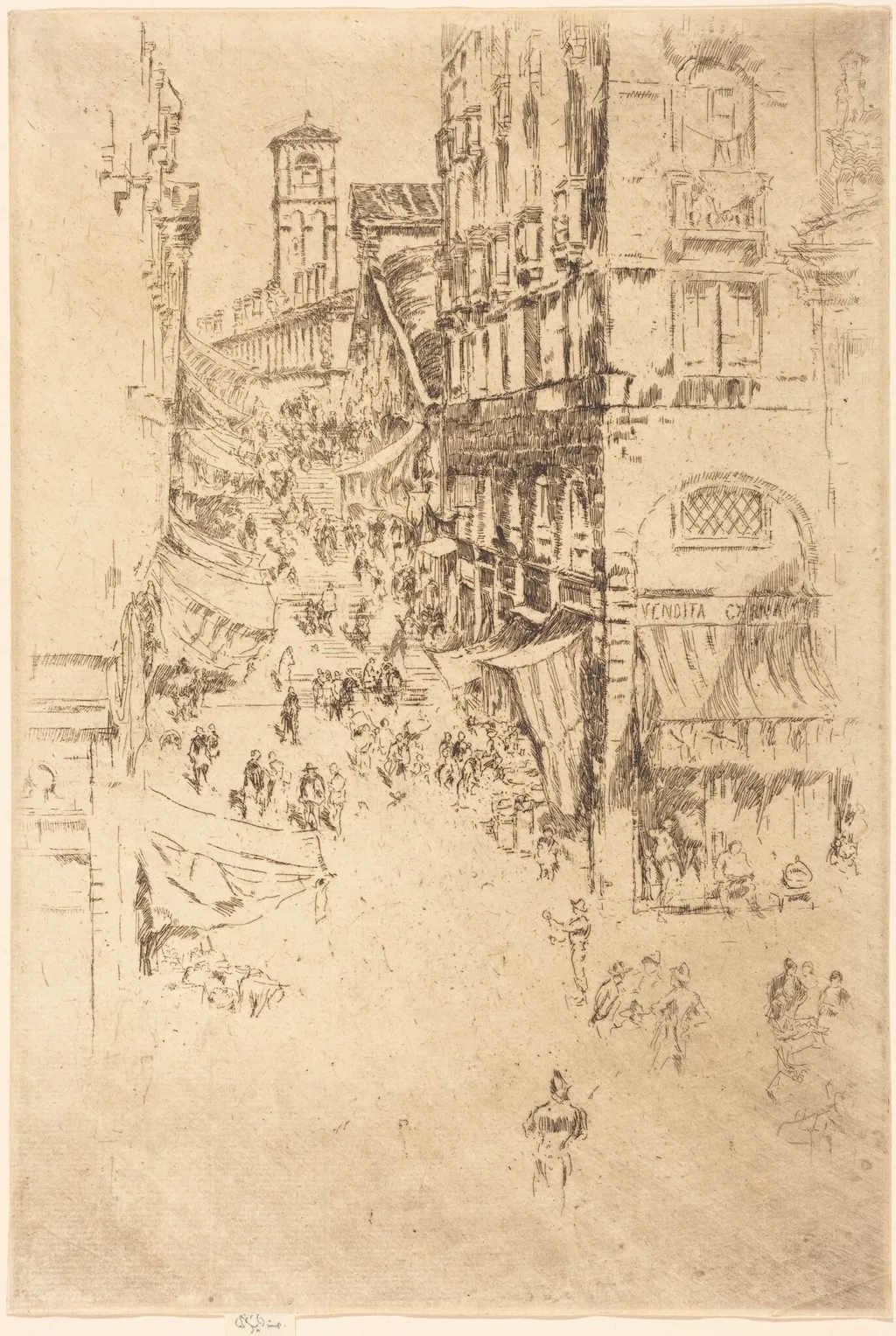
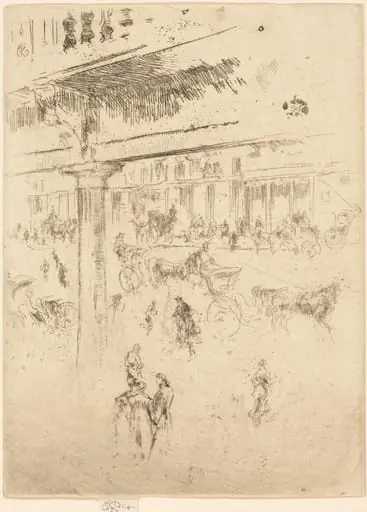
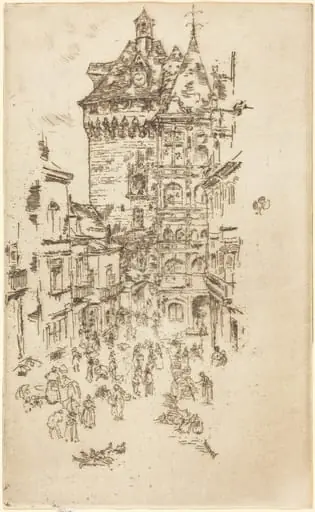
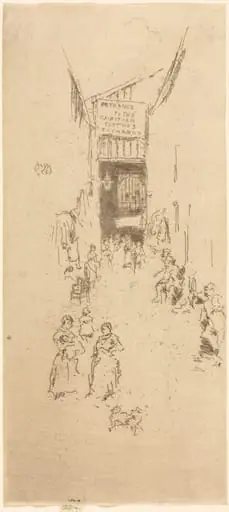
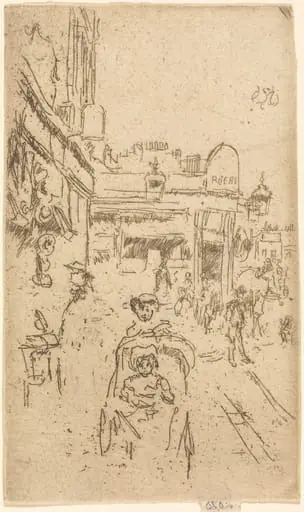
The Rialto is an ink print by the Impressionist artist James McNeill Whistler. It dates from 1880 and is held in the collection of the National Gallery of Art.
About this work
James McNeill Whistler’s 1880 etching shows Venice’s famous Rialto Bridge over the Grand Canal. It’s a black-and-white print on paper, small enough to hold.
Whistler often visited Venice in the 1880s. He made over 50 etchings there, each one capturing a quiet moment in the city. This one focuses on the bridge’s arches and the boats below.
Try drawing this scene yourself. Whistler, James McNeill
Overview
The work exemplifies Whistler’s dedication to the print medium during his years of expatriate life in Europe.
Created in 1880, *The Rialto* is a modest‑sized print that combines etching and drypoint on laid paper. Executed in monochrome, the image presents the iconic Rialto Bridge spanning Venice’s Grand Canal, its arches rendered with delicate line work and the water below populated by small boats. The work exemplifies Whistler’s dedication to the print medium during his years of expatriate life in Europe.
Subject & Meaning
The composition isolates the architectural form of the Rialto Bridge, emphasizing its structural rhythm rather than narrative content. By focusing on the quiet interplay of stone and water, Whistler underscores his belief that visual harmony can stand alone, free from sentimental or moralizing interpretation. The scene invites contemplation of balance and proportion inherent in the urban landscape.
Technique & Style
Whistler employed a combination of traditional etching and the more immediate drypoint technique, allowing for both crisp outlines and softer, velvety tones. The laid paper surface contributes a subtle texture that interacts with the fine lines, while the limited tonal range creates a restrained, atmospheric effect. This approach reflects his broader aesthetic of restraint and tonal subtlety.
History & Provenance
The print was produced during Whistler’s prolific Venetian period, when he created more than fifty etchings of the city’s canals and architecture. It entered the market shortly after its completion, circulating among collectors of his work. The piece has since been held in several public and private collections, documenting the artist’s sustained interest in Venice throughout the 1880s.
Context
Whistler’s practice in the late nineteenth century was marked by his advocacy of "art for art's sake," a stance that rejected overt storytelling in favor of pure visual pleasure. His signature butterfly monogram, appearing on the print, reflects the dual nature of his public persona—delicate in presentation yet assertively independent in artistic philosophy.
Artist & collection
Artist
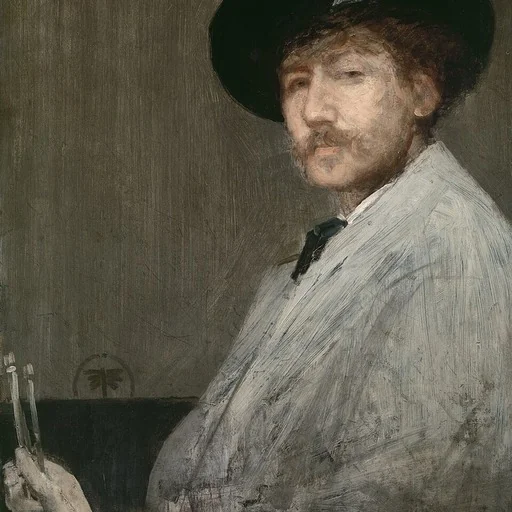
James Abbott McNeill Whistler was an American painter in oils and watercolor, and printmaker, active during the American Gilded Age and based primarily in the United Kingdom.

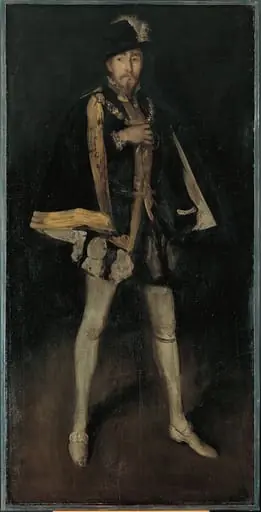 Arrangement in Black, No. 3: Sir Henry Irving as Philip II of Spain
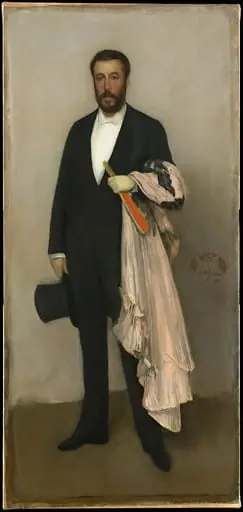 Arrangement in Flesh Colour and Black: Portrait of Theodore Duret
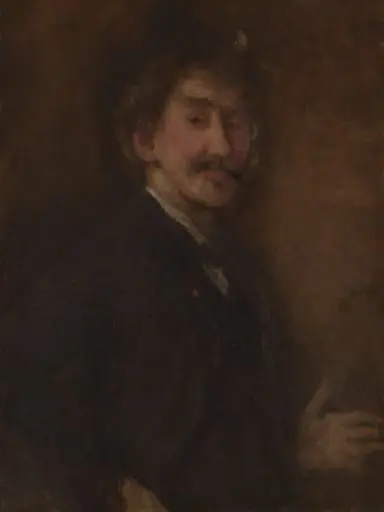 Gold and Brown: Self-Portrait
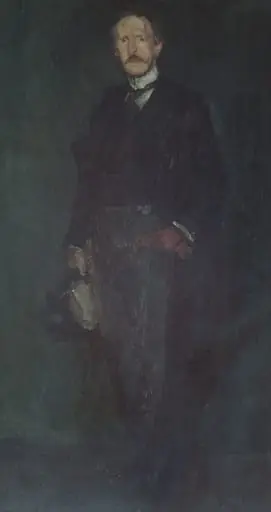 Edward Guthrie Kennedy
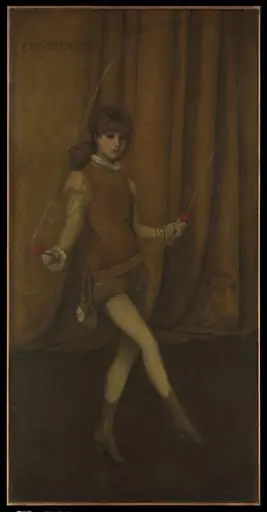 Harmony in Yellow and Gold: The Gold Girl—Connie Gilchrist
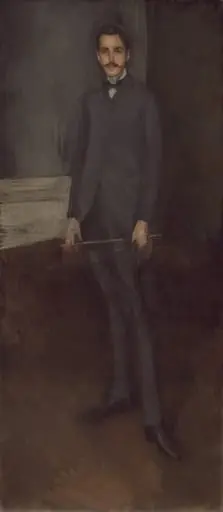 George W. Vanderbilt
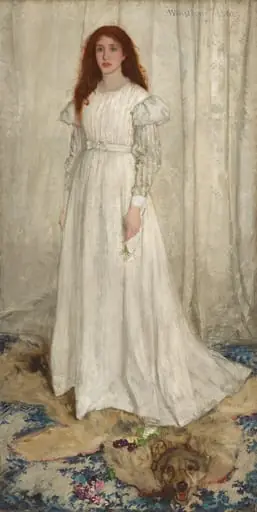 Symphony in White, No. 1: The White Girl
 Henry Irving as Philip II of Spain