Artwork
The Butcher's Dog
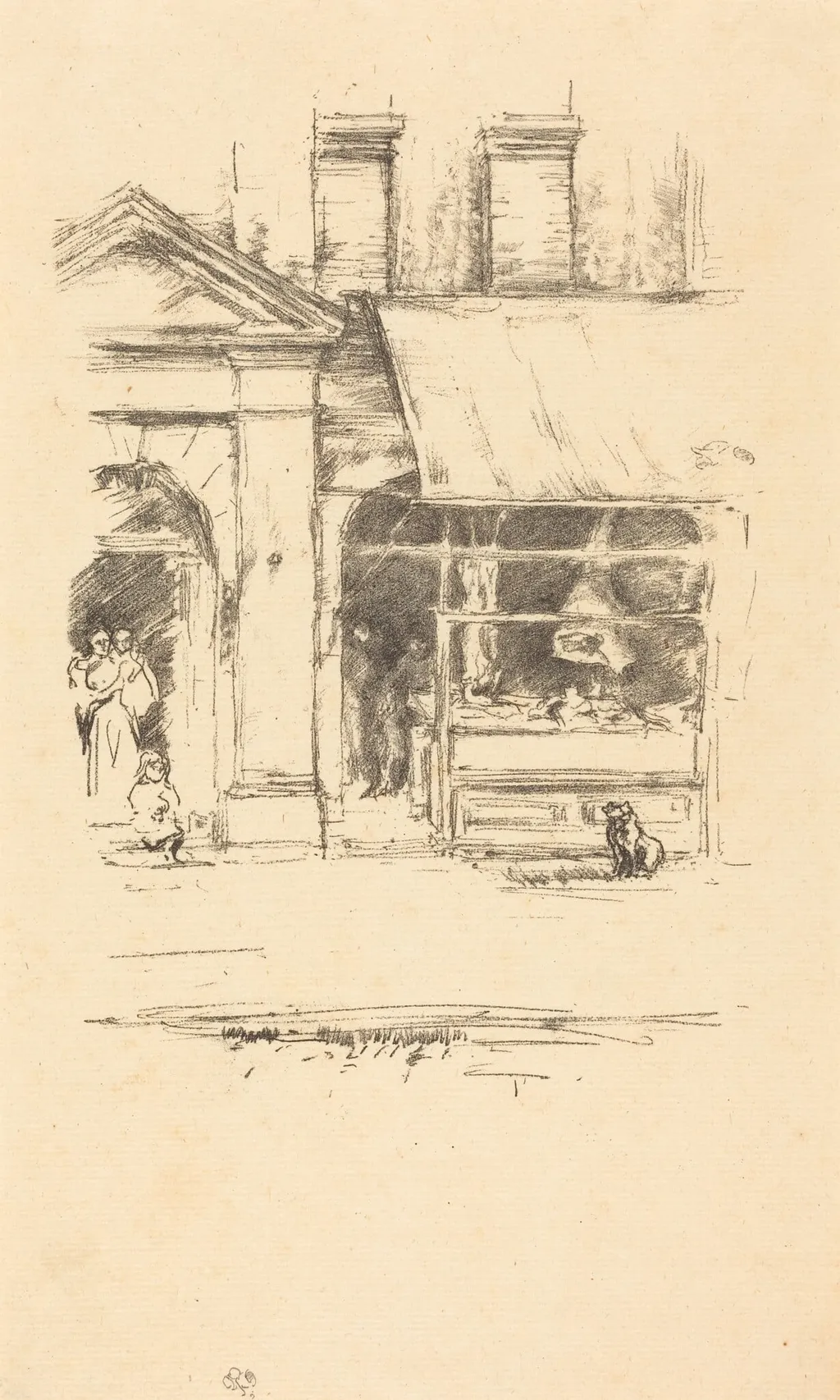
The Butcher's Dog is an ink print by the Impressionist artist James McNeill Whistler. It dates from 1896 and is held in the collection of the National Gallery of Art.
About this work
Overview
The work exemplifies his commitment to formal precision and emotional detachment, aligning with his broader philosophy of 'art for art’s sake.
Created in 1896, *The Butcher’s Dog* is a lithograph in black ink on laid paper by James McNeill Whistler. It belongs to a late series of prints in which he explored urban life through restrained, observational scenes. The work exemplifies his commitment to formal precision and emotional detachment, aligning with his broader philosophy of 'art for art’s sake.' The medium allowed him to achieve subtle tonal contrasts with minimal lines.
Subject & Meaning
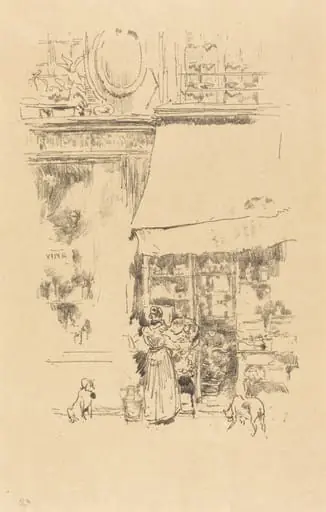
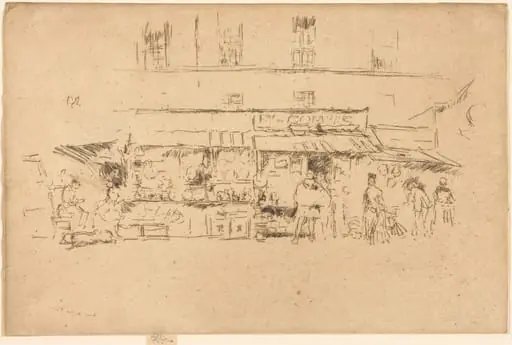
The image depicts a bulldog standing beside a butcher’s shop window, its body angled to the side while its reflection in the glass gazes directly forward. This disjunction between reality and reflection introduces a quiet tension, inviting attention to perception rather than narrative. Whistler avoids moral or sentimental interpretation, focusing instead on the visual rhythm and spatial ambiguity of the moment.
Technique & Style
Whistler employed lithography with disciplined economy, using only black ink to define form and shadow. The laid paper’s texture enhances the print’s tactile quality, while his controlled linework captures the dog’s solidity and the glass’s reflective surface. His signature butterfly, a blend of delicate curves and sharp angularity, is rendered with the same precision as the subject, reinforcing the work’s formal harmony.
History & Provenance
The print was produced during Whistler’s mature period in London, following years of experimentation in printmaking. It was part of a group of lithographs he made between 1894 and 1897, often depicting animals and street scenes. The work remained in private collections after his death and is now held in major institutional holdings, reflecting its status as a representative example of his late graphic output.
Context
Whistler’s late lithographs emerged amid a broader European interest in Japanese prints and modernist simplification. Rejecting narrative realism, he aligned with aesthetic movements that valued composition over storytelling. His focus on ordinary subjects—dogs, shopfronts, alleyways—elevated the mundane through careful arrangement, positioning him as a bridge between 19th-century realism and early modernist sensibilities.
Legacy
Though not widely exhibited during his lifetime, *The Butcher’s Dog* has come to symbolize Whistler’s ability to distill complex visual ideas into minimal forms. Its influence is evident in later 20th-century printmakers who prioritized ambiguity and formal balance over explicit meaning. The work remains a touchstone for studies of print technique and the aesthetic treatment of everyday subjects.
Own this work as a print
Artist & collection
Artist
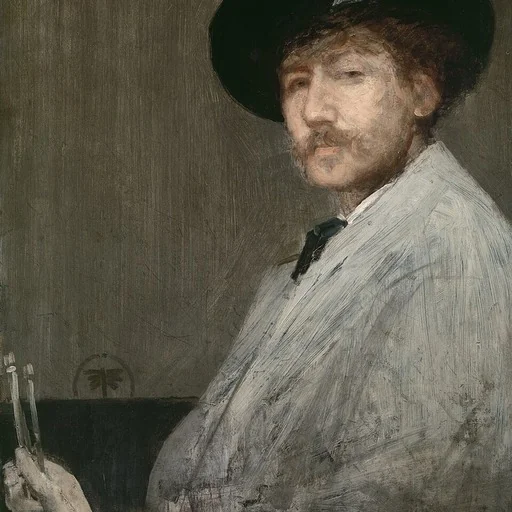
James Abbott McNeill Whistler was an American painter in oils and watercolor, and printmaker, active during the American Gilded Age and based primarily in the United Kingdom.

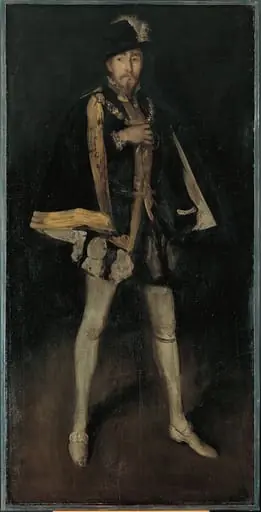 Arrangement in Black, No. 3: Sir Henry Irving as Philip II of Spain
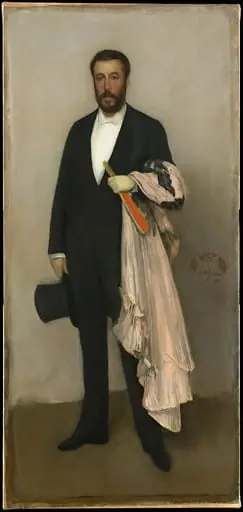 Arrangement in Flesh Colour and Black: Portrait of Theodore Duret
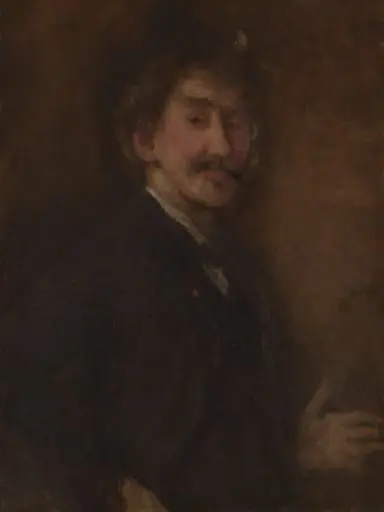 Gold and Brown: Self-Portrait
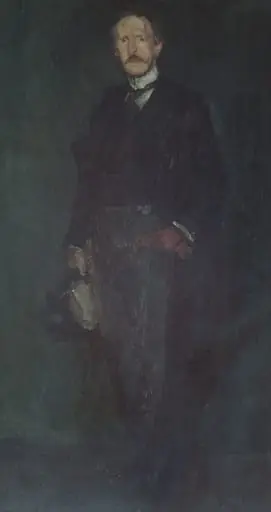 Edward Guthrie Kennedy
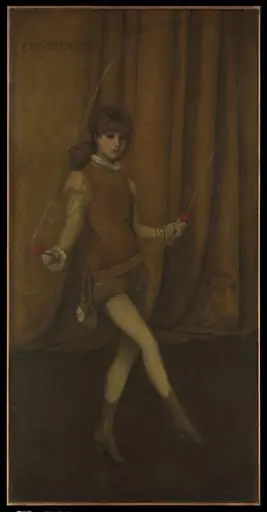 Harmony in Yellow and Gold: The Gold Girl—Connie Gilchrist
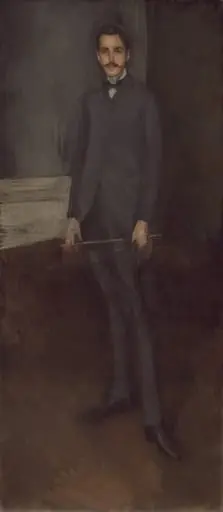 George W. Vanderbilt
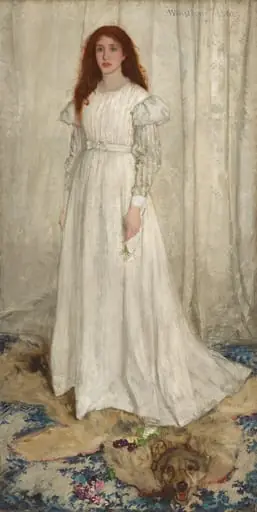 Symphony in White, No. 1: The White Girl
 Henry Irving as Philip II of Spain