Artwork
The Clock-Makers, Paimpol
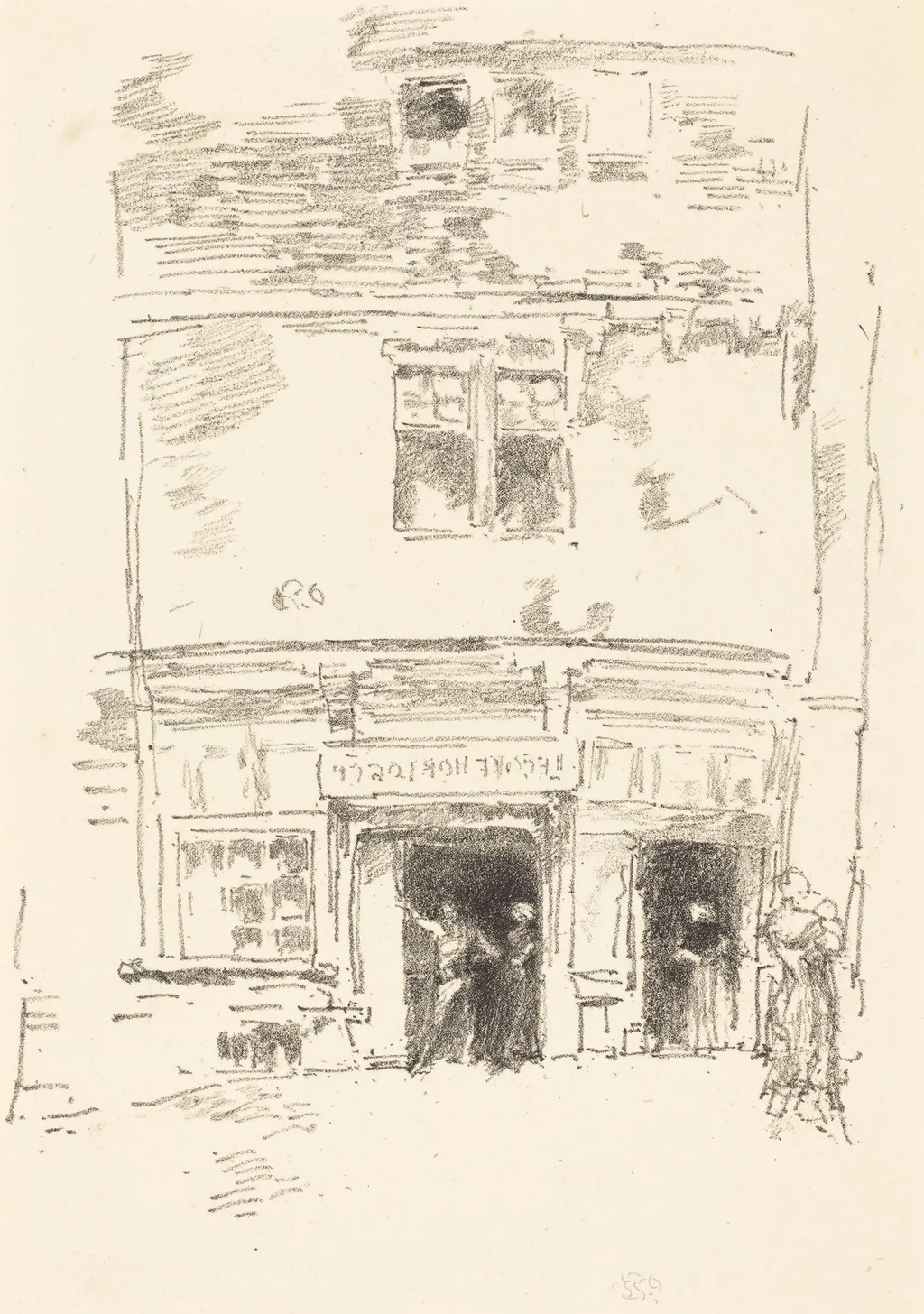
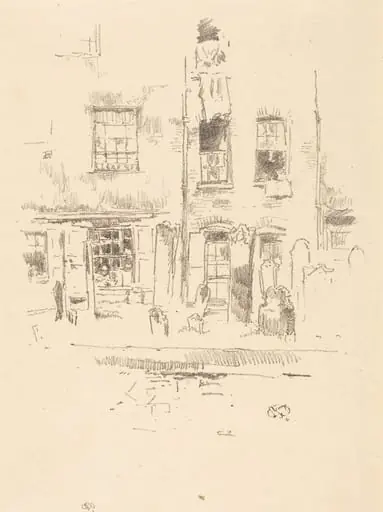
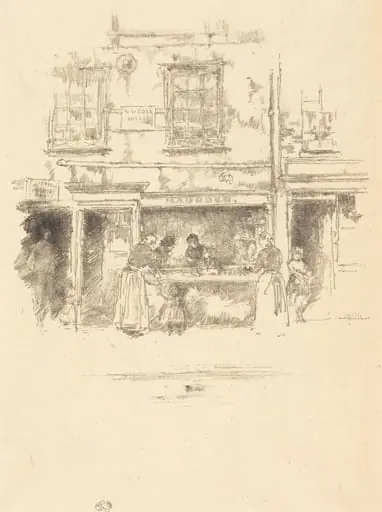
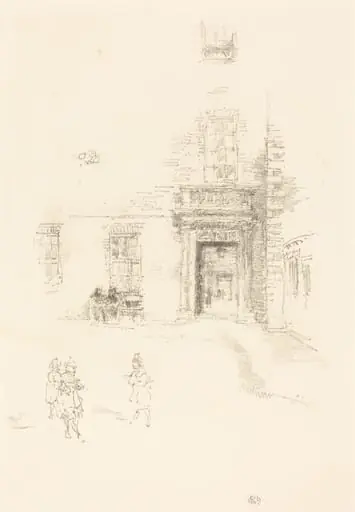
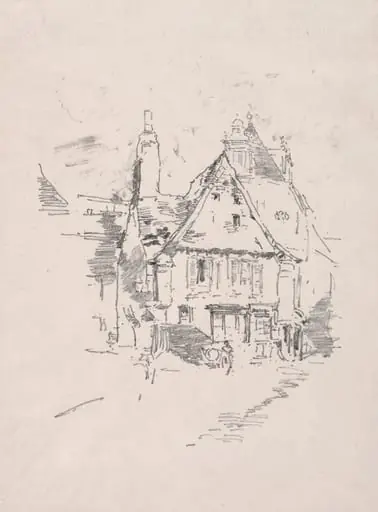
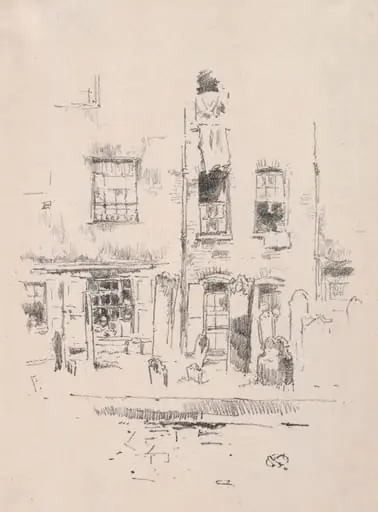
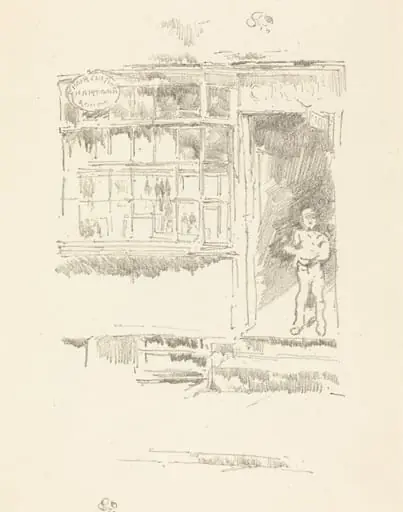
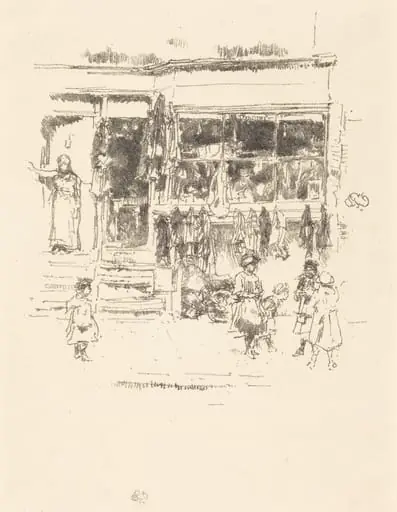
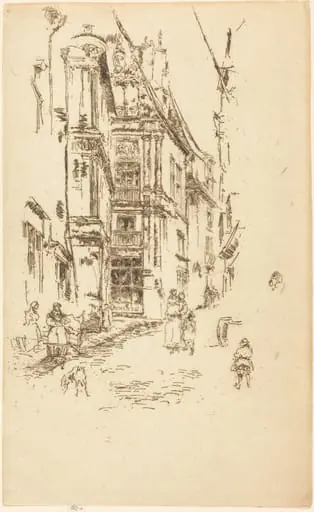
The Clock-Makers, Paimpol is an ink print by the Impressionist artist James McNeill Whistler. It dates from 1893 and is held in the collection of the National Gallery of Art.
About this work
Overview
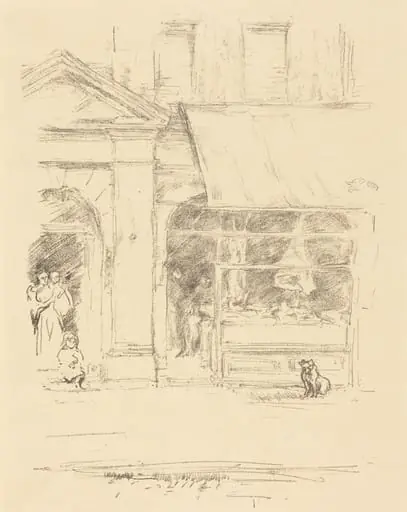
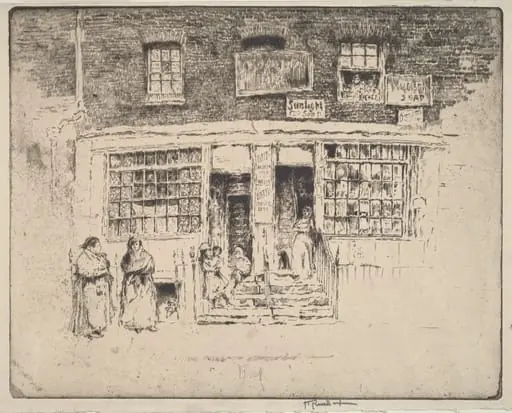
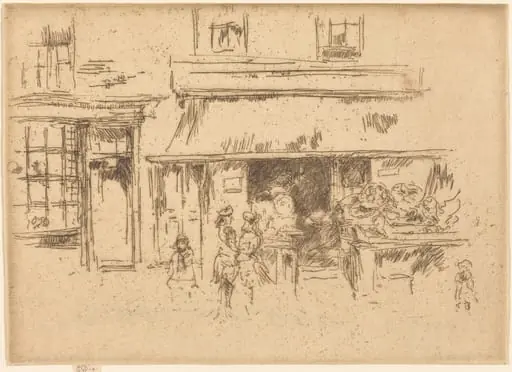
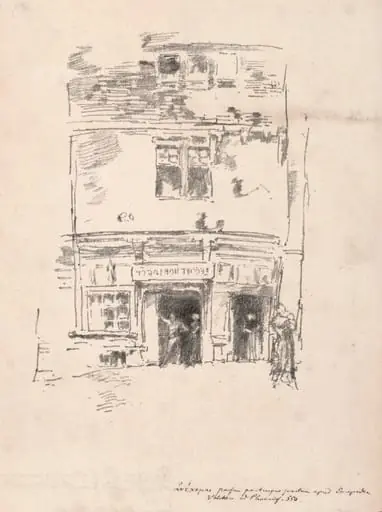
James McNeill Whistler’s 1893 lithograph *The Clock‑Makers, Paimpol* presents a tranquil street tableau in the Breton port of Paimpol. Executed in black on laid paper, the image is composed of nuanced gray tones that convey a quiet, atmospheric scene without overt narrative.
Subject & Meaning
The work shows a small gathering of figures before a building marked by a sign reading “Paimpol.” Individuals converse or stand idle, while others are hinted at through the doorway and further back, suggesting everyday social interaction in a modest urban setting.
Technique & Style
Whistler employed lithographic processes to achieve a range of grays and subtle textures, using chiaroscuro to model light on the figures and architecture. The restraint of line and careful tonal modulation reflect his broader interest in visual harmony over storytelling.
History & Provenance
Although primarily known for oils and watercolors, Whistler produced a series of prints in the 1890s, among which this lithograph belongs. Created during his later period in Britain, it exemplifies his commitment to the “art for art’s sake” principle that guided much of his output.
Context
The image captures a moment in Paimpol, a coastal town in Brittany, at a time when Whistler was traveling and sketching scenes outside the metropolitan art centers. The work aligns with his broader interest in atmospheric urban views, echoing his earlier nocturnes while applying the lithographic medium.
Artist & collection
Artist
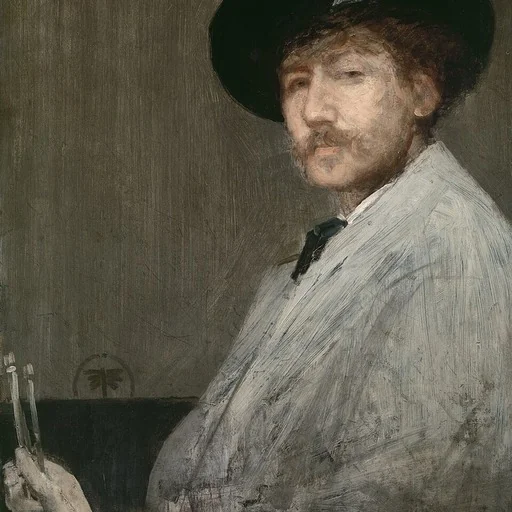
James Abbott McNeill Whistler was an American painter in oils and watercolor, and printmaker, active during the American Gilded Age and based primarily in the United Kingdom.

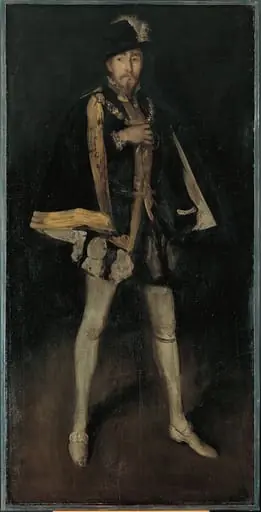 Arrangement in Black, No. 3: Sir Henry Irving as Philip II of Spain
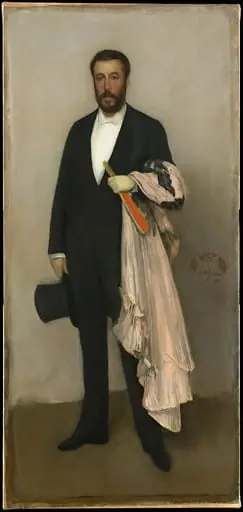 Arrangement in Flesh Colour and Black: Portrait of Theodore Duret
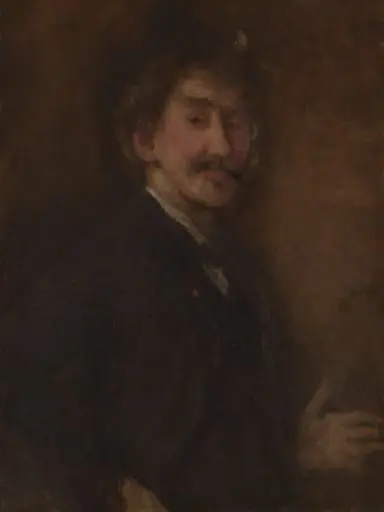 Gold and Brown: Self-Portrait
 Edward Guthrie Kennedy
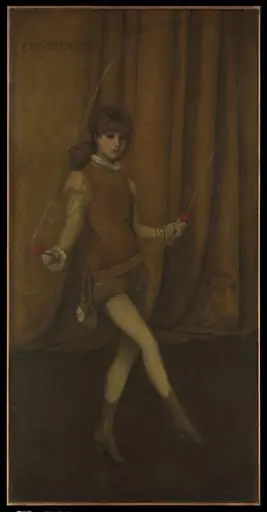 Harmony in Yellow and Gold: The Gold Girl—Connie Gilchrist
 George W. Vanderbilt
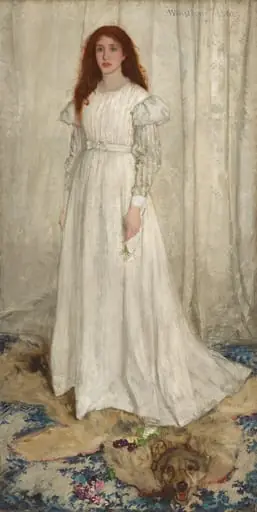 Symphony in White, No. 1: The White Girl
 Henry Irving as Philip II of Spain