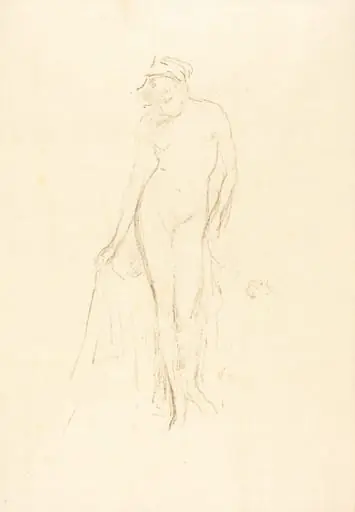
Artwork
The Dancing Girl
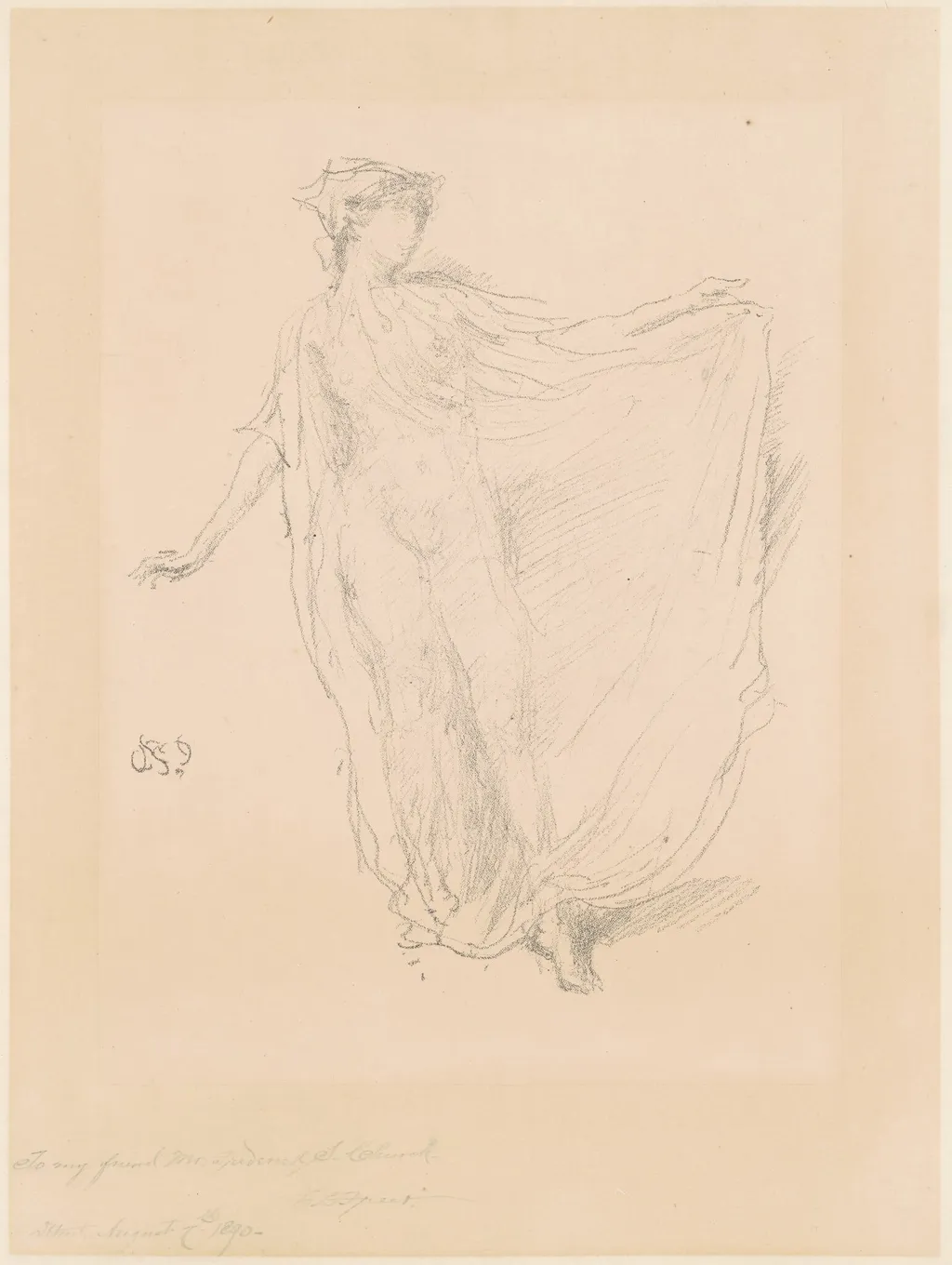
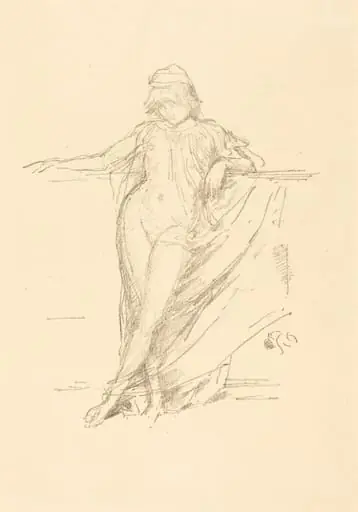
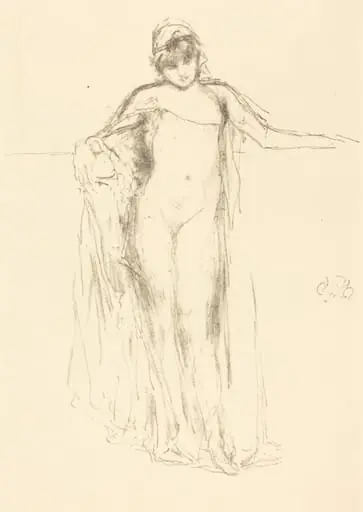
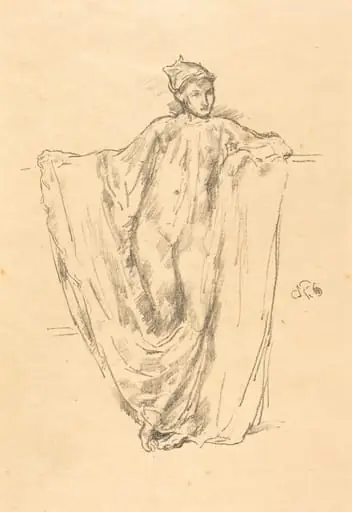
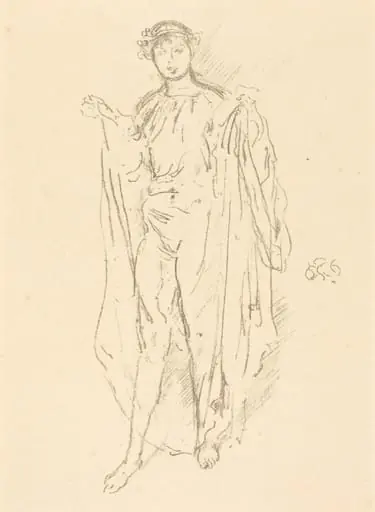
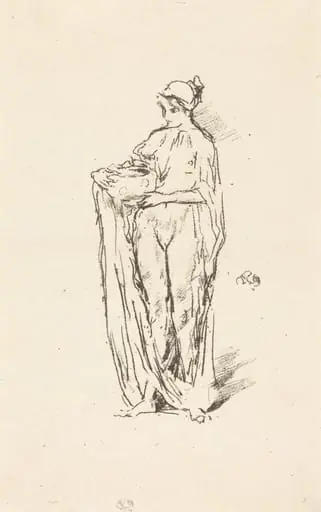
The Dancing Girl is an ink print by the Impressionist artist James McNeill Whistler. It dates from 1889 and is held in the collection of the National Gallery of Art.
About this work
Overview
Whistler created it using lithographic stone, drawing directly with greasy crayon to capture movement with minimal strokes.
This lithograph, titled 'The Dancing Girl,' is a black-ink print on wove paper with chine collé, a technique that bonds a thin sheet of paper to a heavier support during printing. Whistler created it using lithographic stone, drawing directly with greasy crayon to capture movement with minimal strokes. The image stands as a quiet study of posture and rhythm, stripped of detail but rich in implied motion.
Subject & Meaning
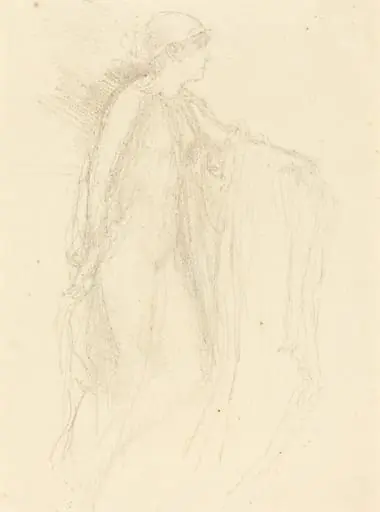
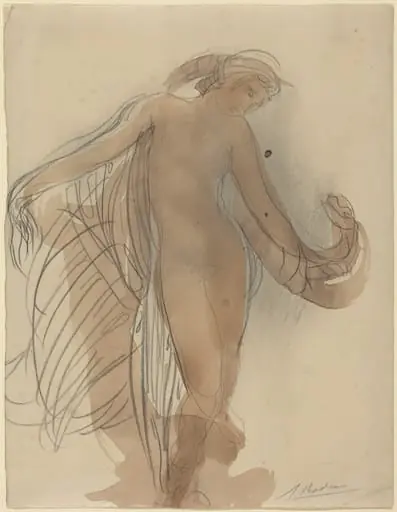
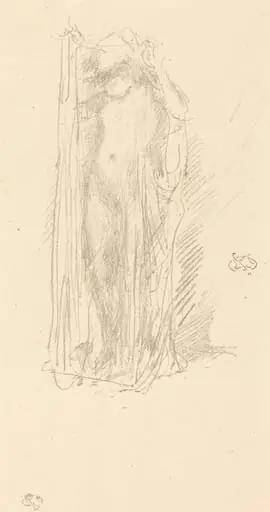
The figure is a dancer caught mid-movement, her body tilted forward with one arm extended behind her. The pose suggests a moment of transition—neither fully static nor fully resolved. There is no narrative context, no setting, no facial features; the focus lies in the economy of line and the suggestion of grace. The subject is less a specific person than an embodiment of motion itself.
Technique & Style
Whistler employed lithography to achieve fluid, spontaneous lines that echo the dancer’s motion. The use of chine collé allowed for delicate tonal variations and a softer edge to the figure’s form. His style here is reductive: contours are suggested, not defined, and drapery is rendered with a few sweeping strokes. The absence of shading or background heightens the focus on the body’s rhythm.
History & Provenance
Created in the 1880s, this print emerged during Whistler’s active engagement with Japanese aesthetics and printmaking. It was likely produced for his private circulation or small exhibitions, not mass distribution. The work remained within collector circles, eventually entering the National Gallery of Art’s collection through a bequest or acquisition in the 20th century.
Context
In the late 19th century, artists across Europe turned to dance as a subject to explore movement, modernity, and the body’s expressiveness. Whistler’s approach diverged from theatrical depictions; he favored abstraction and restraint. His lithographs of dancers reflect broader interests in Japanese ukiyo-e prints and the aesthetic movement’s emphasis on form over narrative.
Legacy
This print exemplifies Whistler’s contribution to the revival of lithography as a fine art medium. Its simplicity influenced later modernists who valued suggestion over detail. Though not widely exhibited in his lifetime, it now stands as a representative work of his graphic output, admired for its quiet precision and emotional restraint.
Artist & collection
Artist
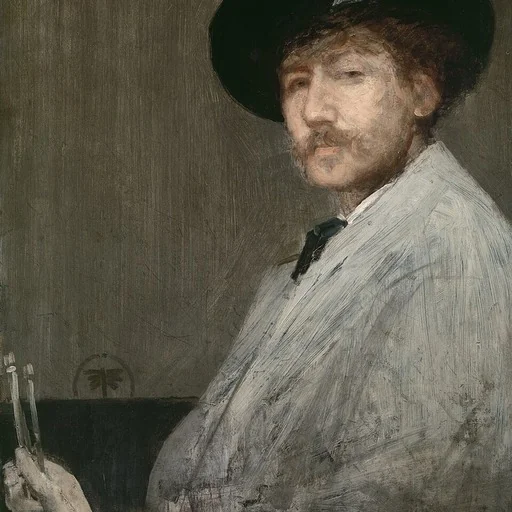
James Abbott McNeill Whistler was an American painter in oils and watercolor, and printmaker, active during the American Gilded Age and based primarily in the United Kingdom.

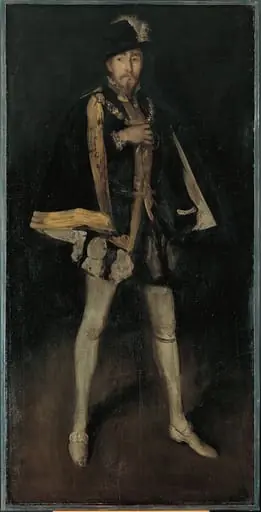 Arrangement in Black, No. 3: Sir Henry Irving as Philip II of Spain
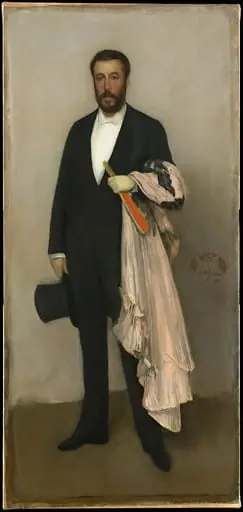 Arrangement in Flesh Colour and Black: Portrait of Theodore Duret
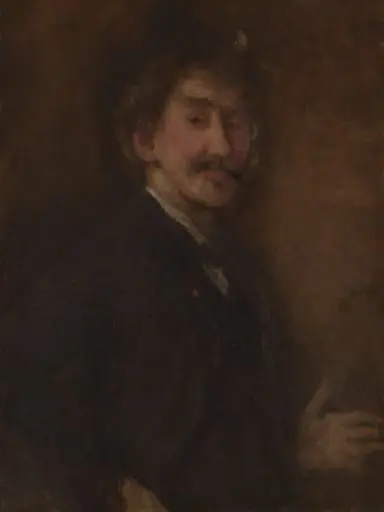 Gold and Brown: Self-Portrait
 Edward Guthrie Kennedy
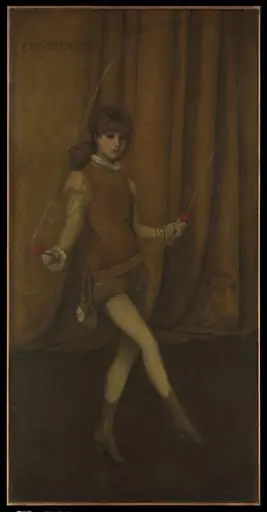 Harmony in Yellow and Gold: The Gold Girl—Connie Gilchrist
 George W. Vanderbilt
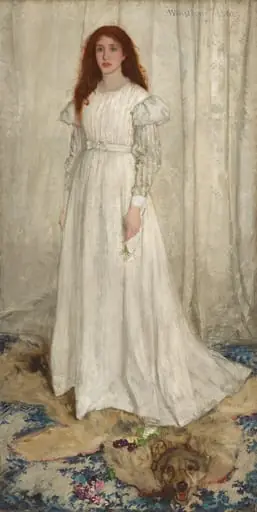 Symphony in White, No. 1: The White Girl
 Henry Irving as Philip II of Spain