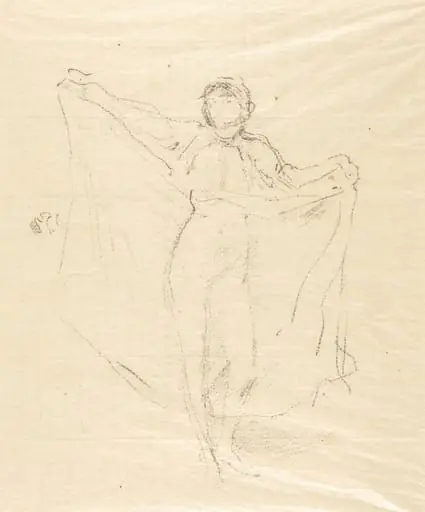
Artwork
The Girl
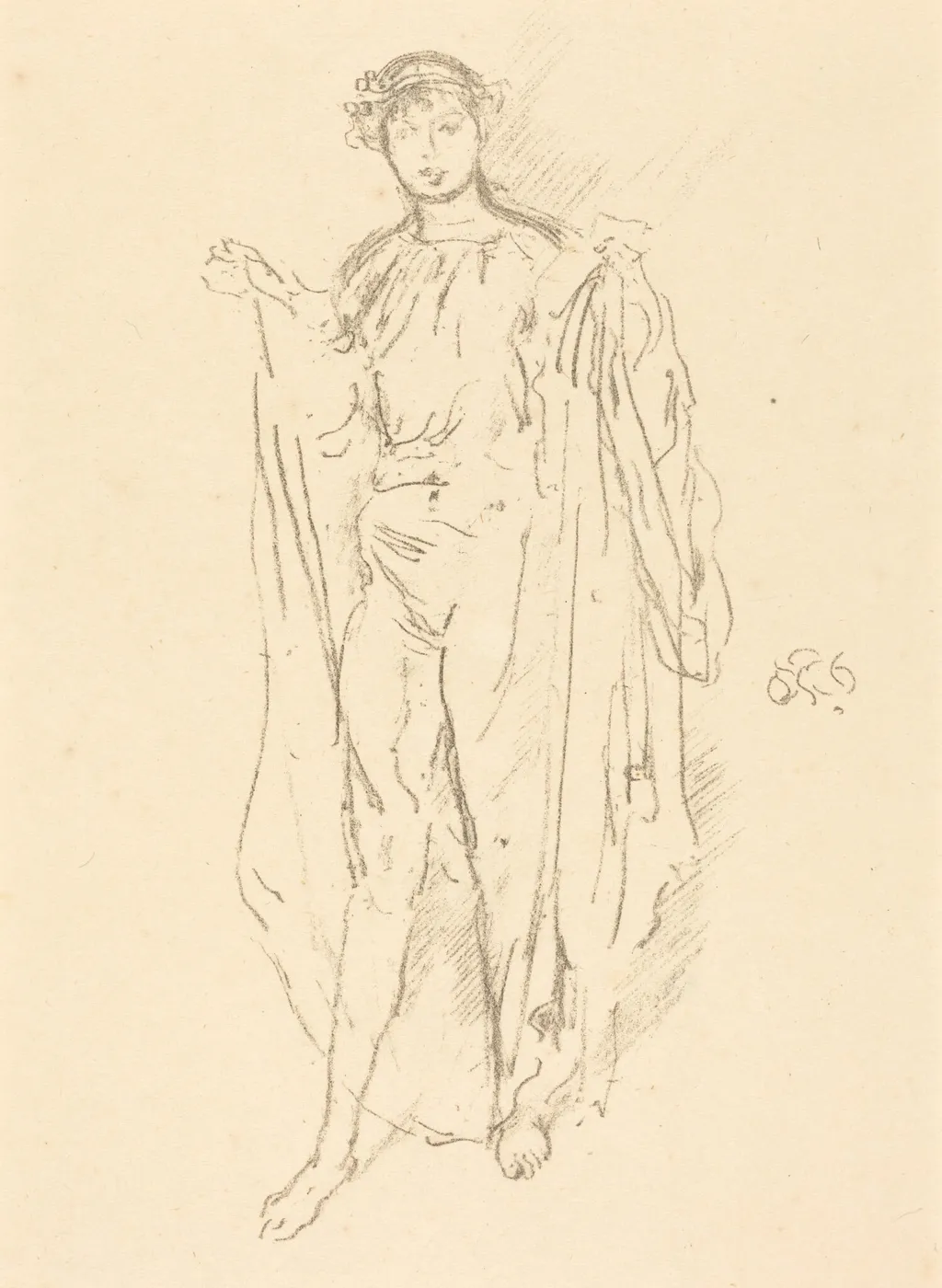
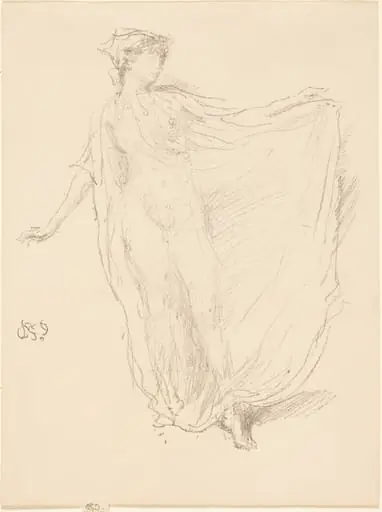
The Girl is an ink print by the Impressionist artist James McNeill Whistler. It dates from 1891 and is held in the collection of the National Gallery of Art.
About this work
Overview
Whistler, an American living in Britain, prioritized aesthetic balance over storytelling, aligning with the 'art for art's sake' philosophy.
Created around 1891, *The Girl* is a lithograph by James McNeill Whistler, executed in black ink on laid paper. As part of his broader printmaking practice, this work exemplifies his move away from narrative art toward formal harmony. Whistler, an American living in Britain, prioritized aesthetic balance over storytelling, aligning with the 'art for art's sake' philosophy. The piece stands as a quiet study in line and tone, characteristic of his mature style.
Subject & Meaning
The subject is a young woman, depicted in profile with her body slightly turned, dressed in a flowing white garment. Her posture and expression convey stillness rather than emotion; the faintest suggestion of a smile adds subtlety without sentiment. The focus is not on identity or story, but on form and presence. Whistler avoids moral or psychological interpretation, inviting contemplation of the figure as a composition of light, fabric, and silhouette.
Technique & Style
Whistler employed lithography to achieve delicate gradations of tone with minimal lines. The black ink on textured laid paper enhances the softness of the dress’s folds and the smoothness of the skin. Background tones are muted, allowing the figure to emerge through contrast rather than detail. His brushwork in lithography was precise yet fluid, emphasizing contour and rhythm over realism, reflecting his affinity for Japanese prints and tonal harmony.
History & Provenance
The print was produced during Whistler’s peak years in London, when he was actively exploring print media alongside his paintings. Few impressions were made, and most remain in institutional collections. It was not widely distributed in his lifetime, reflecting his selective approach to reproduction. Ownership records trace early acquisitions by British and American collectors who valued his experimental prints over his more famous portraits.
Context
In the 1890s, Whistler was distancing himself from academic traditions and the rising popularity of Impressionism. While contemporaries focused on light and atmosphere, he pursued structural clarity and restraint. *The Girl* aligns with his broader interest in single-figure studies—akin to his etchings of women in interiors—where mood is implied through posture and composition, not narrative context.
Legacy
The lithograph contributed to Whistler’s reputation as a printmaker who elevated technical discipline to an expressive end. Though less known than his portraits or Nocturnes, *The Girl* influenced later artists seeking elegance in simplicity. Its restrained aesthetic found resonance in early 20th-century modernists who valued line and form over emotional exposition, securing its place in the evolution of graphic art.
Own this work as a print
Artist & collection
Artist
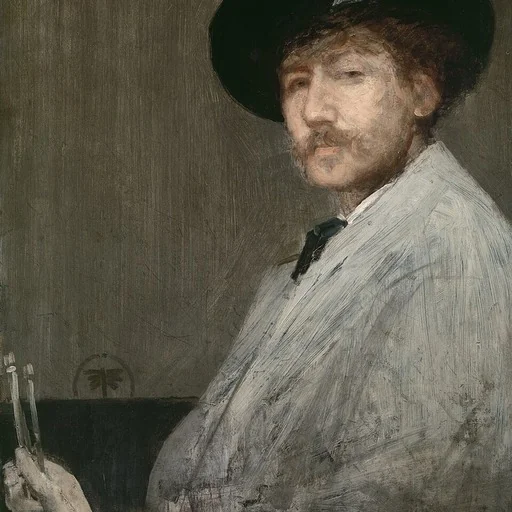
James Abbott McNeill Whistler was an American painter in oils and watercolor, and printmaker, active during the American Gilded Age and based primarily in the United Kingdom.

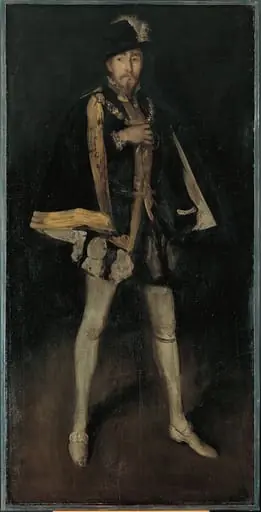 Arrangement in Black, No. 3: Sir Henry Irving as Philip II of Spain
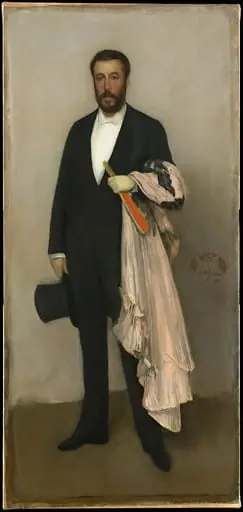 Arrangement in Flesh Colour and Black: Portrait of Theodore Duret
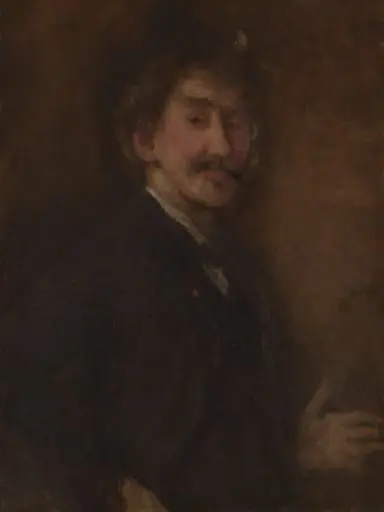 Gold and Brown: Self-Portrait
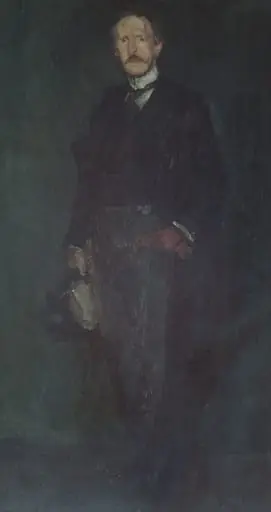 Edward Guthrie Kennedy
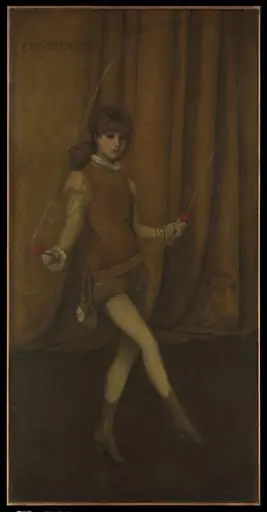 Harmony in Yellow and Gold: The Gold Girl—Connie Gilchrist
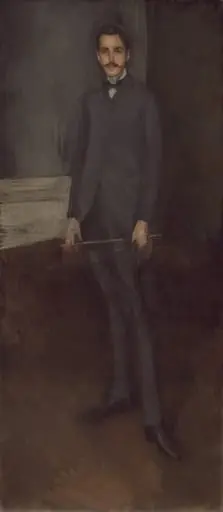 George W. Vanderbilt
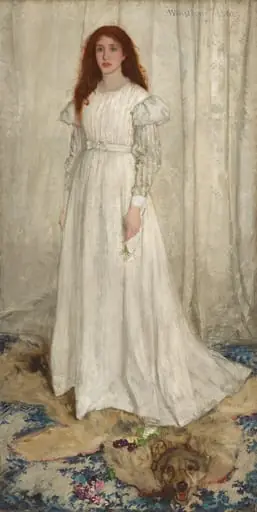 Symphony in White, No. 1: The White Girl
 Henry Irving as Philip II of Spain