Artwork
The Duet, No. 2
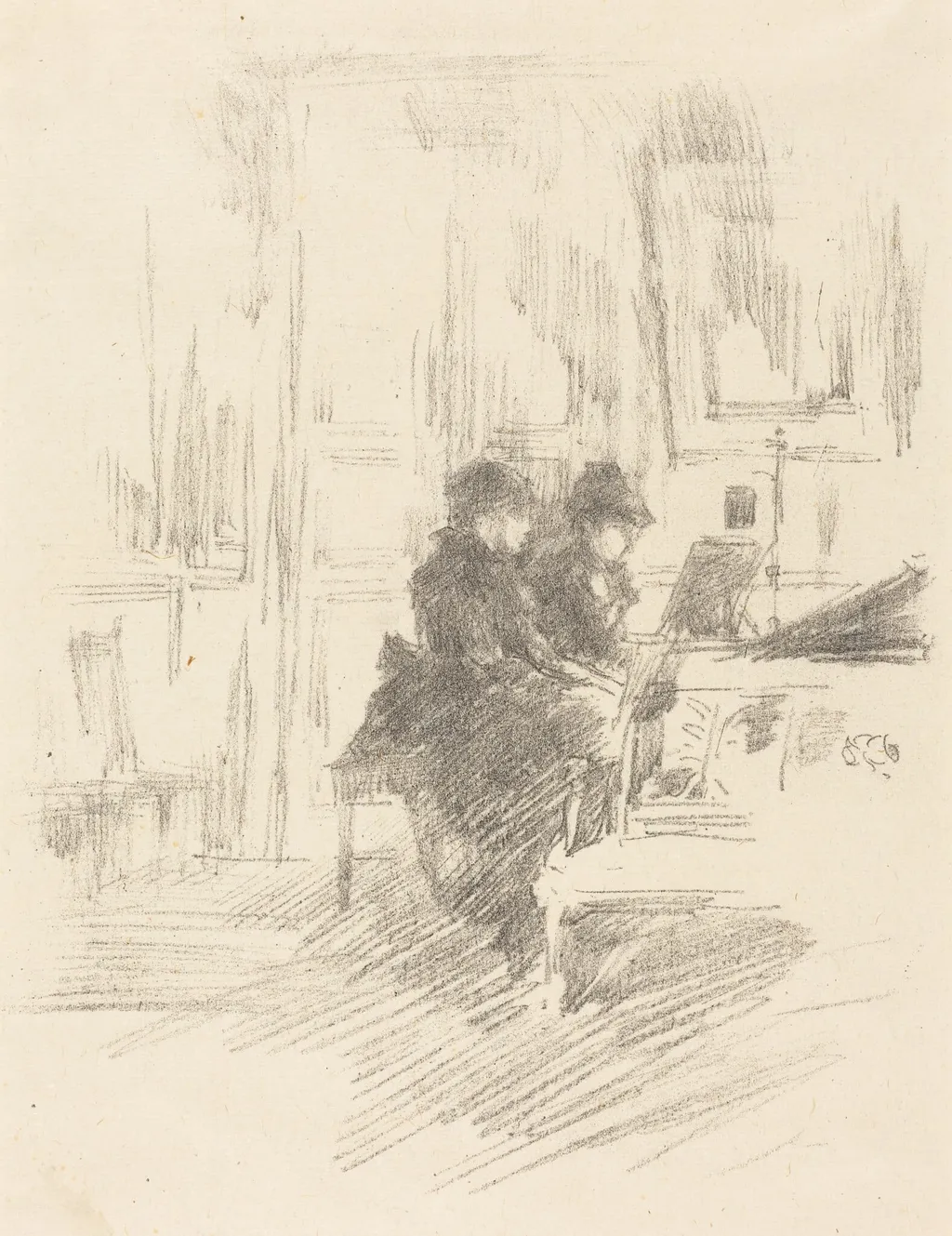
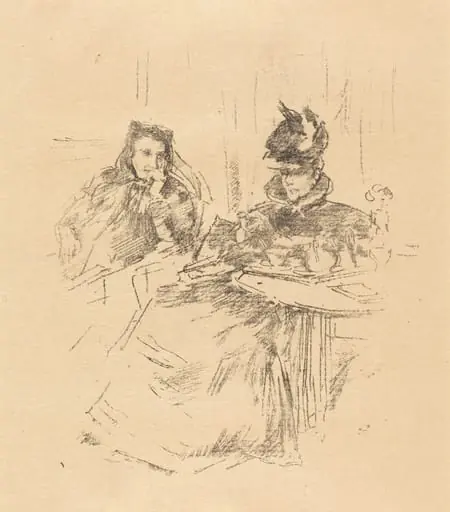
The Duet, No. 2 is an ink print by the Impressionist artist James McNeill Whistler. It dates from 1894 and is held in the collection of the National Gallery of Art. The Duet, No.
About this work
Overview
The Duet, No. 2 is a black lithograph on wove paper created by James McNeill Whistler in 1894. Executed as a single‑color print, it presents a dimly lit stage where two figures are barely discernible, their forms softened by the artist’s characteristic tonal subtlety.
Subject & Meaning
The image captures a quiet, dramatic moment on a theatrical platform, suggesting a musical performance without specifying the participants. The obscured faces and muted gestures invite contemplation of the atmosphere of a private duet rather than a narrative scene.
Technique & Style
Whistler employed the lithographic process to achieve delicate gradations of black, allowing light to dissolve into a deep background. His use of blurred edges and restrained line work reflects his broader aesthetic emphasis on tonal harmony and visual restraint.
History & Provenance
Produced during the 1890s, a period when Whistler created more than fifty lithographs of musicians and performers, The Duet, No. 2 exemplifies his printmaking output of that decade. The work bears his distinctive butterfly monogram, a signature that combines elegance with a hint of defiance.
Context
Created while Whistler was based in the United Kingdom, the print aligns with his practice of prioritising aesthetic effect over overt storytelling, a stance that resonated with the tastes of the American Gilded Age clientele who favored refined, non‑narrative art.
Own this work as a print
Artist & collection
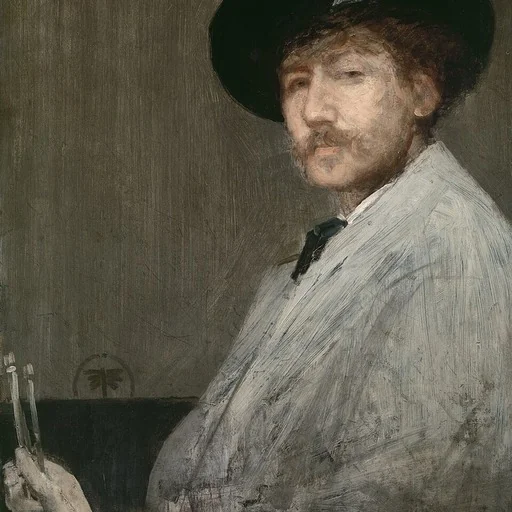
Artist
James Abbott McNeill Whistler was an American painter in oils and watercolor, and printmaker, active during the American Gilded Age and based primarily in the United Kingdom.

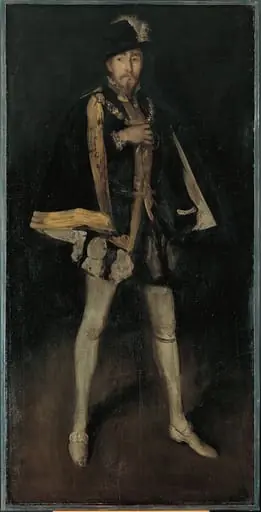 Arrangement in Black, No. 3: Sir Henry Irving as Philip II of Spain
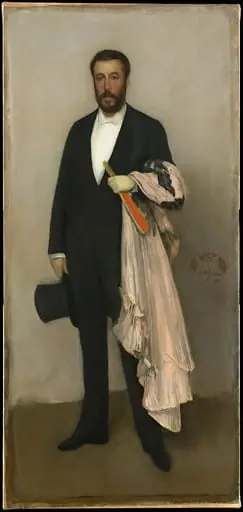 Arrangement in Flesh Colour and Black: Portrait of Theodore Duret
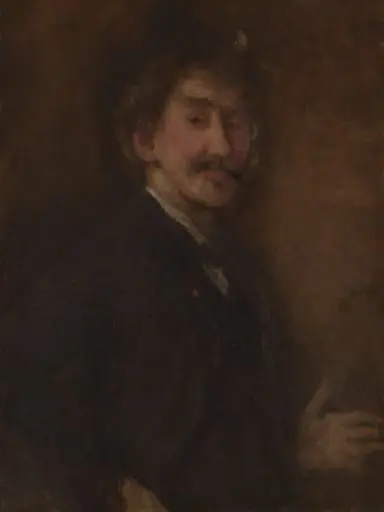 Gold and Brown: Self-Portrait
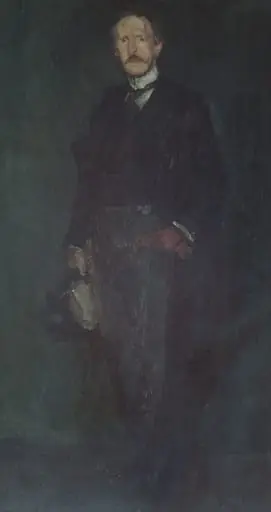 Edward Guthrie Kennedy
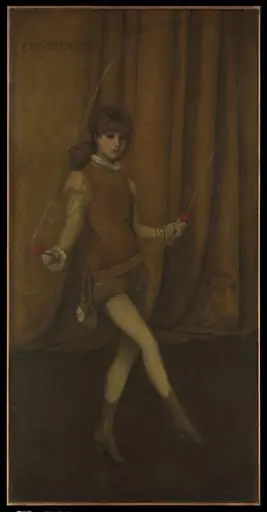 Harmony in Yellow and Gold: The Gold Girl—Connie Gilchrist
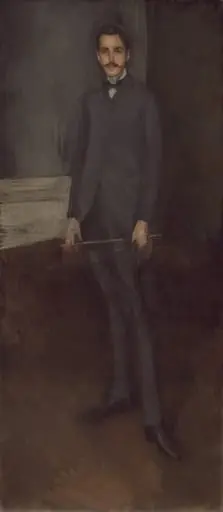 George W. Vanderbilt
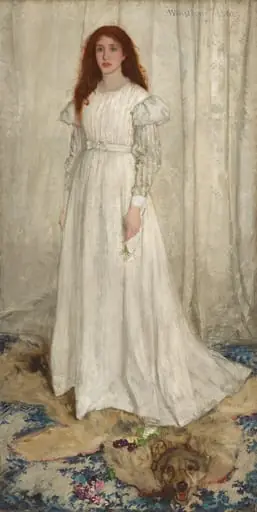 Symphony in White, No. 1: The White Girl
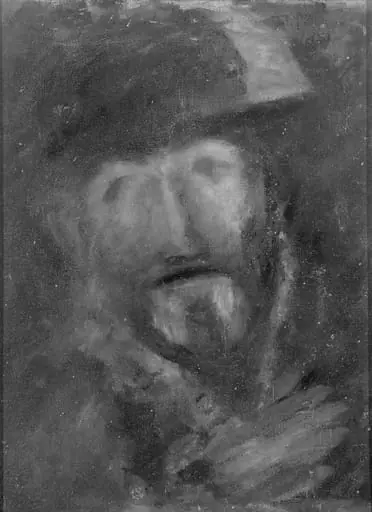 Henry Irving as Philip II of Spain
![Young Woman Seated at a Piano [verso], by Jean-Louis Forain](https://artifactworldgallery.com/img/jean-louis-forain--young-woman-seated-at-a-piano-verso--f5291ade50c6856d-w320.webp)
![Young Woman Seated at a Piano [recto], by Jean-Louis Forain](https://artifactworldgallery.com/img/jean-louis-forain--young-woman-seated-at-a-piano-recto--a3b419d47cacc91d-w320.webp)