Artwork
Late Picquet
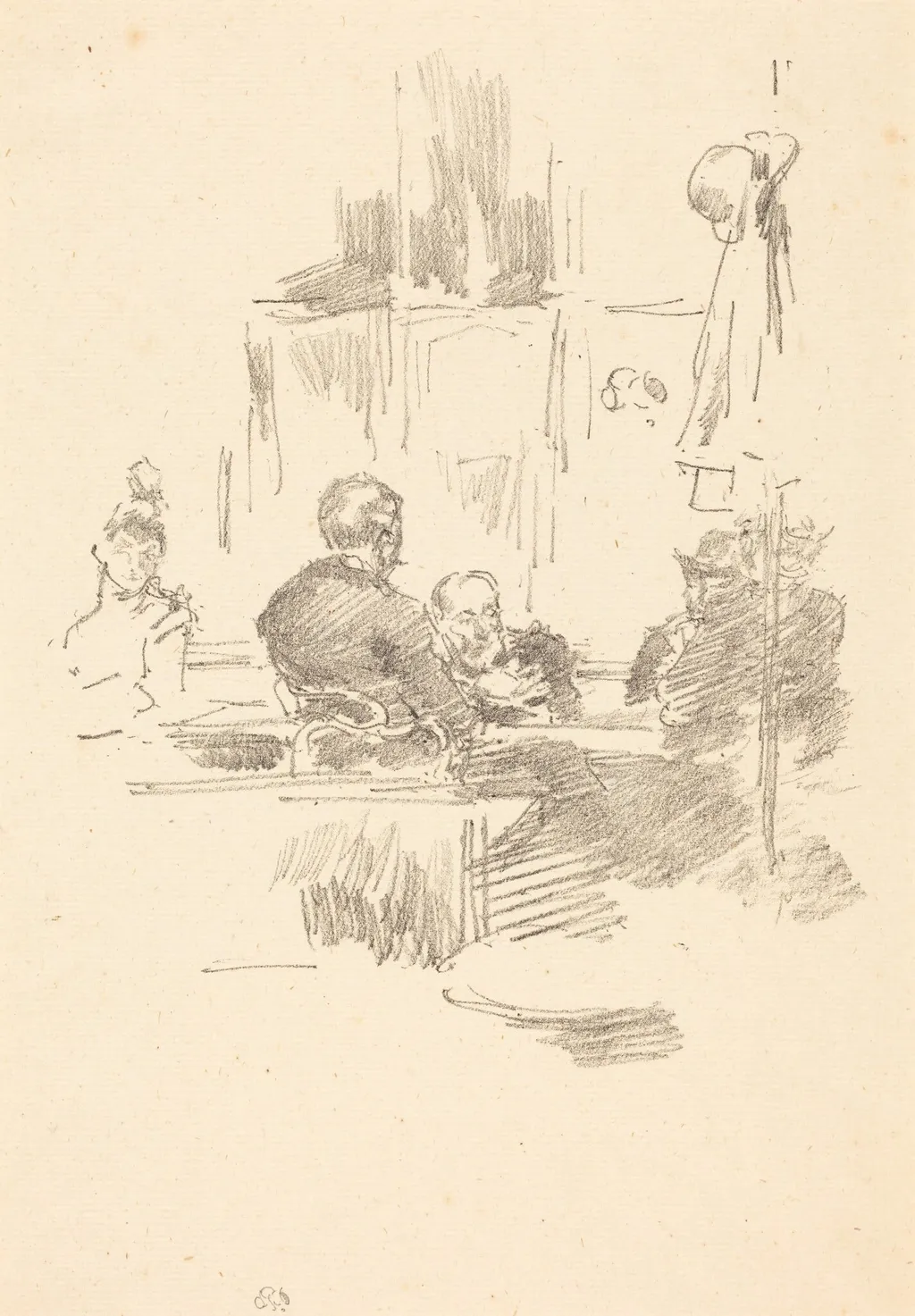
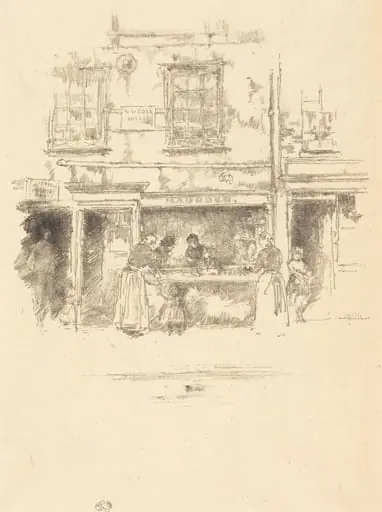
Late Picquet is an ink print by the Impressionist artist James McNeill Whistler. It dates from 1894 and is held in the collection of the National Gallery of Art.
About this work
Overview
The piece is signed with his distinctive butterfly monogram, a personal mark he adopted to assert authorship and aesthetic control.
Created in 1894, *Late Picquet* is a lithograph by James McNeill Whistler, made during his later years in Britain. It belongs to a body of graphic work he produced alongside his paintings, reflecting his deepening interest in printmaking. The piece is signed with his distinctive butterfly monogram, a personal mark he adopted to assert authorship and aesthetic control. Executed in black ink on laid paper, it exemplifies his commitment to tonal subtlety and formal restraint.
Subject & Meaning
The scene depicts a quiet gathering of figures seated around a table, engaged in an undetermined pastime, possibly a card game. The figures are rendered with minimal detail, their identities obscured by shadow and dark attire. Whistler avoids narrative clarity, focusing instead on the mood of stillness and introspection. The absence of overt emotion or action underscores his belief in art as an arrangement of form and tone, independent of storytelling.
Technique & Style
Whistler employed lithography to achieve a range of soft grays and deep blacks, using the medium’s capacity for tonal gradation to model space and atmosphere. The composition is tightly controlled, with light sources—likely a lamp or window—casting subtle highlights on the table and walls, contrasting with the enveloping shadows of clothing and interior. His graphic precision and avoidance of linearity reflect his pursuit of harmony through tone rather than outline.
History & Provenance
The print was made during a period when Whistler was increasingly focused on printmaking as a serious artistic medium, not merely a reproductive tool. It was likely produced in his London studio, where he experimented with lithographic techniques in the 1890s. The work entered private collections soon after its creation and has since been held in institutional holdings, including the British Museum and the Metropolitan Museum of Art, where it is studied as part of his graphic oeuvre.
Context
Whistler’s work in the 1890s emerged in dialogue with the Aesthetic Movement, which prioritized beauty and formal balance over moral or narrative content. *Late Picquet* aligns with his broader rejection of Victorian sentimentality. His interest in Japanese prints, with their flattened space and emphasis on mood, also influenced this piece. The dim interior and restrained palette reflect contemporary European trends in nocturnal and interior scenes, yet Whistler’s approach remains uniquely detached and contemplative.
Legacy
Though less widely known than his paintings, *Late Picquet* exemplifies Whistler’s enduring contribution to modern printmaking. His use of lithography to evoke atmosphere without narrative became a model for later artists exploring tonal abstraction. The work’s quiet intensity and formal discipline continue to inform discussions on the limits of representation, reinforcing his role as a bridge between 19th-century tradition and early modernist sensibilities.
Artist & collection
Artist
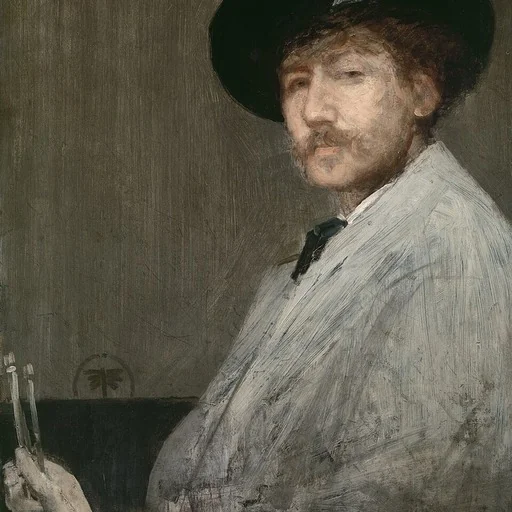
James Abbott McNeill Whistler was an American painter in oils and watercolor, and printmaker, active during the American Gilded Age and based primarily in the United Kingdom.

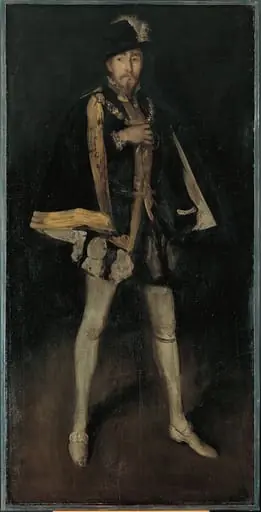 Arrangement in Black, No. 3: Sir Henry Irving as Philip II of Spain
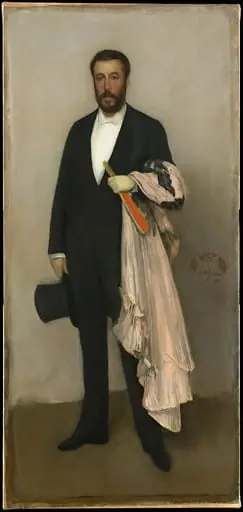 Arrangement in Flesh Colour and Black: Portrait of Theodore Duret
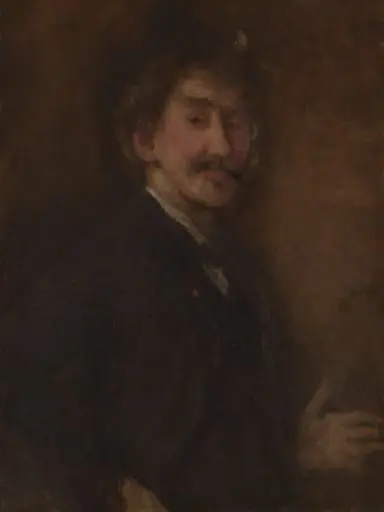 Gold and Brown: Self-Portrait
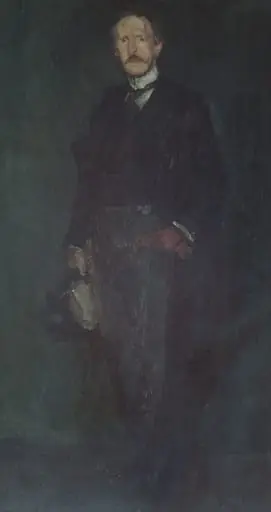 Edward Guthrie Kennedy
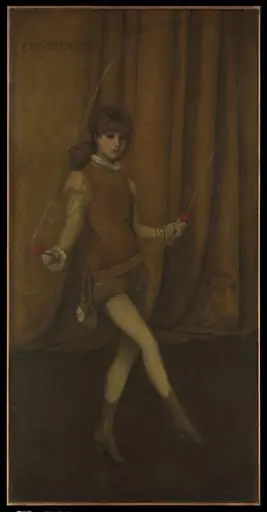 Harmony in Yellow and Gold: The Gold Girl—Connie Gilchrist
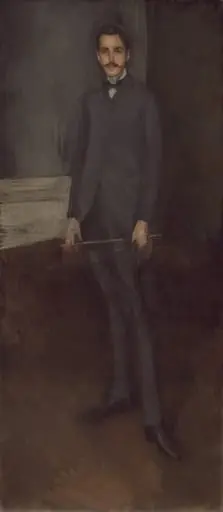 George W. Vanderbilt
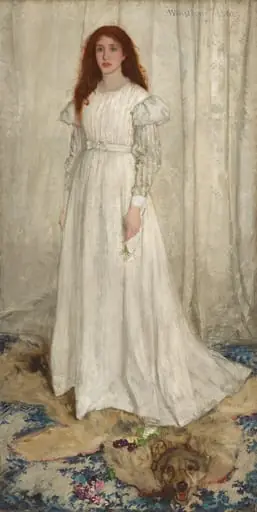 Symphony in White, No. 1: The White Girl
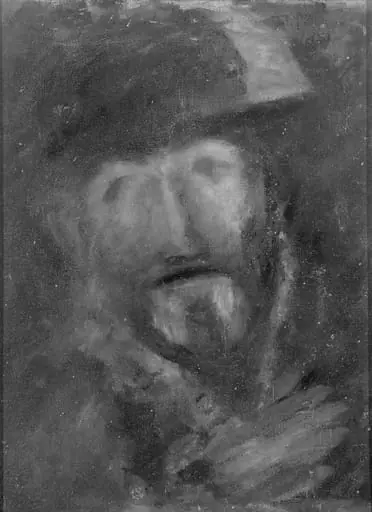 Henry Irving as Philip II of Spain
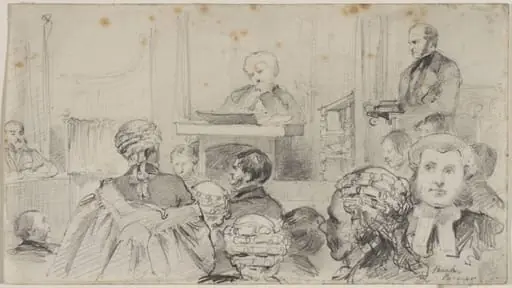 Sheets of studies of participants in a legal action
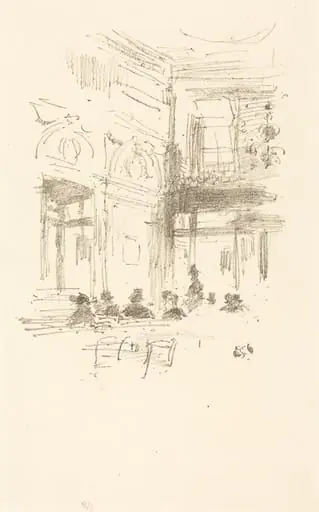 Gatti's
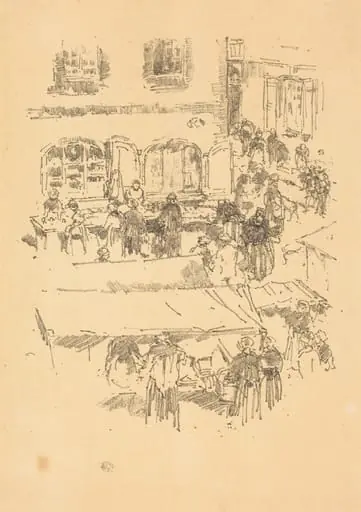 The Marketplace, Vitré
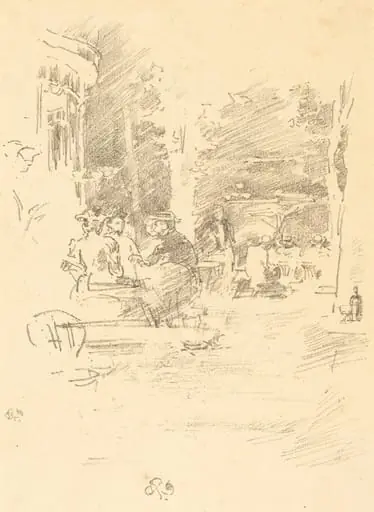 The Little Café au Bois
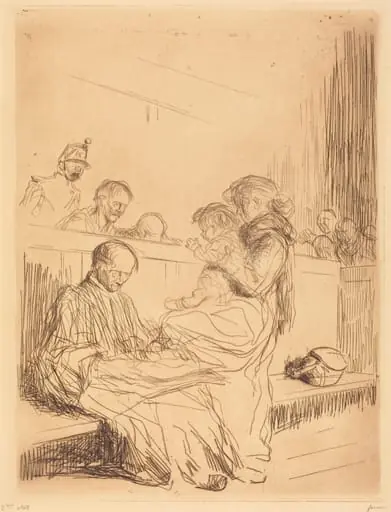 Le prévenu et l'enfant (The Prisoner and the Child)
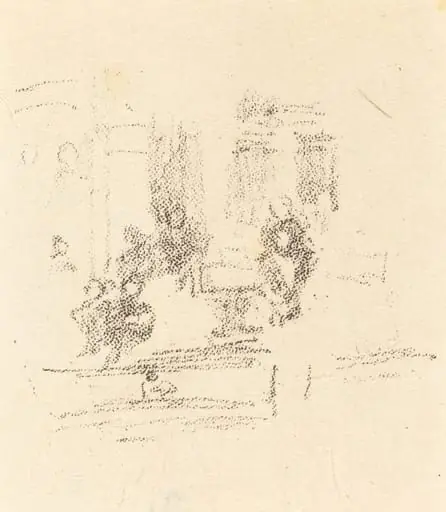 Trial Sketch: An Interior
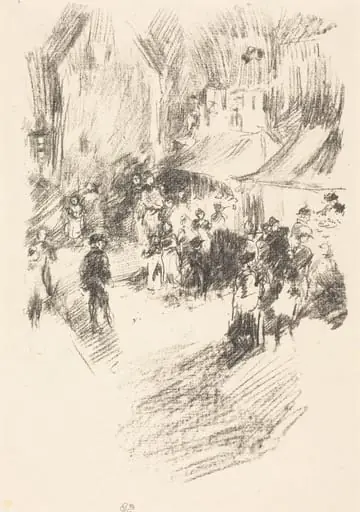 The Fair
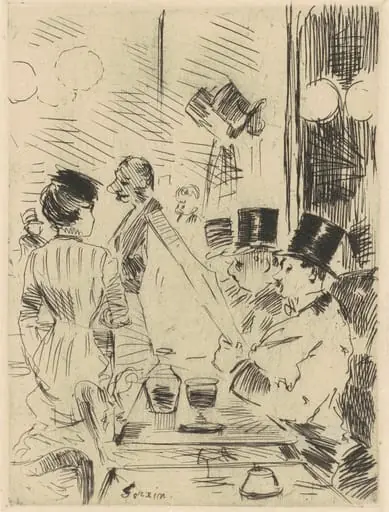 Le Cafe
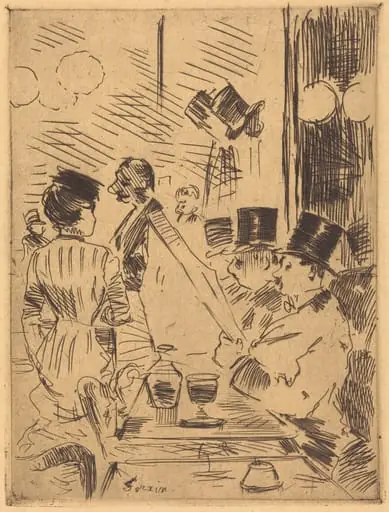 Le café de la Nouvelle Athènes (The Cafe of the New Athens)
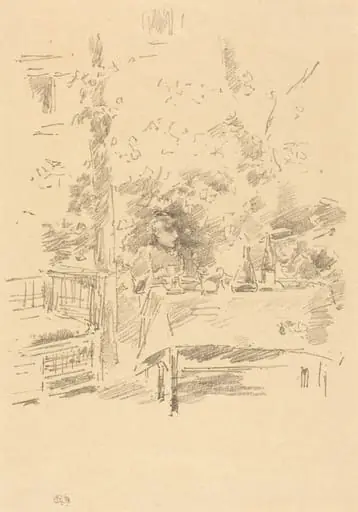 Tête-à-tête in the Garden
 Maunder's Fish Shop, Chelsea
![Father of the Artist [verso], by Paul Cezanne](https://artifactworldgallery.com/img/paul-cezanne--father-of-the-artist-verso--74e24a3aa4f42c1a-w320.webp) Father of the Artist [verso]
Father of the Artist [verso]