Artwork
The Forge
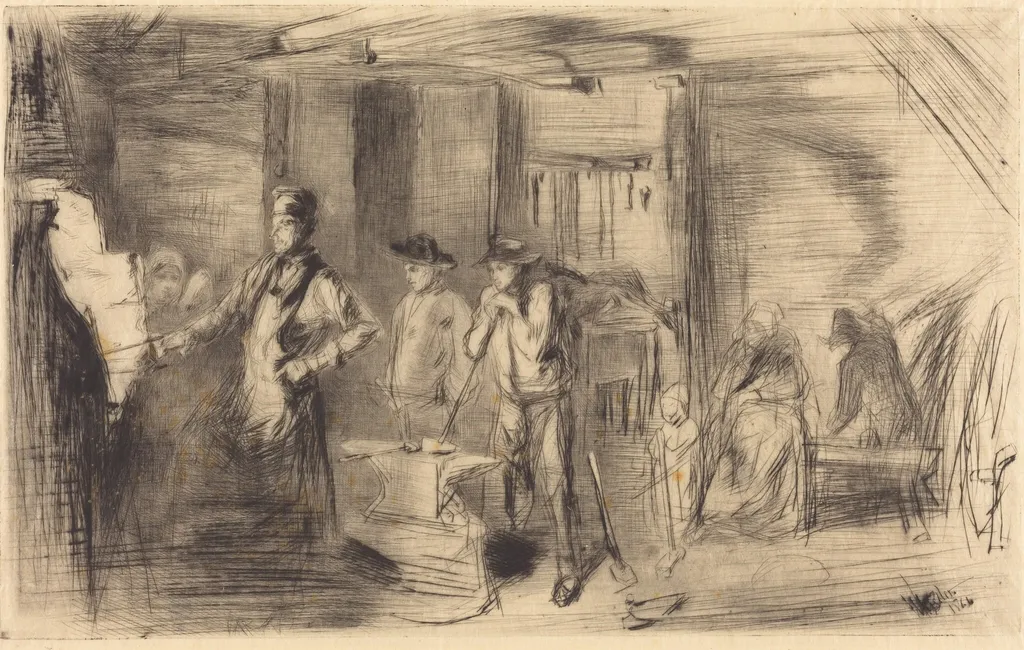
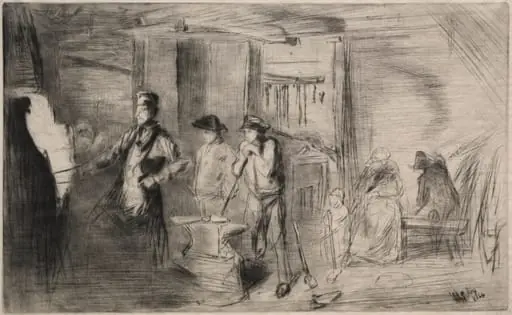
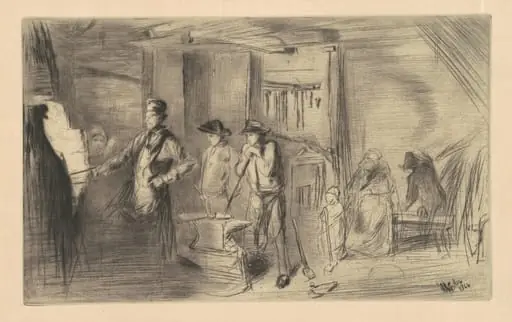
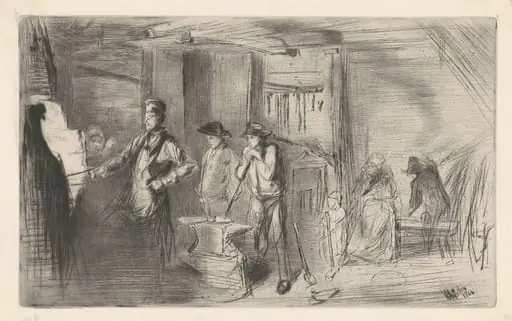
The Forge is an ink print by the Impressionist artist James McNeill Whistler. It dates from 1861 and is held in the collection of the National Gallery of Art.
About this work
Overview
The medium’s subtle texture and restrained mark-making reflect Whistler’s growing commitment to aesthetic form over explicit content.
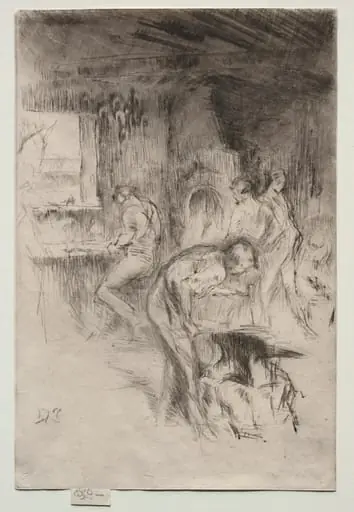
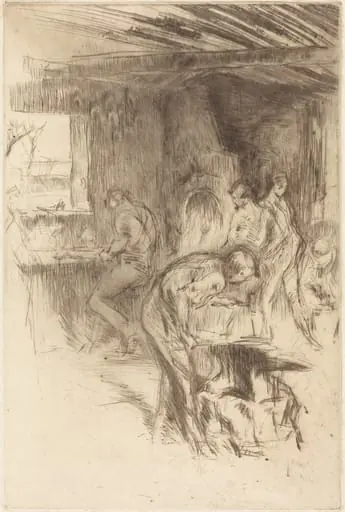
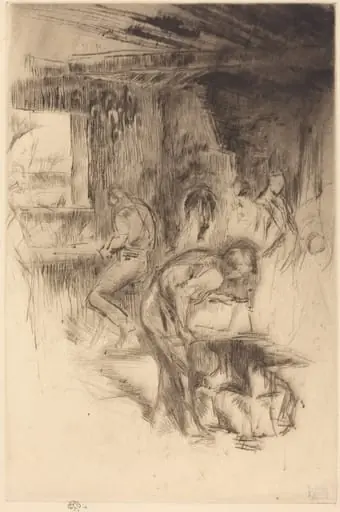
Created in 1861, *The Forge* is a drypoint print on Asian laid paper by James McNeill Whistler. It belongs to a series of early works in which he explored the interplay of light and shadow through minimal, precise lines. Unlike traditional narrative prints, it avoids dramatic storytelling, instead emphasizing tonal balance and spatial quietude. The medium’s subtle texture and restrained mark-making reflect Whistler’s growing commitment to aesthetic form over explicit content.
Subject & Meaning
The scene depicts a dimly lit interior, likely a blacksmith’s workshop, with figures gathered around a workbench. One central figure, dressed plainly and wearing a hat, appears engaged in quiet labor, while others remain in shadow, observing or pausing. No clear action or moral lesson is conveyed; the focus lies in the stillness and the distribution of light. Whistler treats the figures as elements of composition rather than characters in a story, inviting contemplation over interpretation.
Technique & Style
Whistler employed drypoint to create fine, incised lines that hold ink unevenly, producing soft, blurred edges and rich gradations of gray. The paper’s laid texture enhances the print’s tactile quality, while the limited tonal range reinforces the subdued atmosphere. His technique avoids bold contrasts, favoring delicate transitions that suggest volume without definition. This approach aligns with his broader aesthetic philosophy: form refined through restraint, not embellishment.
History & Provenance
Executed during Whistler’s early years in London, *The Forge* emerged from his engagement with the city’s working-class environments and his experimentation with printmaking. It was likely produced for private circulation among artists and collectors rather than public exhibition. The print remained in private hands for much of the 19th century before entering institutional collections, where its quiet formal qualities gradually gained recognition among scholars of print culture.
Context
In the 1860s, Whistler aligned himself with emerging ideas that prioritized visual harmony over moral or literary content. *The Forge* reflects this shift, resonating with contemporary European trends that valued atmosphere and composition in art. While other artists depicted labor with sentiment or social critique, Whistler treated the forge as a study in light, mass, and silence—part of a broader redefinition of artistic purpose across the Atlantic.
Legacy
Though not widely exhibited in his lifetime, *The Forge* became a touchstone for later artists and critics interested in the expressive potential of printmaking beyond illustration. Its emphasis on tonal nuance and compositional economy influenced generations seeking alternatives to narrative-driven imagery. Today, it stands as an early example of Whistler’s enduring contribution to modern print aesthetics—quiet, deliberate, and formally rigorous.
Own this work as a print
Artist & collection
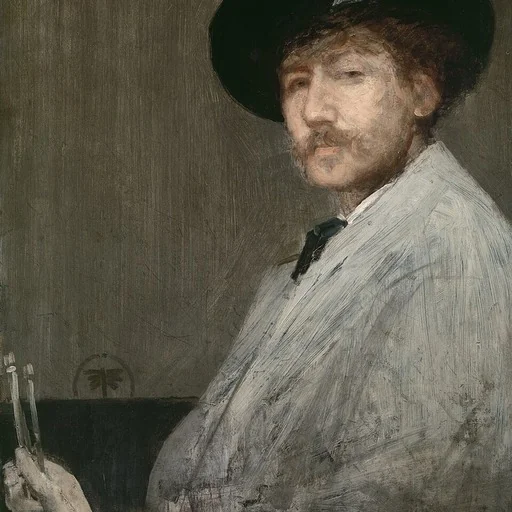
Artist
James Abbott McNeill Whistler was an American painter in oils and watercolor, and printmaker, active during the American Gilded Age and based primarily in the United Kingdom.

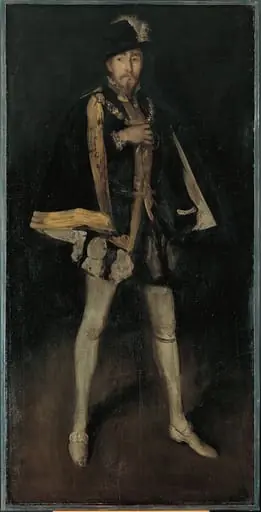 Arrangement in Black, No. 3: Sir Henry Irving as Philip II of Spain
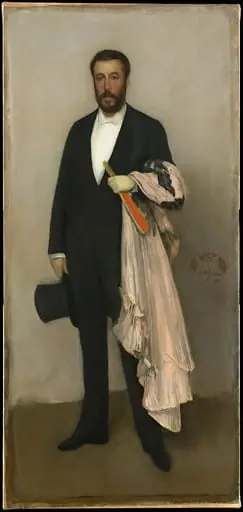 Arrangement in Flesh Colour and Black: Portrait of Theodore Duret
 Gold and Brown: Self-Portrait
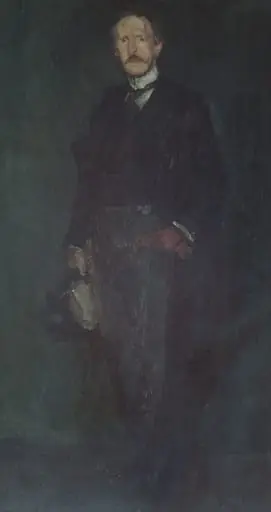 Edward Guthrie Kennedy
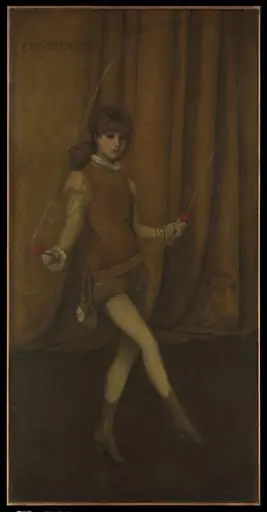 Harmony in Yellow and Gold: The Gold Girl—Connie Gilchrist
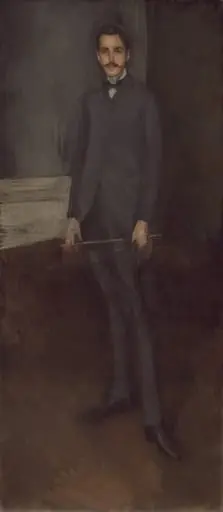 George W. Vanderbilt
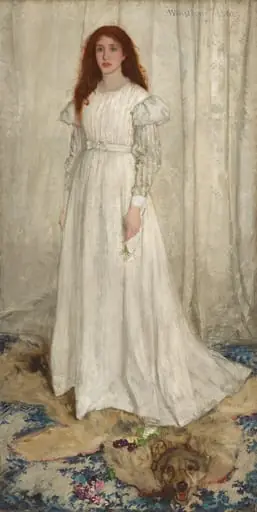 Symphony in White, No. 1: The White Girl
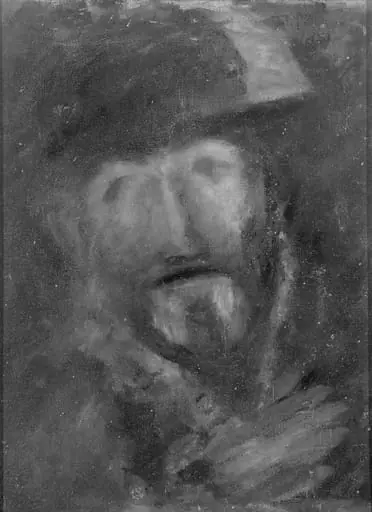 Henry Irving as Philip II of Spain