Artwork
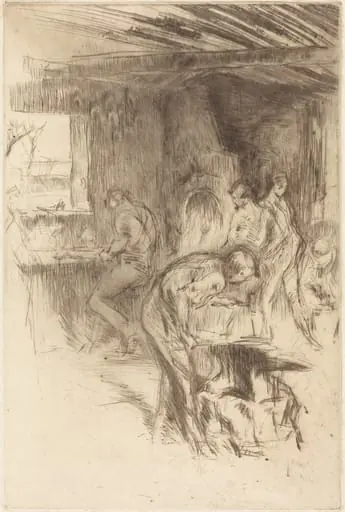
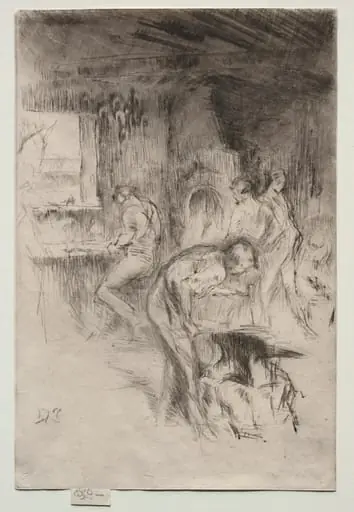
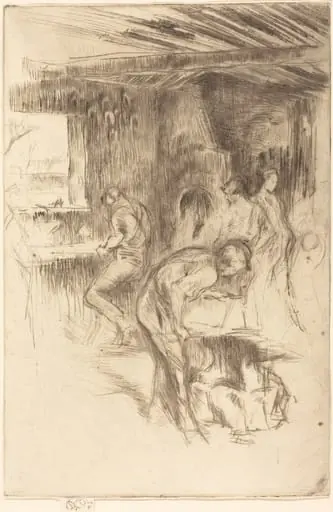
The Little Forge
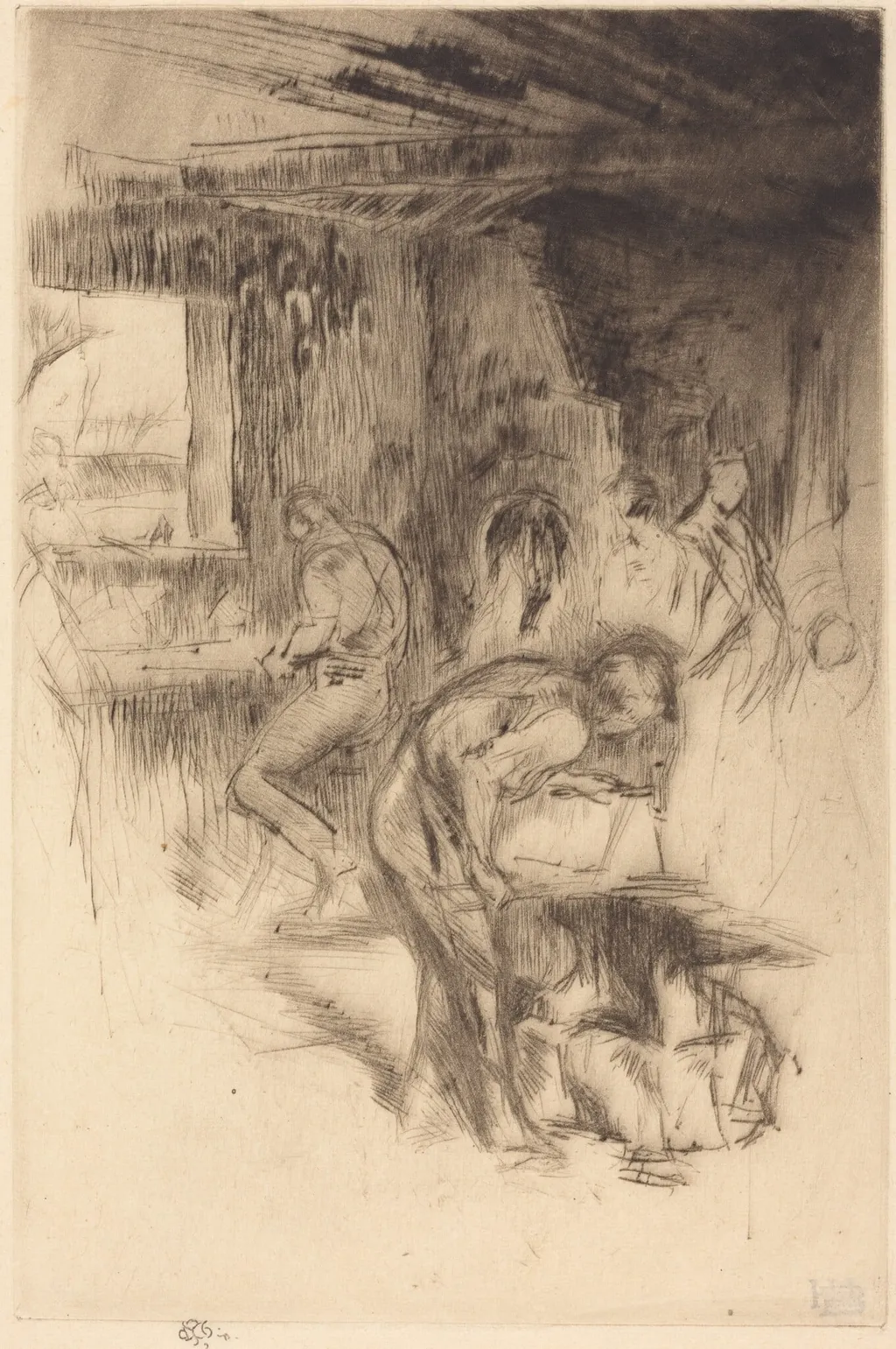
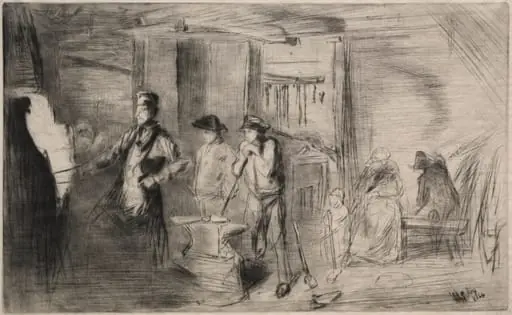
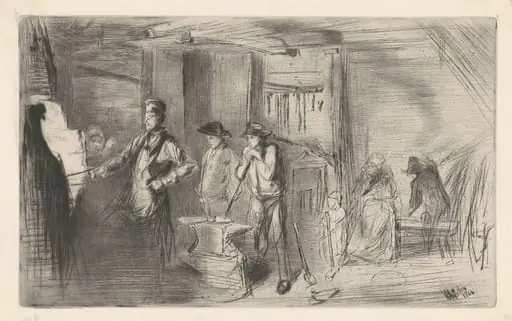
The Little Forge is an ink print by the Impressionist artist James McNeill Whistler. It dates from 1875 and is held in the collection of the National Gallery of Art.
About this work
Overview
The Little Forge is a drypoint print on laid paper created by James McNeill Whistler in 1875. Executed during his time in the United Kingdom, this work showcases his versatility across mediums, including printmaking, oils, and watercolor.
Subject & Meaning
Depicting a bustling forge scene, the print captures the industrious activity of workers in a dimly lit, high-ceilinged room. The focus on everyday labor reflects Whistler's adherence to 'art for art's sake,' prioritizing aesthetic representation over sentimental narrative.
Technique & Style
Characterized by a delicate yet deliberate drypoint technique, the print exhibits Whistler's refined compositional approach. The use of chiaroscuro creates depth and volume, with stark light-dark contrasts conveying the energetic and dynamic atmosphere of the forge.
History & Provenance
Created in 1875, during the American Gilded Age, while Whistler was based in the UK. Specific provenance details are not provided in the available information.
Context
Emerging from the late 19th-century artistic landscape, The Little Forge aligns with the 'art for art's sake' movement, emphasizing formal qualities over emotional or moral themes. Its realistic style with attention to detail and texture situates it within the broader European printmaking traditions of the time.
Legacy
As part of Whistler's printmaking oeuvre, The Little Forge contributes to his reputation for technical innovation and aesthetic refinement across multiple mediums, influencing subsequent generations of artists in their approach to capturing everyday life through print.
Artist & collection
Artist
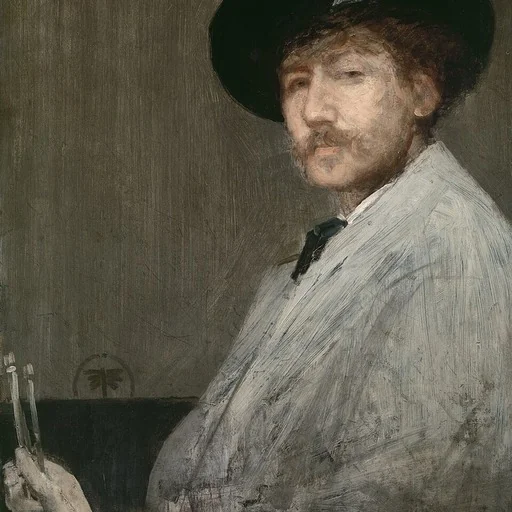
James Abbott McNeill Whistler was an American painter in oils and watercolor, and printmaker, active during the American Gilded Age and based primarily in the United Kingdom.

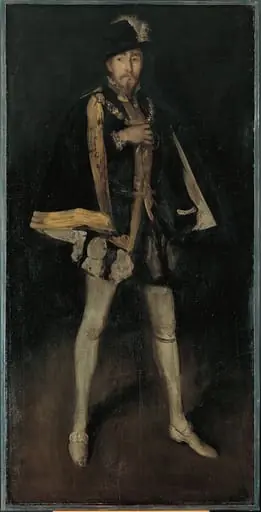 Arrangement in Black, No. 3: Sir Henry Irving as Philip II of Spain
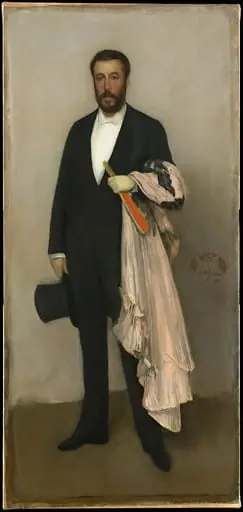 Arrangement in Flesh Colour and Black: Portrait of Theodore Duret
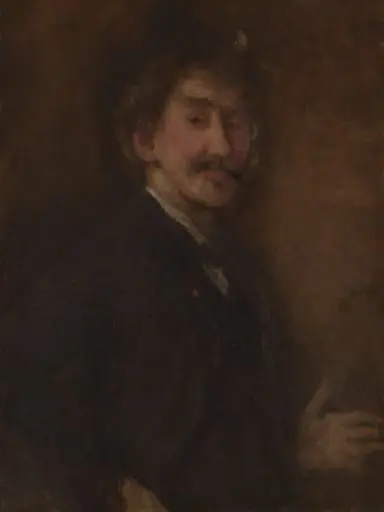 Gold and Brown: Self-Portrait
 Edward Guthrie Kennedy
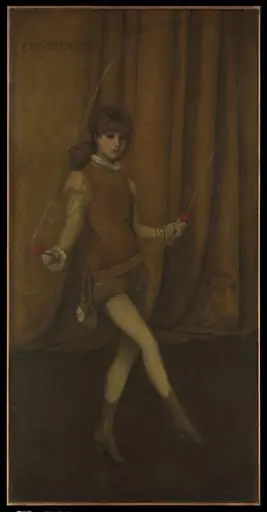 Harmony in Yellow and Gold: The Gold Girl—Connie Gilchrist
 George W. Vanderbilt
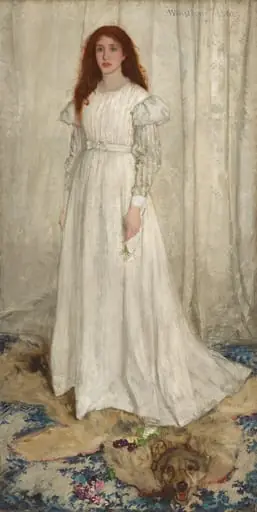 Symphony in White, No. 1: The White Girl
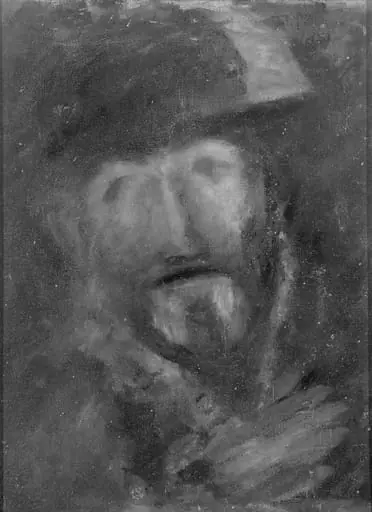 Henry Irving as Philip II of Spain