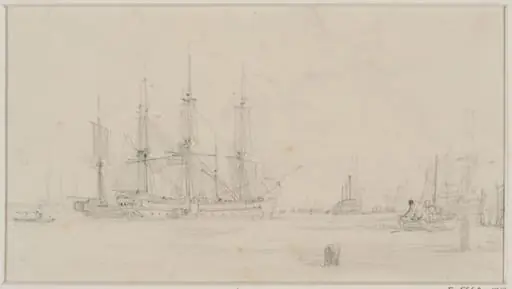
Artwork
The Large Pool
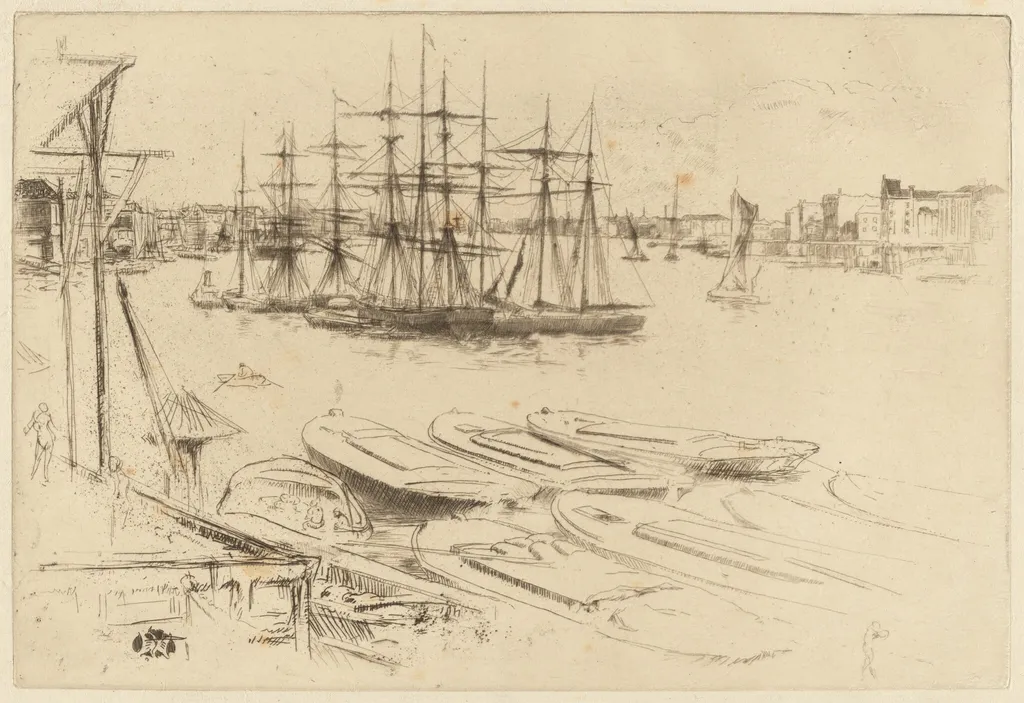
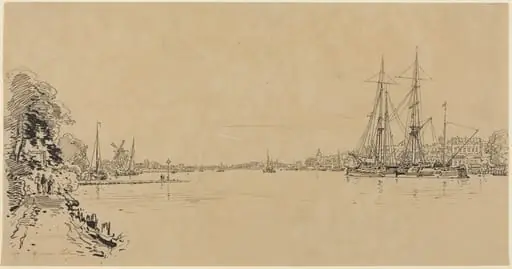
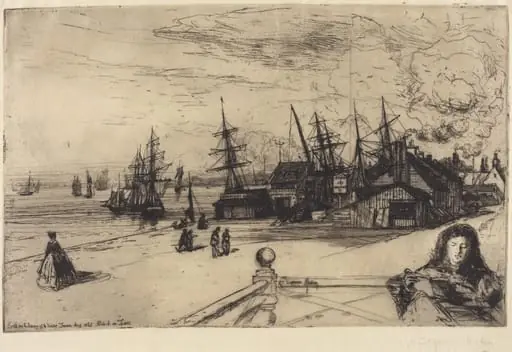
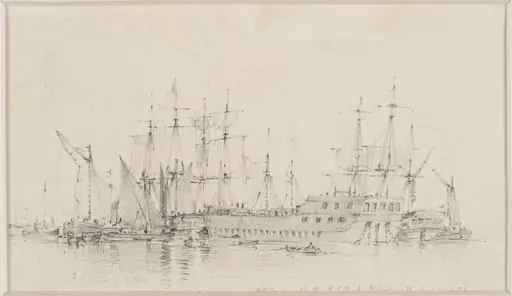
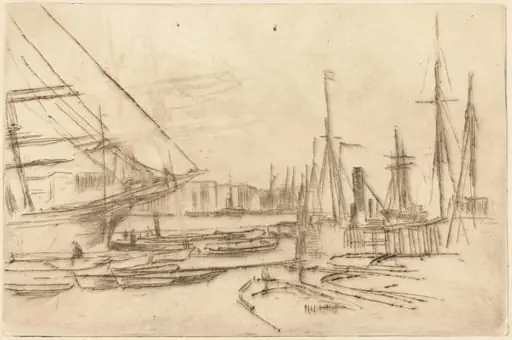
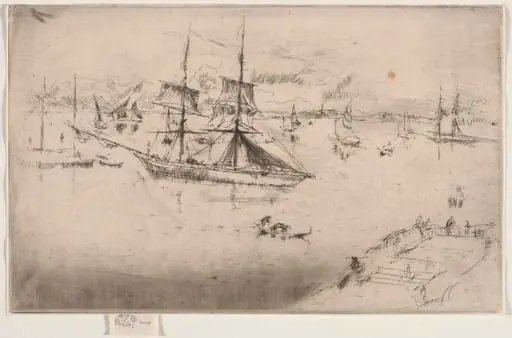
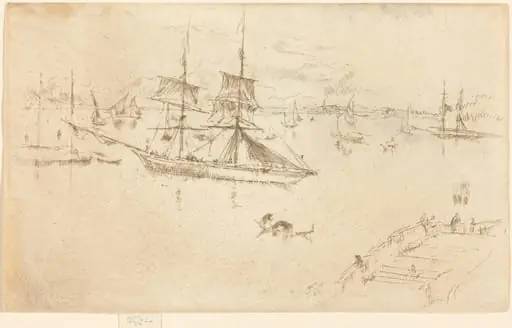
The Large Pool is an ink print by the Impressionist artist James McNeill Whistler. It dates from 1879 and is held in the collection of the National Gallery of Art.
About this work
Overview
It belongs to a series of prints in which he explored quiet, contemplative landscapes, prioritizing tonal harmony over narrative.
Created around 1879, *The Large Pool* is an etching and drypoint on Asian laid paper by James McNeill Whistler. It belongs to a series of prints in which he explored quiet, contemplative landscapes, prioritizing tonal harmony over narrative. The work exemplifies his commitment to aesthetic precision and the quiet interplay of light and surface, distinguishing his approach from the more emotive traditions of his time.
Subject & Meaning
The scene depicts a still body of water surrounded by sparse vegetation and distant architecture, rendered without human figures or overt symbolism. The pool serves as a mirror for ambient light and atmosphere, inviting quiet observation rather than storytelling. Whistler’s choice of subject reflects his belief that visual harmony, not moral or emotional content, should define artistic value.
Technique & Style
Whistler employed etching and drypoint to achieve subtle gradations of tone and delicate linear detail. The surface of the water is suggested through faint, irregular lines, while the surrounding foliage and structures are hinted at with soft, attenuated strokes. The use of Asian laid paper enhanced the print’s sensitivity to ink, allowing for nuanced atmospheric effects and a muted, restrained palette.
History & Provenance
The print was made during Whistler’s most active period in London, where he refined his printmaking techniques after years of experimentation. It entered the collection of the National Gallery of Art in Washington, D.C., in the 20th century, where it remains as part of a broader holding of his graphic works, reflecting its significance in the study of late 19th-century print culture.
Context
In the 1870s and 1880s, Whistler aligned himself with the Aesthetic Movement, rejecting didactic art in favor of compositions governed by form and mood. His prints, including *The Large Pool*, were part of a broader effort to elevate printmaking to the status of fine art, influencing contemporaries and later generations who valued subtlety over spectacle.
Legacy
Whistler’s approach to etching, as seen in this work, helped redefine the medium’s potential for atmospheric expression. His emphasis on tonal balance and minimalism influenced later printmakers and modernist artists who sought to convey emotion through restraint. *The Large Pool* stands as a quiet but enduring example of his contribution to the evolution of graphic art.
Own this work as a print
Artist & collection
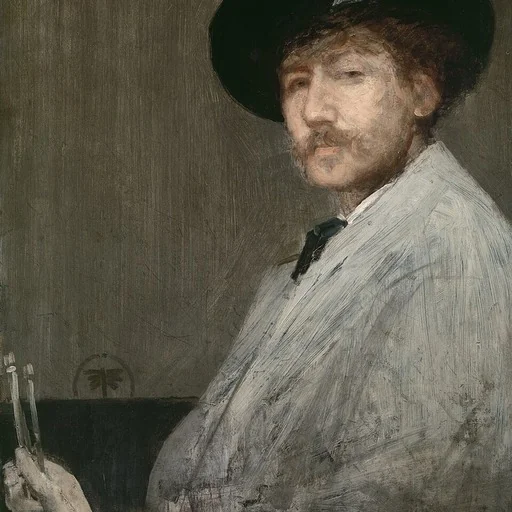
Artist
James Abbott McNeill Whistler was an American painter in oils and watercolor, and printmaker, active during the American Gilded Age and based primarily in the United Kingdom.

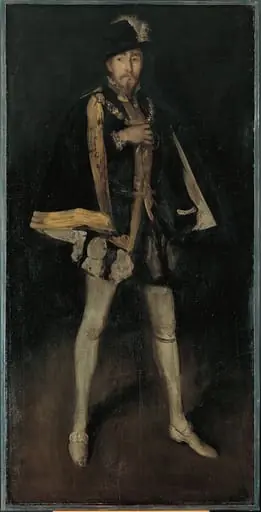 Arrangement in Black, No. 3: Sir Henry Irving as Philip II of Spain
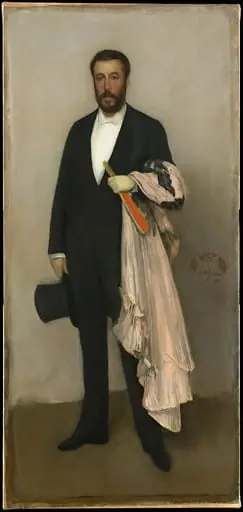 Arrangement in Flesh Colour and Black: Portrait of Theodore Duret
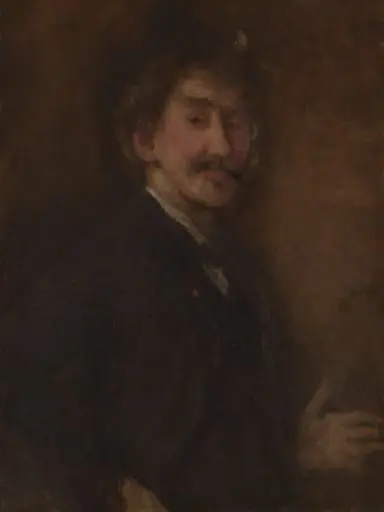 Gold and Brown: Self-Portrait
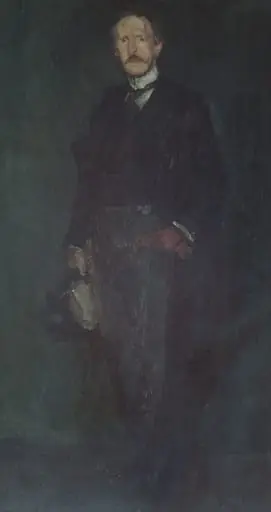 Edward Guthrie Kennedy
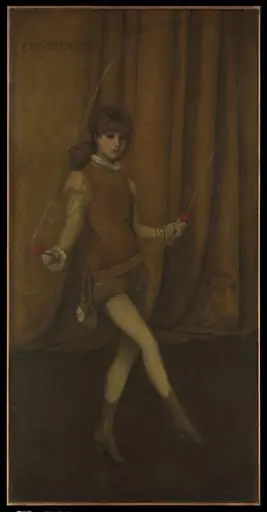 Harmony in Yellow and Gold: The Gold Girl—Connie Gilchrist
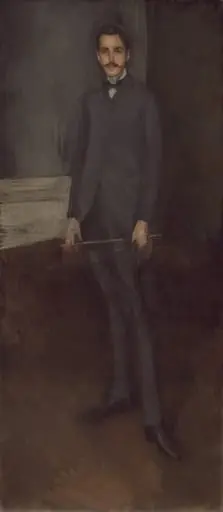 George W. Vanderbilt
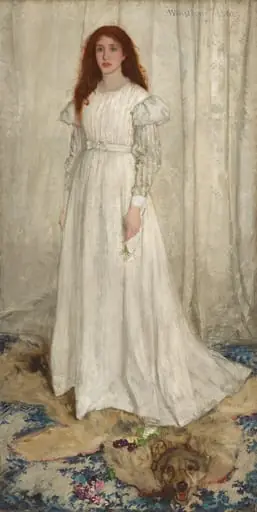 Symphony in White, No. 1: The White Girl
 Henry Irving as Philip II of Spain