Artwork
Dutch View
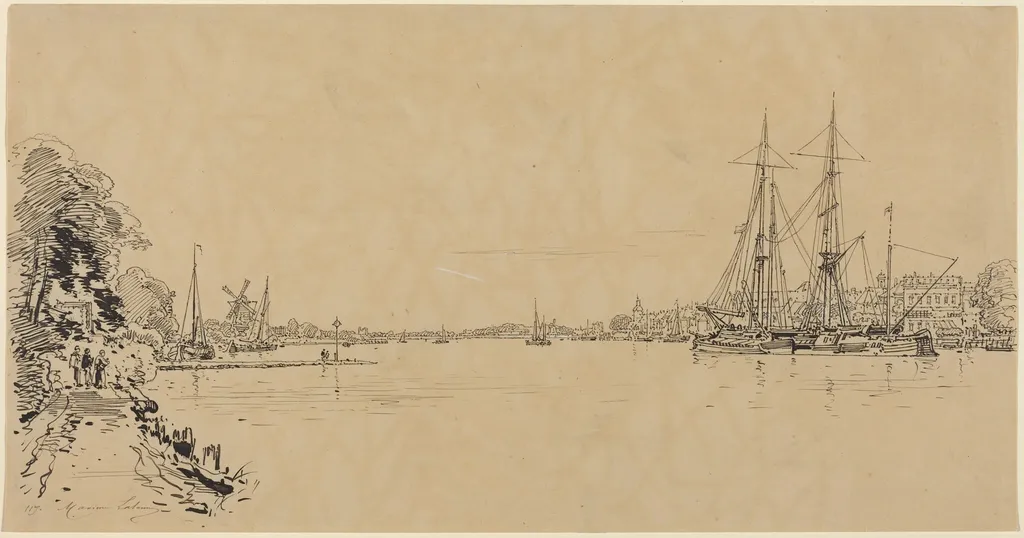
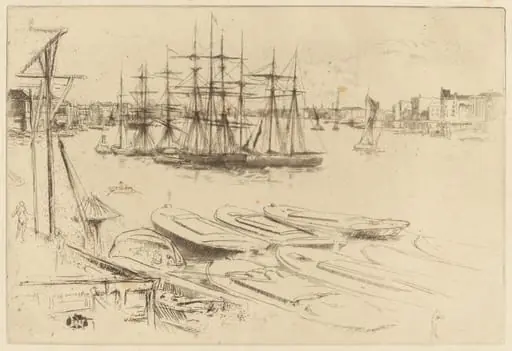
Dutch View is an ink drawing by the Romanticist artist Maxime Lalanne. It dates from 1856 and is held in the collection of the National Gallery of Art.
About this work
Overview
Executed in black ink with white highlights, the work presents a compact harbor scene rendered with swift, economical strokes.
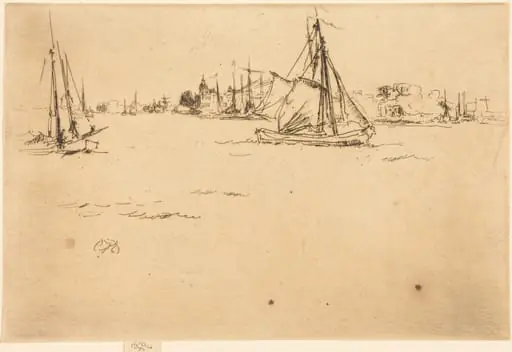
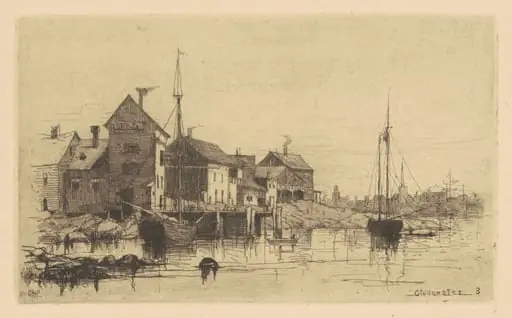
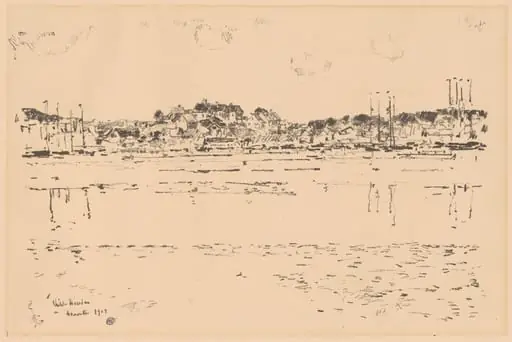
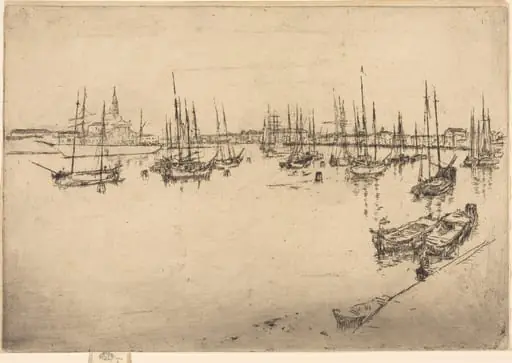
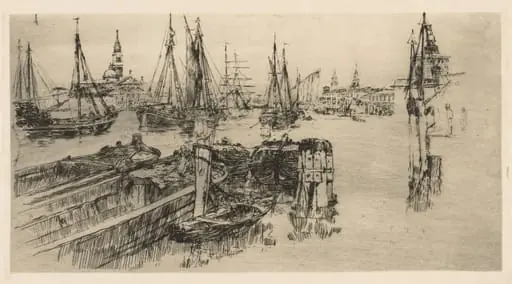
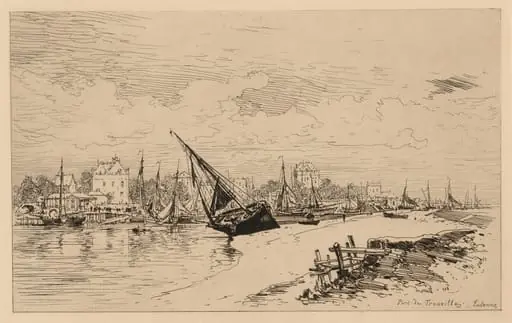
Created in 1856, *Dutch View* is a pen drawing by French artist François Antoine Maxime Lalanne. Executed in black ink with white highlights, the work presents a compact harbor scene rendered with swift, economical strokes. Though the artist was not Dutch, the composition evokes the characteristic waterways, windmills and sky‑line of the Low Countries, offering a concise visual record of a bustling port.
Subject & Meaning
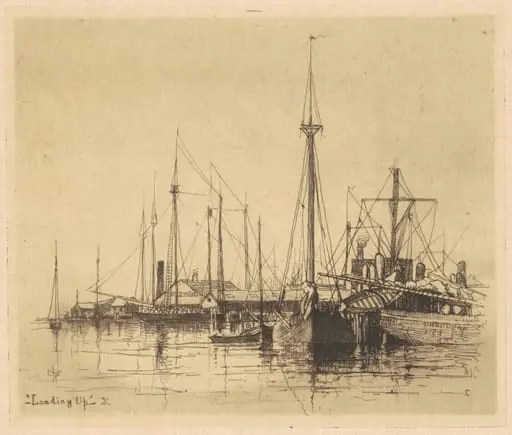
The drawing captures a lively quay where tall ships lie alongside a shoreline dotted with windmills and modest buildings. A small group of figures gathers near a solitary tree on the left, suggesting everyday activity within a maritime community. The emphasis on architecture and vessels underscores the economic and cultural significance of Dutch harbor life in the mid‑nineteenth century.
Technique & Style
Lalanne employs a restrained pen line, allowing the ink to define forms with minimal cross‑hatching. White touches are applied sparingly to suggest reflected light on water and the gleam of ship rigging. The overall effect is sketch‑like and immediate, relying on tonal contrast rather than dense shading to convey depth and atmosphere.
History & Provenance
Lalanne, primarily known for his etchings and charcoal studies, produced *Dutch View* during a period when French artists frequently explored foreign locales through drawing. The piece reflects his interest in rapid field sketches, a practice common among 19th‑century draughtsmen documenting travel impressions. Its provenance traces back to the artist’s personal collection before entering public holdings in the early twentieth century.
Context
The mid‑1800s saw a revival of interest in Northern European scenery among French artists, who admired the clarity of Dutch light and the orderly composition of its canals and windmills. Lalanne’s work aligns with this trend, translating the Dutch landscape into a French draftsmanship idiom that balances precision with spontaneity.
Artist & collection
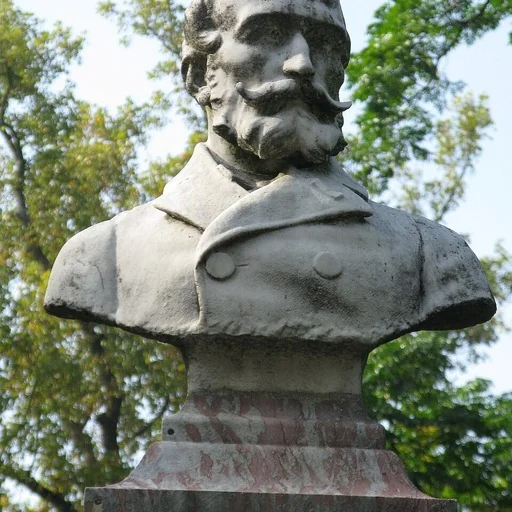
Artist
François Antoine Maxime Lalanne (November 27, 1827 – July 29, 1886) was a French artist known for his etchings and charcoal drawings (fusain).