Artwork
The Smithy
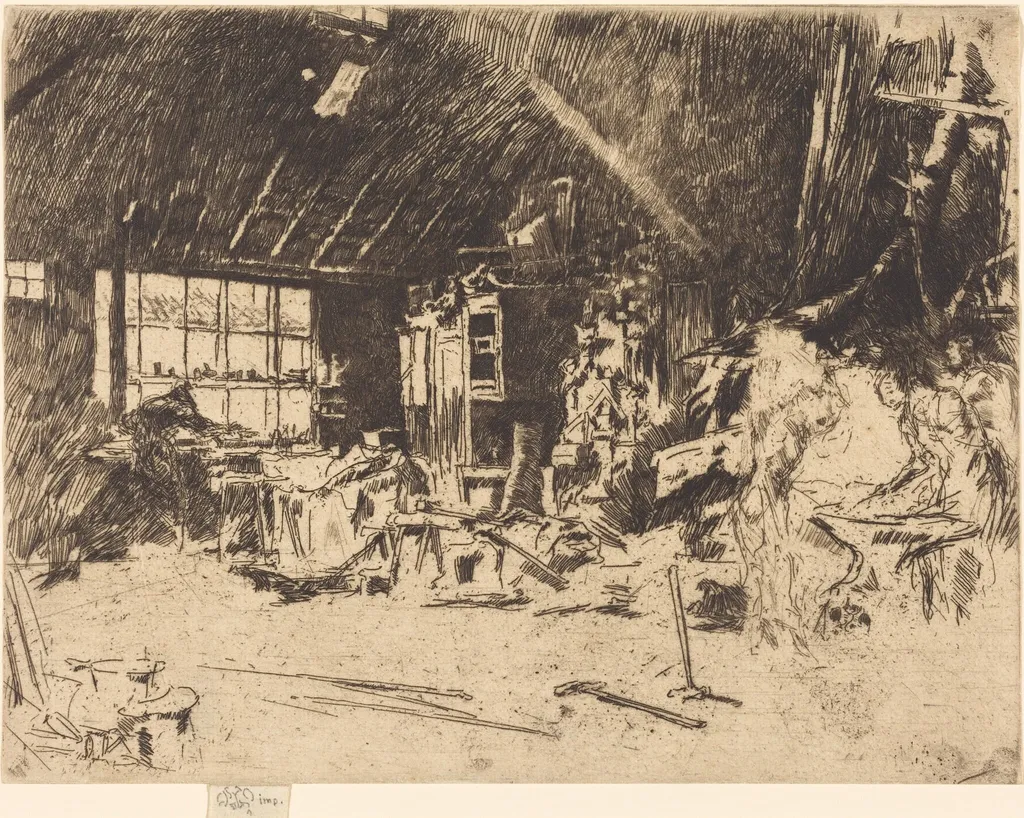
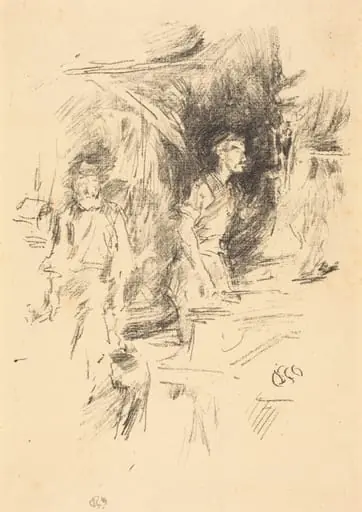
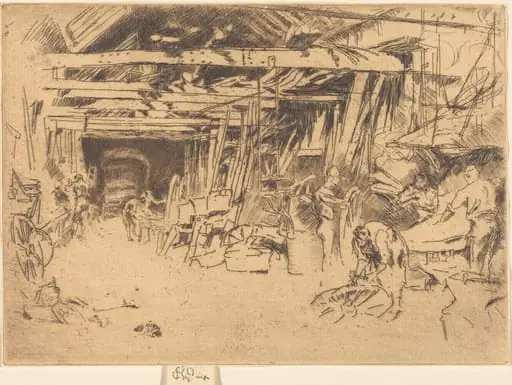
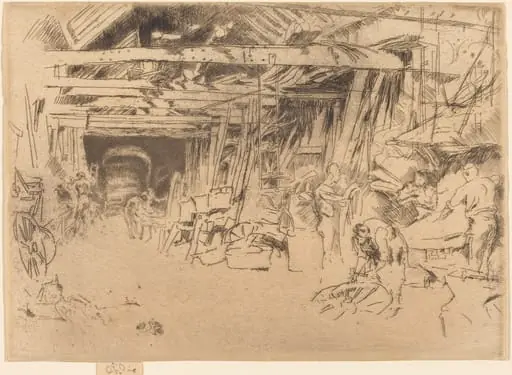
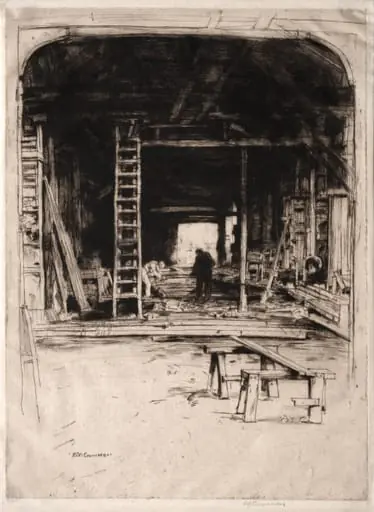
The Smithy is an ink print by the Impressionist artist James McNeill Whistler. It dates from 1880 and is held in the collection of the National Gallery of Art.
About this work
Overview
It belongs to a body of printwork he produced alongside his paintings, reflecting his deep investment in the technical possibilities of printmaking.
Created around 1880, *The Smithy* is an etching and drypoint on laid paper by James McNeill Whistler. It belongs to a body of printwork he produced alongside his paintings, reflecting his deep investment in the technical possibilities of printmaking. Unlike his more famous oil portraits, this piece focuses on a working environment, revealing his interest in mundane, industrial subjects rendered with quiet intensity. The medium’s capacity for subtle tonal variation suited his pursuit of atmospheric nuance.
Subject & Meaning
The scene depicts a blacksmith at his forge, surrounded by tools and the lingering smoke of heated metal. Whistler avoids narrative drama, presenting the laborer as a quiet, almost anonymous figure within a confined space. The focus lies not on the act of forging but on the interplay of light, shadow, and texture in a utilitarian setting. This detachment aligns with his belief in art’s autonomy—elevating the ordinary through composition rather than moral or emotional commentary.
Technique & Style
Whistler employed drypoint to scratch lines directly into a metal plate, creating rich, velvety blacks and soft, blurred edges when inked and printed. The technique allowed him to build depth through layered strokes, capturing the glow of the forge and the roughness of tools without hard outlines. His use of etching added finer details, such as hanging implements and wall textures. The result is a tactile, intimate rendering that emphasizes atmosphere over clarity.
History & Provenance
The print emerged during Whistler’s mature period in London, when he was actively exploring printmaking as a serious artistic medium. Though not widely exhibited at the time, it entered private collections and later institutional holdings, including the National Gallery of Art in Washington, D.C. Its survival reflects its status among connoisseurs who valued his experimental approach to etching over more conventional subjects.
Context
In the late 19th century, European artists increasingly turned to printmaking to challenge academic traditions. Whistler, influenced by Japanese woodcuts and French etchers, used the medium to explore mood and form independently of narrative. *The Smithy* fits within this shift, positioning industrial labor not as social commentary but as a study in light, mass, and spatial rhythm—consistent with his broader aesthetic philosophy.
Legacy
Whistler’s *The Smithy* remains a key example of his contribution to modern printmaking. Its quiet intensity and technical innovation influenced later artists seeking to elevate etching beyond illustration. The work’s enduring presence in museum collections underscores its role in redefining print as a medium capable of conveying subtle emotional and visual complexity, without reliance on grand themes or overt symbolism.
Artist & collection
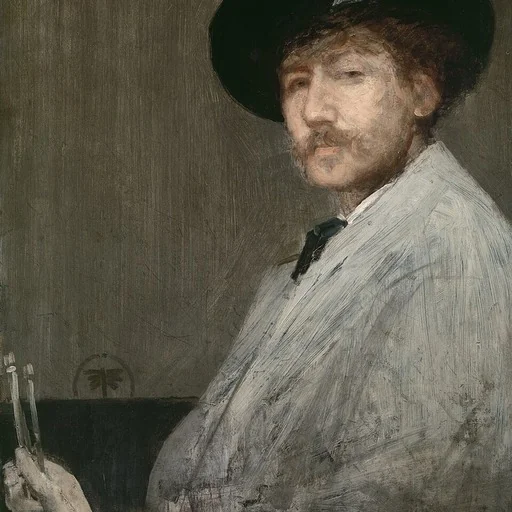
Artist
James Abbott McNeill Whistler was an American painter in oils and watercolor, and printmaker, active during the American Gilded Age and based primarily in the United Kingdom.

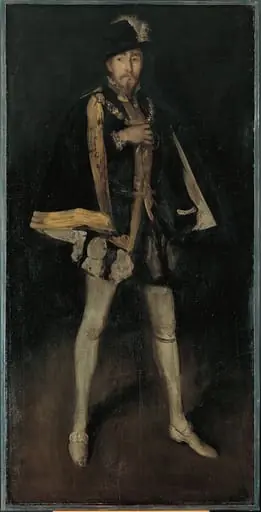 Arrangement in Black, No. 3: Sir Henry Irving as Philip II of Spain
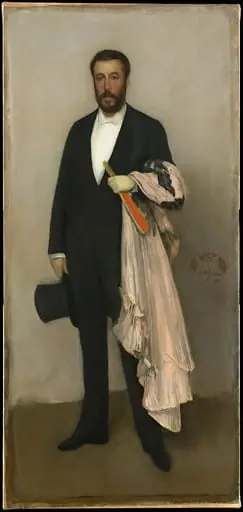 Arrangement in Flesh Colour and Black: Portrait of Theodore Duret
 Gold and Brown: Self-Portrait
 Edward Guthrie Kennedy
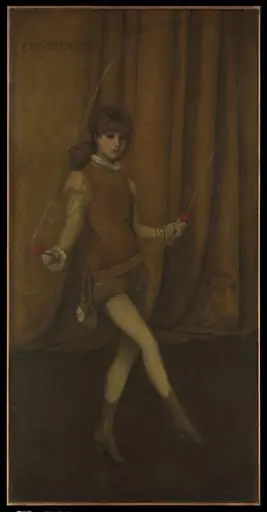 Harmony in Yellow and Gold: The Gold Girl—Connie Gilchrist
 George W. Vanderbilt
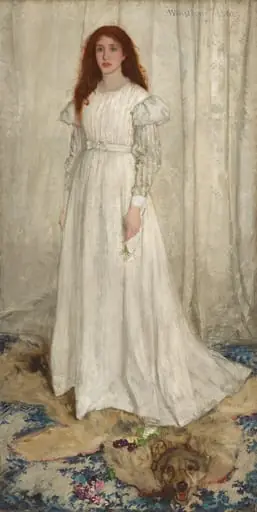 Symphony in White, No. 1: The White Girl
 Henry Irving as Philip II of Spain