Artwork
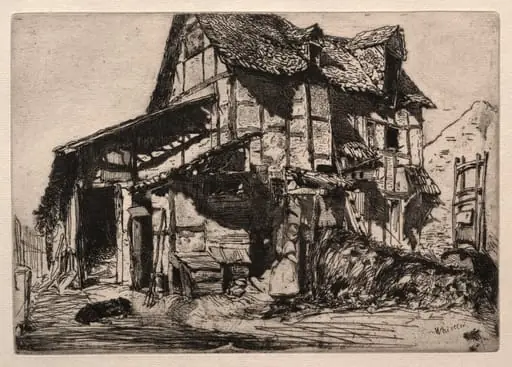
The Smithy
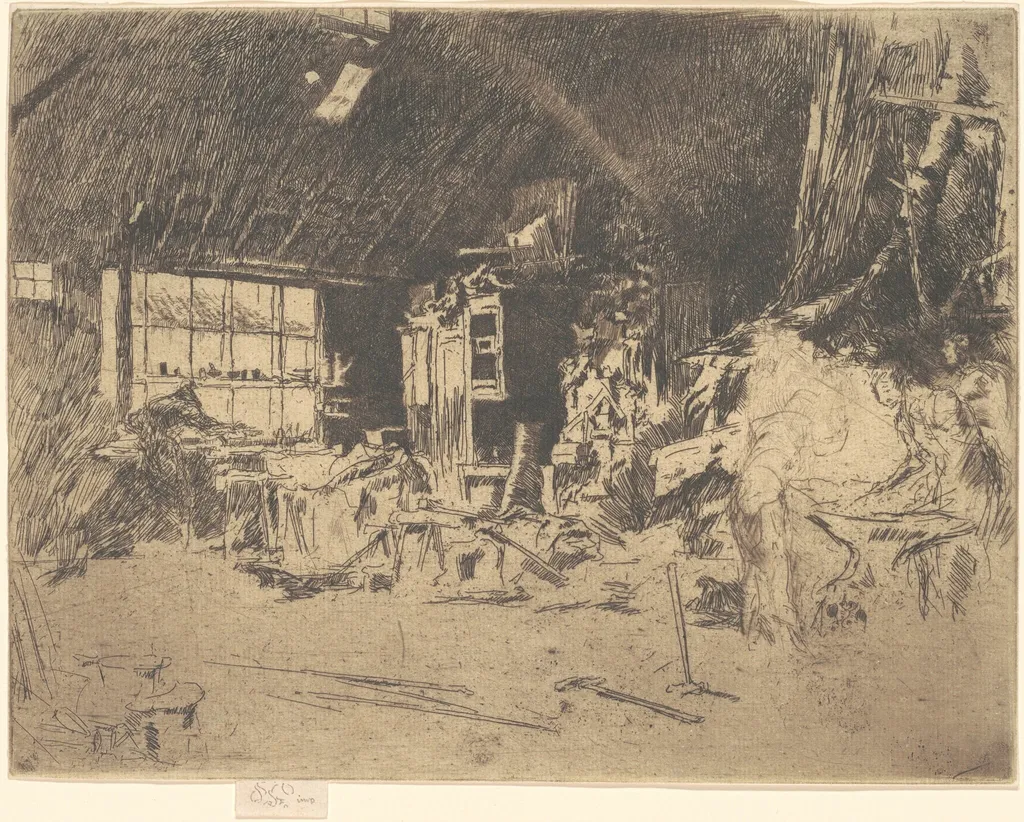
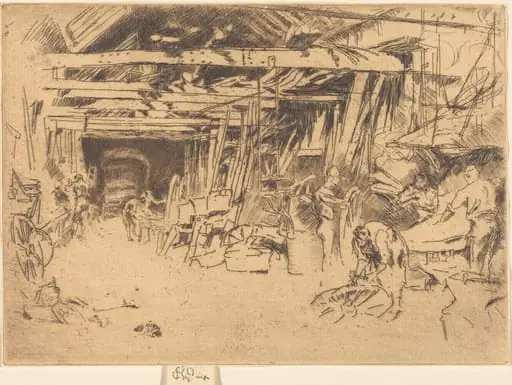
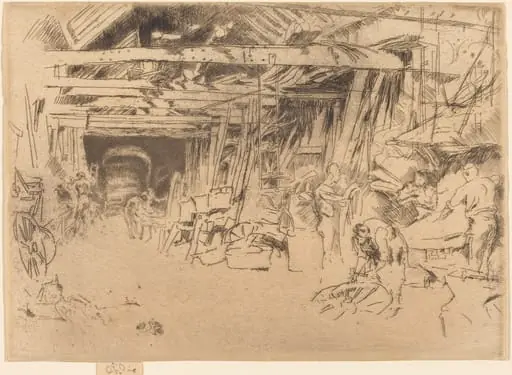
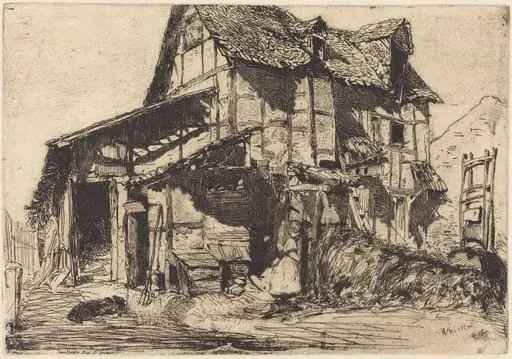
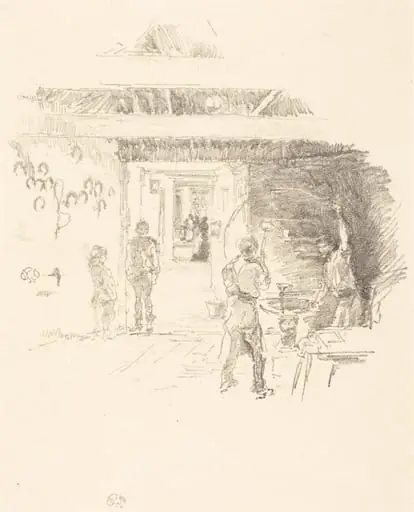
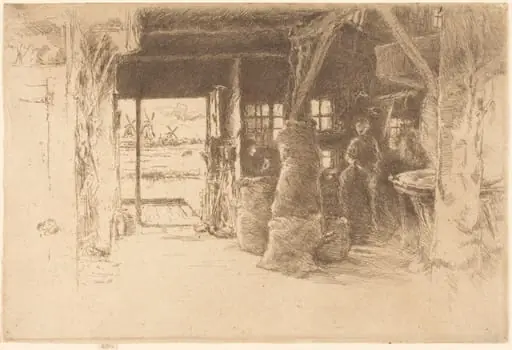
The Smithy is an ink print by the Impressionist artist James McNeill Whistler. It dates from 1880 and is held in the collection of the National Gallery of Art.
About this work
Overview
The Smithy, an 1880 etching and drypoint by James McNeill Whistler, captures a moment of creative intensity within an artist’s cluttered studio, filled with the tools of the craft.
Subject & Meaning
Depicting Whistler’s own workspace, the print offers a glimpse into the everyday life of an artist, emphasizing the intersection of routine and creativity. The choice of subject reflects Whistler’s propensity for elevating mundane scenes into works of artistic contemplation.
Technique & Style
Executed in etching and drypoint in black on laid paper, the piece leverages the expressive potential of these techniques to convey texture and depth, particularly in the rendering of rustic beams illuminated by natural light.
History & Provenance
Created in 1880, The Smithy is characteristic of Whistler’s late 19th-century output, though detailed provenance (ownership history) is not provided in the available information.
Context
Within the broader context of 19th-century art, The Smithy aligns with movements that valued the depiction of everyday life, while its medium situates it within the revival of etching as an artistic medium during this period.
Legacy
The Smithy contributes to Whistler’s legacy as an artist who blurred the lines between the mundane and the sublime, influencing subsequent generations in their approach to capturing the artist’s inner world.
Artist & collection
Artist
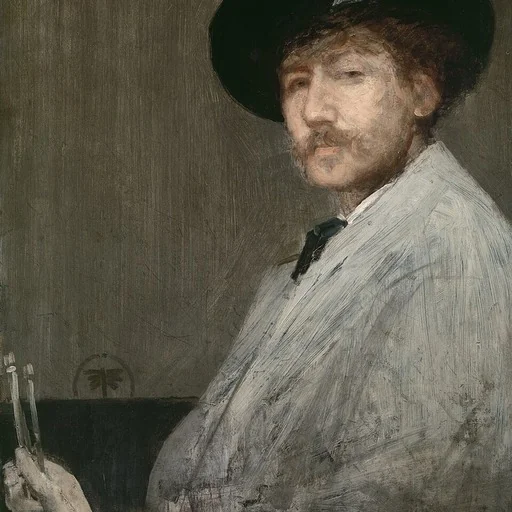
James Abbott McNeill Whistler was an American painter in oils and watercolor, and printmaker, active during the American Gilded Age and based primarily in the United Kingdom.

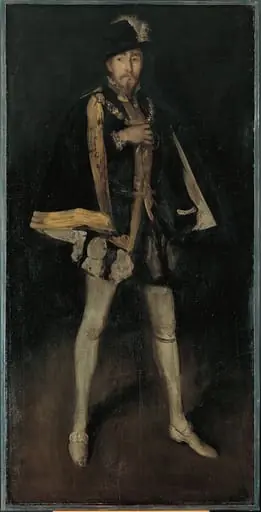 Arrangement in Black, No. 3: Sir Henry Irving as Philip II of Spain
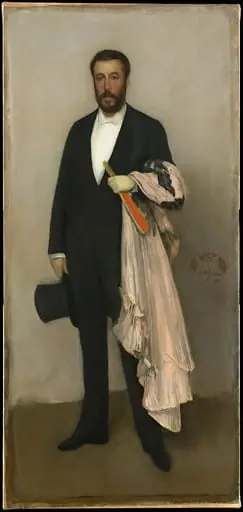 Arrangement in Flesh Colour and Black: Portrait of Theodore Duret
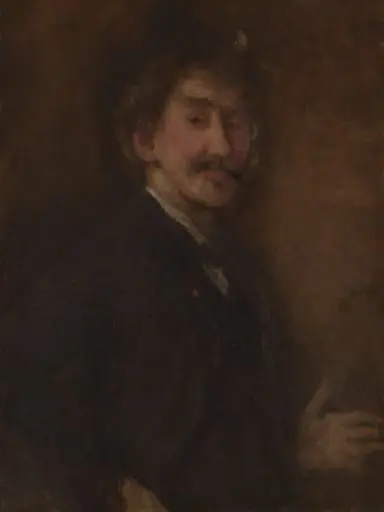 Gold and Brown: Self-Portrait
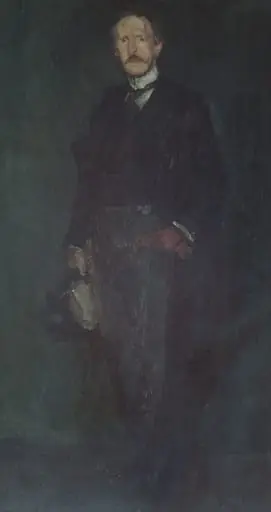 Edward Guthrie Kennedy
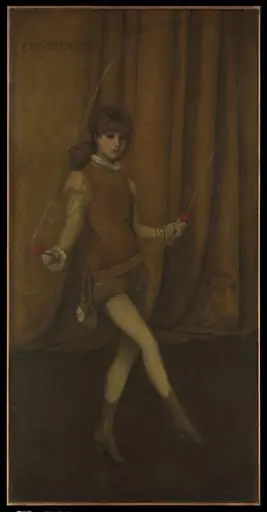 Harmony in Yellow and Gold: The Gold Girl—Connie Gilchrist
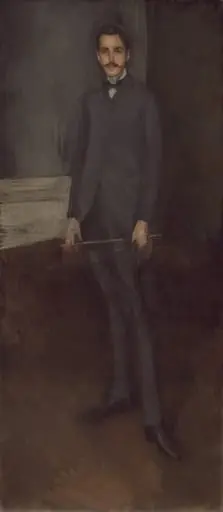 George W. Vanderbilt
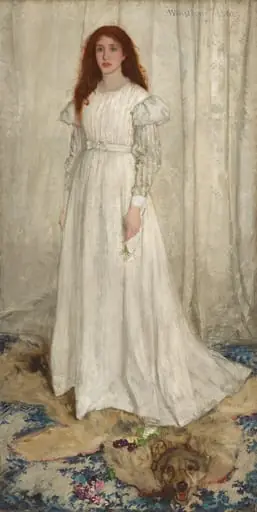 Symphony in White, No. 1: The White Girl
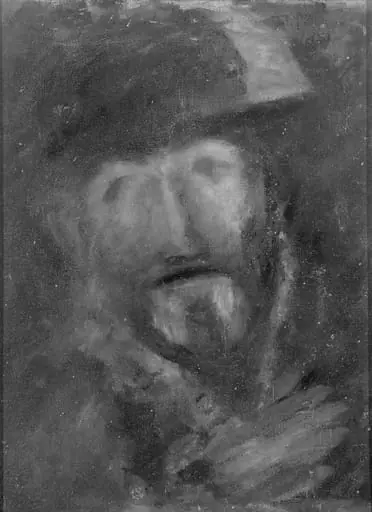 Henry Irving as Philip II of Spain
![Farmers Shucking Corn [recto], by Perry, Enoch Wood, Jr.](https://artifactworldgallery.com/img/perry-enoch-wood-jr--farmers-shucking-corn-recto--9473f386e6632807-w320.webp)